Biomolecular Engineering: Structure, Metabolism, and Cellular Organization
 Call Kai
 Learn
 Practice Test
 Spaced Repetition
 Match
 Flashcards
 Knowt Play
1/180

Earn XP
Description and Tags
Comprehensive practice flashcards covering the eight biomolecular engineering and biochemistry lecture topics, including carbohydrates, lipids, proteins, nucleic acids, cell biology, glycolysis, the citric acid cycle, oxidative phosphorylation, and glycogen/pentose pathways.
181 Terms
Importance of Carbs
distributed widely in nature, key intermediates of metabolism, structural components of plans, central to materials of industrial products, key food source
Carbohydrate
A polyhydroxyaldehyde or polyhydroxyketone, or a substance that yields these compounds upon hydrolysis, generally following the empirical formula (CH2O)n.
Monosaccharide
a carb that cannot be hydrolyzed to a simpler carb, building block of all carbs, general formula of CnH2nOn where n varies from 3 to 8

Aldose
A monosaccharide that contains an aldehyde group at the terminal carbon (carbon-1).
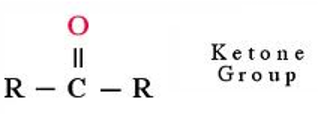
Ketose
A monosaccharide that contains a ketone group (typically at carbon-2).
Aldose and Ketose classification/nomeclature
aldo- and keto- prefixes indicate the nature of the carbonyl
-ose suffix indicates its a carbohydrate
number of C’s indicated by root (tri-, tetra-, etc)
D-Monosaccharide
A monosaccharide that, when written as a Fischer projection with the most oxidized carbon at the top, possesses the hydroxyl group (−OH) on the penultimate (next-to-last) carbon on the right-hand side.
Enantiomers
Stereoisomers that are non-superimposable mirror images of each other, such as D-erythrose and L-erythrose.
Diastereomers
Stereoisomers that are not mirror images of each other, such as D-erythrose and D-threose. Enzymes exist that can interconvert some diastereomers through epimerization
Epimerization
The process by which one epimer is converted into another by the inversion of configuration at a single chiral center. This reaction plays a crucial role in carbohydrate metabolism.
Anomers
the formation of cyclic hemiacetal that yields an additional chiral center and gives 2 diastereomeric forms, designated alpha and beta
Hemiacetal and Hemiketal
alcohols undergoing addition with aldehydes or ketones
hemiacetal is the addition between carbon 1 and 5
hemiketal is the addition between carbon 2 and 5
Reactions of Monosaccharides
OH groups can be converted to esters, treated with acetic anhydride and all OH groups react effectively to become esters
Phosphoric Esters - formed by transfer of phosphate group from ATP molecule - hexokinase acts as enzyme to facilitate reaction
Anomeric Carbon
The new chiral center generated at the carbonyl carbon atom (C-1 for aldoses, C-2 for ketoses) upon intramolecular nucleophilic attack forming a cyclic hemiacetal or hemiketals.

Mutarotation
The spontaneous change in optical rotation over time in solution resulting from the slow interconversion of pure α (meaning the OH is trans to the CH2OH) and β (meaning the OH is cis to the CH2OH) anomers into an equilibrium mixture (typically 37:63 for glucose).

Glycosidic Bond
A covalent acetal bond formed between the anomeric carbon of a carbohydrate and an −OR group (such as an alcohol group of another sugar), locking the cyclic ring and preventing mutarotation.

Sucrose
A non-reducing disaccharide composed of one unit of D-glucose and one unit of D-fructose joined by an α(1→2) glycosidic bond.

Lactose
A disaccharide found in milk composed of D-galactose linked to D-glucose via a β(1→4) glycosidic bond. Contains a reducing end that can act as a reducing agent due to the free aldehyde or ketone group
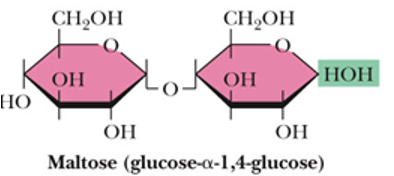
Maltose
A reducing disaccharide formed from two D-glucose units linked by an α(1→4) glycosidic bond. Reducing end
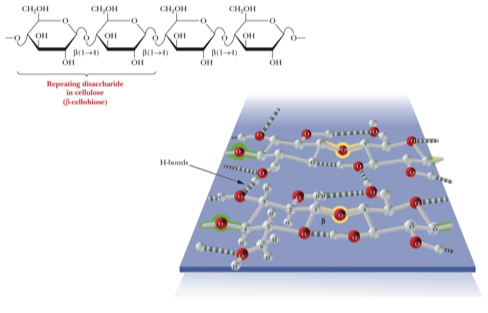
Cellulose
A linear structural polysaccharide composed of approximately 2800 D-glucose units linked by β(1→4) glycosidic bonds, arranged in fully extended chains stabilized by extensive hydrogen bonding.
Amylose
A continuous, unbranched component of plant starch consisting of up to 4000 α -D-glucose units joined by α(1→4) glycosidic linkages.
Amylopectin
A branched plant storage polysaccharide composed of α(1→4) -linked D-glucose chains with α(1→6) glycosidic branch points occurring every 24–30 residues.
β -amylase is an exoglycosidase and cleaves from the non-reducing end of the polymer
α-amylase is an endoglycosidase and hydrolyzes glycosidic linkages anywhere along the chain to produce glucose and maltose

Chitin
A structural polysaccharide occurring in arthropod exoskeletons and fungal cell walls, composed of repeating N-acetyl-β-D-glucosamine units joined by β(1→4) glycosidic bonds.
Glycosaminoglycans (GAGs)
Unbranched polysaccharides based on repeating disaccharide units in which one monomer is an amino sugar and the other carries a negative charge via carboxylate or sulfate groups (e.g., heparin, hyaluronic acid).
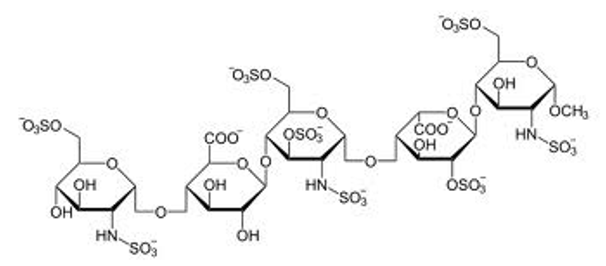
Heparin
a GAG
natural anticoagulant
Hyaluronic Acid
a GAG
a component of vitreous humor of the eye and lubricating joint fluids

Chondroitin sulfate and keratan sulfate
components of connective tissue
Glycoproteins
carb units covalently bonded to polypeptide chain, oligosaccharide portion of glycoproteins act as antigenic determinants, thus led to discovery of blood typing
Lipid
A heterogeneous group of naturally occurring organic molecules that are insoluble in water but soluble in nonpolar organic solvents. Include open chain forms and cyclic forms. Amphipathic in nature (hydrophobic and hydrophilic)
Fatty Acid
An unbranched-chain carboxylic acid, most commonly having an even number of carbon atoms (12–20 carbons), derived from the hydrolysis of fats, oils, or membrane lipids.
Saturated vs. Unsaturated Fatty Acids
Saturated fatty acids contain only single carbon-carbon bonds, whereas unsaturated fatty acids contain one or more carbon-carbon double bonds, predominantly in the cis configuration.
Waxes
Lipid esters formed from long-chain (C16–C36) carboxylic acids and long-chain (C24–C36) alcohols, serving as protective coatings in plants and animals.
Triacylglycerol
A neutral lipid consisting of a glycerol molecule esterified with three fatty acid chains, serving as the primary long-term energy storage molecule in animals.
Saponification
The alkaline hydrolysis of triacylglycerol ester bonds with a strong base (such as NaOH) to yield glycerol and the sodium salts of fatty acids (soaps). Hard water contains Mg2+ and Ca2+ that form insoluble salts with soaps
Phosphoglycerides (Phosphoacylglycerols)
The primary lipid components of biological membranes, consisting of a glycerol backbone esterified to two fatty acid chains and a phosphoric acid esterified to an amino alcohol or other polar head group. Comprise the major lipid component of the cell membranes
Sphingolipids
A class of membrane lipids built on a sphingosine (18-carbon dihydroxyamine) backbone rather than glycerol, found abundantly in neural cell membranes and myelin sheaths.
Glycolipid
a compound in which a carb is bound to an OH of the lipid. Typically the carb is glucose or galactose
Steroids
Non-saponifiable lipids characterized by a tetracyclic core structure consisting of three six-membered rings and one five-membered ring fused together.
Hormones
Androgen - male
Estrogen - female
Formation of Isopentenyl pyrophosphate (IPP)
form mevalonate using 3 acetyl-CoA units, pyrophosphylation gives mevalonyl-PP, then you isomerize IPP to DMAPP by enzyme called IPP isomerase
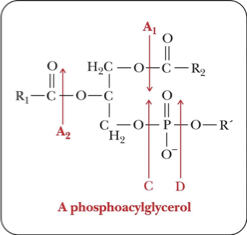
Liberation of Fatty Acids from Triacylglycerols
Lipases catalyze hydrolysis of ester bonds between fatty acid and the rest of the triacylglycerols; Phospholipases catalyze hydrolysis of ester bond between fatty acid and rest of phosphoacylglycerols

Lipid Catabolism
fatty acid oxidation must begin for the FA to be activated (acyl adenylate intermediate is formed), thioester bond formed between carboxyl of FA and thiol of CoA-SH, hydrolysis of 2 phosphate bonds provides energy to form thioester of Acyl-CoA.
Overall Rxn : RCOO^- + ATP + CoA-SH ——> RCO-S-CoA + AMP + 2P
Carnitine Shuttle
The transport mechanism mediated by carnitine palmitoyl transferase (CPT) and carnitine translocase that transfers activated acyl-CoA groups from the cytoplasm across the inner mitochondrial membrane into the matrix. CPT replaces carnitine and CoA on acyl groups between 14 to 18 carbons long. Carnitine Translocase moves acyl-carnitine into matrix and move free carnitine out of the matrix

β-Oxidation
A four-step cyclic pathway in the mitochondrial matrix that cleaves two carbon atoms per cycle from the carboxyl end of fatty acyl-CoA, yielding acetyl-CoA, NADH, and FADH2.
Reaction 1: oxidation of the α , β C-C single bond to a C=C bond
Reaction 2: hydration of the C=C bond
Reaction 3: oxidation of the β- hydroxyl group to a carbonyl group
Reaction 4: cleavage of the carbon chain to yield acetyl-CoA and an acyl-CoA now 2 carbons shorter
Variations due to the nature of the FA
oxidation of unsaturated FA requires enzymes that catalyze isomerization around the double bonds so oxidation can proceed, oxidation of unsaturated FA does not generate much ATP relative to saturated FA because the oxidation step is skipped
Acyl Carrier Protein (ACP)
A specialized protein carrier that binds growing acyl chains during fatty acid biosynthesis in the cytosol, directing them to the fatty acid synthase complex. Synthesis starts at methyl end
Amino Acid
compound with both an amino group and carboxyl group
α-Amino acid has amino group attached to carbon adjacent to carboxyl group, also has side chain group R(gives identity to amino acid)
Naturally amino acids are L-form

Glycine
Gly
G

Alanine
Ala
A

Serine
Ser
S

Leucine
Leu
L

Isoleucine
Ile
I
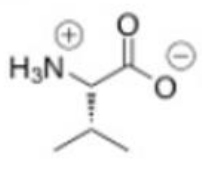
Valine
Val
V

Methionine
Met
M
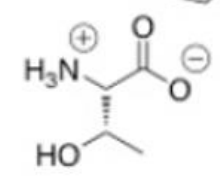
Threonine
Thr
T

Cysteine
Cys
C
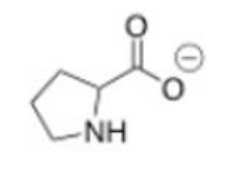
Proline
Pro
P

Phenylalanine
Phe
F
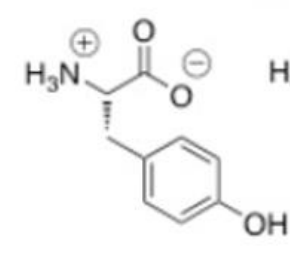
Tyrosine
Tyr
Y

Tryptophan
Trp
W
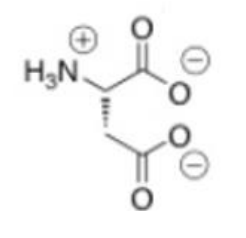
Aspartic Acid
Asp
D

Glutamic Acid
Glu
E

Arginine
Arg
R

Asparagine
Asn
N
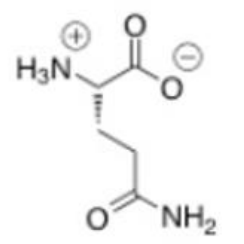
Glutamine
Gln
Q

Lysine
Lys
K

Histidine
His
H

Cytosine
C
Pyrimidine
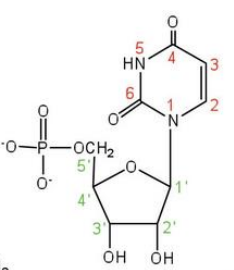
Uracil
U
Pyrimidine

Thymine
T
Pyrimidine

Adenine
A
Purine

Guanine
G
Purine
Zwitterion
A dipolar ion that contains both a positive and a negative charge on different functional groups simultaneously, resulting in a net electrical charge of zero at neutral pH.
Acidity of Amino Acids
pKa of α-carboxyl group is 2.2, stronger than acetic acid, greater acidity of amino acid carboxyl group is due to electron withdrawing inductive effect of -NH3+ group
Guanidine Group
side chain of arginine is a strong base, basicity of guanidine group is attributed to large resonance stabilization of protonated form relative to neutral form
Imidazole Group
side chain of imidazole of histidine is a heterocyclic aromatic amine
Isoelectric Point (pI)
The specific pH at which a molecule carries no net electrical charge; for a simple neutral amino acid, it is calculated as pI=2pKa1+pKa2.
Peptide Bond
A planar, rigid covalent amide bond formed between the α-carboxyl group of one amino acid and the α-amino group of another, characterized by partial double-bond character that restricts rotation. Bond best expressed with resonance structures

Primary Structure
The linear sequence of amino acid residues in a polypeptide chain, read strictly from the N-terminal end to the C-terminal end. Primary structure determines its tertiary
Secondary Structure
hydrogen-bonded arrangement of protein backbone; two bonds have free rotation: bond between alpha carbon and amino nitrogen in residue (ϕ), and the bond between alpha carbon and carboxyl carbon of residue (ψ )
α-Helix
A right-handed helical protein secondary structure having 3.6 amino acid residues per turn and a pitch of 5.4A˚ , stabilized by intrachain hydrogen bonds between peptide carbonyl oxygens and amide hydrogens located four residues ahead. Carbonyl to HN hydrogen bonds parallel to helical axis
exteriors may be polar, nonpolar, or amphiphilic

Helix Disruption
proline creates restricted rotation and its amino group has no NH for H-bonding
electrostatic repulsion or steric crowding caused by charged or bulky side chains
β-Pleated Sheet
A protein secondary structure formed by hydrogen bonds between adjacent extended polypeptide chains oriented in parallel or antiparallel directions, with side chains alternating above and below the sheet plane.
Supersecondary structures
combo of α -helices and β -sheets
αα - two antiparallel helices
βαβ - two parallel strands of beta sheets connected by stretch of helix
β-meander - antiparallel sheet formed by series of tight reverse turns connecting stretches of polypeptide
Greek key - repetitive supersecondary structure formed when antiparallel sheet doubles back on self
β-barrel - made when beta sheets extensive to fold back on self
Tertiary Structure
The overall three-dimensional folding of a single polypeptide chain, driven by hydrophobic interactions, hydrogen bonds, ionic bonds (salt bridges), and covalent disulfide bonds.
Fibrous Proteins
proteins organized parallel along single axis, consist of long fibers or sheets, insoluble in water and dilute salt solutions, role in nature, keratin and collagen
Globular Proteins
proteins which are folded back on themselves a non-fibrous shape, soluble in water and salts, polar side chains are on outside to interact with aqueous environment by hydrogen bonding/ion-dipole, nonpolar side chains buried inside.
Surface structure includes water molecules in complex, helices on protein surface usually amphiphilic, hydrophobic core
In one of 4 classes: α, β, αβ (intermingled) and (separate)
Quaternary Structure
The structural arrangement and spatial organization of multiple distinct folded polypeptide subunits in a multi-subunit protein complex.
Denaturation
The loss of native secondary, tertiary, and quaternary structural ordering in a protein without cleavage of peptide bonds, resulting in loss of biological function.
Brought about by heat, big pH change, detergents, urea or guanidine, and mercaptoethanol
Salting Out
A protein purification method in which high concentrations of a neutral salt, such as ammonium sulfate ((NH4)2SO4), strip water from protein surfaces and cause proteins to precipitate based on differences in hydrophobic interactions. Different aliquots taken as function of salt concentration to get desired protein sample of interest
Size Exclusion Chromatography
A chromatographic method that separates macromolecules based on molecular size, in which smaller molecules enter porous stationary polymer beads and elute slowly, while larger molecules bypass the pores and elute first.
Affinity Chromatography
A protein separation technique based on specific, noncovalent binding interactions between a target protein and a biological ligand covalently tethered to a stationary resin.
SDS-PAGE (PolyAcrylamide Gel Electrophoresis)
Polyacrylamide gel electrophoresis conducted in the presence of sodium dodecyl sulfate, which denatures proteins and confers a uniform negative charge-to-mass ratio, allowing separation solely by molecular weight.
Isoelectric Focusing
An electrophoretic technique that separates amphoteric molecules such as proteins along a stable, immobilized pH gradient until each molecule reaches the pH equal to its isoelectric point (pI) and ceases to migrate. Gel prepared using a pH gradient that parallels electric field (+ at low pH end, - at high pH end)
Edman Degradation
A chemical method for sequencing polypeptides by sequentially reacting the N-terminal amino acid with phenylisothiocyanate to cleave and identify a phenylthiohydantoin (PTH) derivative without hydrolyzing the remainder of the chain.
Solid Phase Synthesis of Peptides
Coupling, Coupling, Deprotecting, Coupling, Coupling, Deprotecting
Nucleotide
A biochemical monomer consisting of a nitrogenous base (purine or pyrimidine) attached to the C-1' carbon of an aldopentose sugar (ribose or 2'-deoxyribose) and at least one phosphate group attached to the C-5' carbon.
5’ end - phosphate
3’ end - hydroxyl

Purine Bases
Bicyclic nitrogenous bases consisting of fused six-membered and five-membered rings, represented by adenine (6-aminopurine) and guanine (2-amino-6-oxypurine).

Pyrimidine Bases
Monocyclic nitrogenous bases containing a six-membered aromatic ring with two nitrogen atoms, represented in nucleic acids by cytosine, uracil, and thymine.
DNA
consists of 2 polynucleotide strands running in opposite directions of each other, strands held together by hydrogen bonds. G-C pair has 3 H bonds, A-T pair has 2 H bonds
Replication begins with uncoiling, then synthesis from 5’ to 3’ direction