Assessing the Abdomen
 Call Kai
 Learn
Learn Practice Test
 Spaced Repetition
 Match
Match Flashcards
 Knowt Play
1/65

There's no tags or description
Looks like no tags are added yet.
Name | Mastery | Learn | Test | Matching | Spaced | Call with Kai | Chat |
|---|
No analytics yet
Send a link to your students to track their progress
66 Terms
Liver diagnostics
Aspirate aminotrasferase (AST), alanine aminotransferase (ALT), ammonia level, bilirubin level, liver biopsy
Gallbladder diagnostics
Ultrasound, heptobiliary iminodiacetic acid scan
Pancreas diagnostics
Amylase and lipase, glucose
Stomach diagnostics
Esophagogastroduodenoscopy, capsule endoscopy
Spleen diagnostics
Complete blood count (CBC)
Veriform appendix diagnostics
Stool analysis, fecal occult blood test (FOBT), stool for culture, barium enema, sigmoidoscopy, colonoscopy
Kidneys and bladder diagnostics
Blood urea nitrogen (BUN), creatinine, glomerular filtration rate (GFR), bladder scan
Weight health history
Weight loss or gain, intentional or nonintentional
Appetite health history
Changes in appetite, factors affecting appetite or ability to eat, good intolerances, cultural considerations
Dysphagia
Difficulty swallowing
Nausea/vomiting health history
When did it start, pattern, color of emesis, hematemesis, projectile vomiting
Hematemesis
Vomiting of blood, can indicate medical conditions like GI bleeding or ulcers
Indigestion or heartburn health history
Timing, duration, medications, pattern
Gastroesophageal reflux disease (GERD)
Chronic digestive disorder where stomach acid flows back into the esophagus, causing symptoms like heartburn and regurgitation
Pyrosis
Burning sensation in the chest or throat, commonly known as heartburn, often associated with gastroesophageal reflux disease (GERD)
Dyspepsia
Difficult digestion; indigestion
Diarrhea/constipation health history
Normal bowel habits, color, consistency, blood in stool, laxative use, perceived constipation
Flatulence health history
Problems associated with gas, bloating, belching, or burping, can be influenced by diet, how much air is swallowed with eating, and sometimes intestinal disorders
Aerophagia
Swallowing air, can lead to bloating and discomfort
Urination health history
Frequency, incontinence, back pain, difficulty starting the stream, dysuria, renal or colic pain
Dysuria
Painful or difficult urination, often associated with urinary tract infections or other bladder issues
Abdominal sequence of assessment
Inspection, auscultation, indirect percussion, palpation
Abdominal mapping
Process of dividing the abdomen into four quadrants; four- and nine-region
Inspecting the abdomen normal findings
Contour (flat or round), bilaterally symmetrical, umbilicus midline, skin smooth and intact without pulsations or visible peristalsis
Inspecting the abdomen abnormal findings
Scaphoid, distended, or protuberant, increased peristaltic waves, pulsations, ascites, diastasis recti, hernia, Cullen’s sign
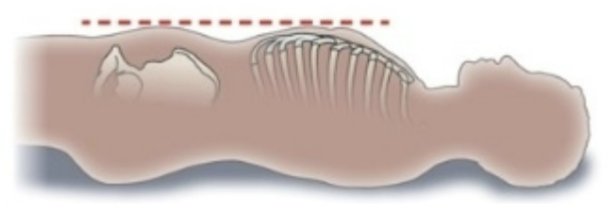
Scaphoid
Abdominal contour that appears sunken or concave, often indicating issues like malnutrition or dehydration
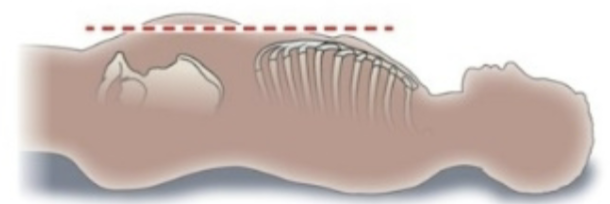
Distended
Abdomen appears swollen or enlarged due to excess gas, fluid, or other substances.
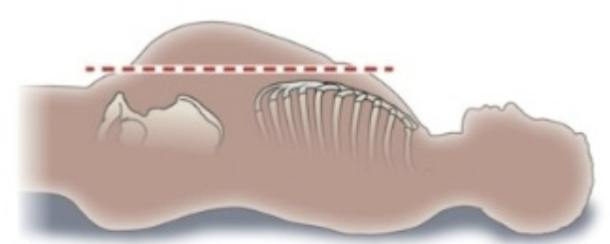
Protuberant
Abdomen is bulging or swollen outward, often indicating underlying issues such as obesity or fluid accumulation
Distention
Condition of being stretched, inflated, or larger than normal
Ascites
Abnormal accumulation of fluid in the abdomen
Diastasis recti
Separation of abdominal longitudinal muscles (rectus abdominis) during pregnancy
Hernia
Protrusion of an organ through the wall of the cavity that normally contains it
Cullen’s sign
Bruising in the skin around the umbilicus, indicates internal bleeding
Auscultating bowel sounds normal findings
5-34 clicks or gurgles per minutes
Auscultating bowel sounds abnormal findings
Hyper or hypoactive, no bowel sounds
Types of bowel sounds
Borborygmes, hyperactive, hypoactive, absent
Borborygmes
Loud, gurgling sounds made by movement of gas through intestines
Hyperactive
Loud, high-pitched sounds
Hypoactive
Slow, decreased sounds
Absent
No sounds heard
Auscultating vascular sounds normal findings
No bruit sounds are heard over arteries
Auscultating vascular sounds abnormal findings
Bruits, venous hum, friction rub
Venous hum
Soft, low-pitched sound heard over veins, indicating increased blood flow
Bruit
Swooshing sound, indicating turbulent blood flow
Percussing the abdomen normal findings
Tympany in all four quadrants and dullness over organs
Percussing the abdomen abnormal findings
Excessive high pitched tympanic sounds, dullness, pain
Palpating the abdomen normal findings
No tenderness, smooth surface characteristics
Palpating the abdomen abnormal findings
Tenderness is present, mass is felt
Deep palpation normal findings
No masses, enlarged organs, or tenderness
Deep palpation abnormal findings
Masses are palpated, enlarged organs, tenderness or pain is present
Palpating the bladder normal findings
Empty bladder is nonpalpable, partially filled bladder is firm and smooth
Palpating the bladder abnormal findings
Distended bladder is palpated as a smooth, round, and firm mass extending as far up as the umbilicus
Distended bladder
Bladder is overly filled with urine, making it easily palpable and enlarged
Percussing for costovertebral (CVA) tenderness normal findings
Elicits no pain
Percussing for costovertebral tenderness abnormal findings
Tenderness or pain is felt
Pyelonephritis
Kidney infection resulting from bacteria, leading to inflammation of the renal pelvis and renal tissue
American Cancer Society recommended age for colon cancer screening
45
Visceral pain
Poorly localized, dull, or diffuse pain that arises from the abdominal organs, or viscera
Gastric lavage
Medical procedure used to wash out the stomach contents, often performed to treat poisoning or overdose
Splenomegaly
Enlargement of the spleen, often indicating an underlying health issue or condition
Right upper quadrant organs
Liver, gallbladder, right portion of the diaphragm, duodenum, pancreas head, right kidney, parts of the colon
Left upper quadrant organs
Stomach, spleen, pancreas tail, left lobe of the liver, left kidney, parts of the colon
Right lower quadrant organs
Appendix, cecum, ascending colon, right ureter, parts of the small intestine, part of the bladder; right ovary and fallopian tube in females
Left lower quadrant organs
Descending and sigmoid colon, left ureter, part of the bladder, parts of the small intestine; left ovary and fallopian tube in females
Auscultating bowel sounds
Begin at the ileocecal valve
Vascular auscultation sites
Right and left femoral arteries, right and left iliac arteries, right and left renal arteries, aorta