cell transport & tissue - **from review sheet
 Call Kai
 Learn
Learn Practice Test
 Spaced Repetition
 Match
Match Flashcards
 Knowt Play
1/36

There's no tags or description
Looks like no tags are added yet.
Name | Mastery | Learn | Test | Matching | Spaced | Call with Kai | Chat |
|---|
No analytics yet
Send a link to your students to track their progress
37 Terms
passive transport
no energy required
high to low concentration
active transport
energy required
low to high concentration
simple diffusion
particles distribute evenly within solution
facilitated diffusion
substances require a protein carrier for passive
osmosis
simple diffusion of water
water easily crosses plasma membrane
hypertonic solution
water moves out of the cell
cell shrinks or shrivels

hypotonic solution
water moves into the cell
cell swells or bursts

isotonic solution
water is at equilibrium
cell will stay the same
epithelial tissue functions
forms boundaries
covers internal/external body surfaces
lines body cavities
makes up glands
epithelial tissue classifications
shape and number of layers
basement membrane
attached to underlying connective tissue
apical surface
NOT attached to underlying tissue
simple squamous
1 layer
flat
thin to allow for diffusion

simple squamous function
thin to allow for diffusion
simple cuboidal
1 layer
box shaped
secretion and absorption

simple cuboidal function
secretion and absorption
simple columnar
1 layer
tall
absorption and secretion of mucus

simple columnar function
absorption and secretion of mucus
stratified squamous
2+ layers
flat
protection from abrasion
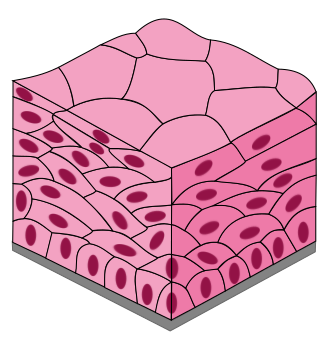
stratified squamous function
protection from abrasion
transitional
stretches/shrinks easily
found in bladder

connective tissue functions
binding
supporting
cushioning
protecting
extracellular matrix
a non-living substance filling the spaces between cells
nervous tissue locations
brain, spinal cord, nerves
nervous tissue functional characteristics
irritability
conductivity
skeletal muscle
voluntary
movement
posture
production of heat
striations
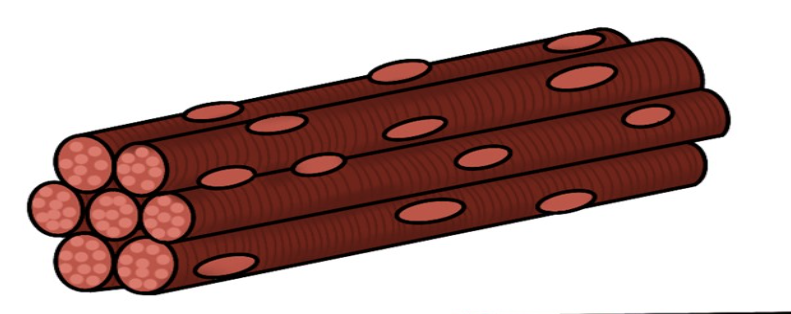
smooth muscle
found inside many organs
involuntary
push and digest food
contracts to prepare for childbirth
no striations

cardiac muscle
involuntary
heart
pump blood through arteries and veins
striations

bone
support
protection
stores calcium
produces blood cells

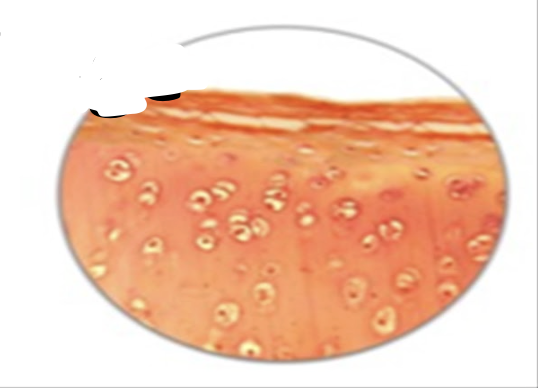
cartilage
no blood vessels or nerves
reduces friction between bones
stands up against compression and tension very well
firm ground substance causes a rigid rubber-like matrix
blood
within blood vessels
only liquid body tissue
atypical ct - does not connect things

areolar loose ct
most common ct in body
serves as packing material that wraps and cushions organs
under epithelial tissues around organs
gel-like ground substance; has all 3 fiber types

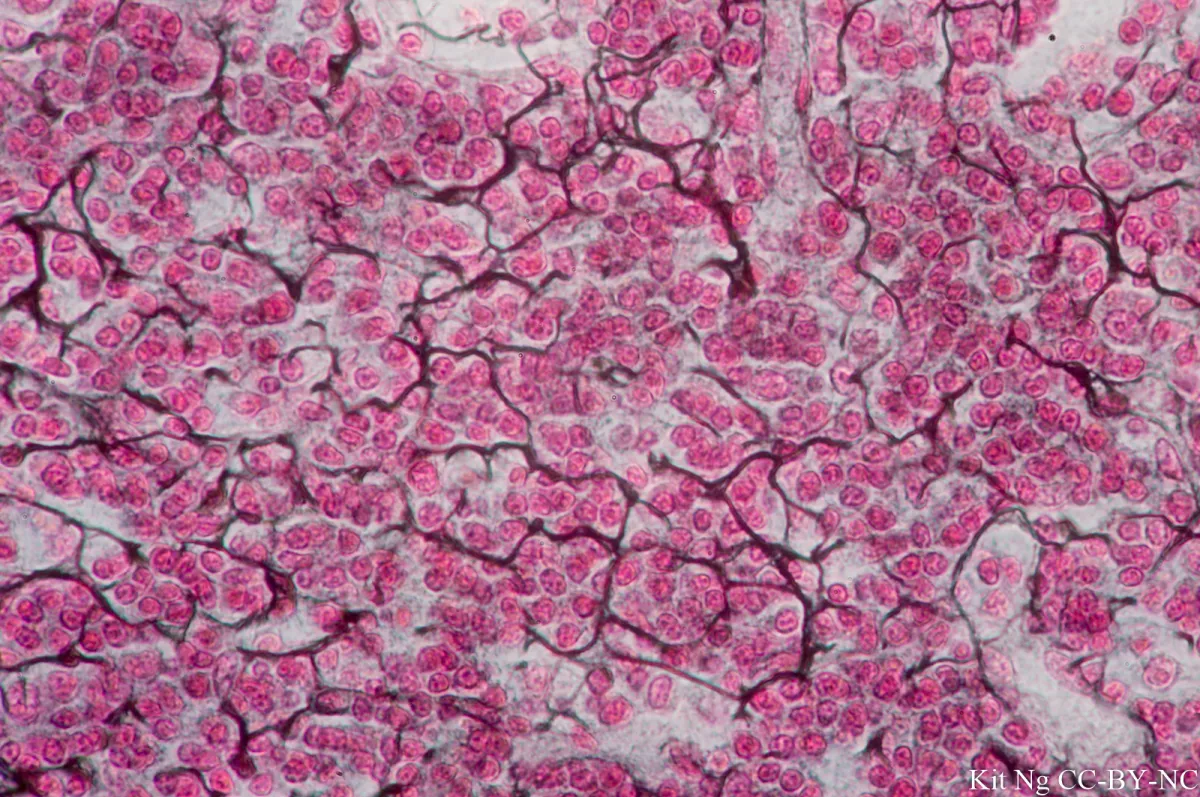
reticular loose ct
forms soft skeleton that supports other cells
lymph nodes, spleen, bone marrow
gel-like ground substance; no collagen or elastin
adipose loose ct
energy reserves
insulates body heat
cushions organs
under skin & around kidneys and heart
little matrix; made mostly of tightly packed fat cells

regular dense ct
strong when pulled in one direction
tendons and ligaments
closely packed parallel collagen fibers

irregular dense ct
randomly arranged collagen fibers
strong when pulled in many directions
dermis, fibrous coverings that surround organs and joints

elastic dense ct
allows tissue to bounce back after stretching
walls of arteries, ligaments connecting vertebrae, lungs
high number of elastic fibers
