AH3 Exam 3: SCI

0.0(0)
Studied by 28 people
call kaiCall Kai
learnLearn
examPractice Test
spaced repetitionSpaced Repetition
heart puzzleMatch
flashcardsFlashcards
GameKnowt Play
Card Sorting

1/16

encourage image

There's no tags or description

Looks like no tags are added yet.

17 Terms

1
New cards

4 types incomplete spinal cord lesions:

  1. central cord syndrome

  • arms weaker than legs

  1. anterior cord syndrome

  • movement and ability to feel pain/ temperature lost below injury

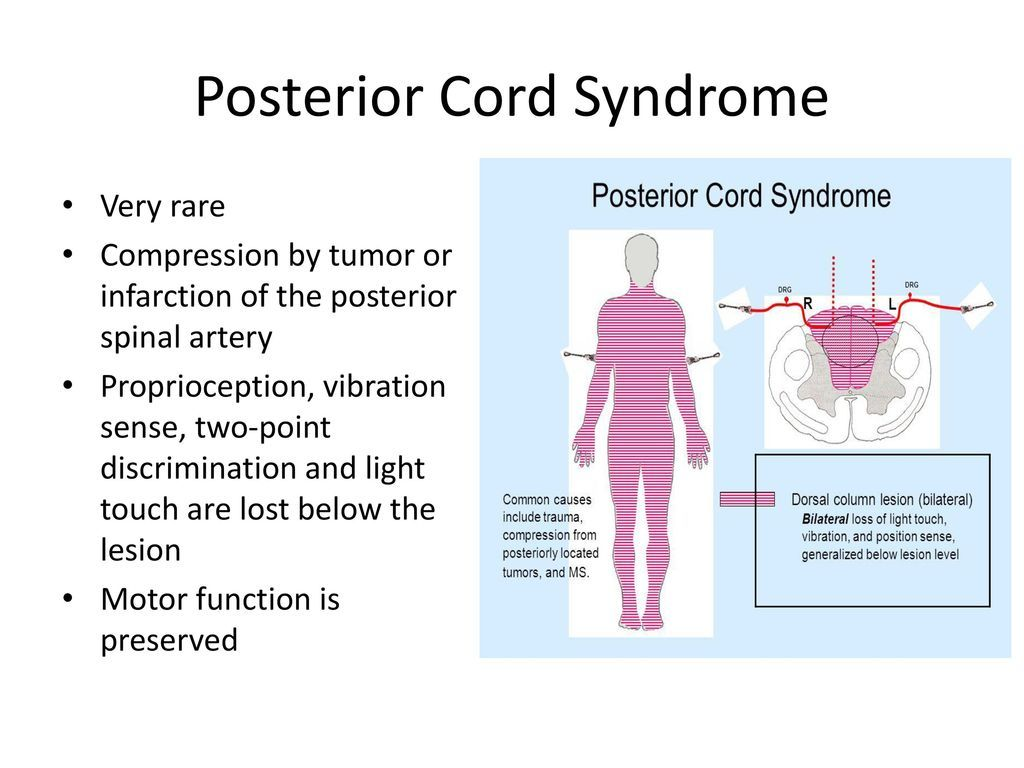
  1. posterior cord syndrome

  • feeling vibrations and body position’s lost= difficult balance and walking

  1. brown-Sequard syndrome

  • one side spinal cord damaged = weakness on same side and loss of pain/ temperature on opposite side


<ol><li><p><span style="color: rgb(230, 136, 136);"><strong>central </strong></span><span style="color: rgb(7, 5, 5);">cord syndrome</span></p></li></ol><ul><li><p><span style="color: rgb(230, 136, 136);"><strong>arms weaker</strong></span> than legs</p></li></ul><ol start="2"><li><p><span style="color: rgb(123, 134, 26);"><strong>anterior </strong></span><span style="color: rgb(17, 18, 13);">cord syndrome</span></p></li></ol><ul><li><p><span style="color: rgb(123, 134, 26);"><strong>movement </strong></span><span style="color: rgb(16, 16, 13);">and ability to feel</span><span style="color: rgb(123, 134, 26);"> <strong>pain/ temperature lost below injury</strong></span></p></li></ul><ol start="3"><li><p><span style="color: rgb(46, 137, 163);"><strong>posterior </strong></span><span style="color: rgb(14, 17, 18);">cord syndrome</span></p></li></ol><ul><li><p><span style="color: rgb(14, 17, 18);">feeling</span><span style="color: rgb(46, 137, 163);"> <strong>vibrations </strong></span><span style="color: rgb(7, 9, 10);">and </span><span style="color: rgb(46, 137, 163);"><strong>body position’s</strong> </span><span style="color: rgb(20, 24, 25);">lost= difficult</span><span style="color: rgb(46, 137, 163);"> <strong>balance</strong></span><strong> </strong>and walking</p></li></ul><ol start="4"><li><p><span style="color: rgb(216, 97, 195);"><strong>brown-Sequard</strong> </span><span style="color: rgb(10, 6, 9);">syndrome</span></p></li></ol><ul><li><p><span style="color: rgb(216, 97, 195);"><strong>one side</strong> </span><span style="color: rgb(27, 13, 24);">spinal cord damaged = </span><span style="color: rgb(216, 97, 195);"><strong>weakness on same</strong> </span><span style="color: rgb(8, 6, 8);">side and</span><span style="color: rgb(216, 97, 195);"> <strong>loss of pain/ temperature on opposite side</strong></span></p></li></ul><p></p>
2
New cards

What causes central cord syndrome?

  • hallmark?


cause: hyperextension injury with swelling in center of spinal cord (whiplash MVA)

****motor loss greater in ARMS than legs

  • ex: person walks fine but cant grip fork


<p>cause: <strong>hyperextension </strong>injury with swelling in center of spinal cord (whiplash MVA)</p><p>****motor loss <span style="color: rgb(192, 79, 79);"><strong>greater in ARMS</strong></span> than legs</p><ul><li><p>ex: person walks fine but <strong>cant grip fork</strong></p></li></ul><p></p>
3
New cards

what is lost in anterior (5) SCI and preserved (4)?

lost:

  1. loss of motor function below injury (paresis/paralysis)

  2. pain

  3. temp

  4. crude touch (firm touch)


preserved:

  1. proprioception (body position)

  2. fine touch

  3. pressure

  4. vibrations


<p><span style="color: rgb(221, 62, 62);"><strong>lost</strong>:</span></p><ol><li><p><span style="color: rgb(4, 3, 3);">loss </span><span style="color: rgb(221, 62, 62);">of <strong>motor </strong></span><span style="color: rgb(15, 12, 12);">function below injury (paresis/paralysis)</span></p></li><li><p><span style="color: rgb(221, 62, 62);"><strong>pain</strong></span></p></li><li><p><span style="color: rgb(221, 62, 62);"><strong>temp</strong></span></p></li><li><p><span style="color: rgb(221, 62, 62);"><strong>crude</strong> </span><span style="color: rgb(18, 13, 13);">touch (firm touch)</span></p></li></ol><p></p><p><span style="color: rgb(25, 162, 72);"><strong>preserved</strong>:</span></p><ol><li><p><span style="color: rgb(25, 162, 72);"><strong>proprioception </strong></span><span style="color: rgb(10, 13, 11);">(body position)</span></p></li><li><p><span style="color: rgb(30, 156, 72);"><strong>fine </strong></span><span style="color: rgb(10, 13, 11);">touch</span></p></li><li><p><span style="color: rgb(25, 162, 72);"><strong>pressure</strong></span></p></li><li><p><span style="color: rgb(25, 162, 72);"><strong>vibrations</strong></span></p></li></ol><p></p>
4
New cards

what is lost in posterior (4) SCI and preserved (4)?


lost:

  1. proprioception

  2. fine touch

  3. pressure

  4. vibrations


preserved:

  1. pain

  2. temp

  3. crude touch

  4. motor function


<p><span style="color: rgb(217, 47, 47);"><strong>lost:</strong></span></p><ol><li><p><span style="color: rgb(217, 47, 47);"><strong>proprioception</strong></span></p></li><li><p><span style="color: rgb(217, 47, 47);"><strong>fine touch</strong></span></p></li><li><p><span style="color: rgb(217, 47, 47);"><strong>pressure</strong></span></p></li><li><p><span style="color: rgb(217, 47, 47);"><strong>vibrations</strong></span></p></li></ol><p></p><p><span style="color: rgb(26, 184, 62);"><strong>preserved:</strong></span></p><ol><li><p><span style="color: rgb(26, 184, 62);"><strong>pain</strong></span></p></li><li><p><span style="color: rgb(26, 184, 62);"><strong>temp</strong></span></p></li><li><p><span style="color: rgb(26, 184, 62);"><strong>crude touch</strong></span></p></li><li><p><span style="color: rgb(26, 184, 62);"><strong>motor function</strong></span></p></li></ol><p></p>
5
New cards

What causes brown-sequard cord syndrome?

  • findings of brown-sequard cord syndrome? (2)


cause: one side of cord damaged (GSW)

findings:

  1. Ipsilateral: same side as injury

  • loss of proprioception

  • loss of motor function

  • loss of sense of vibration

  1. Contralateral: opposite side of injury

  • loss of pain + temp


<p><strong>cause</strong>: <span style="color: rgb(186, 130, 36);"><strong>one side</strong></span> of cord damaged (GSW)</p><p>findings:</p><ol><li><p><span style="color: rgb(37, 140, 140);"><strong>Ipsilateral: </strong></span><span style="color: rgb(37, 140, 140);"><strong>same </strong></span><span style="color: rgb(11, 13, 13);">side as injury</span></p></li></ol><ul><li><p><span style="color: rgb(11, 13, 13);">loss of</span><span style="color: rgb(37, 140, 140);"> <strong>proprioception</strong></span></p></li><li><p><span style="color: rgb(10, 12, 12);">loss of</span><span style="color: rgb(37, 140, 140);"> <strong>motor function</strong></span></p></li><li><p><span style="color: rgb(22, 29, 29);">loss of sense of</span><span style="color: rgb(37, 140, 140);"> <strong>vibration</strong></span></p></li></ul><ol start="2"><li><p><span style="color: rgb(230, 67, 67);"><strong>Contralateral</strong>: <strong>opposite </strong></span><span style="color: rgb(16, 13, 13);">side of injury</span></p></li></ol><ul><li><p><span style="color: rgb(16, 13, 13);">loss o</span><span style="color: rgb(230, 67, 67);">f <strong>pain + temp</strong></span></p></li></ul><p></p>
6
New cards

SCI injury manifestations:

  • above C4 (2)

  • thoracic (2)

  • lumbar and sacral (3)


  • above C4

  1. inability to breathe

  2. quadriplegic


  • thoracic

  1. paraplegia

  2. poor truck control


  • lumbar and sacral

  1. loss of GU function; sexual function

  2. hypotension

  3. no temperature control


<ul><li><p><span style="color: rgb(202, 157, 43);"><strong>above C4</strong> </span></p></li></ul><ol><li><p><span style="color: rgb(22, 21, 17);">inability to</span><span style="color: rgb(202, 157, 43);"> <strong>breathe</strong></span></p></li><li><p><span style="color: rgb(202, 157, 43);"><strong>quadriplegic</strong></span></p></li></ol><p></p><ul><li><p><span style="color: rgb(29, 133, 133);"><strong>thoracic </strong></span></p></li></ul><ol><li><p><span style="color: rgb(29, 133, 133);"><strong>paraplegia</strong></span></p></li><li><p><span style="color: rgb(11, 14, 14);">poor </span><span style="color: rgb(29, 133, 133);"><strong>truck </strong></span>control</p></li></ol><p></p><ul><li><p><span style="color: rgb(178, 110, 216);"><strong>lumbar and sacral</strong> </span></p></li></ul><ol><li><p><span style="color: rgb(19, 18, 20);">loss of </span><span style="color: rgb(178, 110, 216);"><strong>GU function; sexual </strong></span><span style="color: rgb(3, 3, 3);">function</span></p></li><li><p><span style="color: rgb(178, 110, 216);"><strong>hypotension</strong></span></p></li><li><p><span style="color: rgb(13, 10, 14);">no </span><span style="color: rgb(178, 110, 216);"><strong>temperature</strong></span><strong> </strong>control</p></li></ol><p></p>
7
New cards

surgical management for SCI: (2)

  1. decompression laminectomy

  • removal of 1 or more vertebral laminae to allow cord to expand with edema

  1. spinal fusion

  • stabilize spine and correct deformity using bone graft or rods


8
New cards

2 types tractions:

  1. Halo:

  • complex cervical injury c-collar wont be useful

  • or just needs to be immobilized (6-12 weeks) before surgical procedure

    • never get wet!! (only bathe, never shower)

  1. Skeletal:

  • for subluxation injuries

  • pulls spinal cord away from itself (stretch it essentially)


<ol><li><p><span style="color: rgb(231, 174, 31);"><strong>Halo</strong>:</span></p></li></ol><ul><li><p><span style="color: rgb(15, 14, 10);">complex </span><span style="color: rgb(231, 174, 31);"><strong>cervical injury</strong> </span><span style="color: rgb(12, 11, 9);">c-collar wont be useful</span></p></li><li><p><span style="color: rgb(27, 24, 15);">or just needs to b</span><span style="color: rgb(231, 174, 31);">e <strong>immobilized</strong></span><strong> </strong>(6-12 weeks) before surgical procedure</p><ul><li><p>never get wet!! (only bathe, never shower)</p></li></ul></li></ul><ol start="2"><li><p><span style="color: rgb(35, 95, 116);"><strong>Skeletal</strong>:</span></p></li></ol><ul><li><p><span style="color: rgb(35, 95, 116);">for <strong>subluxation </strong></span><span style="color: rgb(8, 13, 15);">injuries</span></p></li><li><p><span style="color: rgb(35, 95, 116);"><strong>pulls</strong></span><strong> </strong>spinal cord away from itself (stretch it essentially)</p></li></ul><p></p>
9
New cards

what is spinal shock?

signs (7)

complete, but temporary loss of reflexes, movement, sensation, and autonomic body functions below injury—immobilize spinal cord

signs: (temporarily paralyzed)

  1. flaccid paralysis

  2. no DTR

  3. decreased visceral and somatic sensations

  4. no penile reflex

  5. ⬇ urinary/fecal retention

  6. anhidrosis (no sweat)

  7. paralytic ileus


<p><span style="color: rgb(235, 98, 98);"><strong>complete, but temporary loss</strong></span> of reflexes, movement, sensation, and autonomic body functions below injury—immobilize spinal cord</p><p>signs: (temporarily paralyzed)</p><ol><li><p><span style="color: rgb(223, 132, 132);"><strong>flaccid paralysis</strong></span></p></li><li><p><span style="color: rgb(167, 153, 61);"><strong>no DTR</strong></span></p></li><li><p>decreased <span style="color: rgb(117, 172, 59);"><strong>visceral and somatic sensations</strong></span></p></li><li><p><span style="color: rgb(38, 169, 121);"><strong>no penile reflex</strong></span></p></li><li><p><span style="color: rgb(102, 99, 228);"><strong><span data-name="arrow_down" data-type="emoji">⬇</span> urinary/fecal retention</strong></span></p></li><li><p><span style="color: rgb(217, 84, 194);"><strong>anhidrosis </strong></span>(no sweat)</p></li><li><p><span style="color: rgb(208, 120, 16);"><strong>paralytic ileus</strong></span></p></li></ol><p></p>
10
New cards

what is neurogenic shock?

signs: (4)

  • which one is key for neurogenic shock?


distributive shock—loss of SNS control = blood vessels dilate

  1. vasodilation

  2. bradycardia!!!!! (KEYYY for neurogenic shock)

  3. hypotension

  4. temperature instability


11
New cards

specific vasopressor for neurogenic shock?

phenylephrine!!!

  • fix circulatory problem—life threatening


12
New cards

What is autonomic dysreflexia, and who is at risk?

dangerous, sudden rise in BP that happens in people with a SCI (Hypertensive crisis BP >140/90)

  • body overreacting to something irritating it below the level of the SCI—urologic source (UTI, full bladder)

    • usually in pts with injuries T6 or above


<p>dangerous, <span style="color: rgb(219, 69, 69);"><strong>sudden rise in BP</strong></span> that happens in people with a SCI (<span style="color: rgb(227, 87, 87);"><strong>Hypertensive crisis BP &gt;140/90</strong></span>)</p><ul><li><p>body overreacting to something irritating it below the level of the SCI—<span style="color: rgb(231, 83, 83);"><strong>urologic </strong></span>source (UTI, full bladder) </p><ul><li><p>usually in pts with <span style="color: rgb(34, 155, 151);"><strong>injuries T6 or above</strong></span></p></li></ul></li></ul><p></p>
13
New cards

causes of autonomic dysreflexia (4)

Something irritating the body triggers an uncontrolled nervous system response:

  1. full bladder

  • kinked catheter

  1. constipation

  2. tight clothes

  3. pressure sores


<p>Something <strong>irritating the body triggers</strong> an uncontrolled nervous system response:</p><ol><li><p><span style="color: rgb(206, 57, 57);"><strong>full bladder</strong></span></p></li></ol><ul><li><p>kinked catheter</p></li></ul><ol start="2"><li><p><span style="color: rgb(84, 144, 218);"><strong>constipation</strong></span></p></li><li><p><span style="color: rgb(189, 75, 179);"><strong>tight clothes</strong></span></p></li><li><p><span style="color: rgb(41, 153, 72);"><strong>pressure sores</strong></span></p></li></ol><p></p>
14
New cards

What findings occur above the injury during autonomic dysreflexia? (3)

  1. severe HA

  2. flushing

  3. diaphoresis

  4. piloerection

  • goosebumps


<ol><li><p><span style="color: rgb(221, 169, 70);"><strong>severe HA</strong></span></p></li><li><p><span style="color: rgb(240, 87, 87);"><strong>flushing</strong></span></p></li><li><p><span style="color: rgb(97, 87, 175);"><strong>diaphoresis</strong></span></p></li><li><p><span style="color: rgb(40, 147, 54);"><strong>piloerection</strong></span></p></li></ol><ul><li><p>goosebumps</p></li></ul><p></p>
15
New cards

What skin findings occur below the injury during autonomic dysreflexia?

dry, pale cool skin due to vasoconstriction

  • no sweat


<p><span style="color: rgb(37, 190, 171);"><strong>dry, pale cool skin</strong></span> due to vasoconstriction</p><ul><li><p>no sweat</p></li></ul><p></p>
16
New cards

What is the immediate nursing priority for suspected autonomic dysreflexia?(4)

  • key difference above vs below level of SCI:


  1. Sit pt upright!!! (high fowlers)

  2. Check BP right after!!

  • sit them upright to help lower

  1. Irrigate foley

  2. Loosen tight clothes


***everything ABOVE injury = vasoDILATED

***BELOW injury = vasoCONSTRICTED

17
New cards

other complication of SCI: (7)

  1. orthostatic hypotension

  • loss of vasomotor tone (vessels weak → hypotension)

  • use compression stockings or wrap limbs b4 sitting them up

  1. bowel motility issues

  • risk: emesis

  • aspiration

  • impaction—laxatives

  1. pressure injuries

  2. muscle atrophy/contractures

  3. DVT

  4. immunocompromised

  • prone to UTIs, pneumonia, wound infections

  1. neuropathic pain