LAB 8 NON-TELEOSTS
 Call Kai
 Learn
 Practice Test
 Spaced Repetition
 Match
 Flashcards
 Knowt Play
1/66

There's no tags or description
Looks like no tags are added yet.
Name | Mastery | Learn | Test | Matching | Spaced | Call with Kai | Chat |
|---|
No analytics yet
Send a link to your students to track their progress
67 Terms
Depressed Body
flounder, skates, rays; dorsoventrally flattened, swim like a bird
Compressed Body
laterally flattened; tall thin body shape allows fish to enter vertical crevices and for quick bursts of speed and quick turns
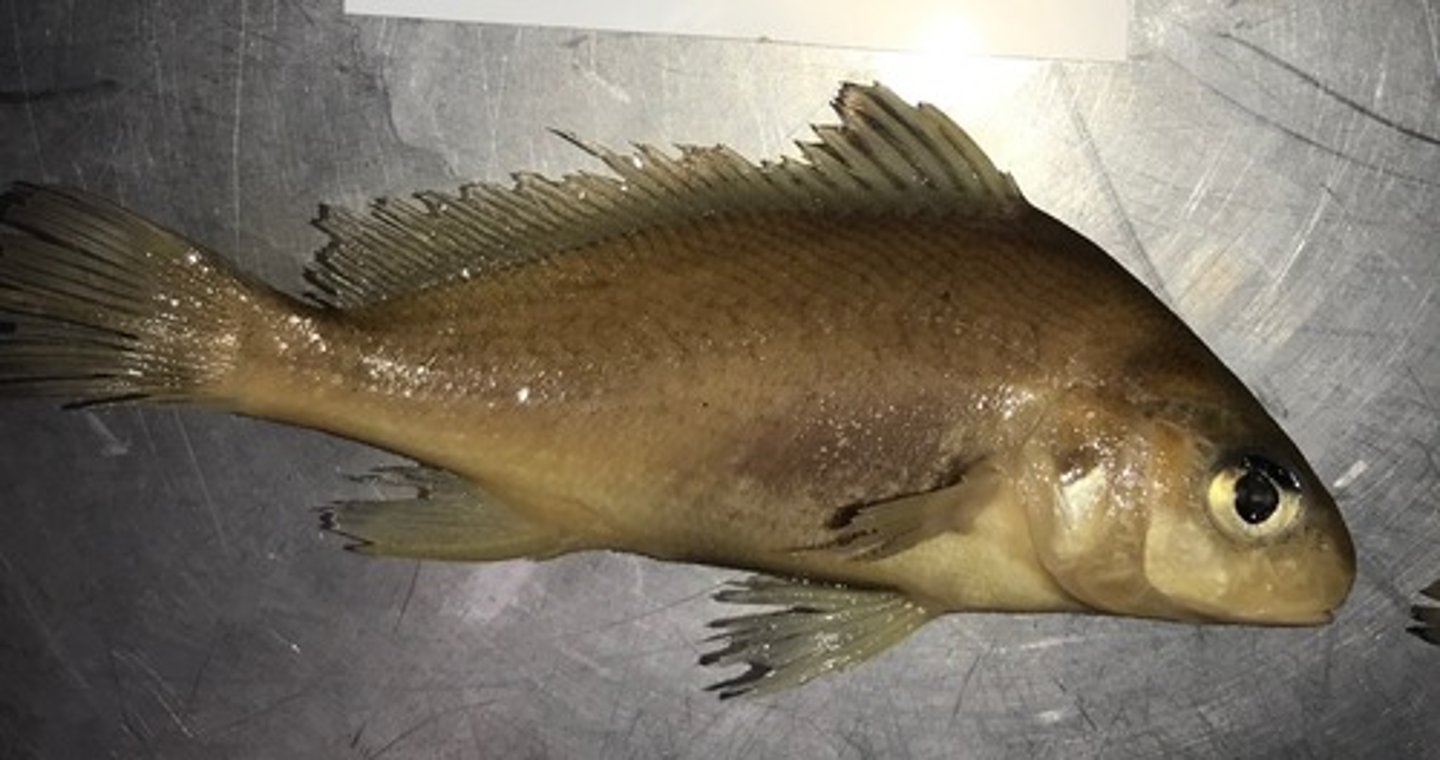
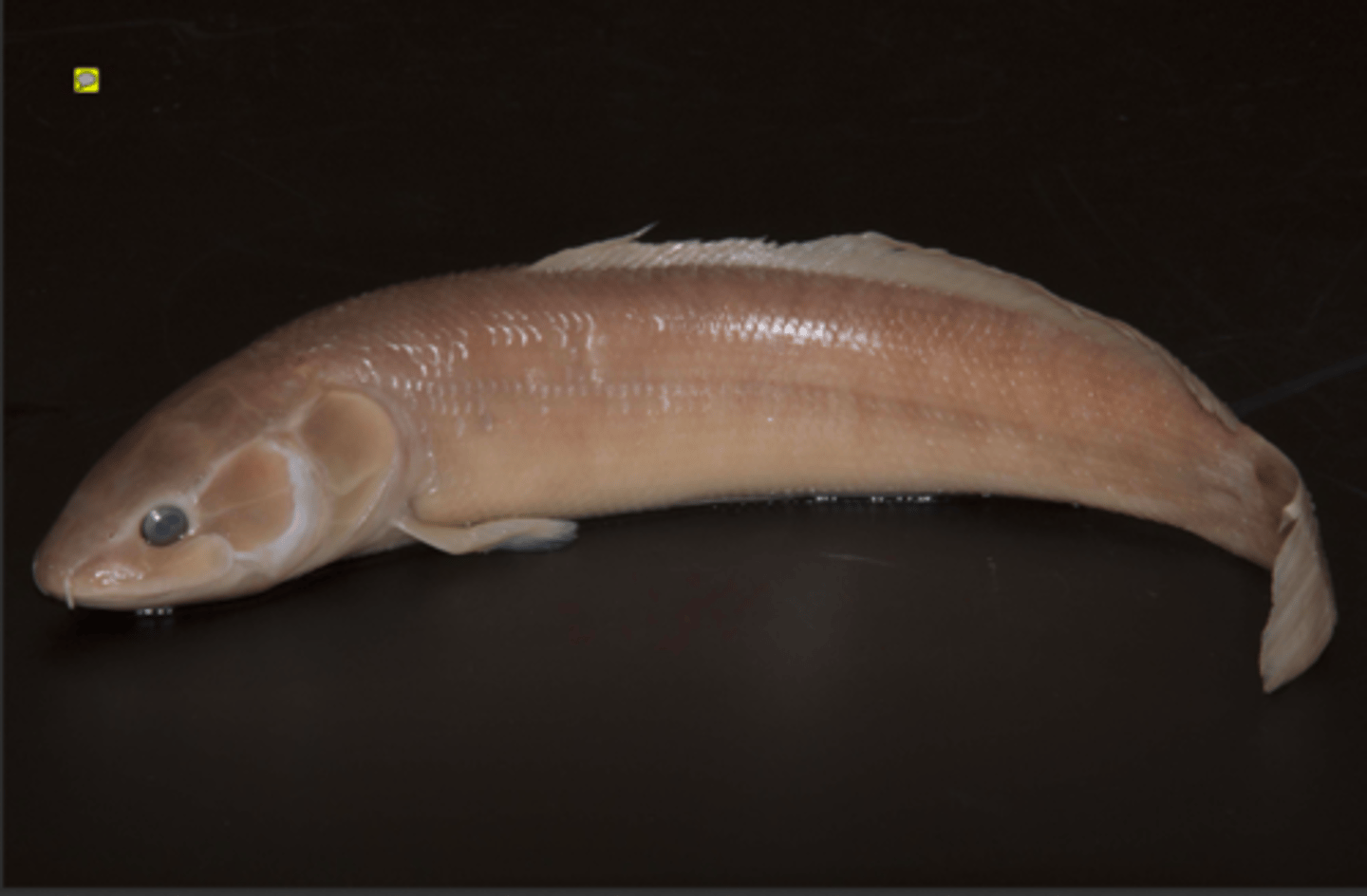
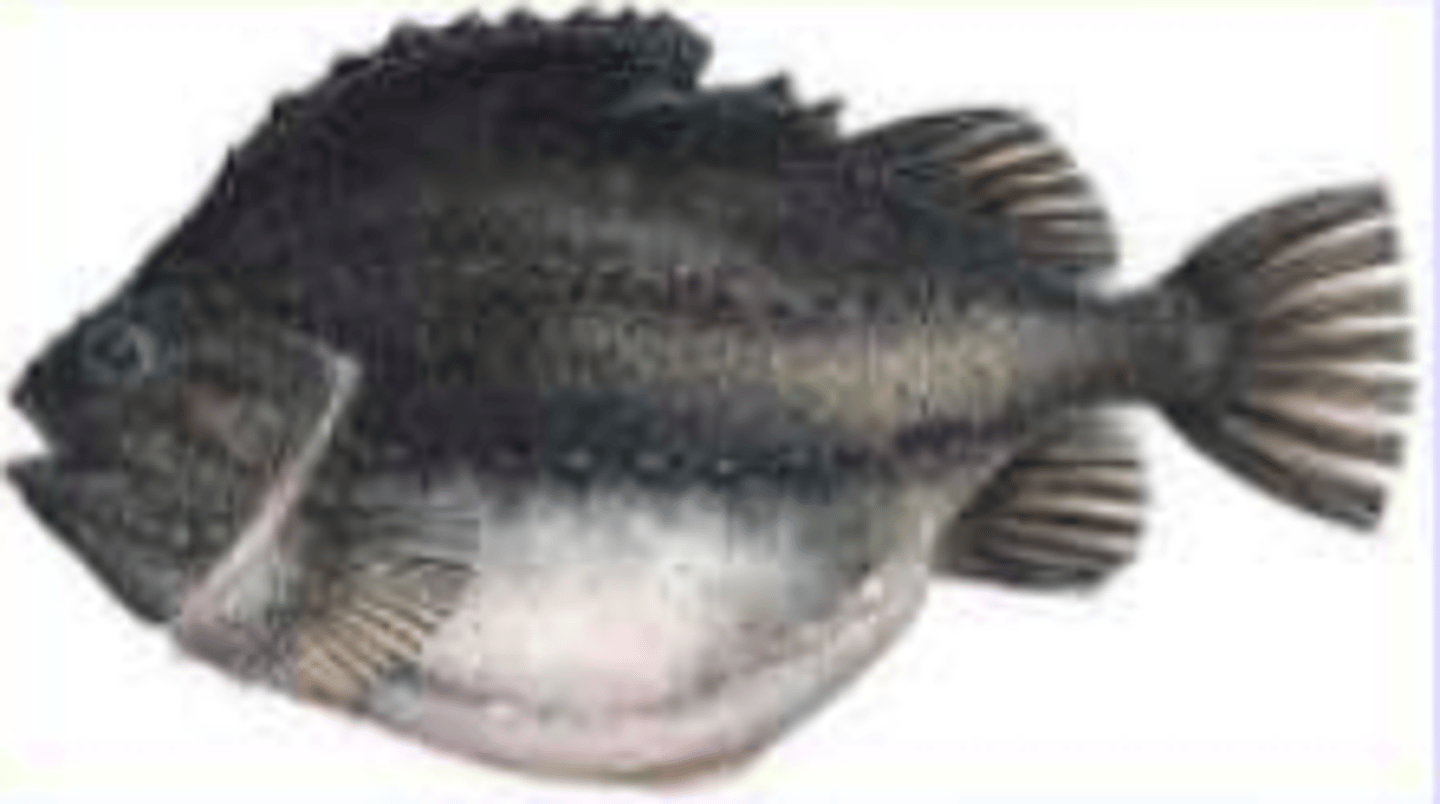
Globular Body
resembles a globe/is round
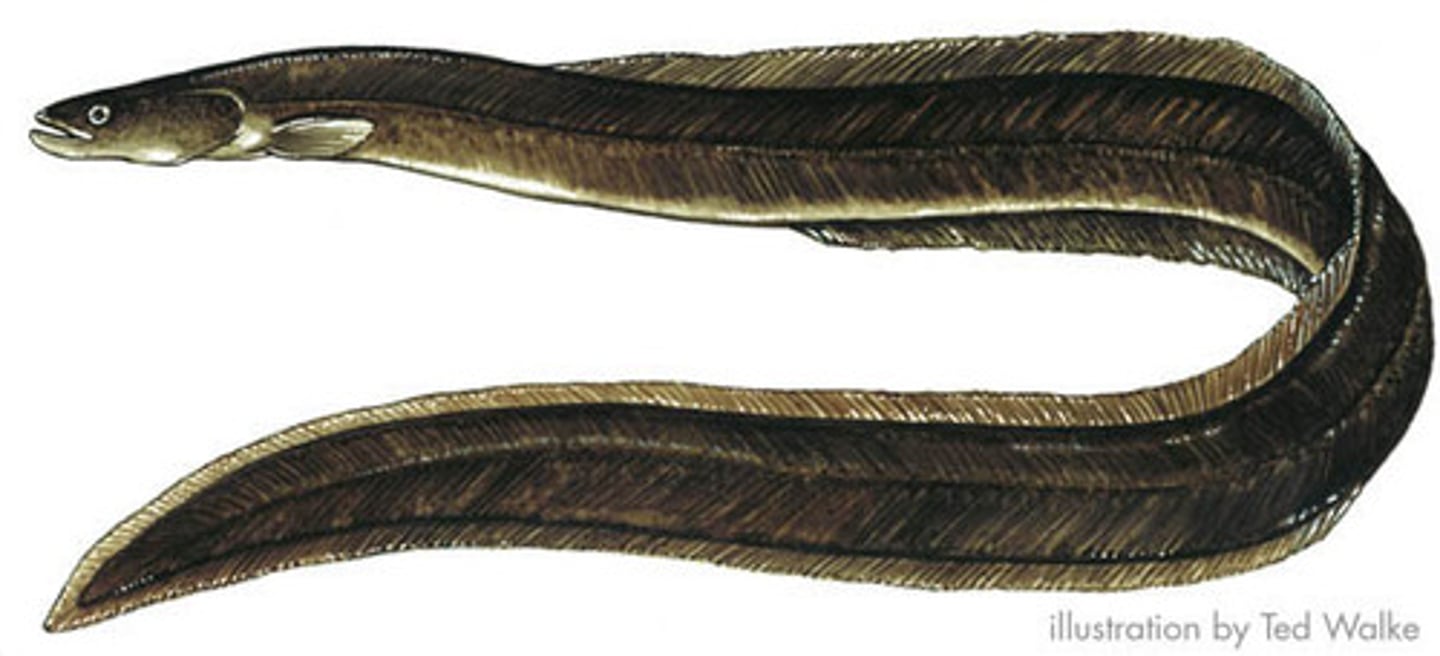
Aguilliform Body
elongated and slender; slither like snakes; allows them to maneuver into narrow openings and resist the force of current
Fusiform Body fish
tapers both anteriorly and posteriorly from a middle maximum; streamlined with pointed ends; helps to lower frictional resistance and allows them to move through the water extremely fast
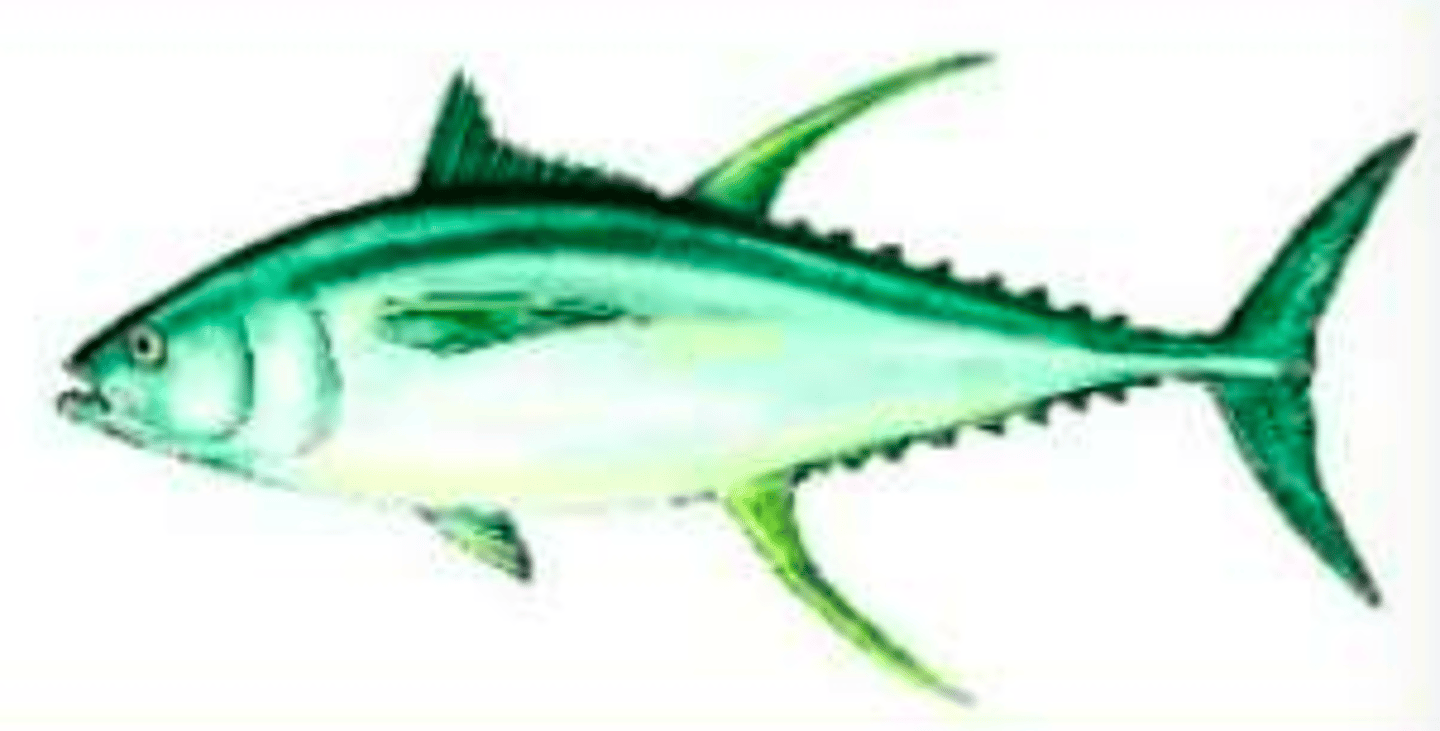
Terminal Mouth
opens anteriorly
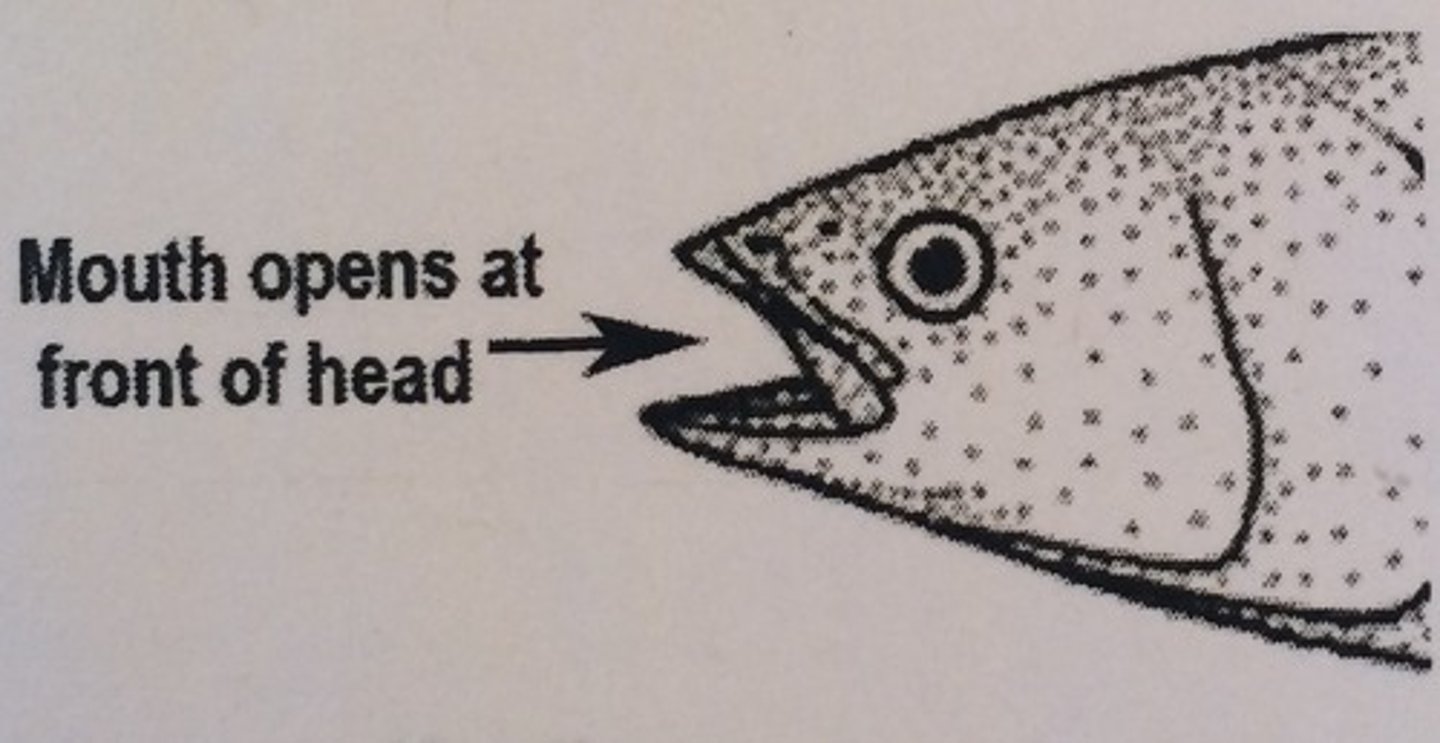
Subterminal Mouth
opens just a little below terminal
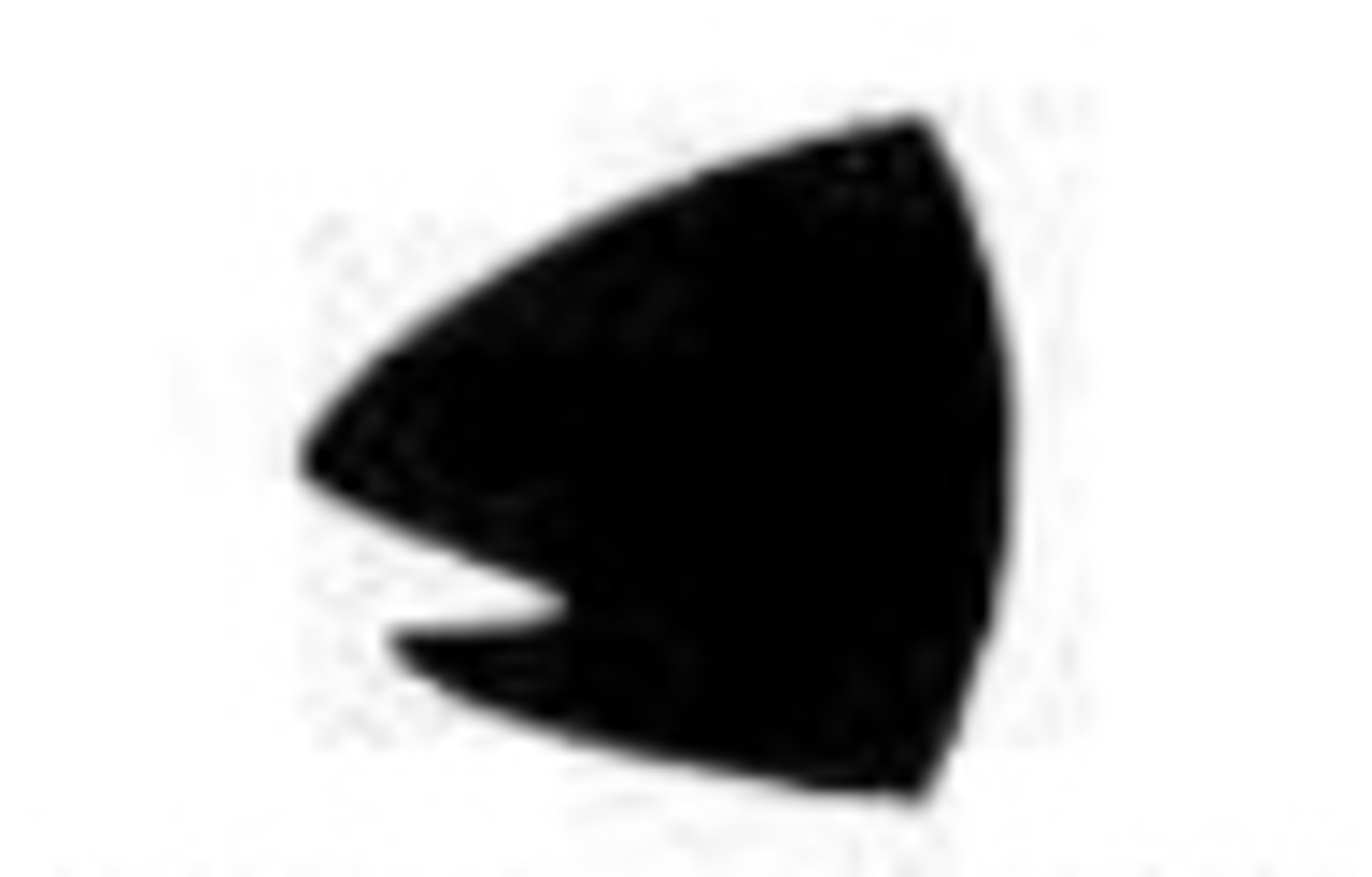
Inferior Mouth
opens ventrally and well back of the snout

Superior Mouth Fish
opens dorsally
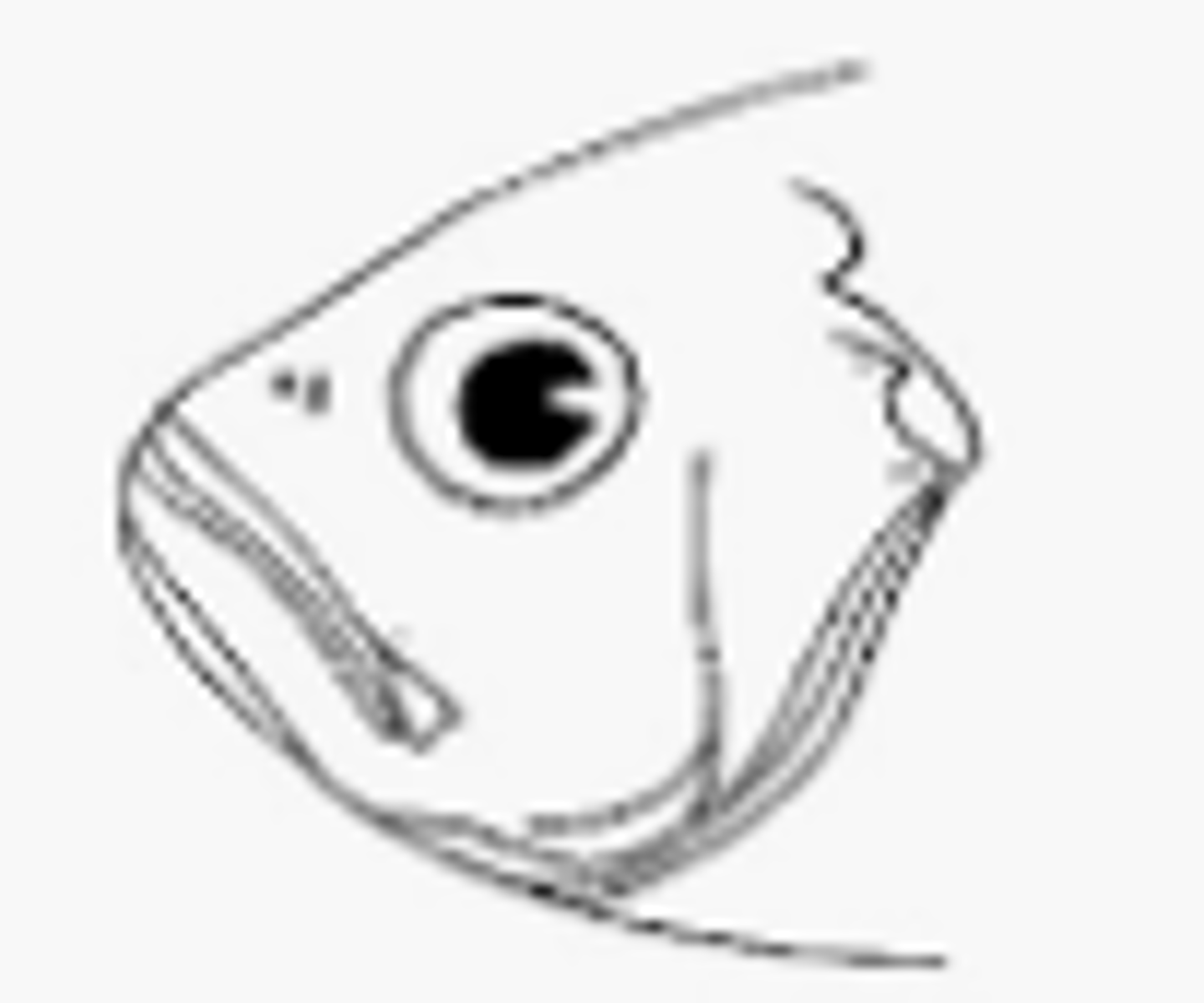
Fins attach in three main places
abdominal pelvics, thoracic pelvics, jugular pelvics
Abdominal pelvics
most ancestral state; attach ventral to abdomen anywhere from anterior to anus, posterior to pectoral fins. Pelvic girdle NOT attached

Thoracic Pelvics
more derived state; attach ventral to the pectoral fin, with the basipterygium attached to pectoral girdle
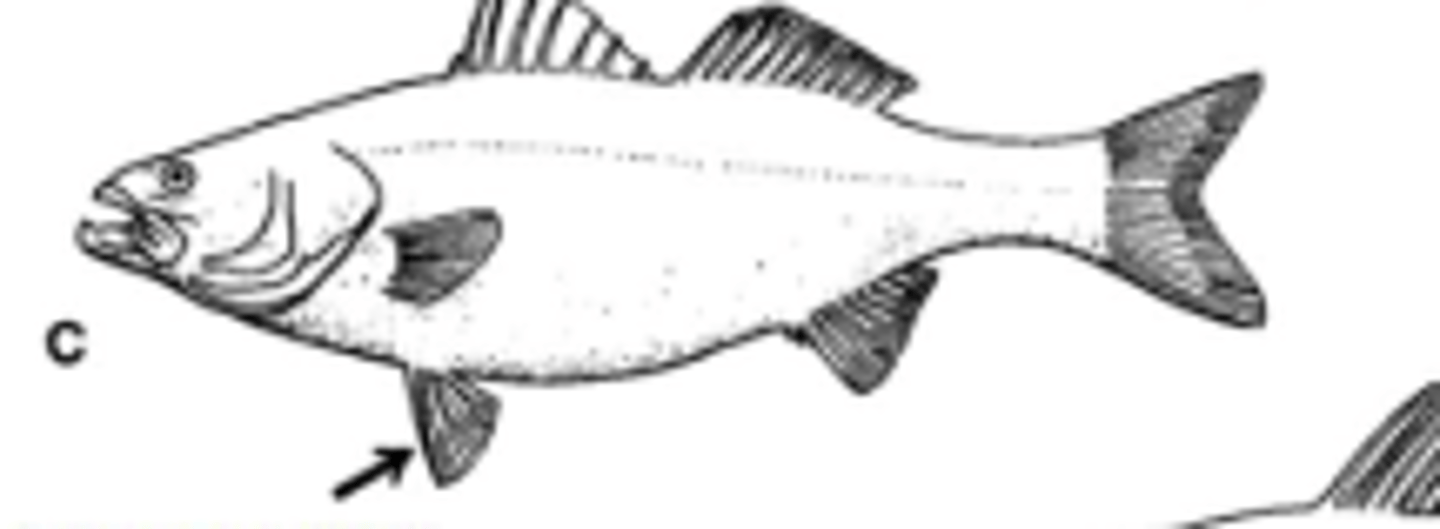
Jugular Pelvics
most derived found in few teleosts; attach ventral to the operculum
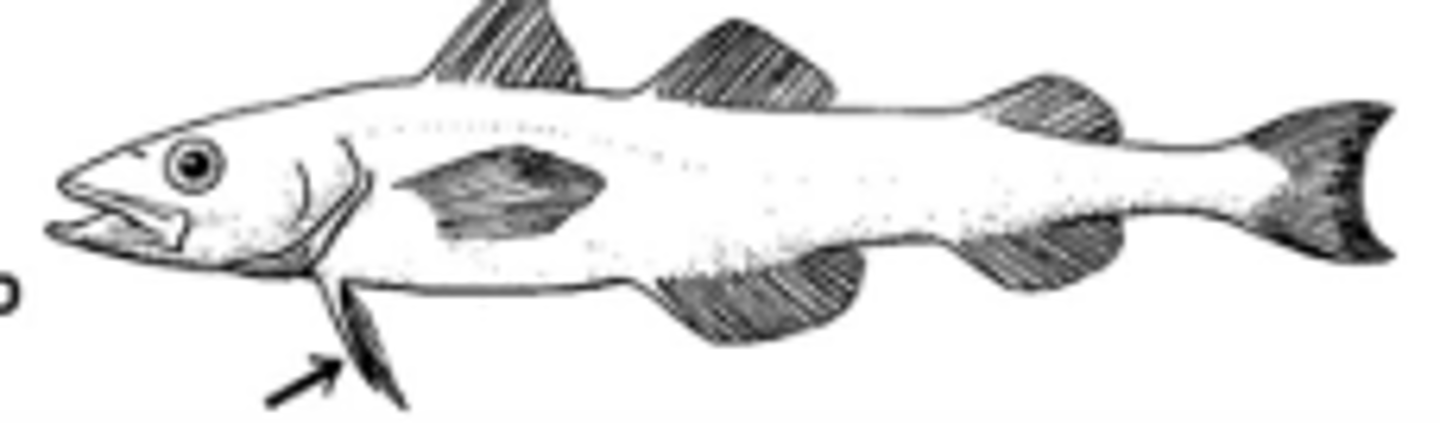
Pectoral Fins
attach in two places; control direction of movement during locomotion
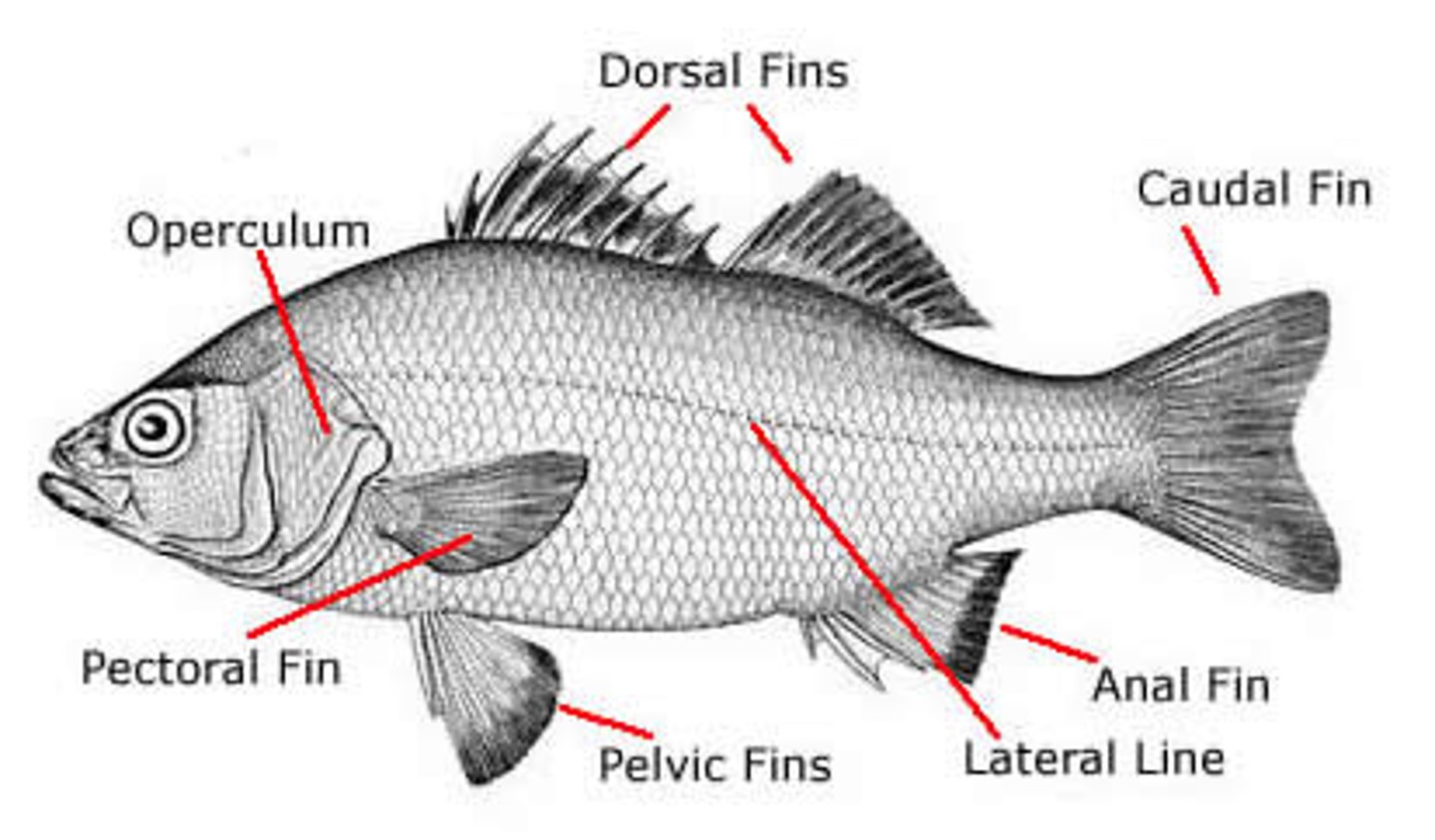
Ventral Pectorals
ancestral state; attach low on the side of body just posterior to gills; only occur w/abdominal pelvics
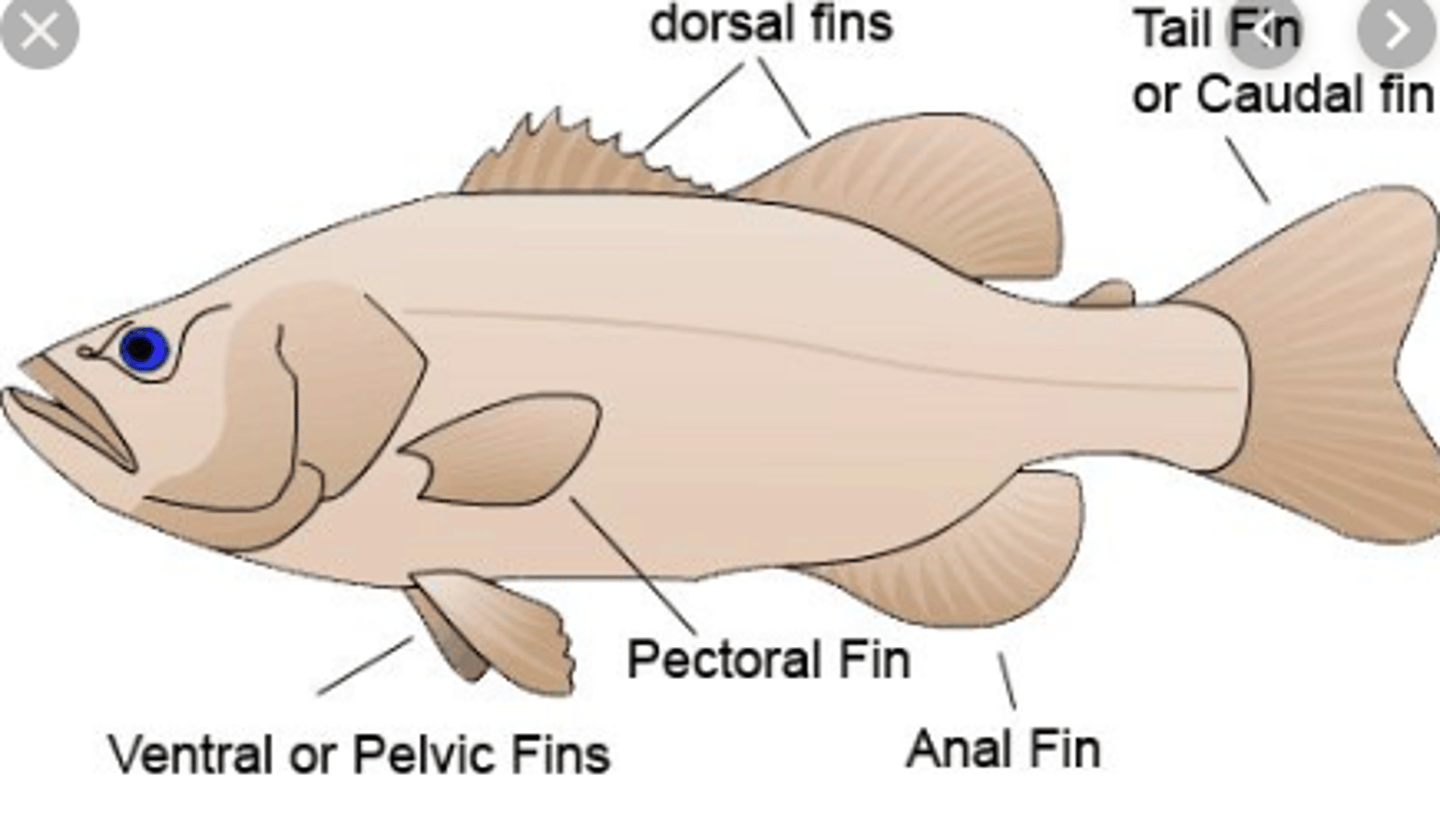
Lateral Pectorals
attach high on the side of the body just posterior to the gills; usually w/vertical orientation, occur w/all positions of pelvics
Osteichthyans (bony fish) Fin Ray Types
Soft, spinous, spiny
Soft Ray
branched at the tip w/cross segmentation and always bilaterally paired and flexible; consist entirely of lepidotrichia
Spinous Ray
forms bilaterally paired, unbranched hard "spine" w/no cross segmentation; occurs only in catfish-minnow clade (Ostariophysi)
Spiny Ray
single, medium, hard, unsegmented ray; occurs in acanthopterygians (perch and drum)
Caudal Fin types
hypocercal, heterocercal, homocercal, diphycercal
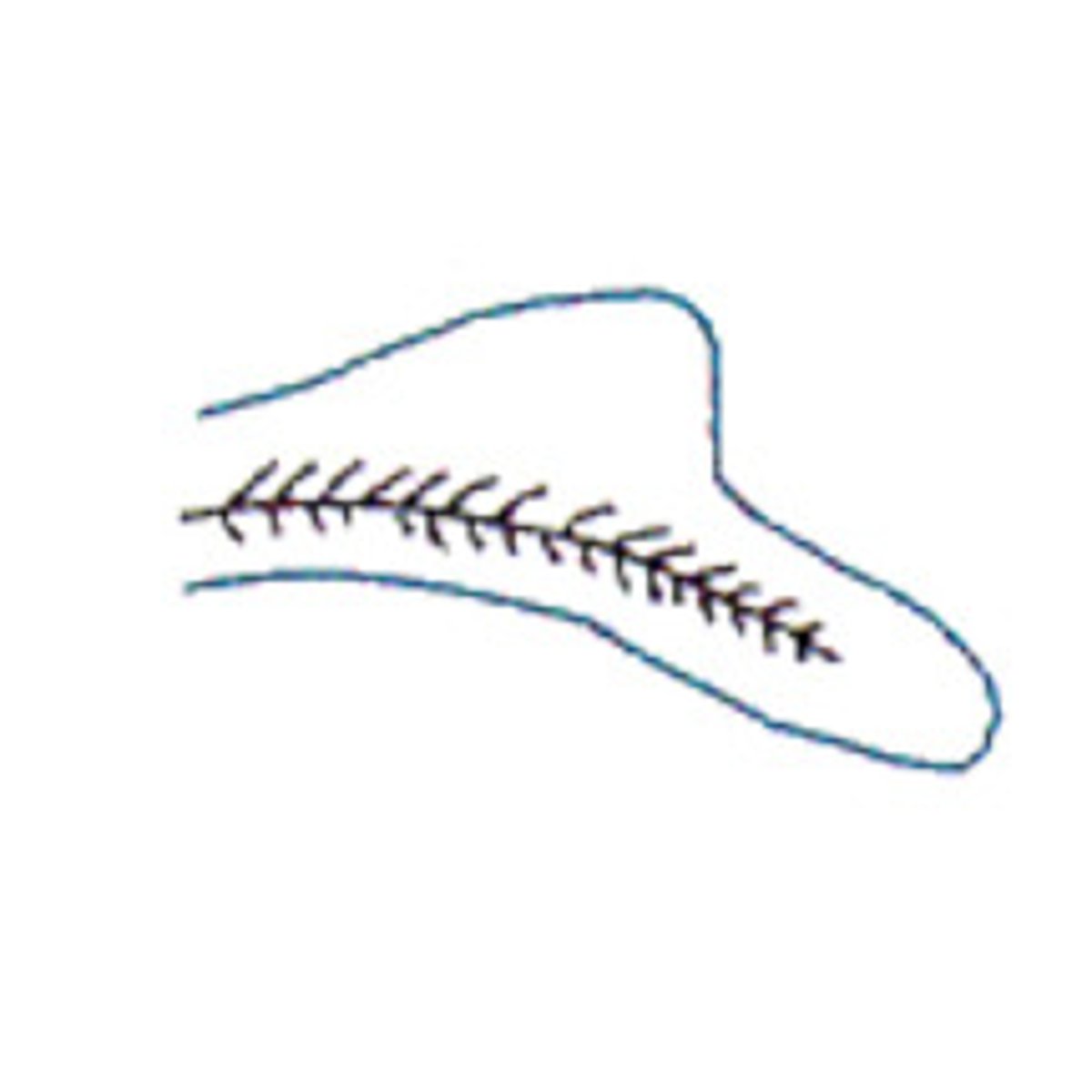
Hypocercal Fin
lower/ventral lobe longer than upper/dorsal; vertebral column extending into ventral lobe
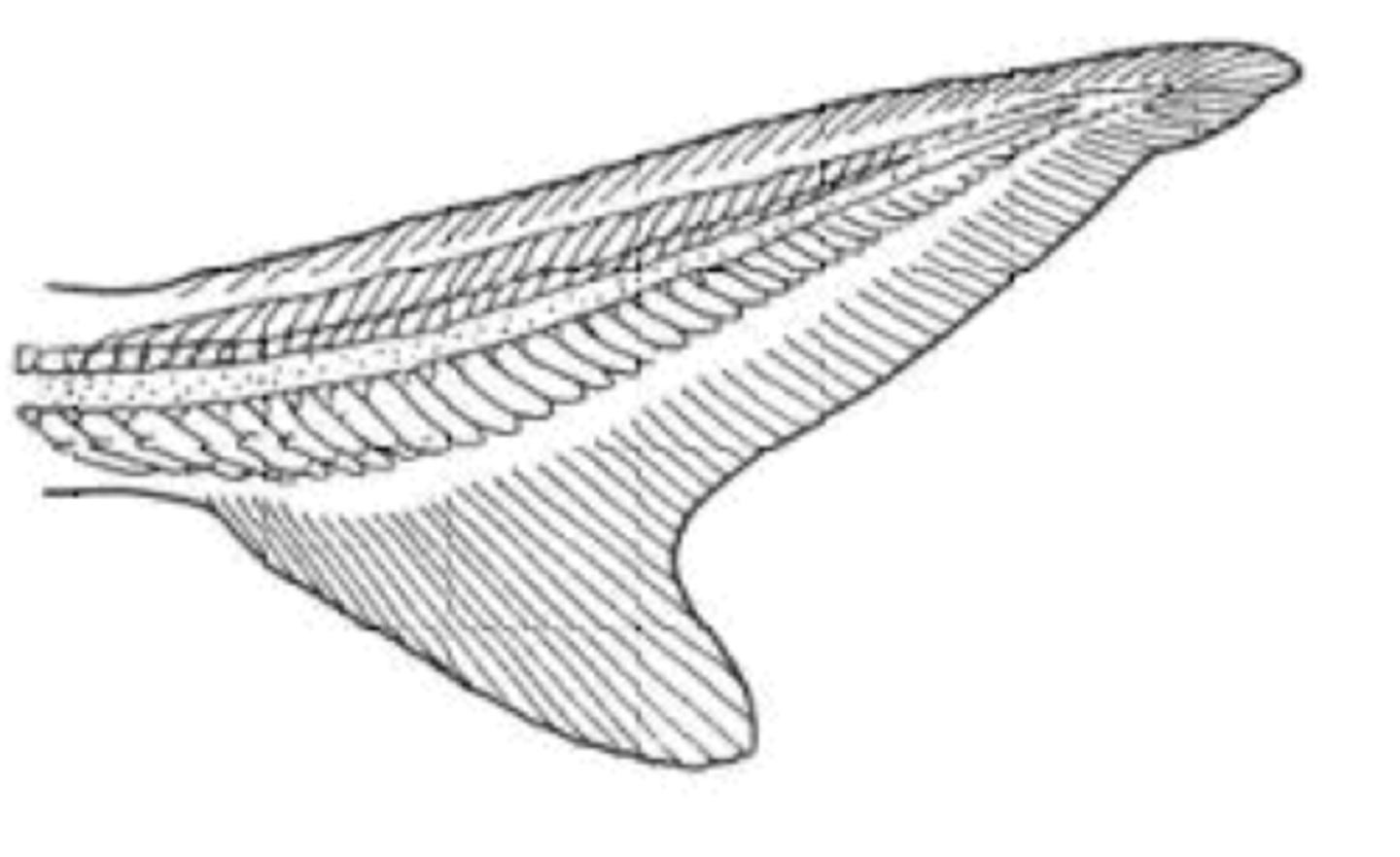
Heterocercal Fin
longer dorsal lobe, shorter ventral lobe; vertebral column usually extending well into dorsal lobe
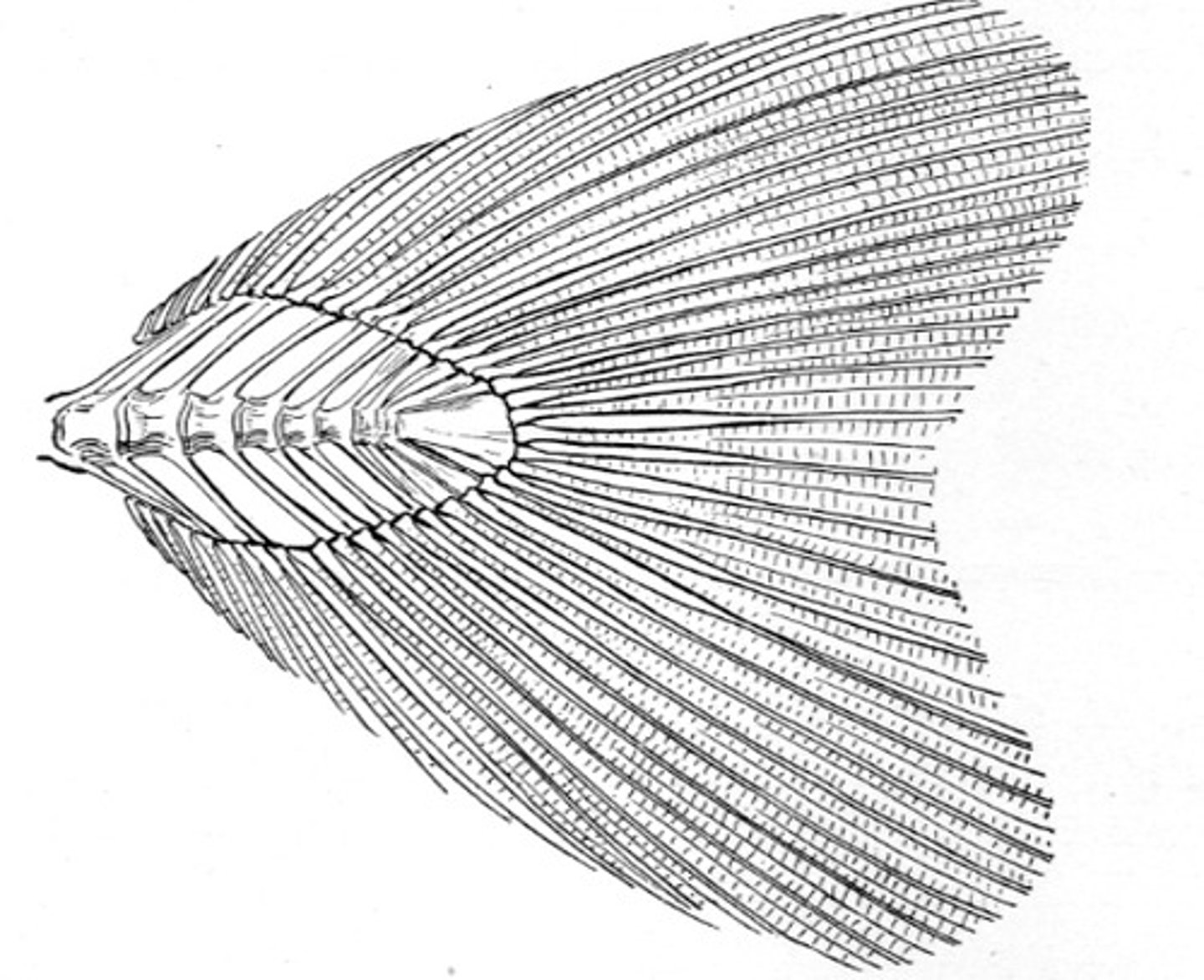
Homocercal Fin
tail fin symmetrical externally and some extension of vertebral column into dorsal part of the fin (teleosts)
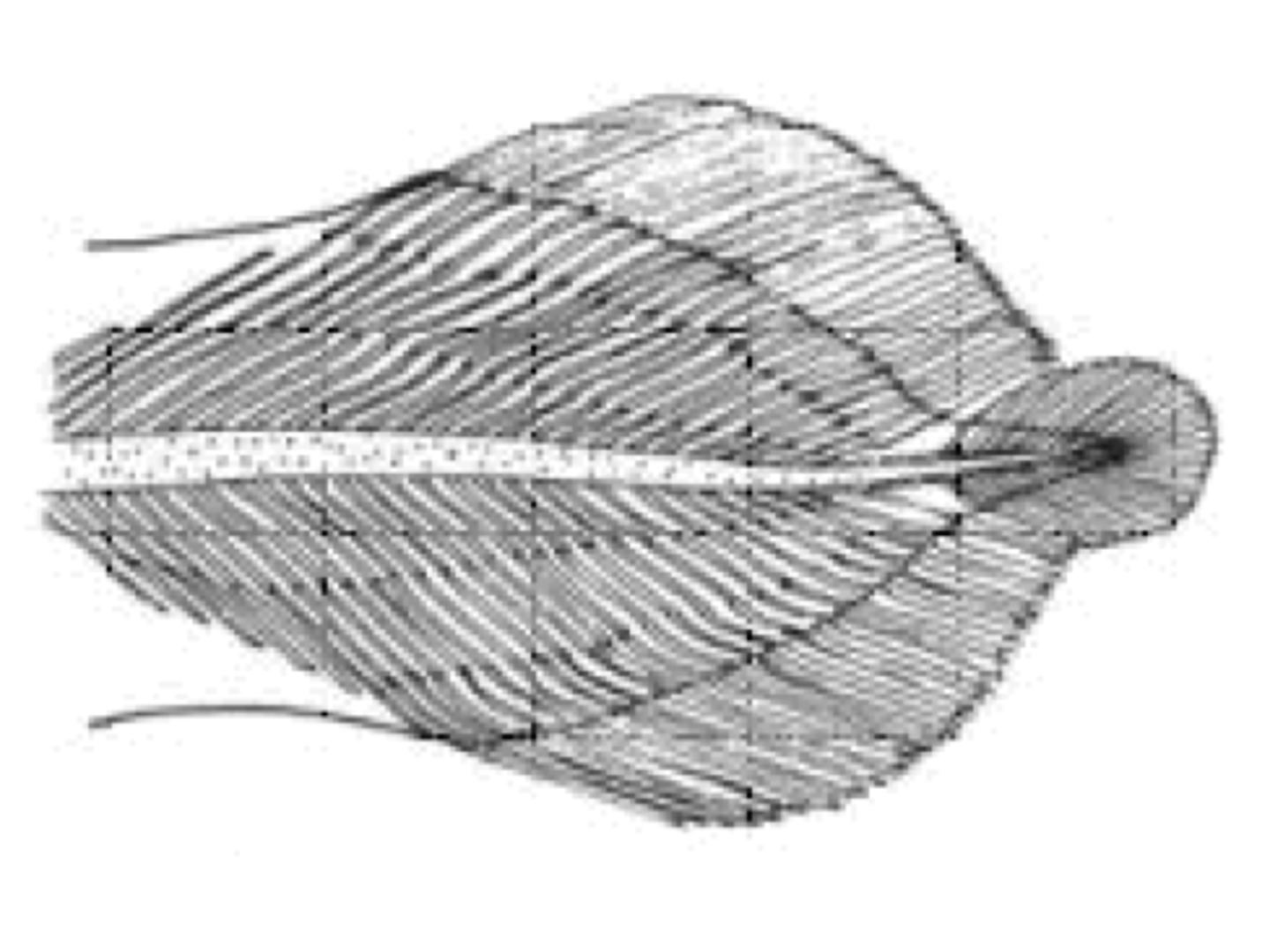
Diphycercal Fin
tail fin symmetrical and the vertebral column extending into tail separating it into equal hypaxial and epaxial lobes; ancestral
Class Cyclostomata
single nostril not divided into incurrent and excurrent openings; no jaws or paired fins, keratinized teeth and tongue
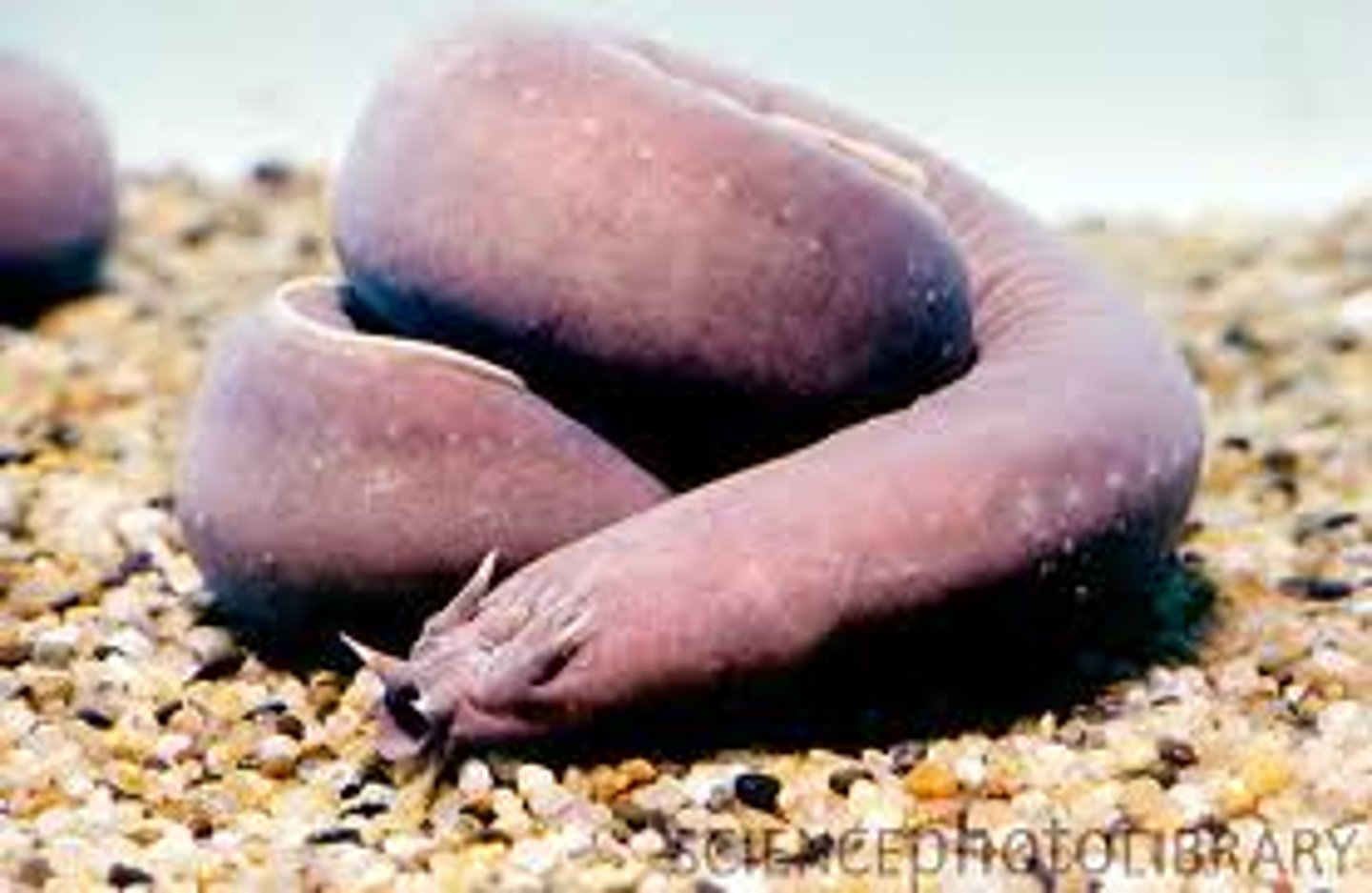
Order Myxiniformes (Class Cyclostomata)
hagfish, anguilliform w/subterminal mouth, no dorsal or paired fins, diphycercal caudal fin, warm marine water
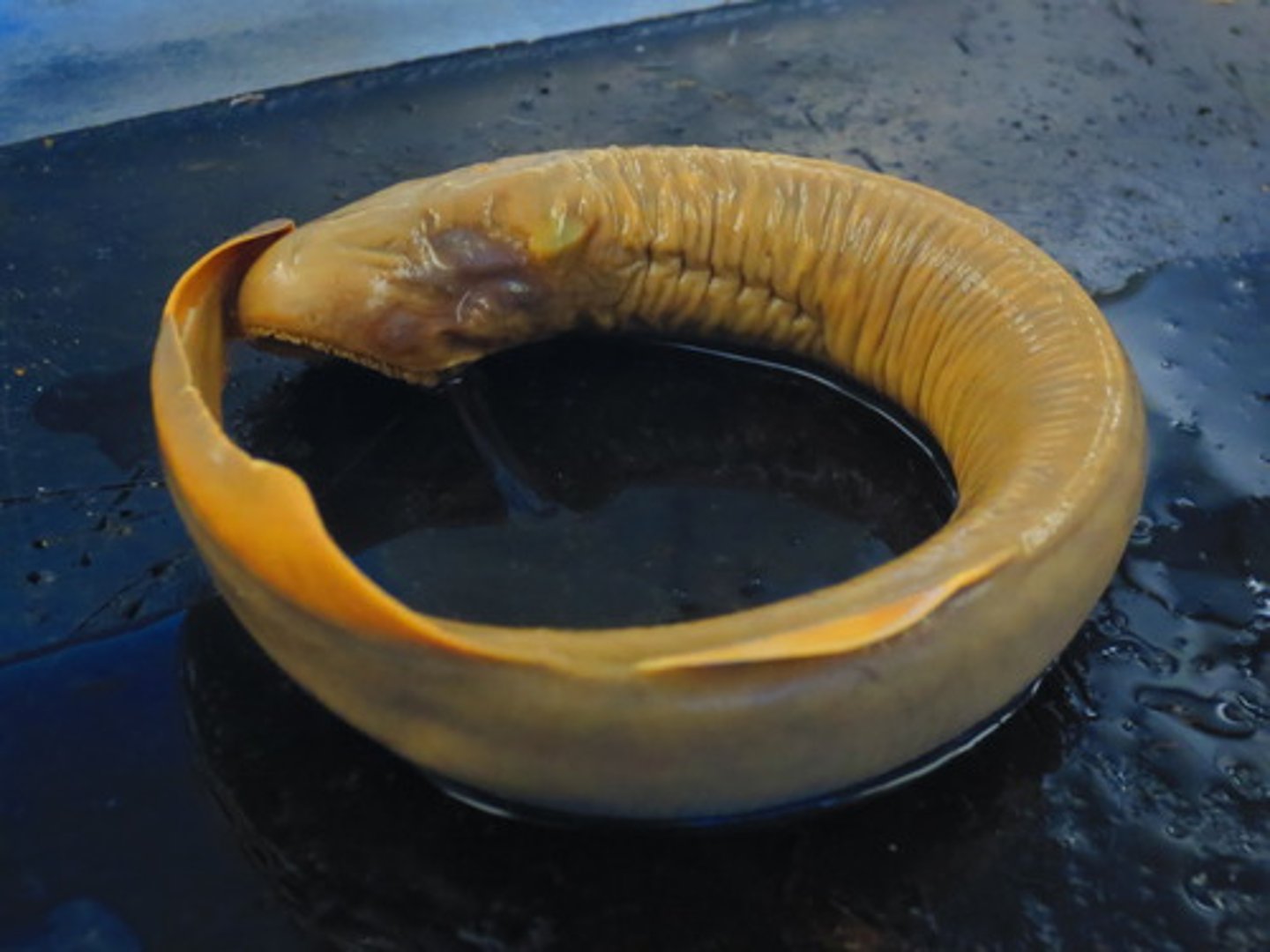
Order Petromyzontiformes
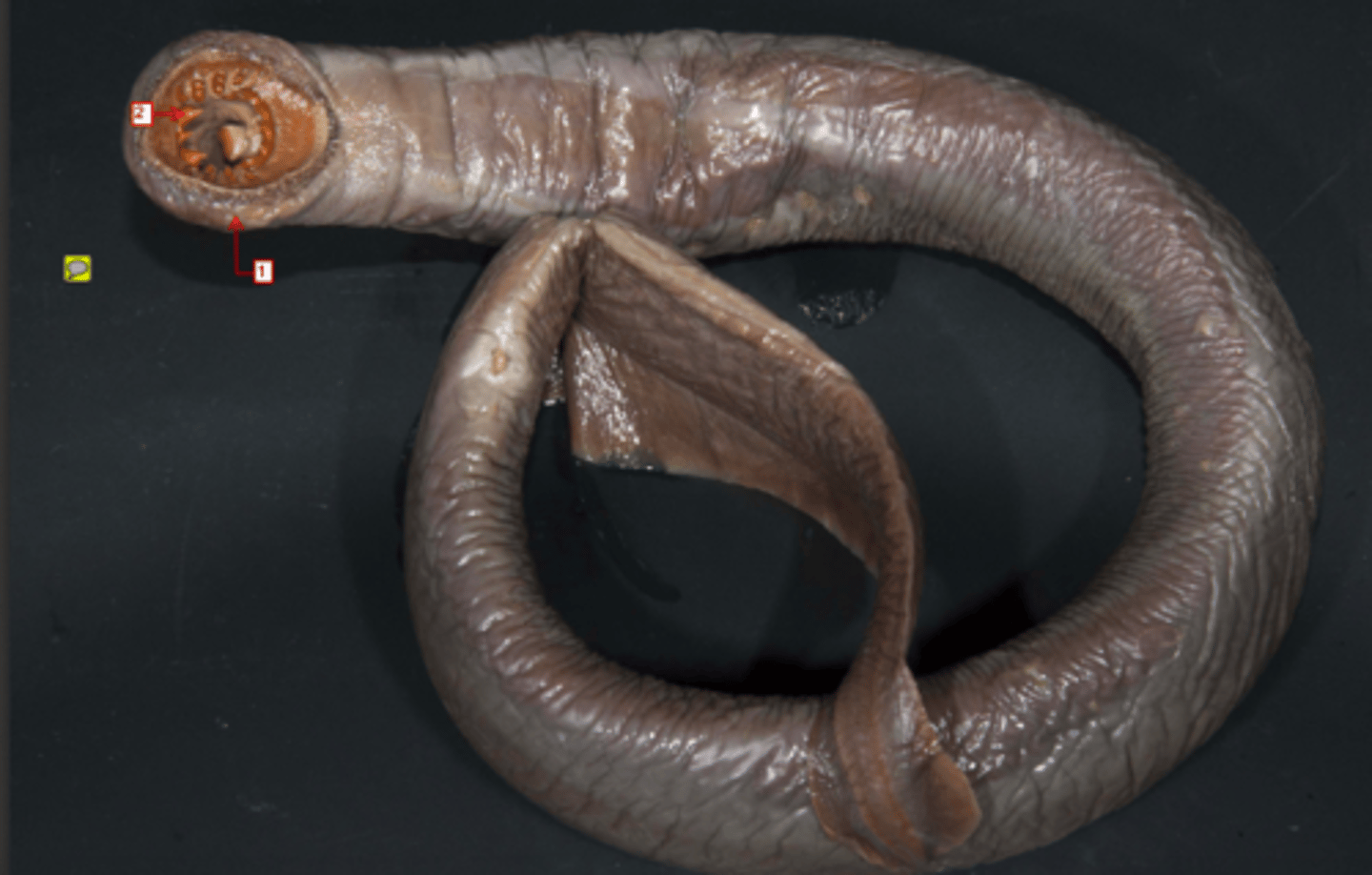
anguilliform w/interior mouth. oral hood, horny teeth
Class Placodermi
armored, jawed fishes.
Class Chondrichthyes
cartilaginous jawed fishes. placoid scales or scaleless.
Subclass Holocephali
chondrichthyans w/fleshy operculum covering gills
Subclass Elasmobranchii
chondrichthyans without an operculum
Subdivision Selachii
sharks
Subdivision Batoidei
head and body fused and depressed; pectoral fins enlarged and attached to side of head, mouth inferior
Class Osteichthyes
bony gnathostomes; operculum always present
Subclass Actinopterygii ***************
bony fishes with fins composed mostly or wholly of rays
Phylum: chordata, subphylum: vertebrata, order: petromyzontiformes. Anguilliform w/inferior mouth. Oral hood around mouth, one or two dorsal fins. Fresh-water and coastal marine, temperate zones
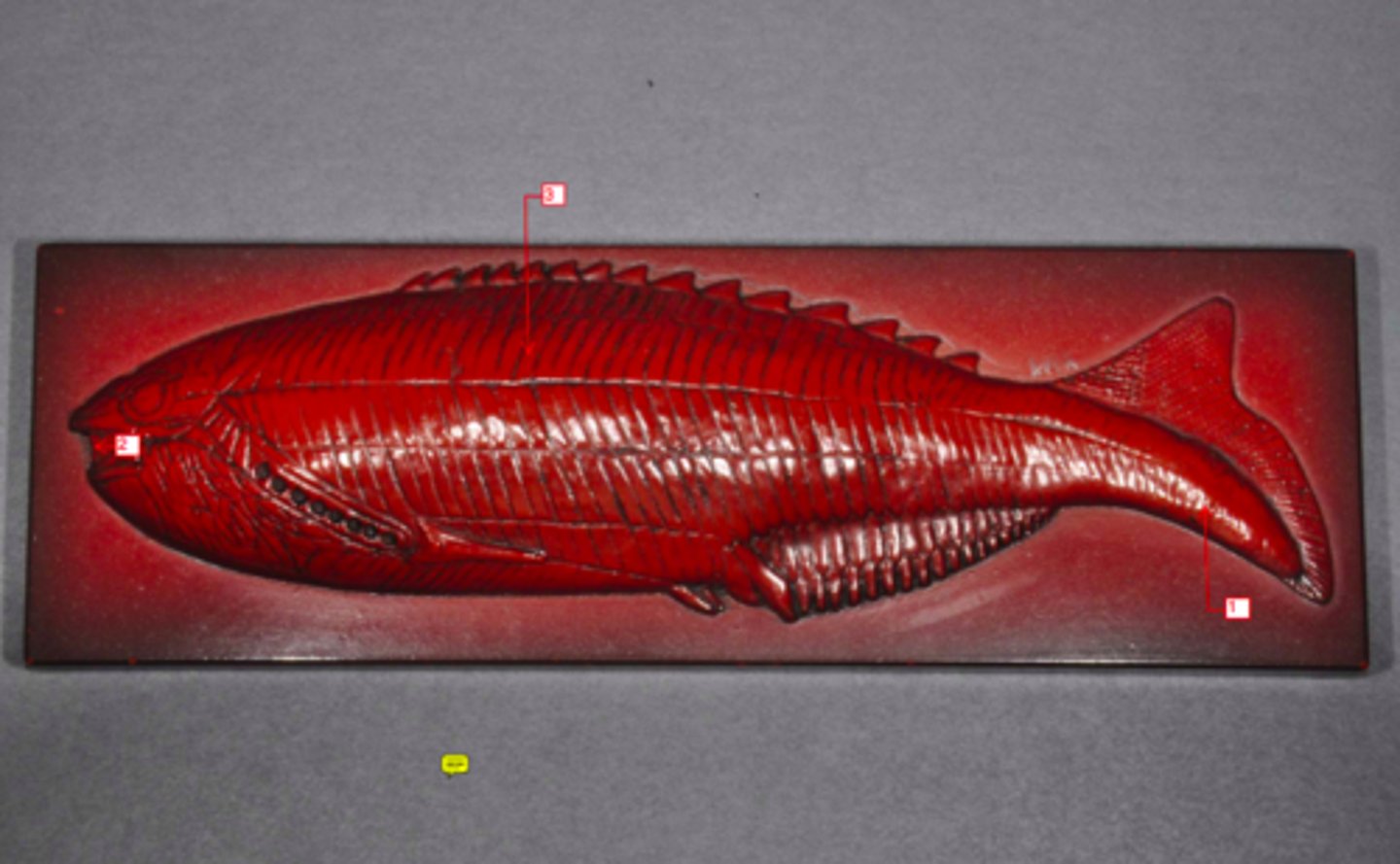
Class Anaspida. Compressed body, terminal mouth, hypocercal caudal tail
Class Heterostraci. Somewhat compressed body w/inferior mouth. Hypocercal tail
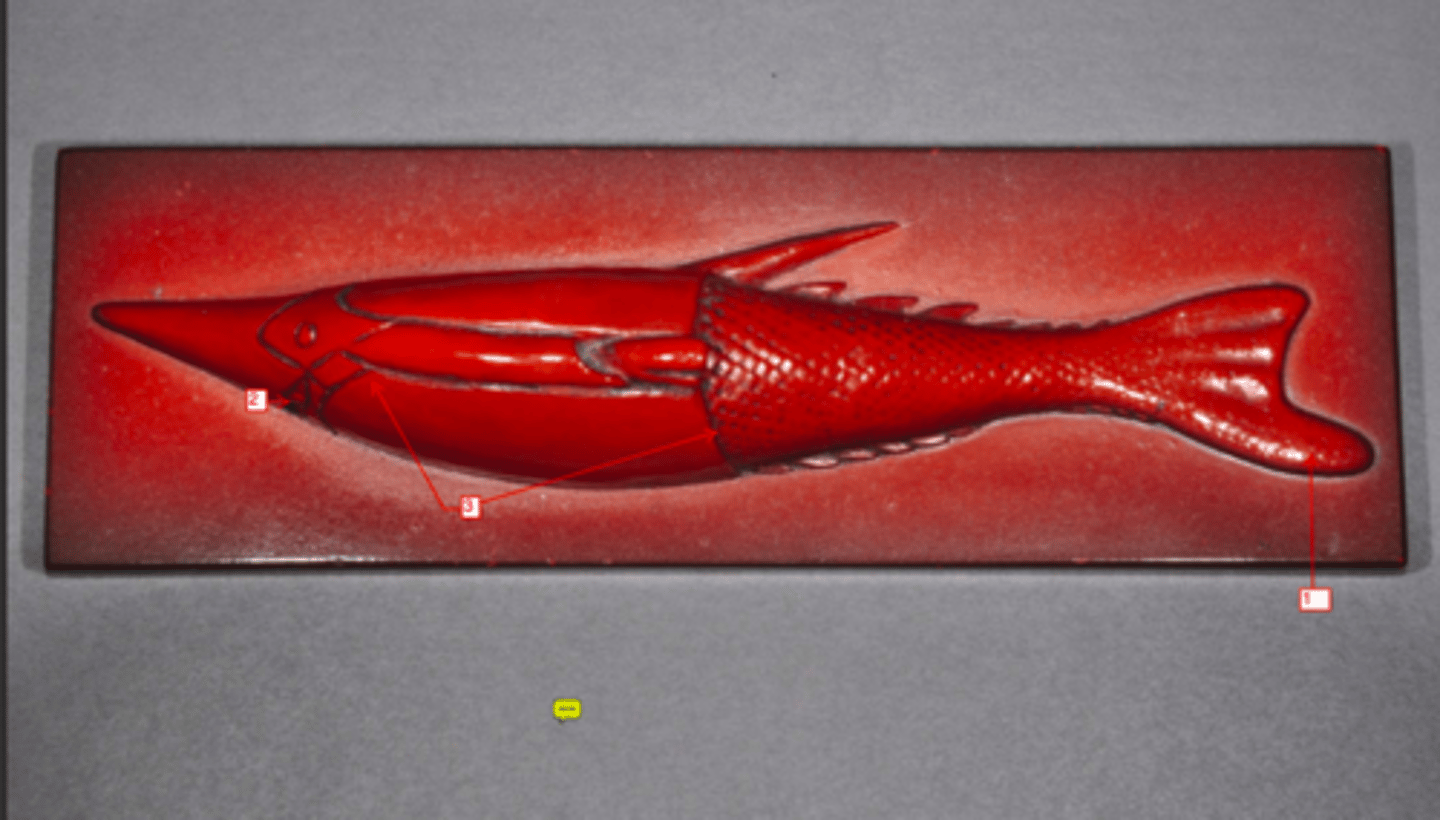
Class Osterostraci. Dorso-ventrally depressed head, inferior/subterminal mouth, pectoral fins, heterocercal tail
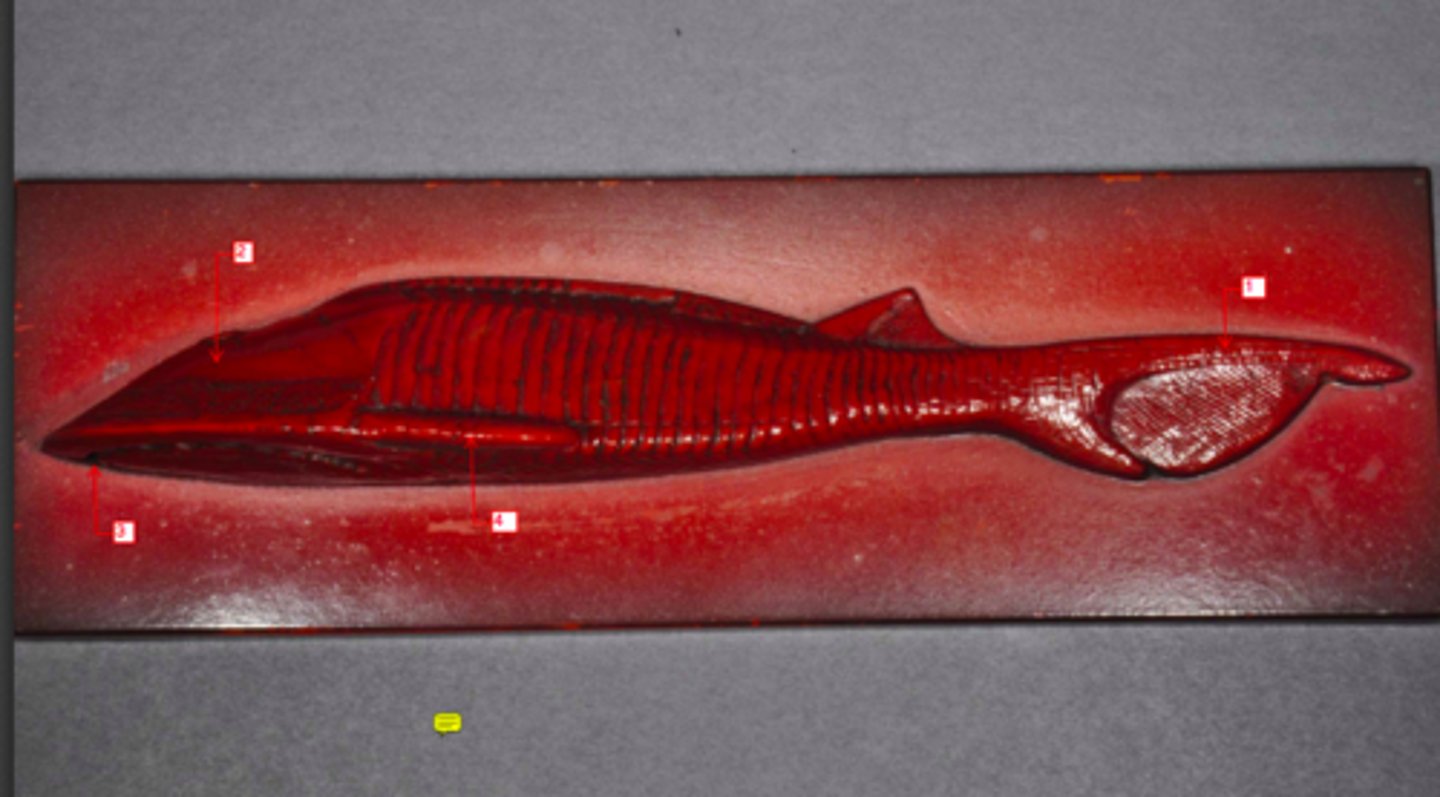
Class Placodermi, Order Antiarchi. Somewhat depressed, w/small inferior mouth. large pectoral fins, armored
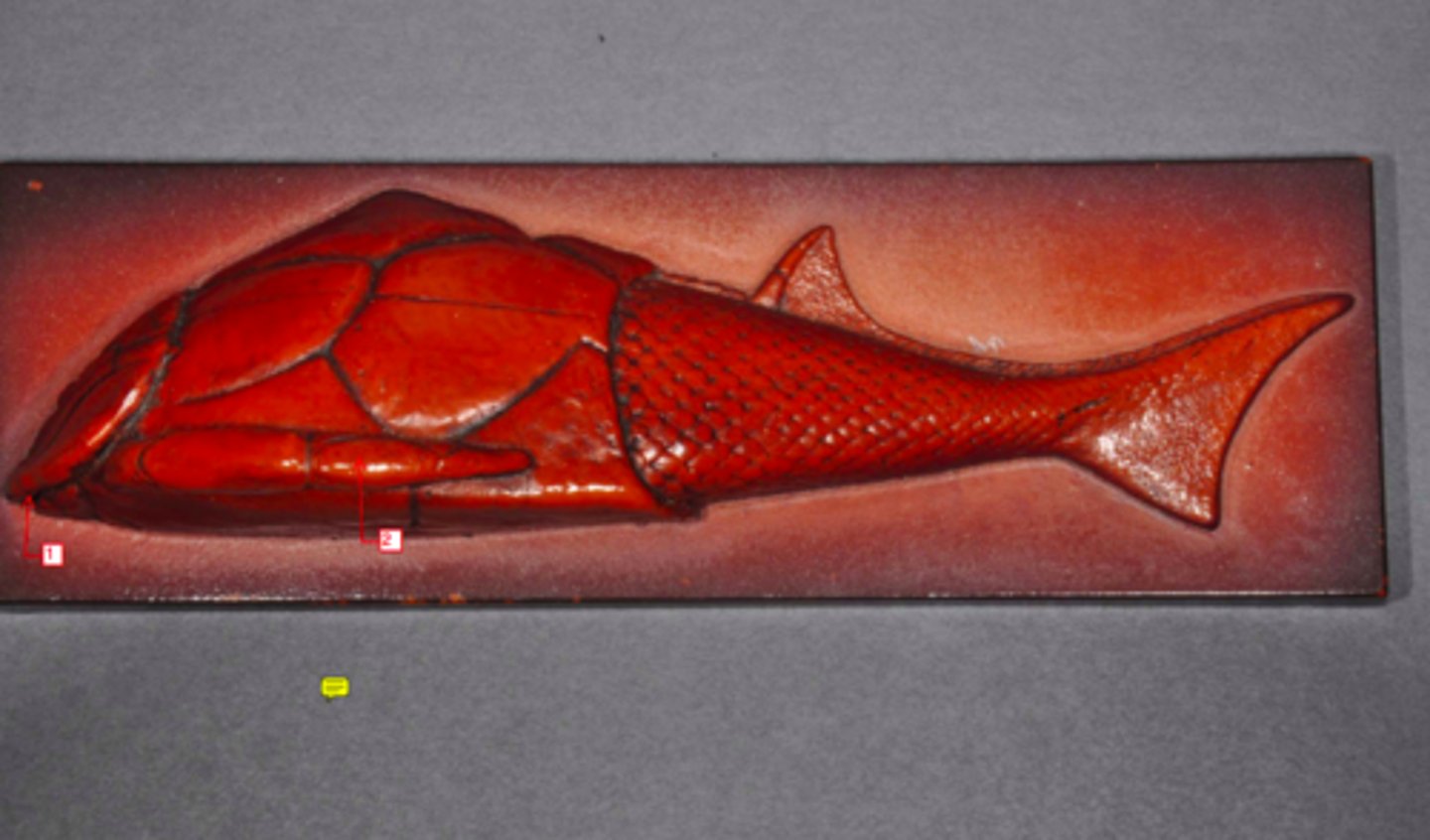
Superclass Gnathostomata, Class Placodermi, Order Arthrodira
large terminal mouth, small pectoral fins, heavily armored
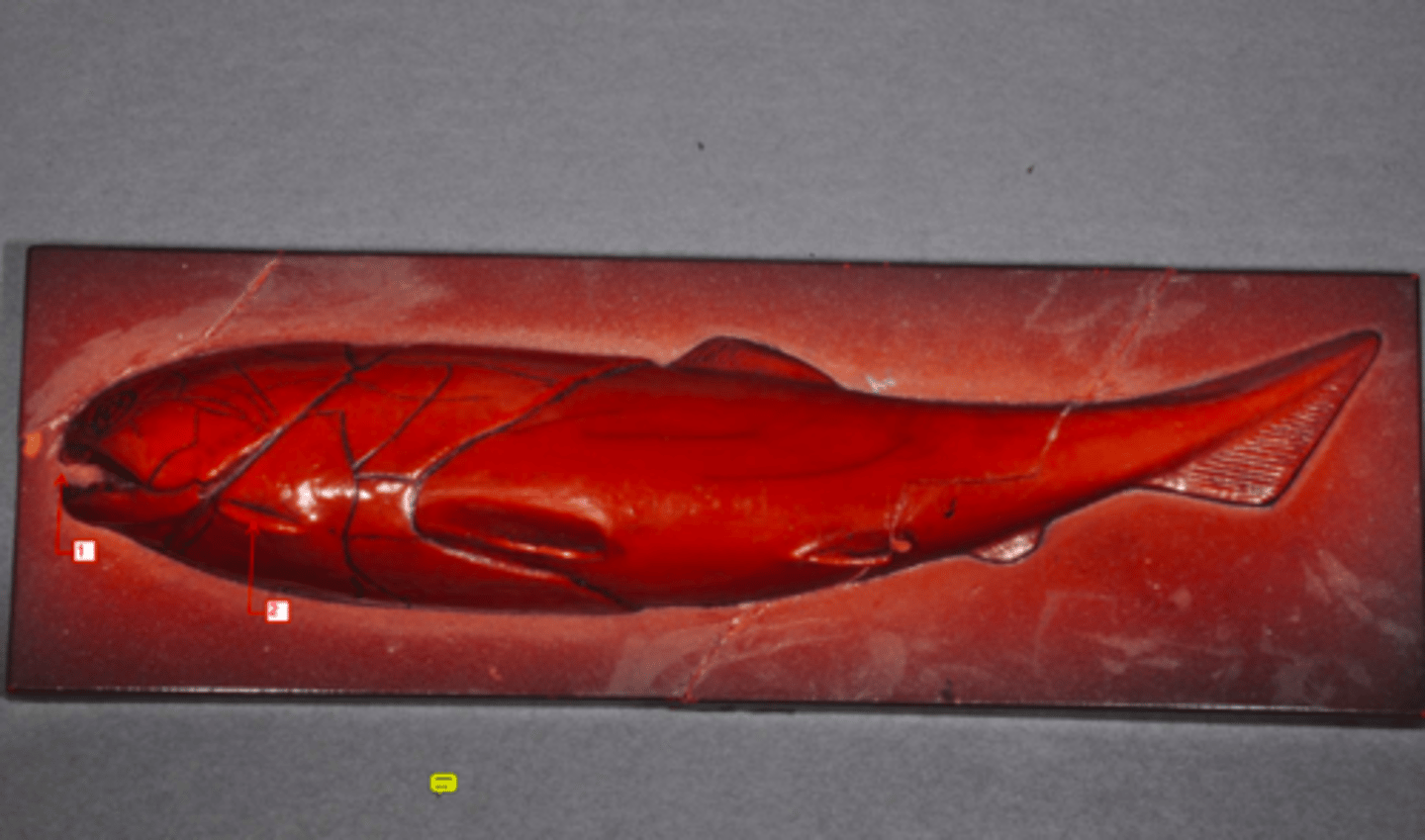
Class Chondrichthyes, Order Chimaeriformes. Cephalic Clasper
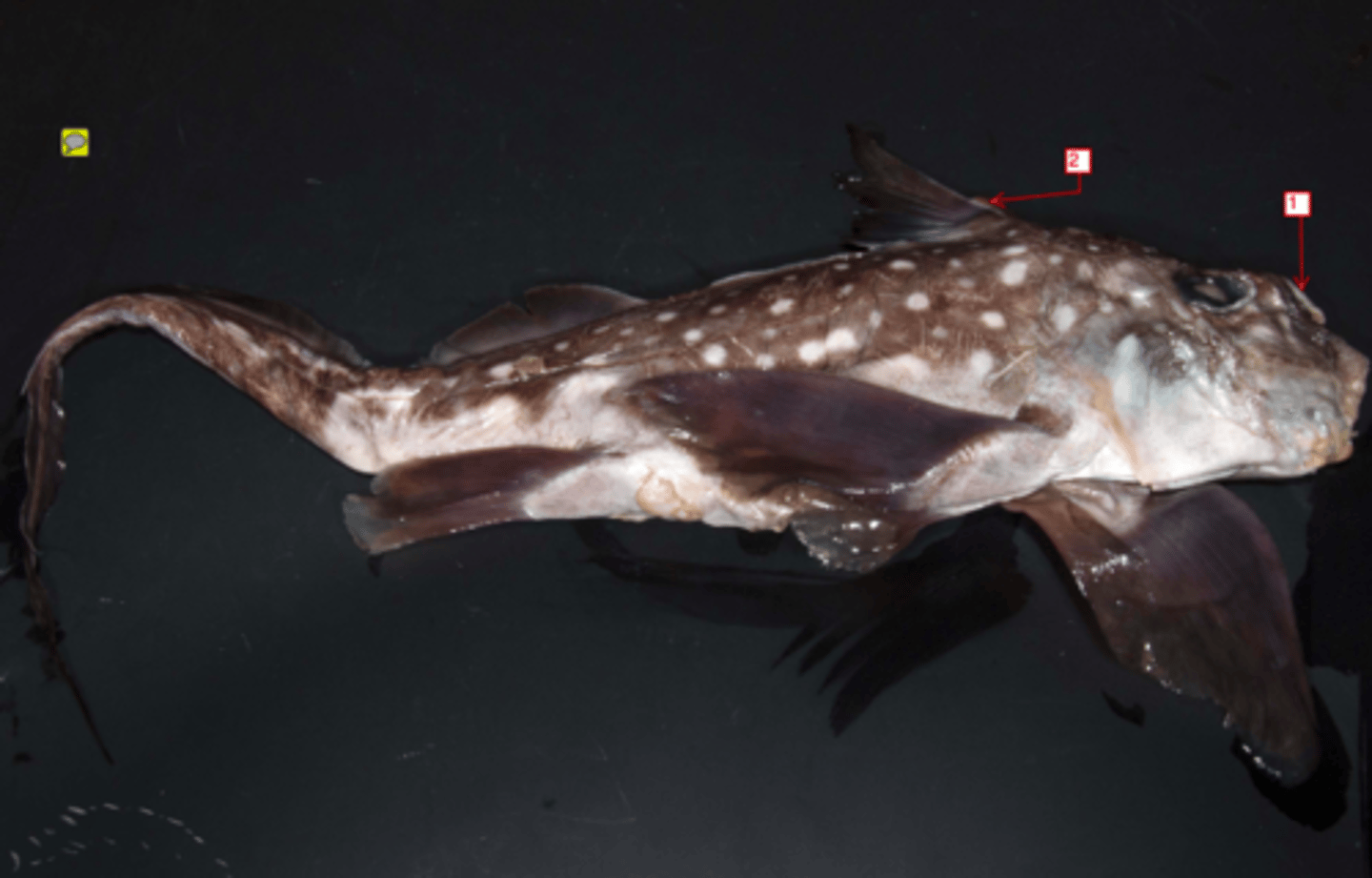
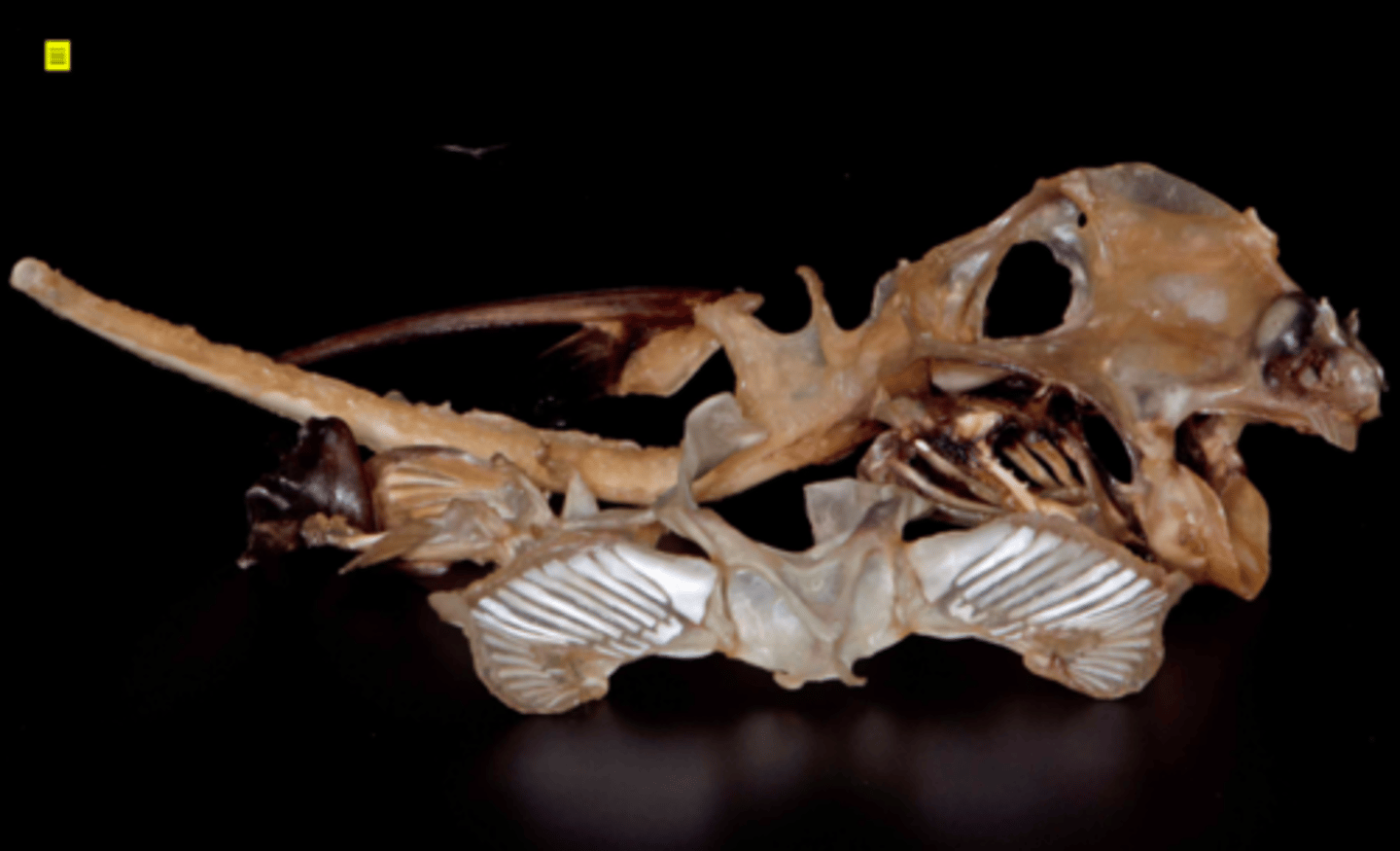
Chimaeriformes, infused w/parafin
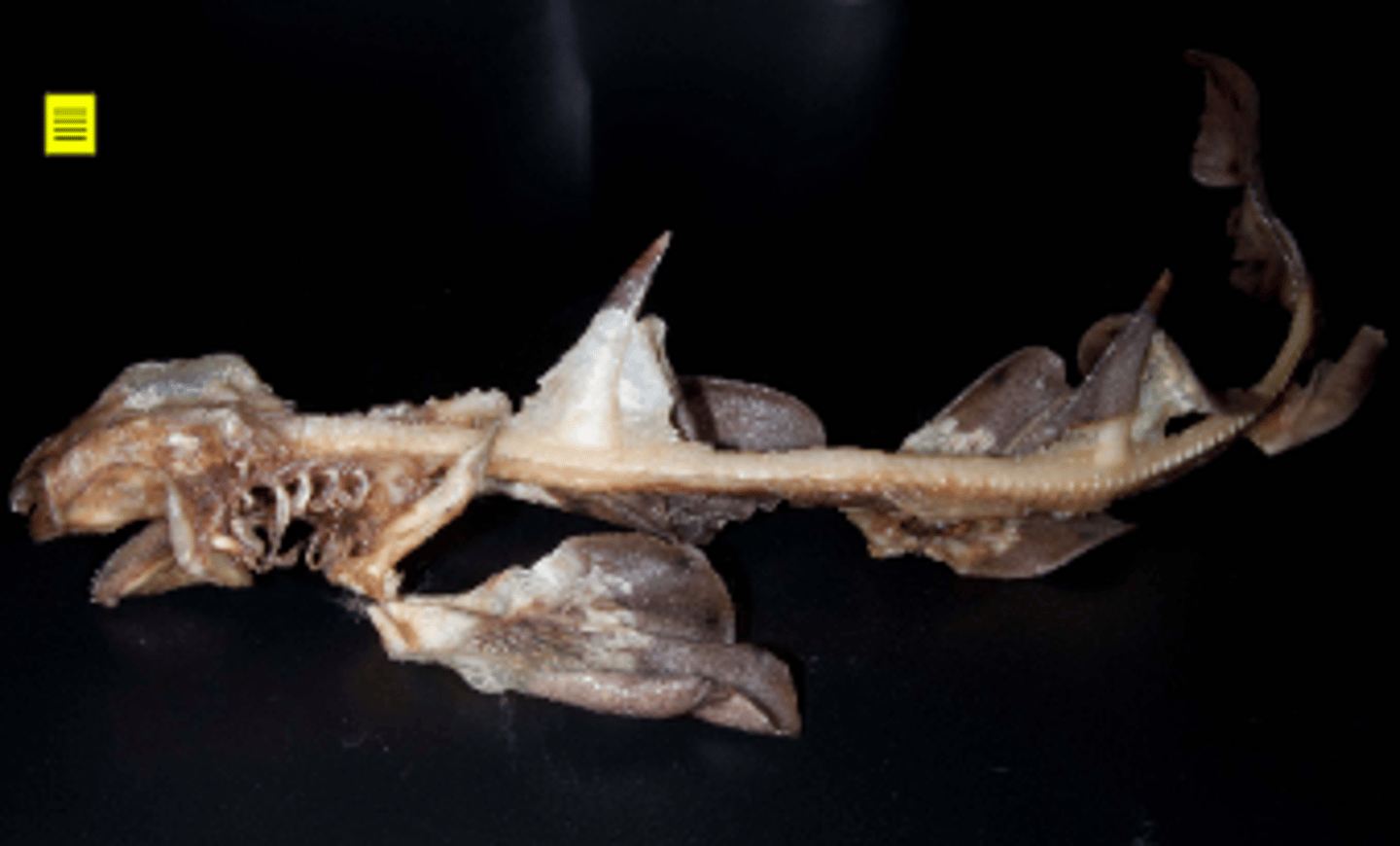
Class Chondrichthyes, Subclass Elasmobranchii, Order Heterodontiformes.
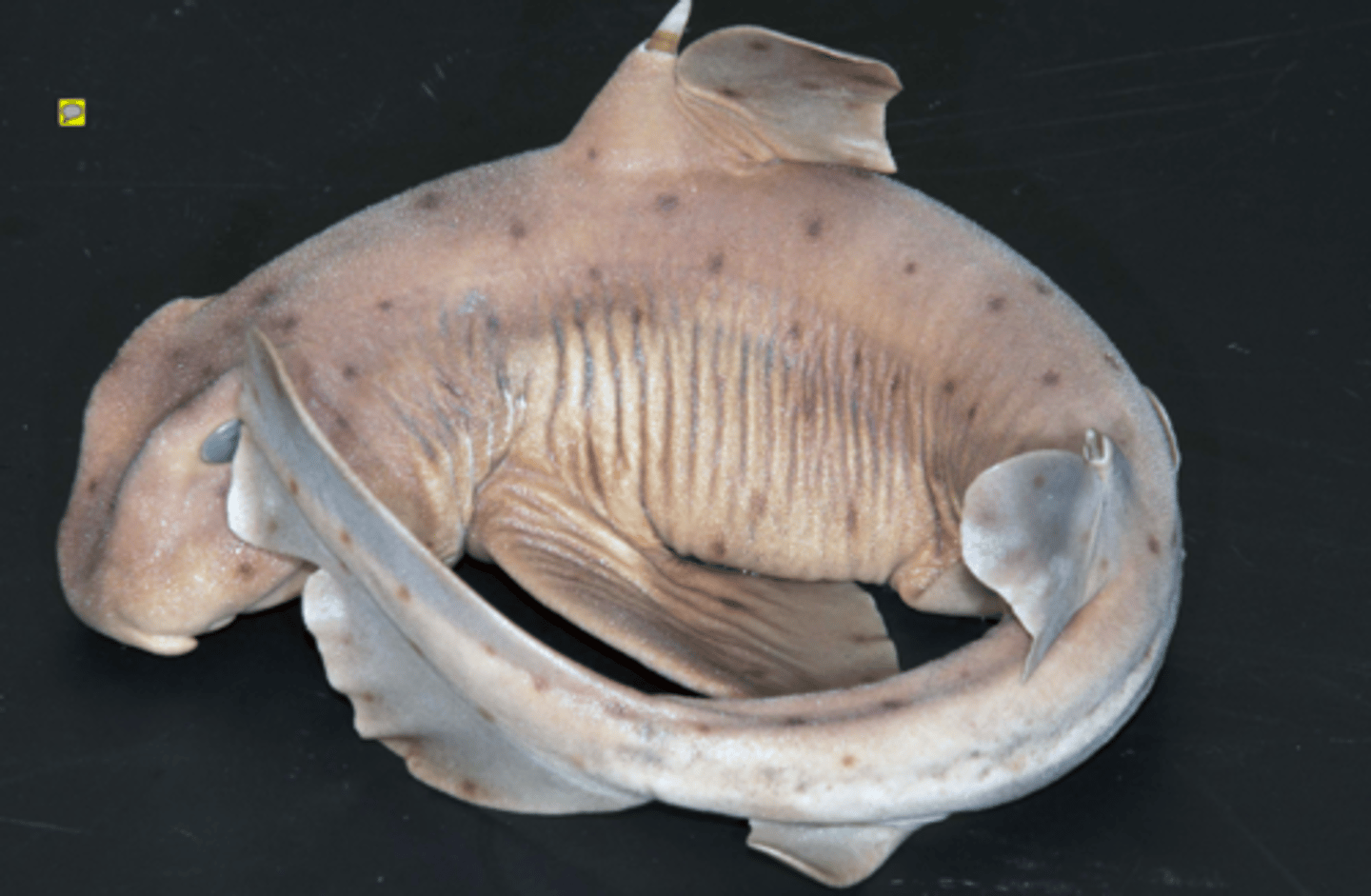
Order Heterodontiformes.
Order Carcharhiniformes
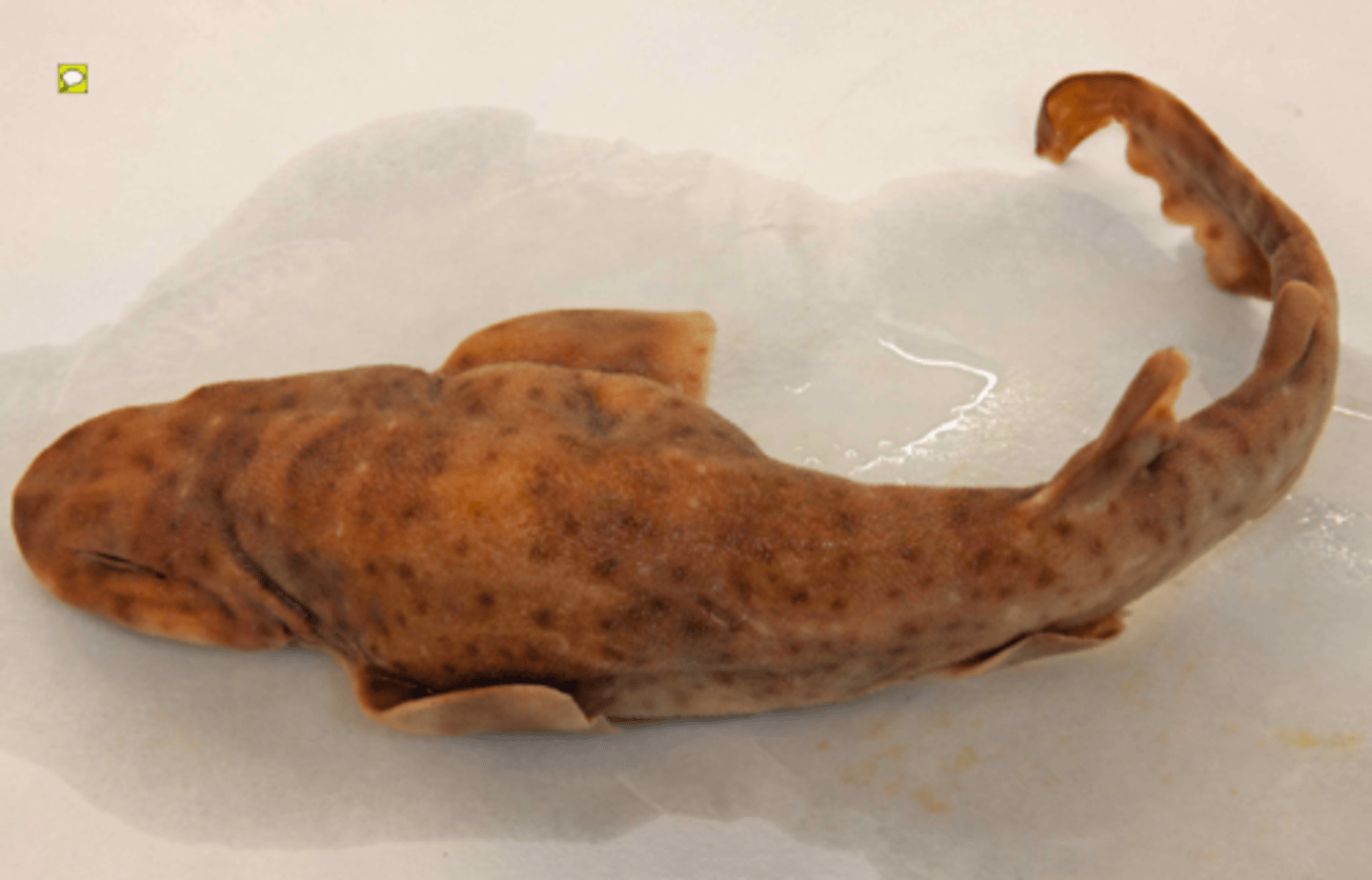
Order Carcharhiniformes. #1 Anal fin
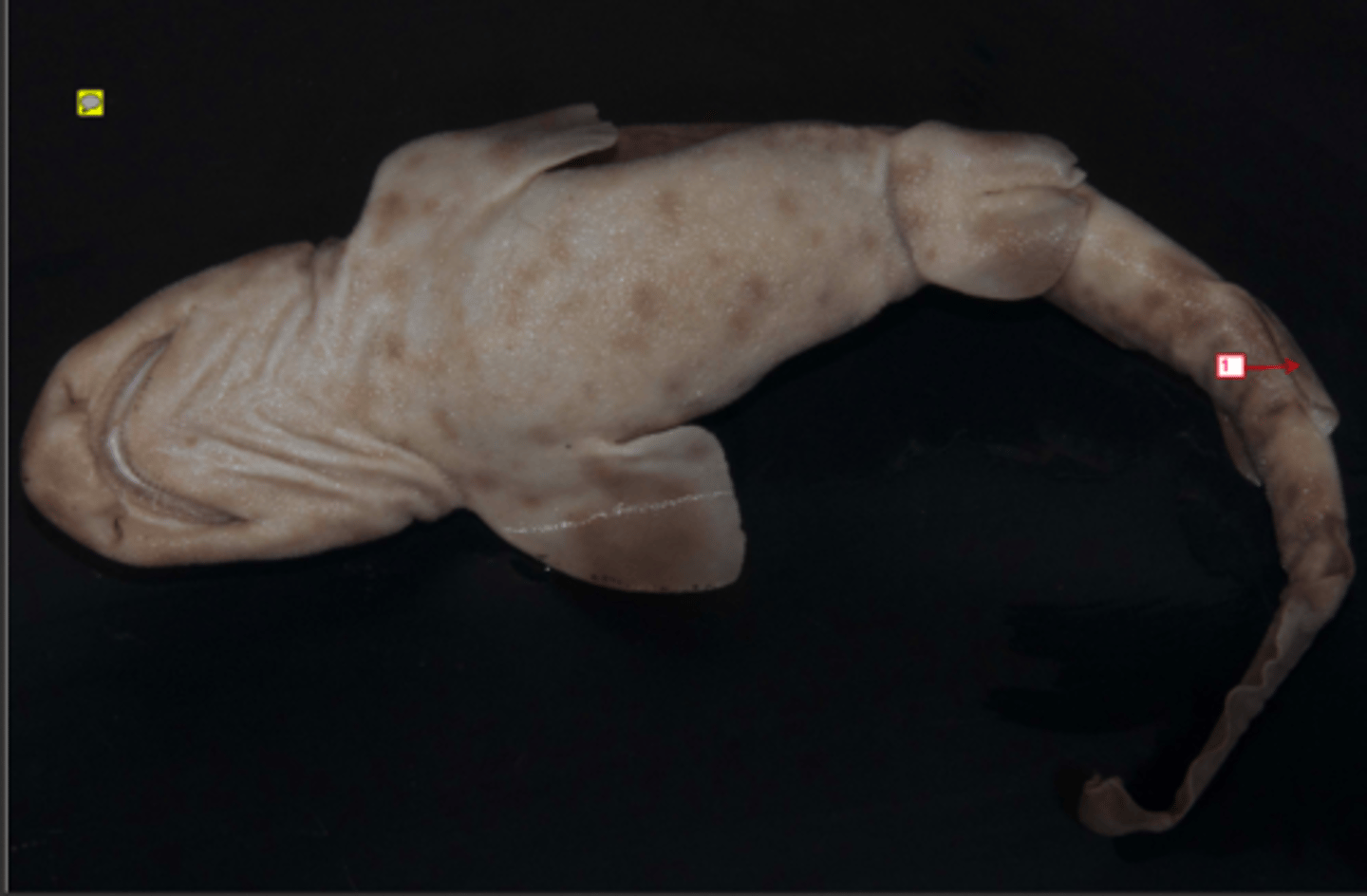
Order Carcharhiniformes. Small teeth
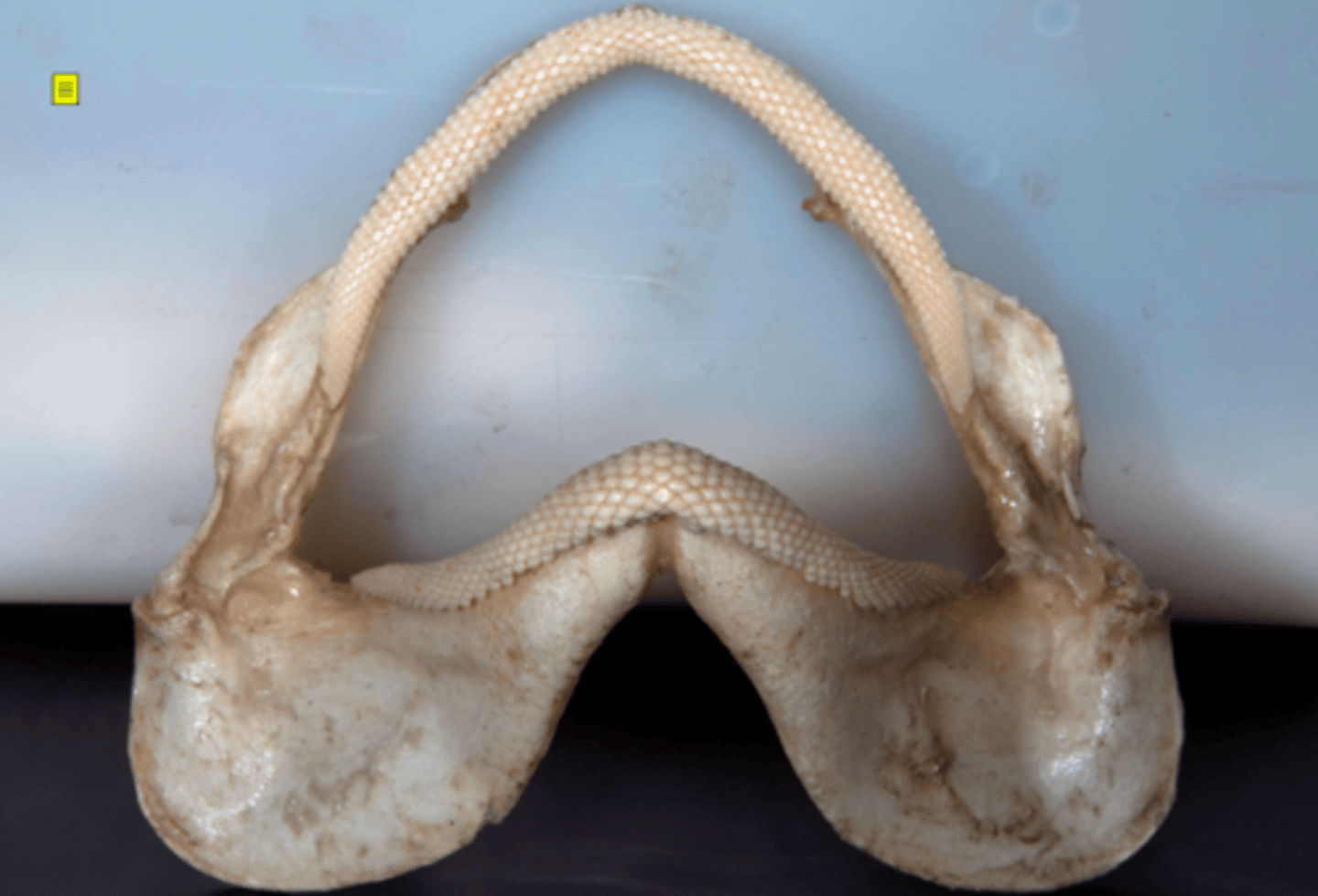
Order Carcharhiniformes
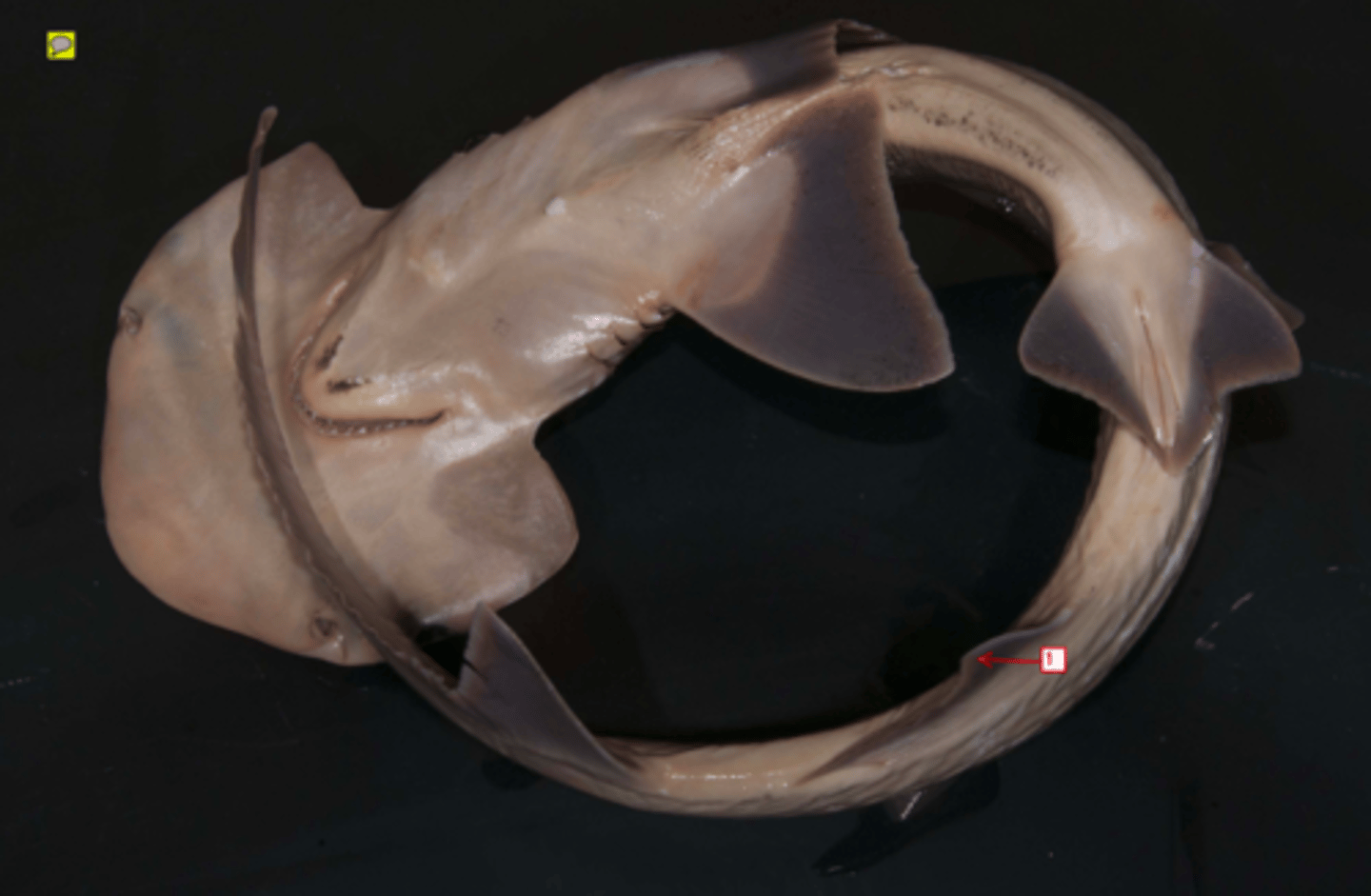
Class Chondrichthyes, Subclass Elasmobranchii, Order Lamniformes. Inferior mouth, fusiform head and body, dorsal fins spineless, lacking nictitating membrane
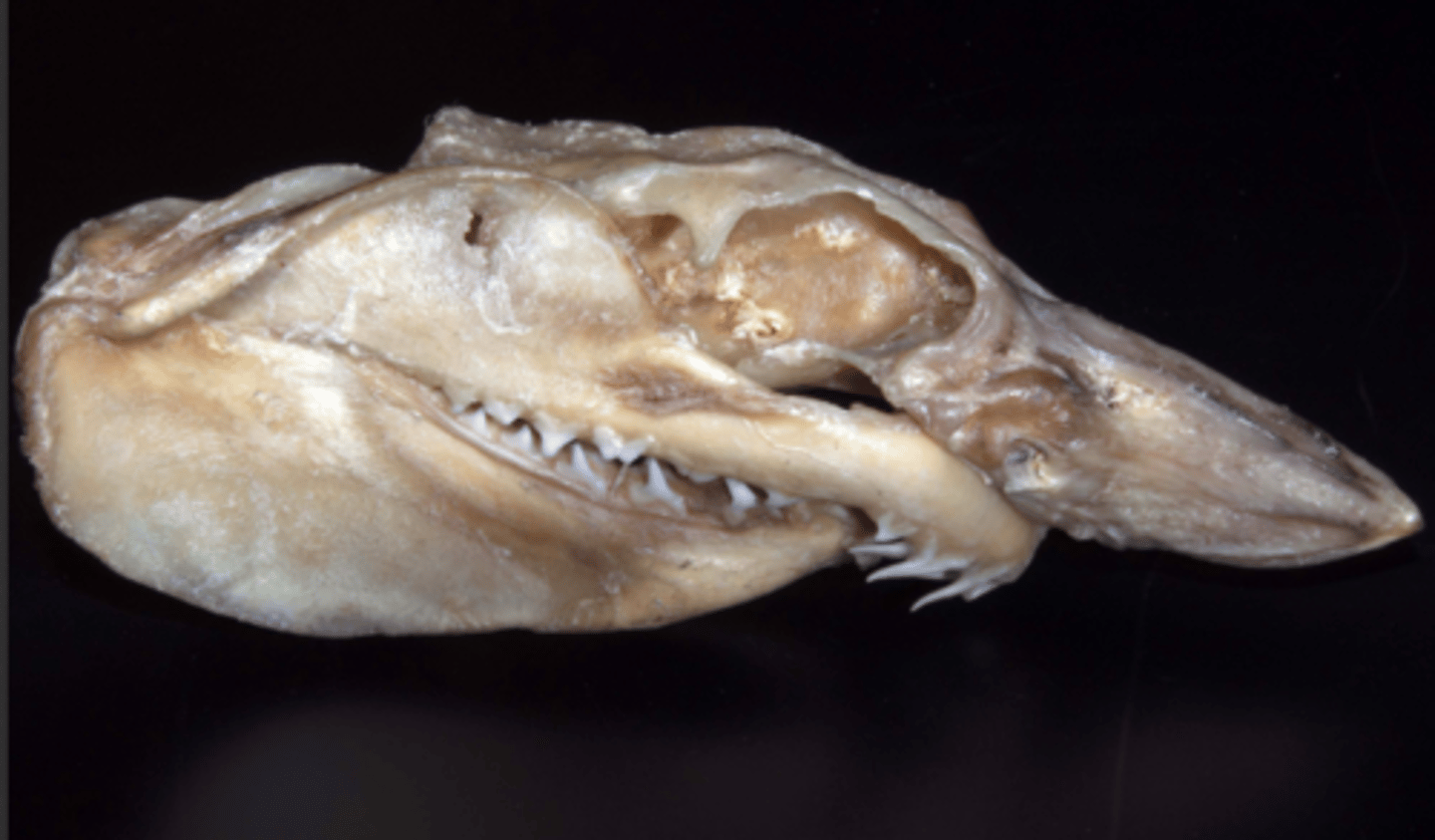
Subclass Elasmobranchii, Superorder Squalomorphi, Order Squaliformes. Inferior mouth, somewhat fusiform head and body, large spiracles, lack of anal fin
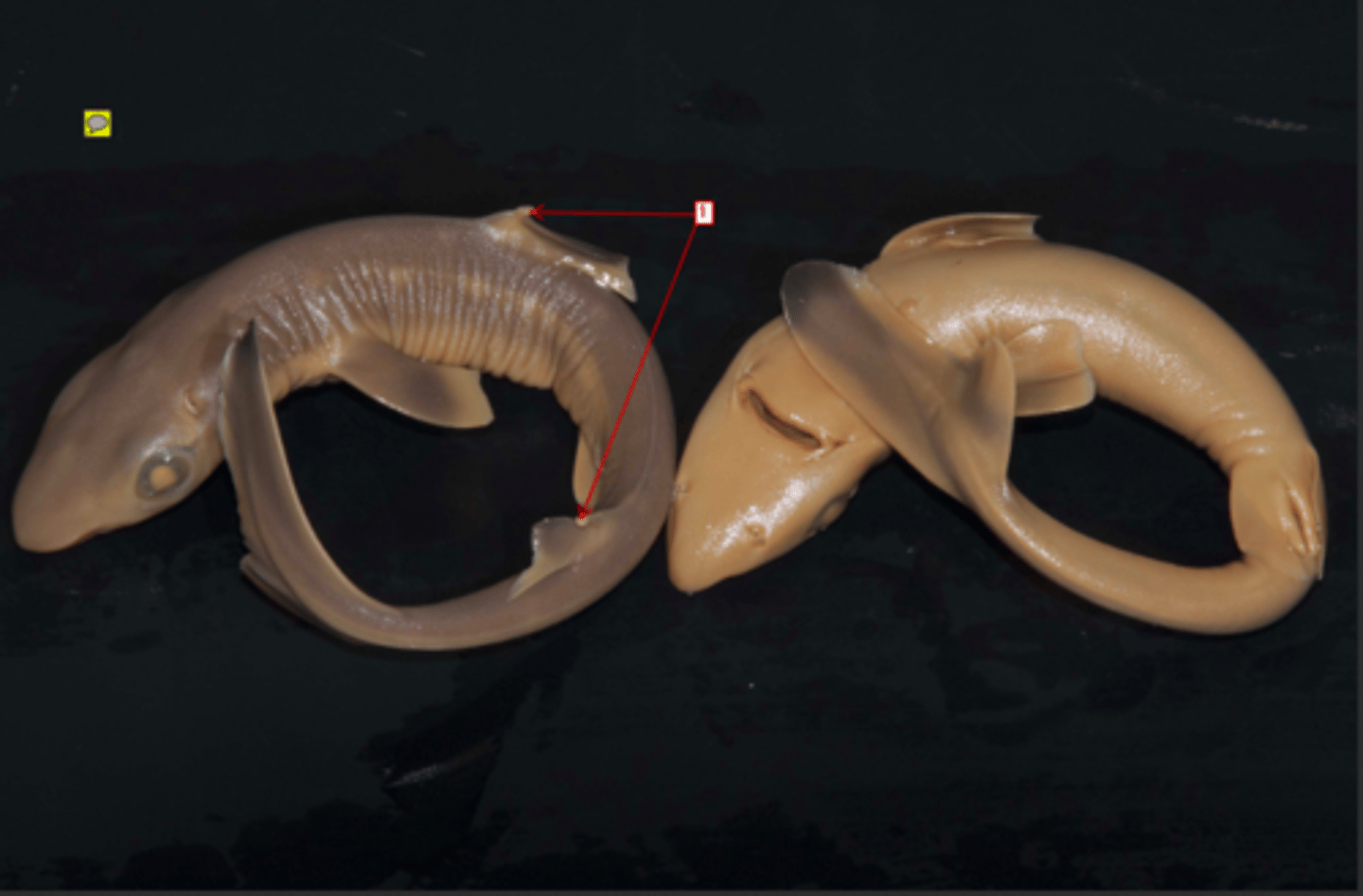
Subclass Elasmobranchii, Superorder Squalomorphi, Order Squatiniformes. Head and body depressed, subterminal mouth
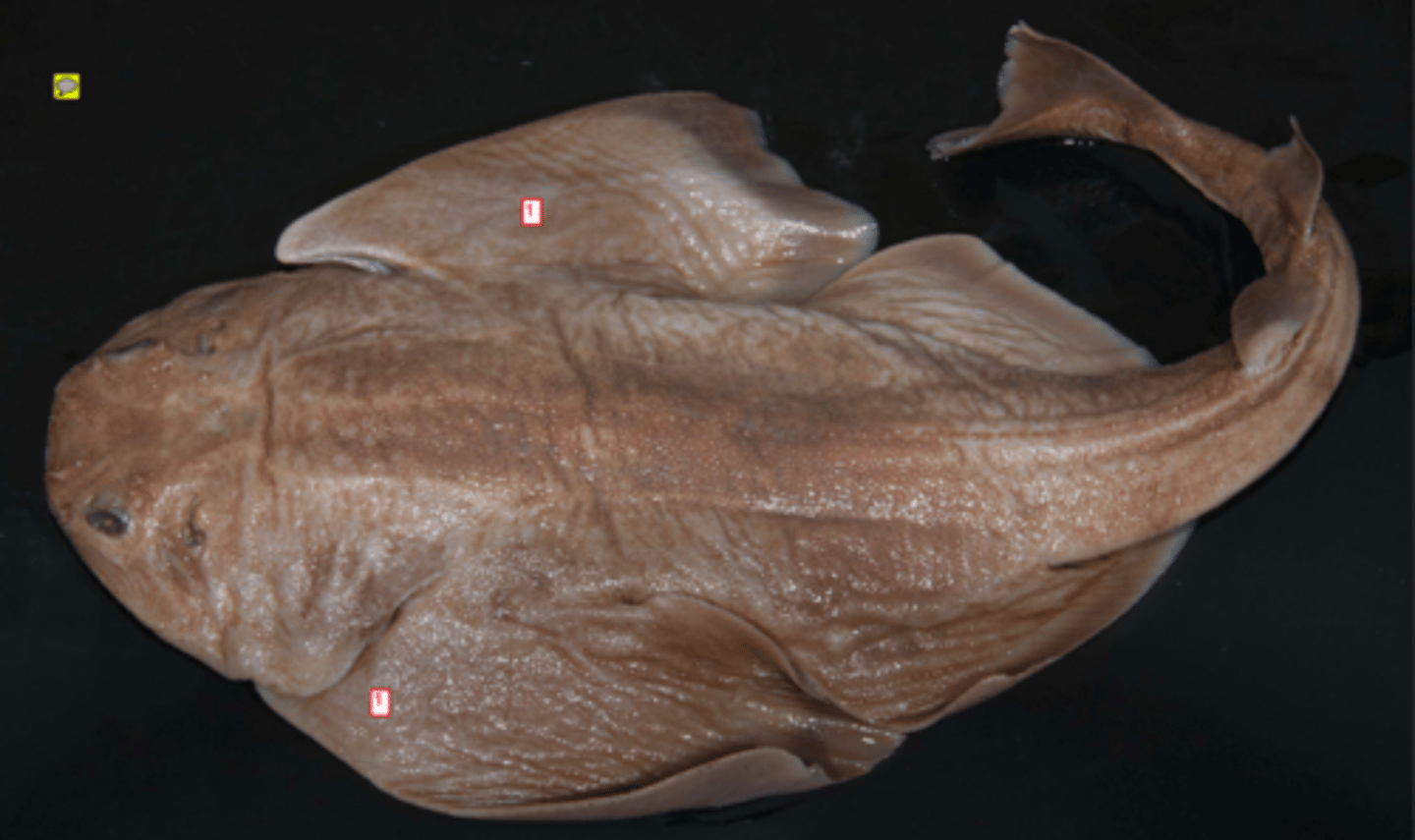
Order Squatiniformes. #1 pectoral fin enlarged but not fused to head
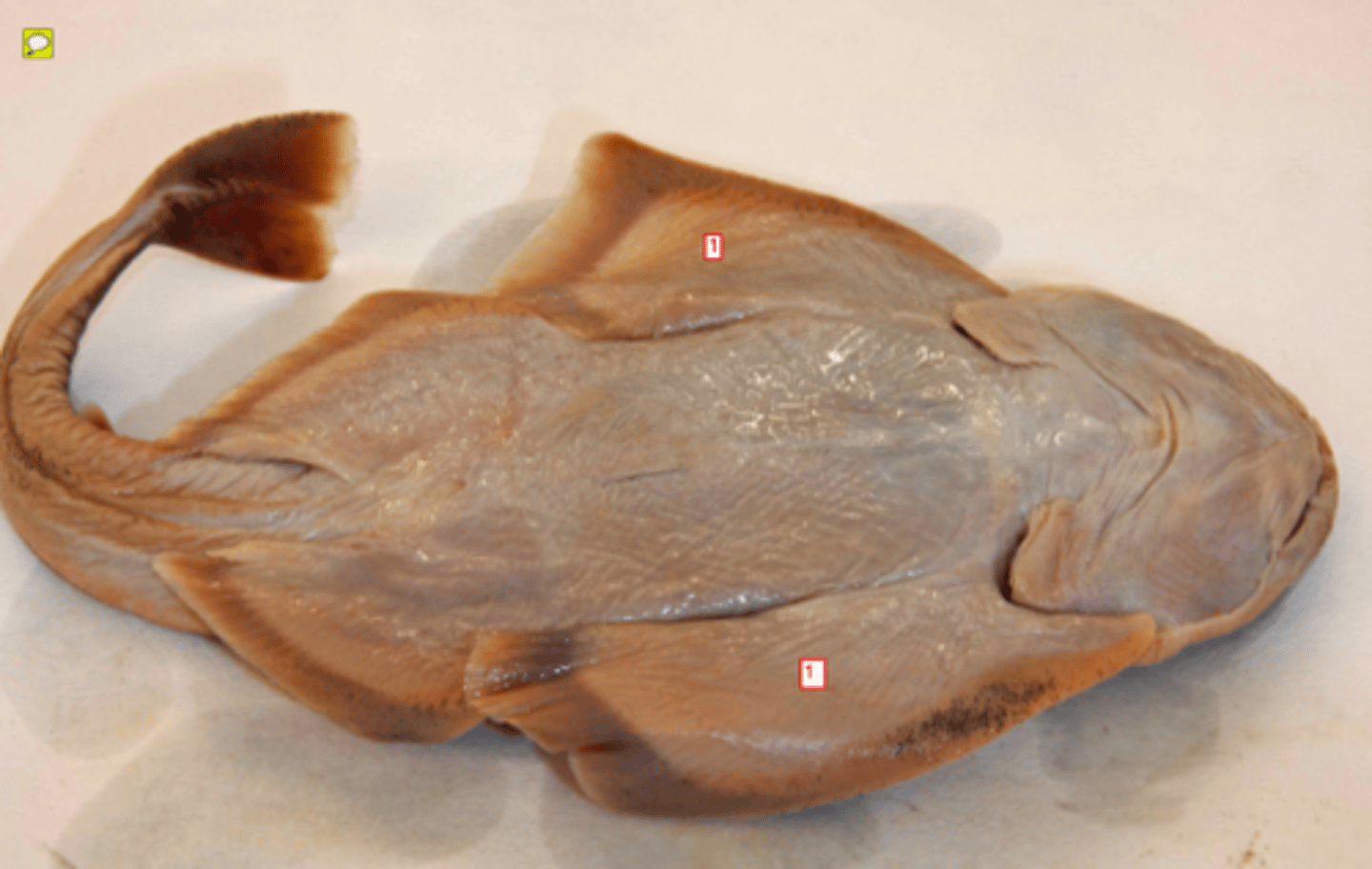
Subdivision Batoidei, Order Rajiformes.
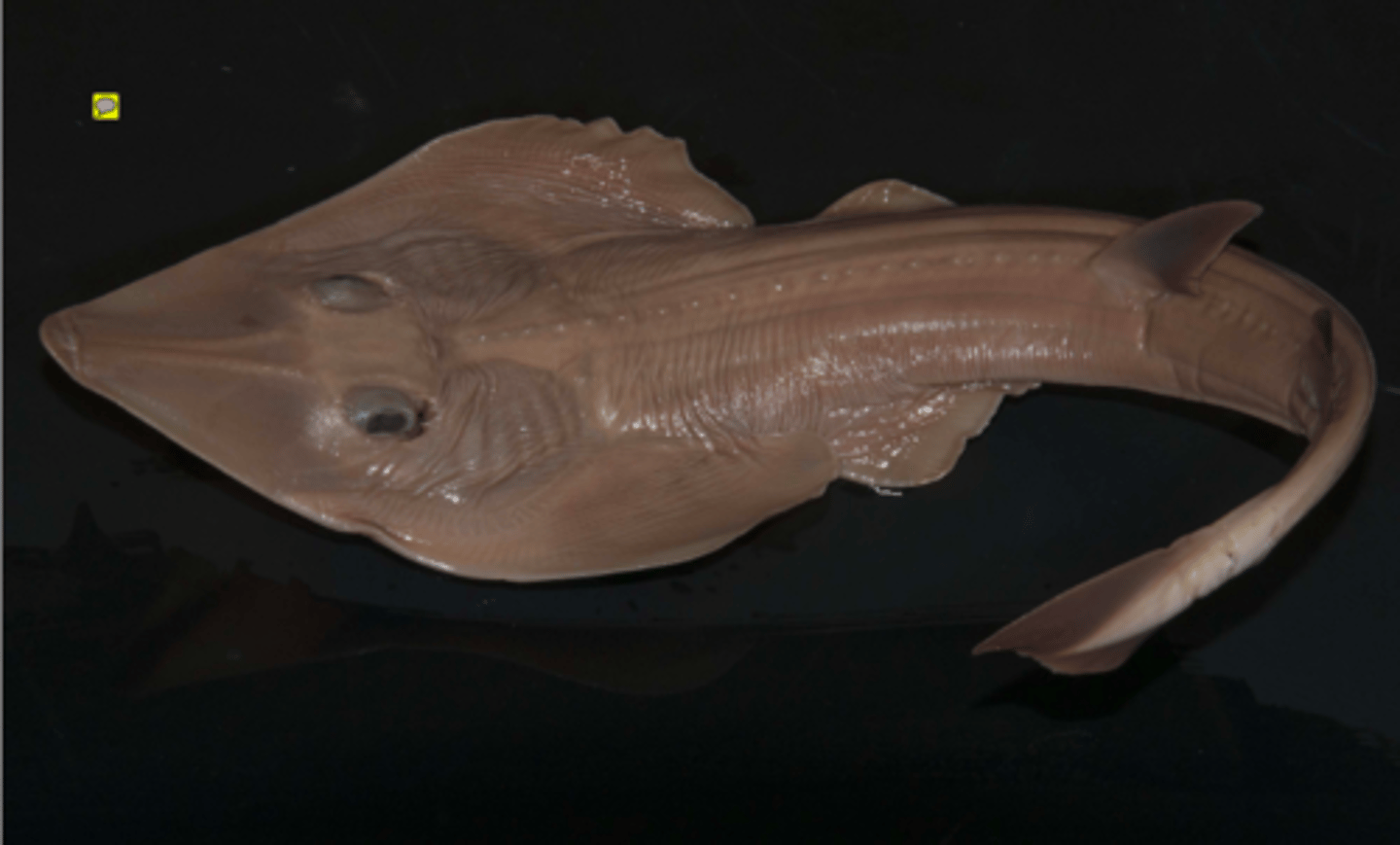
Order Rajiformes. Skull and pectoral fins, infused in parafin, attached to side of head, not fused to chondrocranium
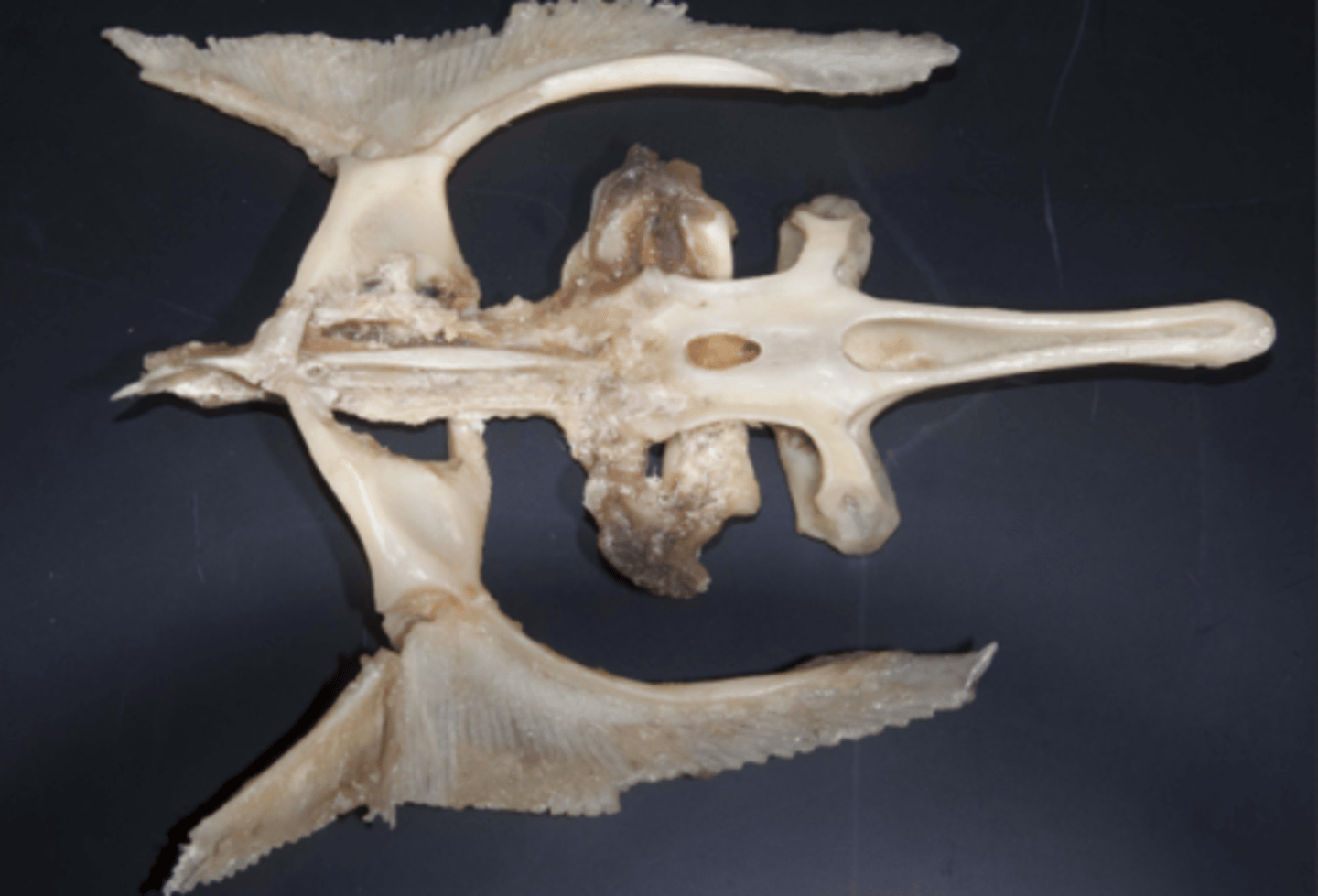
Order Rajiformes. Pectoral fin fused to head, thin tail, two dorsal fins
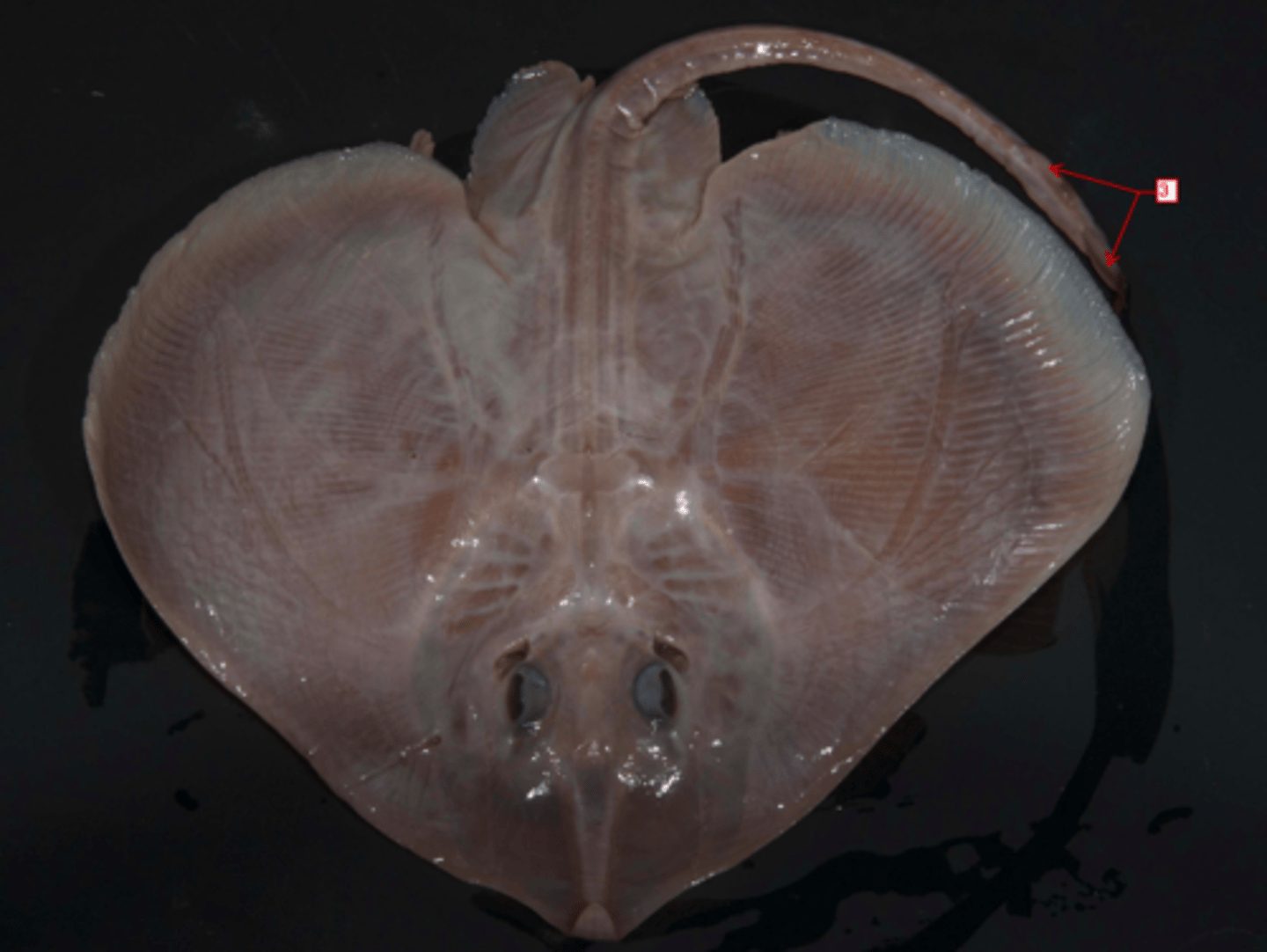
Subdivision Batoidei, Order Myliobatiformes. Tail thin w/no caudal or dorsal fin, Elongate sting. Pectoral fin fused to head
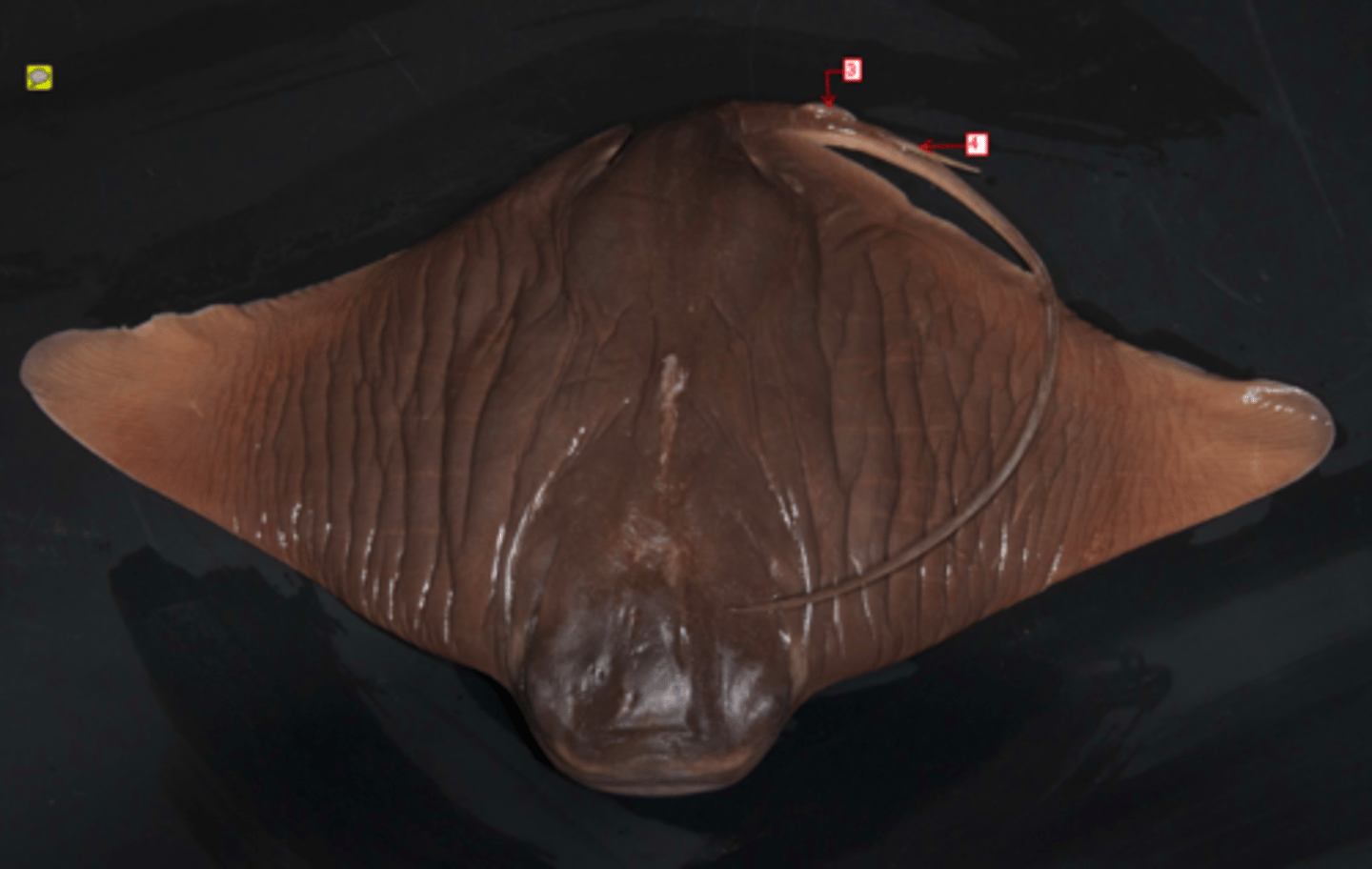
Class Osteichthyes, Infraclass Actinistia. Tri-lobed caudal fin. Terminal mouth, slightly compressed body
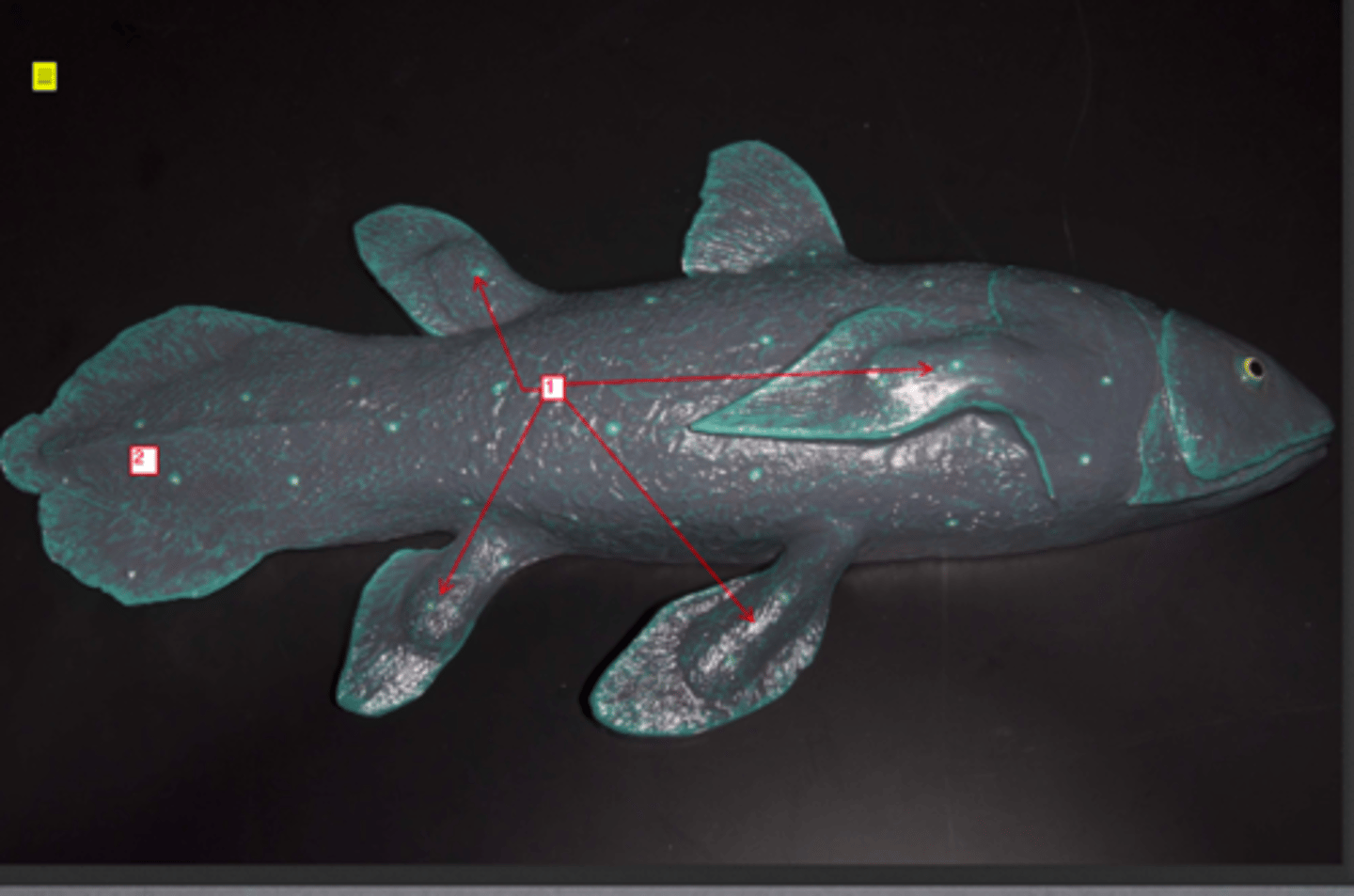
Class Osteichthyes, Subclass Sarcopterygii, Infraclass Dipnoi. Heterocercal caudal tail, two dorsal fins
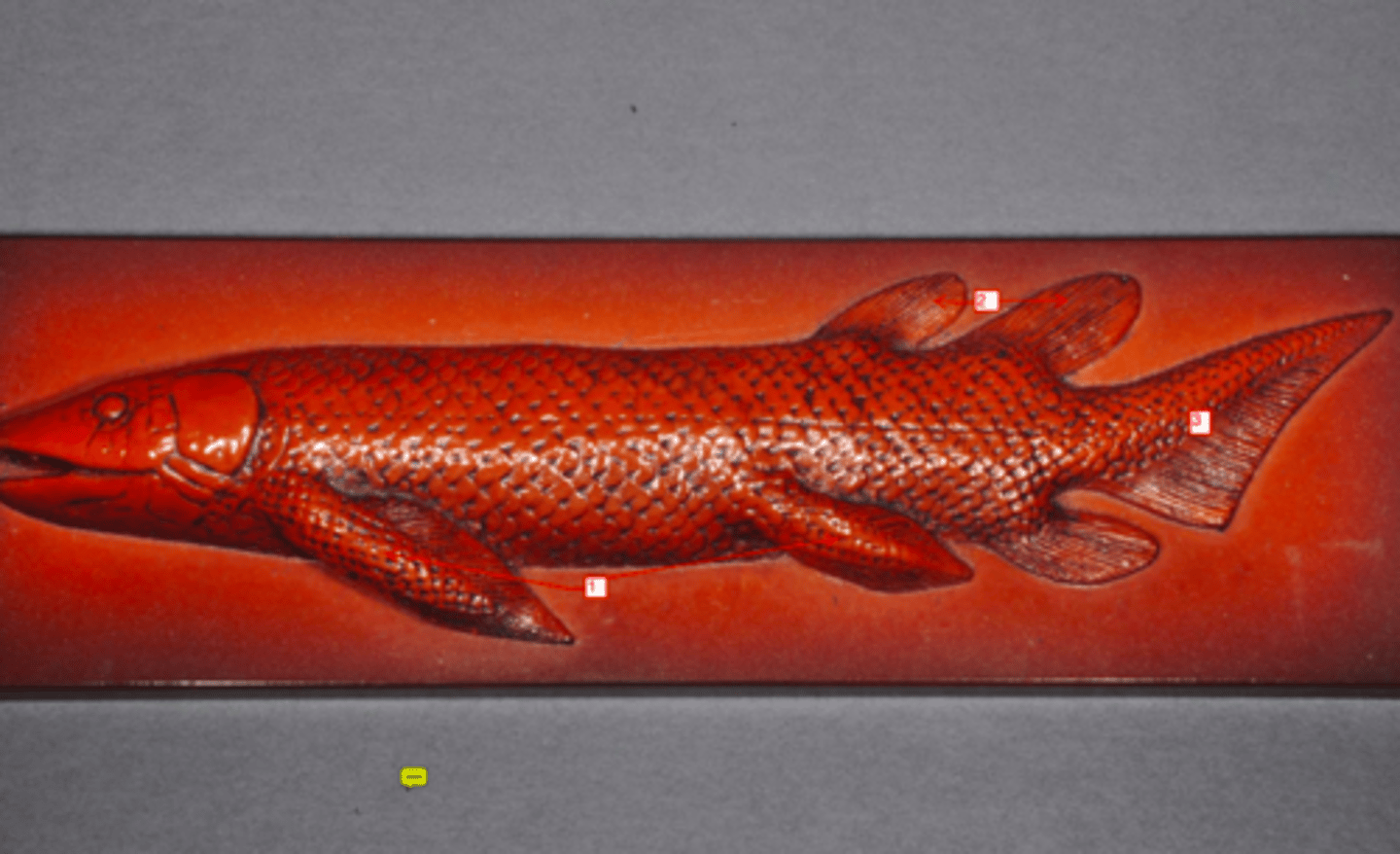
Infraclass Dipnoi, Order Lepidosireniformes
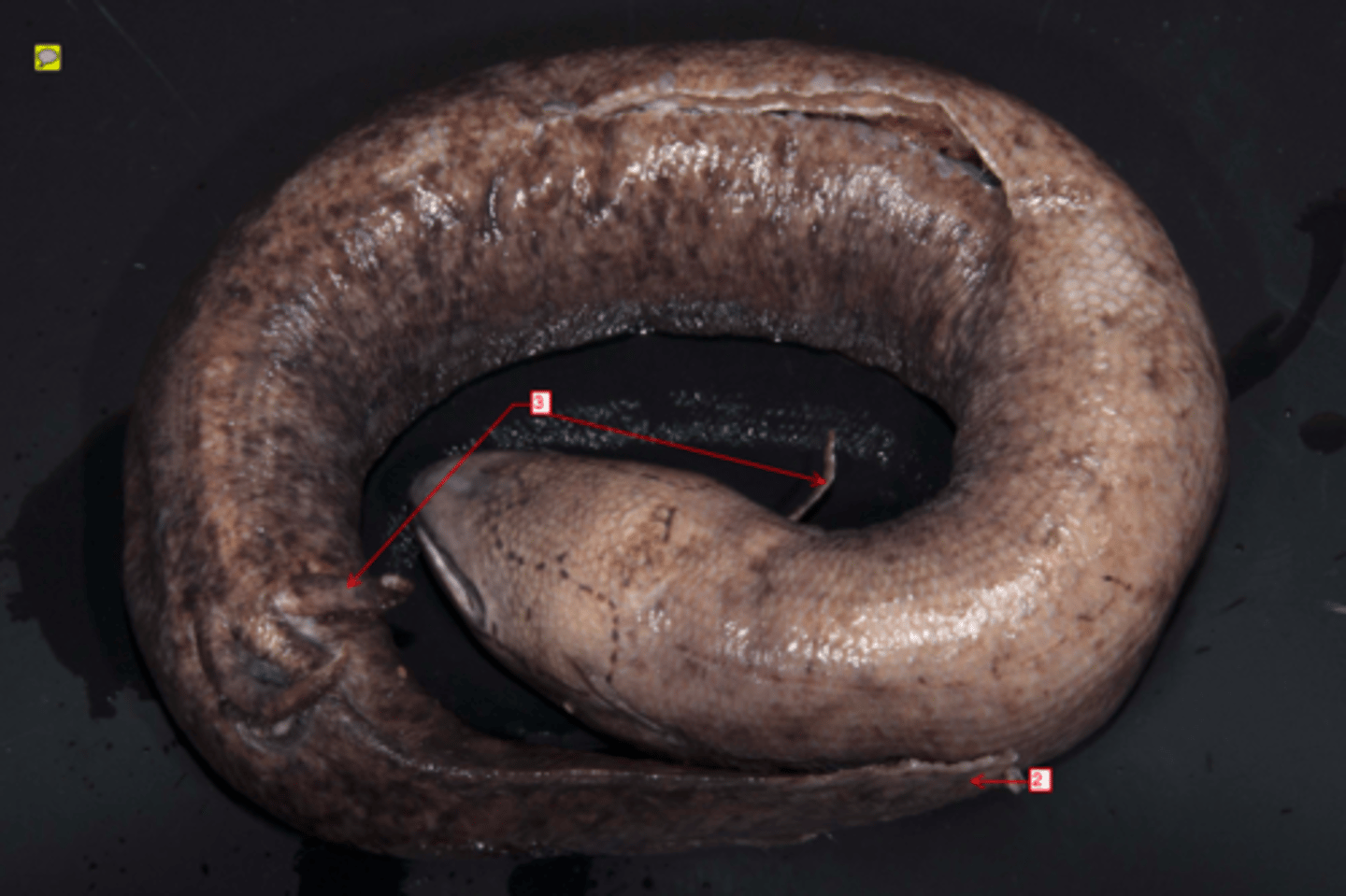
Subclass Actinopterygii, Order Acipenseriformes. Heterocercal caudal fin, large scutes along side, elongate rostrum, inferior mouth, scaleless
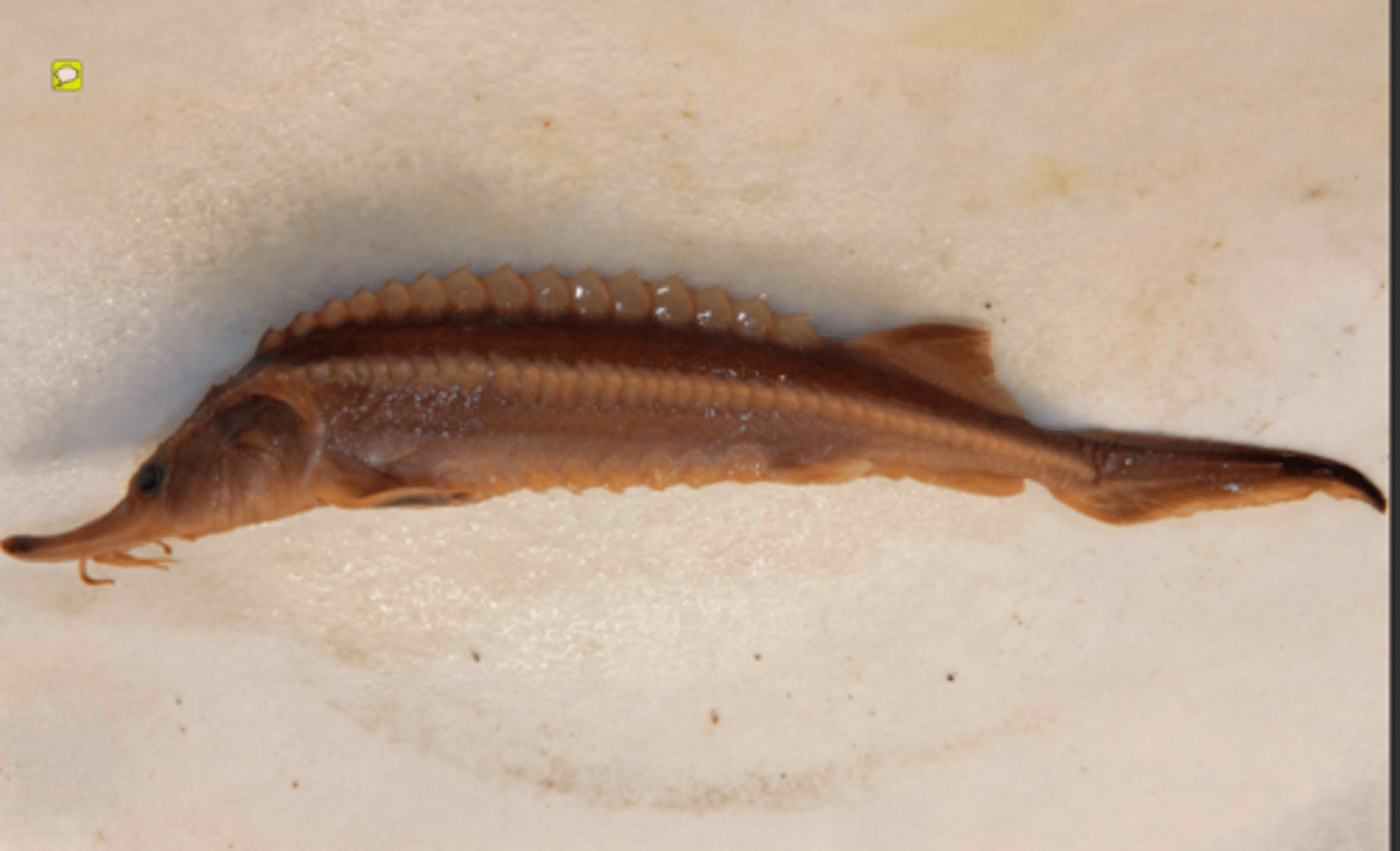
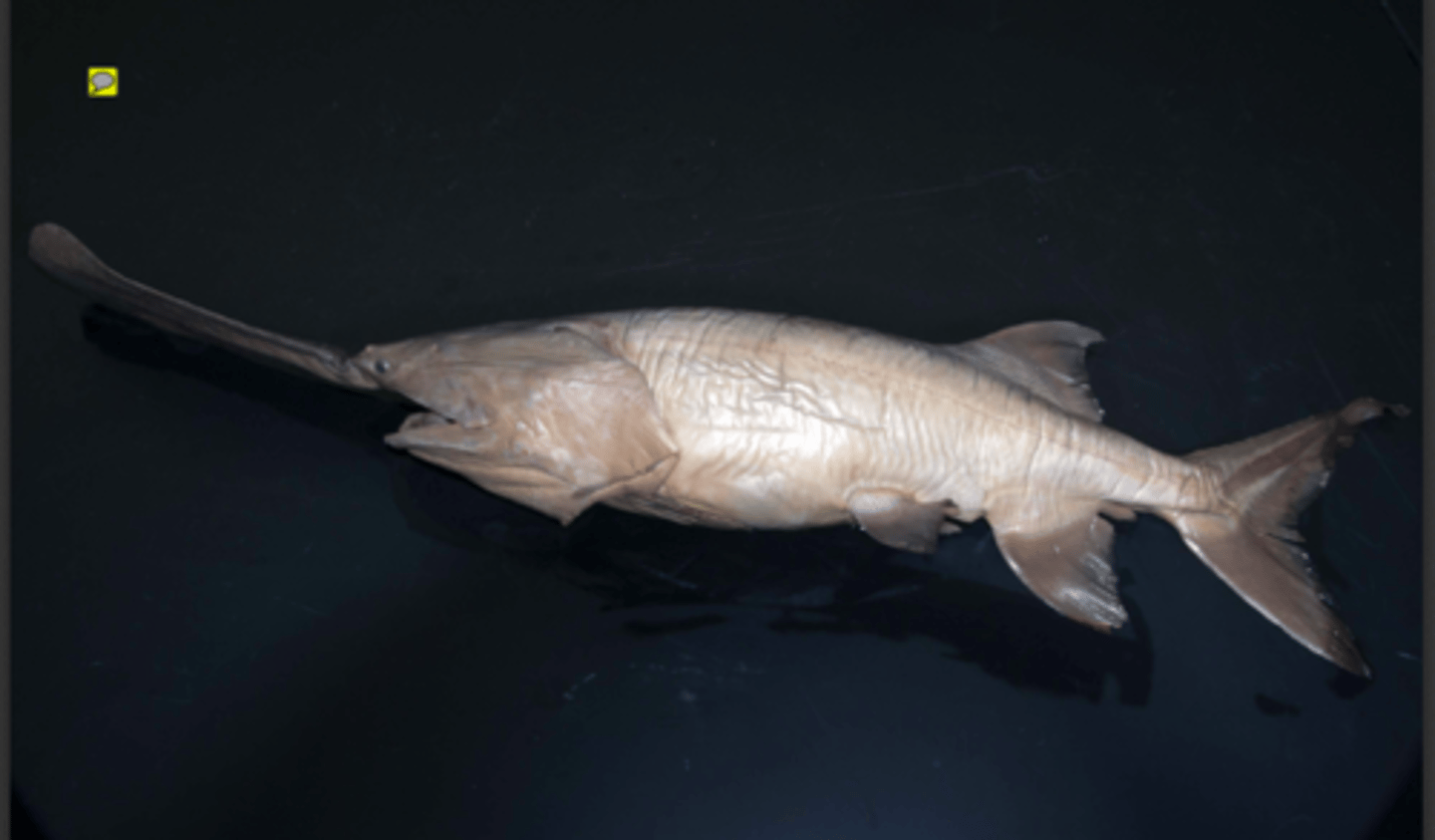
Order Acipenseriformes. Heterocercal caudal fin, extremely elongate rostum.
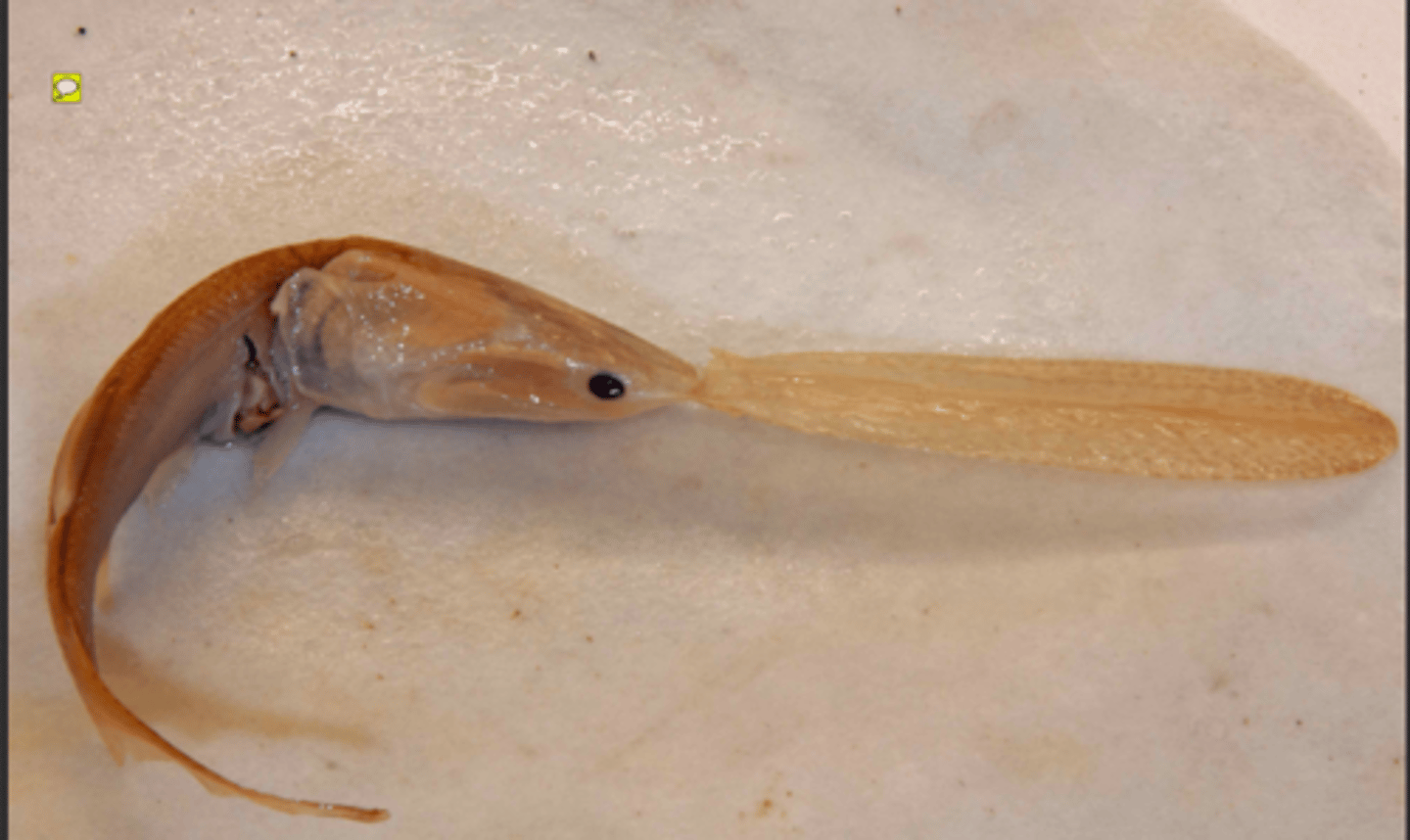
Acipenseriformes, adult.
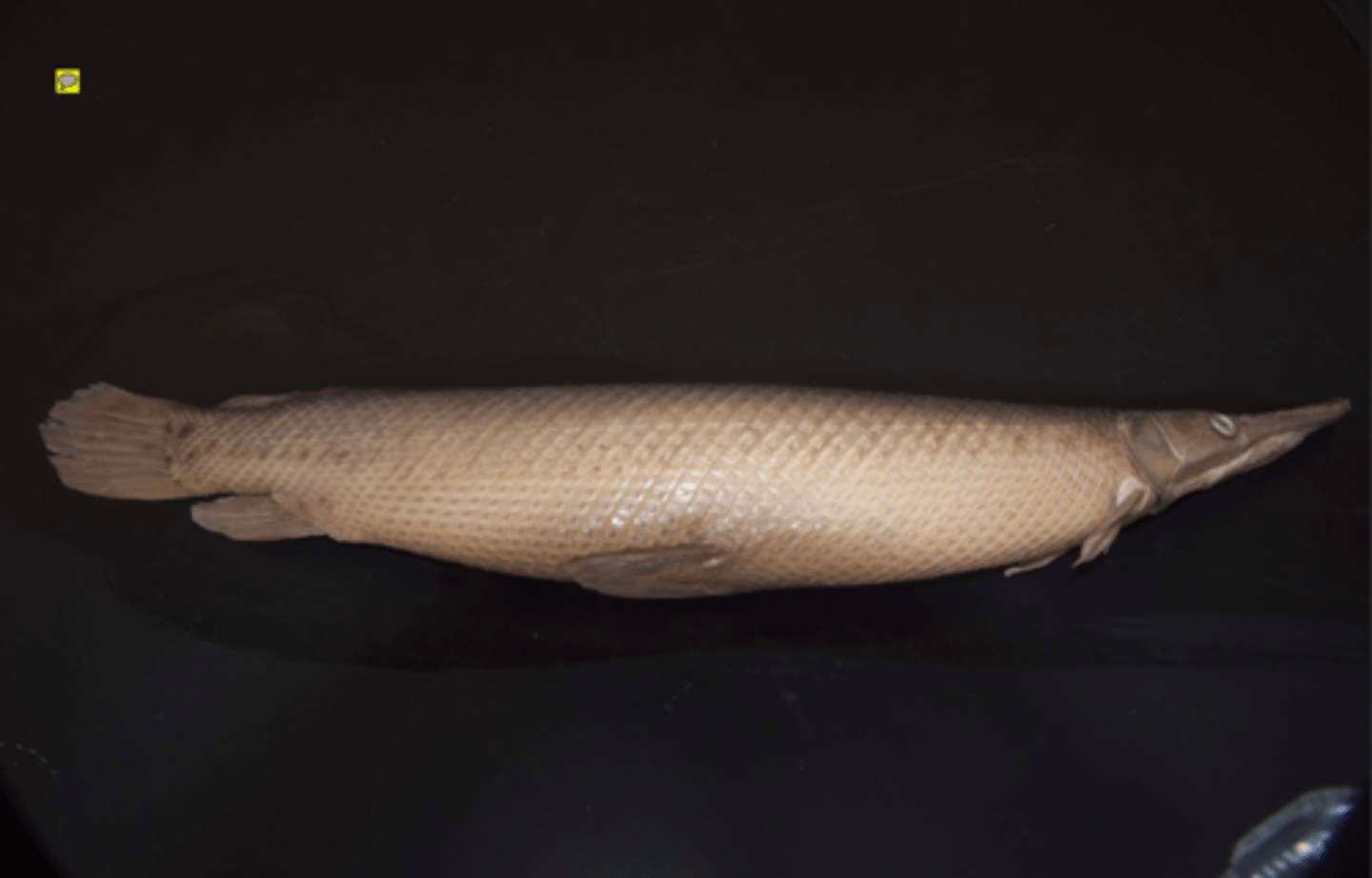
Subclass Actinopterygii, Order Lepisosteiformes. Ganoid scales
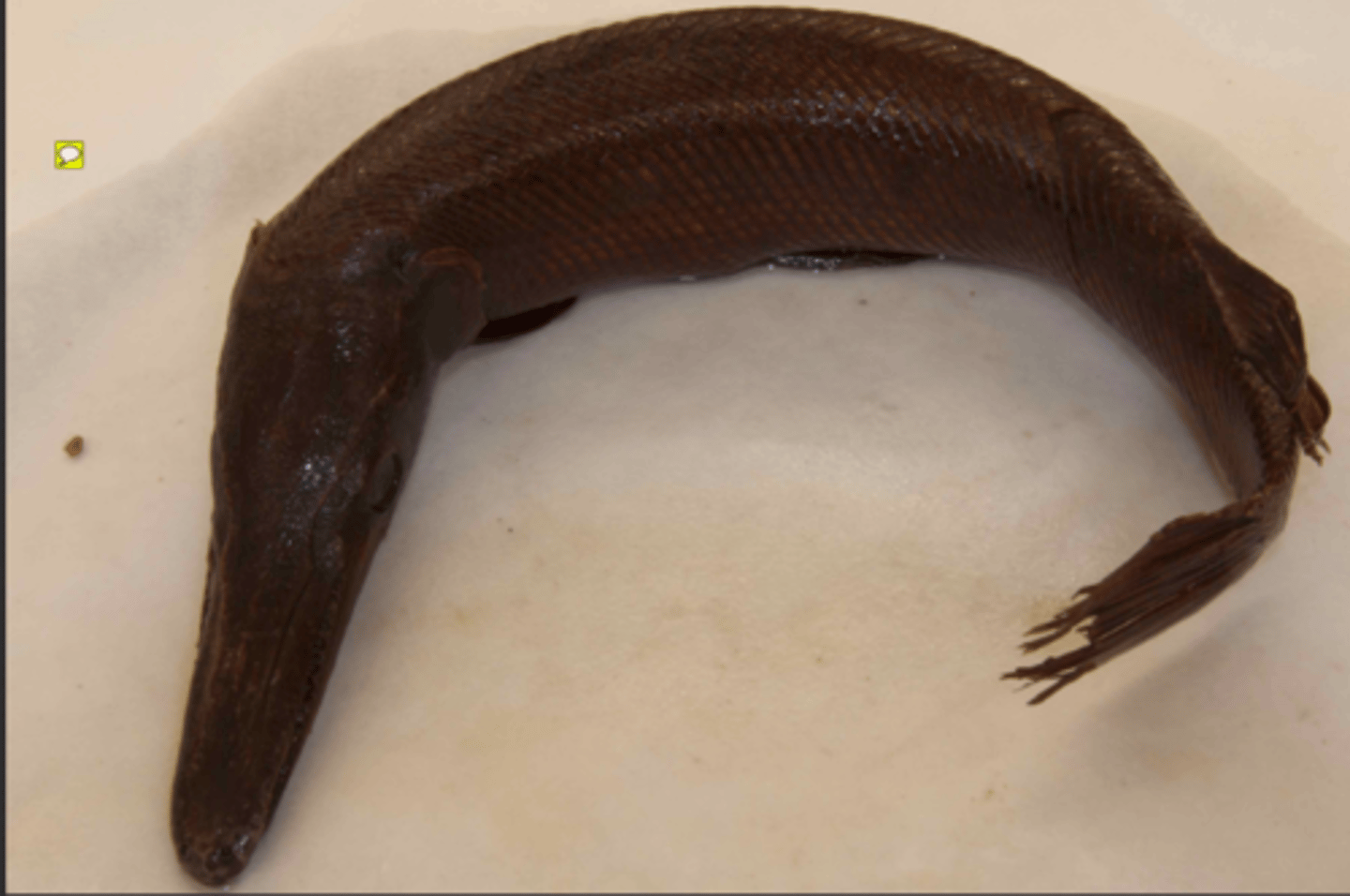
Order Lepisosteiformes
Subclass Actinopterygii, Order Amiiformes