EASC 101, lab exam
 Call Kai
 Learn
 Practice Test
 Spaced Repetition
 Match
 Flashcards
 Knowt Play
1/48

There's no tags or description
Looks like no tags are added yet.
49 Terms

Quartz(SiO2)
NF Silicate,
Choncoidal fracture,
Multi bright color(white, purple, black, salmon)
NM, H(7) 6.5>, some can have a hexagonal pyramid.

Calcite(CaCO3)
Carbonate
Rhombic cleavage
White(transparent), white streak
NM, 5.5> H(3) 2.5>, react to dilute HCl

Biotite Mica & Muscovite
F Silicate
Basal cleavage
White(transparent) for muscovite /Black for biotite
NM, H <2.5, very flexible

Magnetite (Fe3O4)
Oxide
Uneven fracture,
Black/silvery black, black streak
M,6.5> H 5.5> grain too small to see, magnetic

Talc
NF Silicate
Uneven fracture
White, white streak
NM, H(1) <2.5, soapy feel

Olivine((Mg,Fe)2 SiO4)
F Silicate
Conchoidal fracture
Green
NM, H 6.5>, grains are shiny under microscope

Dolomite (CaMg(CO3)2)
Carbonate
3 cleavage not at 90
Mainly white(variety), white stream
NM, 5.5> H 2.5>, react with HCl when powdered.

Sphalerite(ZnS)
Sulphide
dodecahedral fracture(hard to see)
Dark color/light yellow, yellow streak
M, 5.5 > H 2.5>,smells like rotten eggs

Fluorite( CaF2)
Halide
Normally 4 cleavage directions/octahedral cleavage (sometimes can find octahedrons)
Multi light colored(white, purple, blue), white streak
NM, 5.5> H(4) 2.5>, if broken perfectly can result in an octahedron.

Hematite (Fe2O3)
Oxide
Uneven fracture
Black or silvery black, red streak
M,6.5> H 5.5>, metallic samples are specular(acts like a mirror)

Halite(NaCl)
Halide
Cubic cleavage at 90 degree
Transparent, white streak
NM, 5.5> H 2.5 >, salty taste

Galena(PbS)
Sulphide
Cubic cleavage at 90 degree
Silvery black
M, 5.5> H 2.5>,heavy for its size

Pyrite( FeS2)
Sulphide
Conchoidal fracture
Gold, greenish black or brownish black streak
M,6.5> H 5.5>, crystals can form as dodecahedrons or cubes.


Chalcopyrite (CuFeS2)
Sulphide
Uneven Fracture
Gold, black streak
M,5.5> H(around 5) 2.5>, look like spray paint gold

Gypsum( CaSO4)
Sulphate
Basal cleavage(often not seen)
White, white streak
NM, H(2) <2.5, soft but not soapy
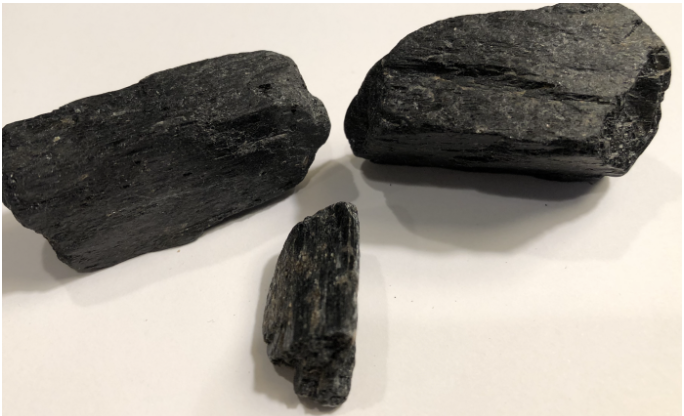
Amphibole/ Hornblende
F Silicate
2 cleavage not at 90, uneven fracture
Dark green to black,white streak(very difficult to find)
NM, 6.5> H 5.5>, almost look like burned wood grain

Pyroxene
F Silicate
2 cleavage at 90, irregular fracture
Dark green to black, white streak(very difficult to find)
NM, 6.5> H 5.5>

K feldspar( Orthoclase)
NF silicate
2 cleavage at 90 degree & uneven fracture
Salmon Color, white streak(too hard to see)
NM,6.5> H(6) 5.5>, has exsolution lamellae
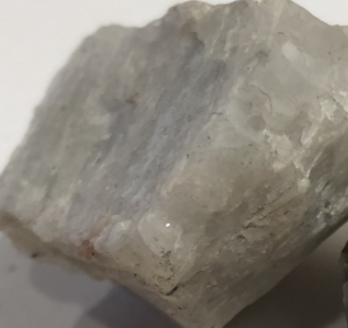
Na-rich plagioclase( Albite)
NF silicate
2 cleavage at 90 degree & uneven fracture
Porcelain Color, white streak(too hard to see)
NM,6.5> H(6) 5.5>, has striations

Ca-rich plagioclase(Labradorite)
NF Silicate
2 cleavage at 90 degree & uneven fracture
Iridescent Color, white streak(too hard to see)
NM,6.5> H(6) 5.5>, has striations

Granite
Orthoclase, quartz, albite, biotite
Phaneritic, felsic
(Intrusive Igneous rock,slow cooling at low temp magma at depth)

Grandiorite
Intrusive Igenous rock
Albite, quartz, biotite
Phaneritic, felsic
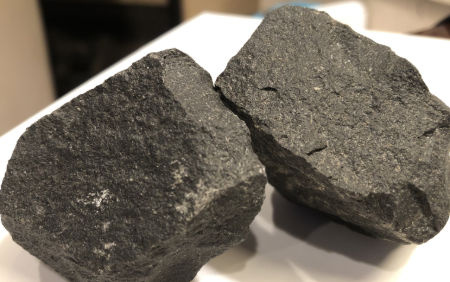
Basalt
Groundmass: Black
Aphanitic, mafic
Extrusive Igenous rock (cool quickly at hot temp just below surface)

Dacite
Groundmass : Grey
Amphibole phenocrysts
Porphyritic rock , felsic
(Form at low temp as either intrusive or extrusive, 2 stages; phenocryst first form then cooled quickly at surface to make groundmass)

Rhyolite
Groundmass: light pink/red
Quartz phenocryst
Porphyritic, felsic
( Formed at depth first as either intrusive or extrusive then rose to surface which quickly cooled the rest of the magma)

Diorite
Albite, Amphibole
Phaneritic, intermediate
Intrusive Igenous Rock
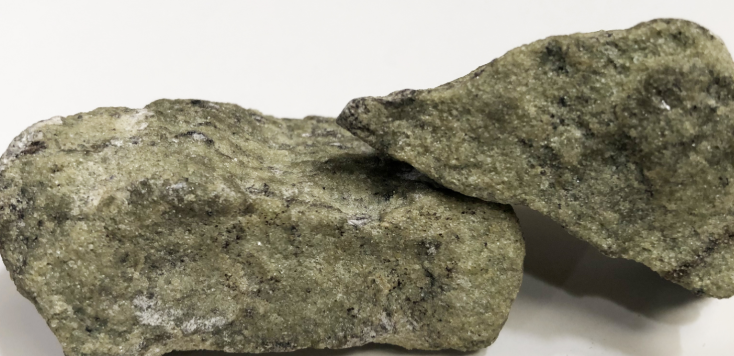
Periodtite
Olivine
Phaneritic, Ultramafic
Intrusive Igenous rock, formed at extreme high temps.
Makes the bulk of the Earths upper mantle.

Scoria
Groundmass: Oxidized rusted red
Aphanitic & Vesicular, Mafic
Extrusive Igenous rock, formed at high temperatures where gas was trapped inside bu then released, causing holes & gaps in the rocks.

Gabbro
Labradorite, Pyroxene
Phaneritic, Mafic
Intrusive Igneous Rock.

Obsidian
Glassy
Is volcanic glass, extreme cooling of lava, elements have no time to bond/form minerals
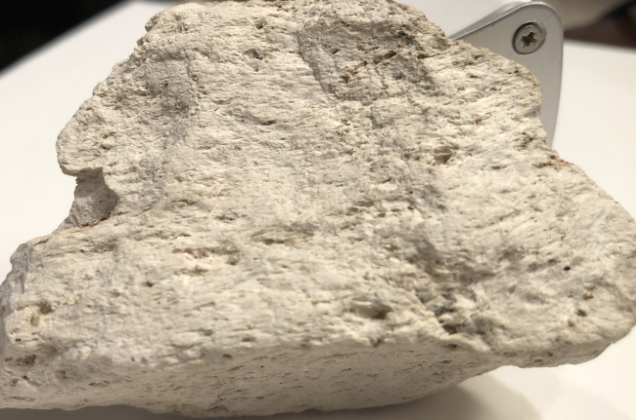
Pumice
(comprised of tiny shards of volcanic glass)
Very lightweight despite its size, rough
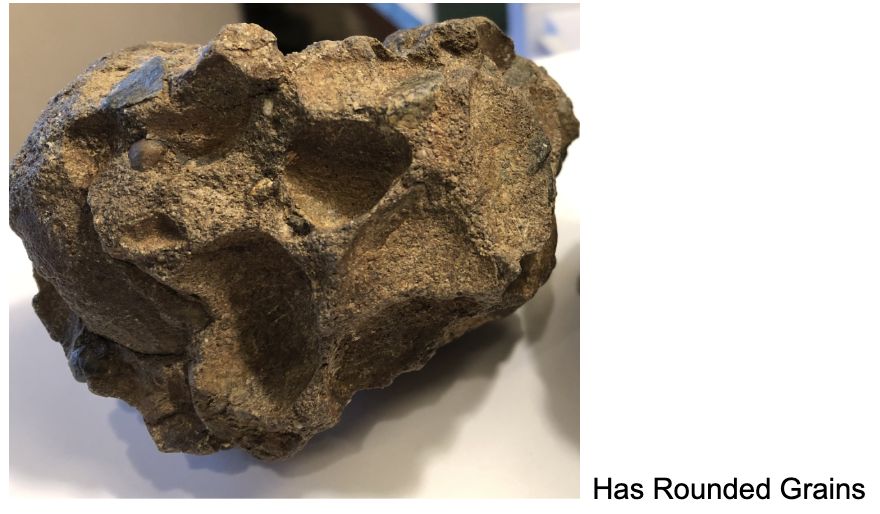
Conglomerate & Breccia
Conglomerate has rounded grains, Breccia has angular grains.
Has a lot of lithic fragments.
Gravel(>2mm), rounded or angular grains but poorly sorted
gravel size grains(clasts)
Clastic Sedimentary.

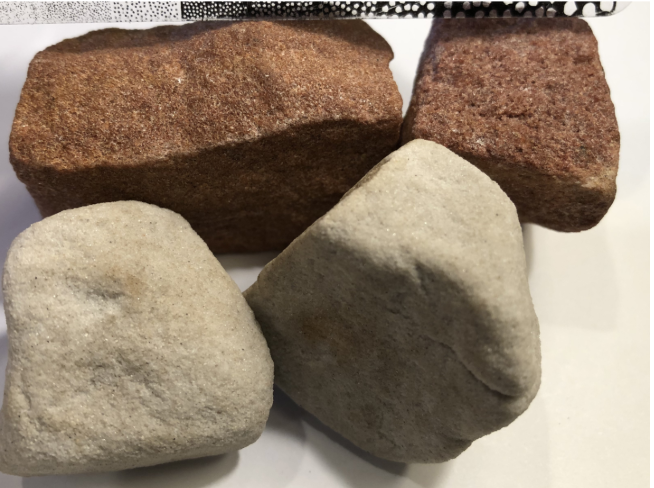
Quartz Sandstone
Mainly compromised of Quartz, (white sandstone) hassilica cement, (red sandstone) has iron oxide cement
Sand(1/16- 2mm), very well sorted, round grains
Abundance of quartz & sand grain, a lot of shiny speckles
Clastic sedimentary

Arkose
Quartz, feldspar
Sand & granules, angular grains
Moderate sort of sandstone and feldspar
Clastic sedimentary
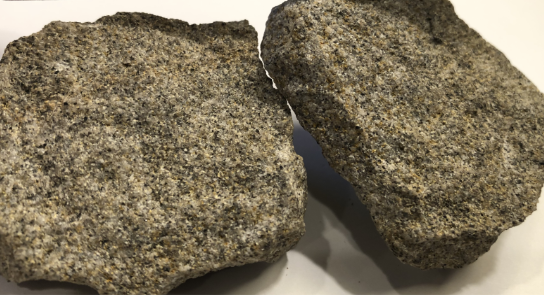
Lithic Sandstone
Quartz, & Lithic/dark fragments
Sand, moderate to well rounded sorting
Lots of dark spots(lithic fragment) such as basalt, a couple of quart sand grain
Clastic sedimentary

Mudstone
Microscopic materials, made up of clay & silicate materials.
Lumpy. May contain plant fossils.
Clastic Sedimentary

Shale
Microscopic materials, made of clay/silicate materials
Fissile/ Breaks easily along flat layers. May contain plant fossils. Looks like a small skipping stone.
Clastic sedimentary

Chalk
Microscopic materials, react with acid, made up of calcite
Formed from microscopic coccolithophorids
Super soft, can write with it, if you firmly pat it some chalk powder can get on your hands
Biogenic Sedimentary

Oolitic Limestone
Reacts with acid, made up of calcite ooids(small, round,noticeable grains)
Rounded ooids are shown in the limestone, look like little pearls
Chemical sedimentary

Micrite
Microscopic materials, reacts to acid
Made up of microcrystalline calcite
Dark in color & microscopic grains
Chemical sedimentary
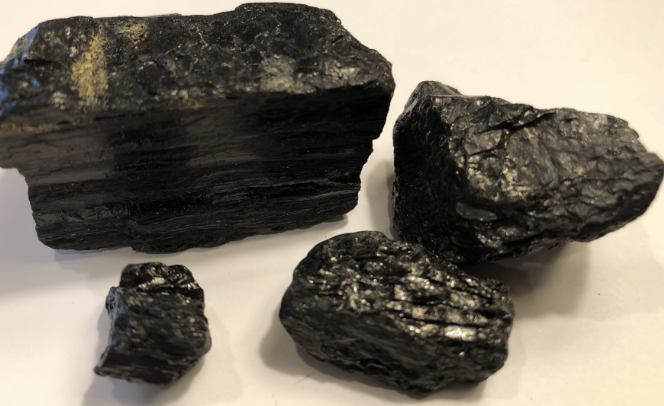
Coal
Made up of fine, crystalline carbon
Shiny, has low density, idk just look up minecraft or something it probably looks similar
Biogenic sedimentary

Chert
Made up of Microscopic Quartz/silicate
Conchoidal fracture & is very hard
Chemical sedimentary
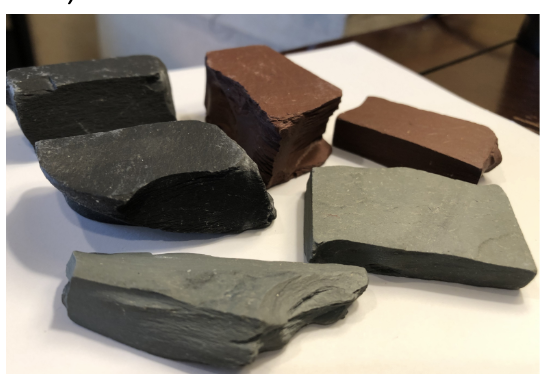
Slate
Foliated Rock,regional metamorphism
comprised of a variety of minerals, Protolith: shale,
Breaks along flat layers, very fine grained
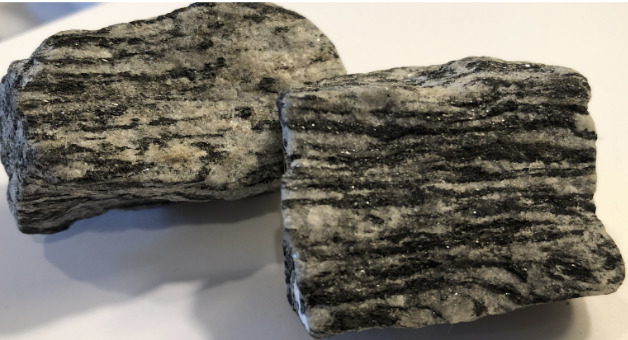
Gneiss
Foliated rock, regional metamorphism
Compromised of albite, quartz, biotite & amphibole,protolith: shale or igneous rock
Bands/patterns of light & dark minerals, medium to coarse grained, chance to have porphyblasts

Quarztite
Non-foliated rock, contact metamorphism
Made of quartz & sandstone, protolith: Sandstone
Scratches glass, does not react to dilute Hcl, medium to coarse grained

Marble
Non-foliated rock, contact metamorphism
Made of calcite & limestone, protolith limestone
Reacts with dilute Hcl, soft & does not scratch glass, medium-coarse grained

Schist
Foliated rock, regional metamorphism
Made of visible mica(biotite & mucovite) & garnet porphyblasts, protolith: shale
Scaly look to it from larger abundant mica grains, much bigger porphyblasts. Medium to coarse grained

Soap Stone
Foliated or Nonfoliated, hydrothermal metamorphism at subduction zones
Made of mainly talc, amphibole and chlorite, protolith: ultramafic rock
Relatively soft and waxy, can scratch with fingernails, fine grained

Phyllite
Foliated rock, regional metamorphism
Made from abundance of mica lined along flat layers, protolith: Shale
shiny(looks metallic) break easily along flat flayers, fine grained, can have porphyblasts