[7A] Water-soluble vitamins
 Call Kai
 Learn
 Practice Test
 Spaced Repetition
 Match
 Flashcards
 Knowt Play
1/87

There's no tags or description
Looks like no tags are added yet.
88 Terms
Compare the amounts we need per day of vitamins to carbs or lipids
We need relatively small amounts of vitamins/day compared to carbs and lipids
(makes sense because vitamins =MICROnutrients, carbs =MACROnutrients)
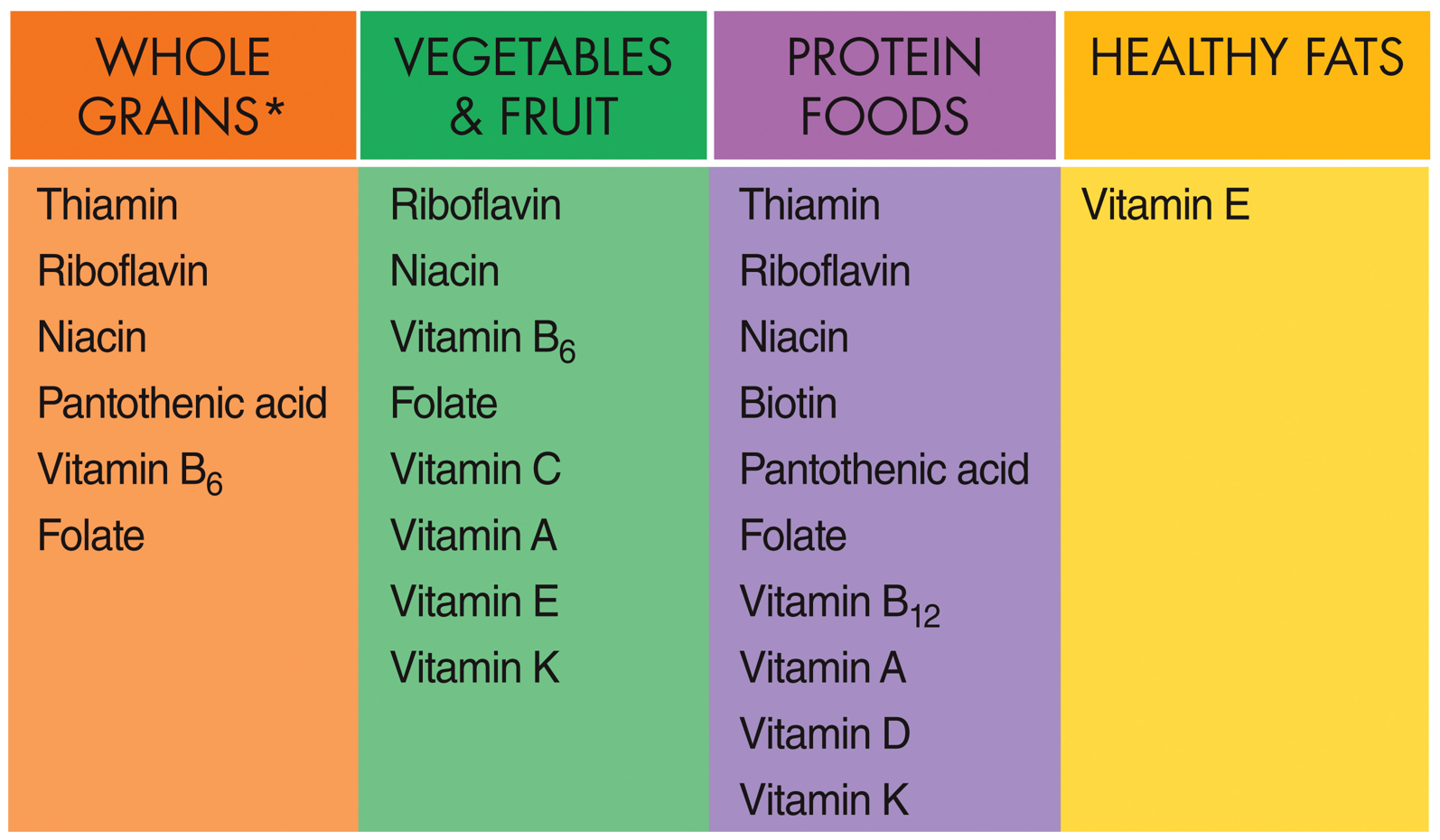
Foods with high vitamin content sorted into Canada Food Guide groups: whole grains, vegetables and fruit, proteins, healthy fats
What are vitamins
ESSENTIAL (must get from diet) for homeostasis, growth, reproduction, and other metabolic processes
vitamins are ___________ compounds
Organic
means they aren’t minerals
Vitamin bioavailability varies due to (3)
Availability of carrier proteins
Rate and efficiency of conversion to active form
Interactions with other dietary components, including other micronutrients
Water soluble vs fat soluble vitamins in terms of presence at toxic levels
Water soluble vitamins are less likely than fat-soluble vitamins to be present at toxic levels, because:
1. There is no water storage in the human body (unlike fat that builds up)
2. Water-soluble vitamins are easily filtered and excreted by the kidney when in excess.
Water soluble vs fat soluble vitamins in terms of being deficient, where do deficiencies first appear
Water soluble vitamins are more likely than fat-soluble vitamins to become deficient.
Tend to be less stable (e.g., light, heat)
Exposed to kidney filtration and excretion
In metabolically active or rapidly growing tissues.
List the water-soluble vitamins (9)
Thiamin (B1)
Riboflavin (B2)
Niacin (B3)
Pantothenic acid (B5)
Vitamin B6 (pyridoxine and related vitamers)
Biotin (B7)
Folates and folic acid (B9)
Vitamin B12
Vitamin C
Vitamins with historical names for compounds later shown to NOT be true vitamins
Vitamins B4, B8, B10, and B11 and B13
Water-soluble vitamins often act as co-enzymes for (2)
E metabolism and hematopoiesis (hgb and rbcs)
B vitamins always involved in
E metabolism pathways (also have other primary roles)
Why are vit B6, folate (B9) and Vit B12 grouped together
Work together to help metabolize homocysteine.
Low levels can increase homocysteine in the blood.
Elevated homocysteine is associated with increased cardiovascular disease (CVD) risk, including atherosclerosis
Thiamine (Vit B1) dietary sources
Whole grains and some proteins foods (pork, lentils, fish, nuts and seeds).
Added as an enrichment/fortification to foods
Thiamine (B1) how was it discovered
Identified as the deficiency that caused beriberi in chickens > White rice but not brown rice
Thiamine (Vit B1) bioavailability
Sensitive to heat, oxygen, and low-acid (basic) conditions (destroyed easily)
Destroyed by anti-thiamin factors such as heat-labile thiaminases (raw fish/shellfish) and tannins (tea, coffee). (whole diet matters not just each individual food)
Thiamine (Vit B1) 2 uses in body
Production of ATP from glucose (PDH, Krebs)
Metabolism of sugars and amino acids (RNA, ACh)
Active form of thiamine (B1) co-enzyme for
decarboxylation reactions
Does vitamin supplementation always work?
NO - only works if you are deficient (i.e. won’t see E changes if you start taking supplement unless you were deficient to start with)
Thiamine (Vit B1) deficiency what is it called and what are the symptoms
Beriberi
E lack, depression, weakness, tingling in arms and legs, paralysis (ACh lack)
Thiamine (Vit B1) effects also observed in ___ system, symptoms such as, why?
tachycardia, edema, HF (not well understood, might be due to heart being a very metabolically active tissue as well)
Like several Vit B vitamins, B1 deficiency can result from
alcohol use disorder due to impaired absorption (inflammation) and liver damage (prevents liver from activating them)
Riboflavin (vit B2) dietary sources
Protein foods (milk, cheese, animal meats) as well as some fruits, vegetables, and whole grains.
Added as an enrichment/fortification
Riboflavin (vit B2) bioavailability
sensitive to light > opaque milk containers (often sold in darker containers to help reserve riboflavin)

Riboflavin (vit B2) use in body (2)
Mitochondrial metabolism (FAD and FMN) (ETC)
FAD involved in critic acid cycle and fatty acid metabolism
FAD and FNM act as e carriers in transport system
Activates other vitamins
Since riboflavin (vit b2) activates other vitamins, what can this cause if someone is deficient
They would be deficient in the other vitamins that b2 activates
What other vitamins does riboflavin (b2) activate (6)
Folate, niacin, vitamins B3, B6, B9, K
Riboflavin (B2) deficiency called? symptoms?
Ariboflavinosis
Poor wound healing (due to inability of new cells to replace damaged ones
inflammation (eyes, lips, mouth, tongue)
cracking of tissue in corners of the mouth, scaly and greasy skin eruptions
confusion (related to brain E metabolism)
Riboflavin (B2) deficiency occurs first in
rapidly-growing tissues such as skin, linings of the eyes, mouth, and tongue
Niacin (B3) toxicity signs (4) (has UL)
Flushing, nausea, rash, tingling extremities
Niacin (B3) dietary sources
Protein foods (peanuts, lentils, animal meats) as well as whole grains and some fruits and vegetables
Niacin (B3) identified how
during study of pellagra when deficiency was associated with diets that relied on corn (niacin very low in corn)
Niacin (B3) bioavailability
Can be synthesized from tryptophan, but only when amino acid levels are in excess of protein needs (+ requires B6)
Niacin (B3) use in body, how
Aerobic respiration
Niacin forms NAD+ and NADH (Glycolysis, beta oxidation, krebs impacted)
Niacin (B3) deficiency called and best known for which symptoms
Pellagra
three D’s: dermatitis (sunburn like damage), diarrhea, dementia
Early symptoms of pellagra (B3 deficiency) (3)
fatigue, decreased appetite, and indigestion
Other GI symptoms of pellagra (B3 deficiency) (3)
bright-red tongue, vomiting, constipation
Mental symptoms of pellagra, why
begin with irritability, headaches, loss of memory, insomnia, and emotional instability; progresses to psychosis and acute delirium.
All of these rely heavily on E systems
Pantothenic acid (B5) deficiency
very rare (widely available)
Pantothenic acid (B5) dietary sources
Protein foods (milk, seeds, nuts, lentils, animal meats) as well as some whole grains
Pantothenic acid (B5) bioavailability
Sensitive to heat and extremes of pH such as low-acid (basic) and high-acid (acidic) conditions
Pantothenic acid (B5) use in the body (2)
Part of coenzyme A, part of acetyl-CoA (glycolysis, beta-oxidation, ketogenic amino acids à Krebs Cycle)
Lipids metabolism need carriers
Pantothenic acid is also needed to produce acyl carrier protein needed for the synthesis of cholesterol and fatty acids
Pantothenic acid (B5) deficiency is rare but can occur how
as part of multiple B vitamin deficiency resulting from malnutrition or chronic alcoholism
Biotin (B7) dietary sources
Protein foods (cooked eggs, animal meats)
Identified in animal studies with rats fed protein from raw egg
One time where adding heat makes nutrient more available to you
Biotin (B7) bioavailability
Biotin is also produced by bacteria in the GI tract, which can be absorbed into the body as another source
Raw eggs contain avidin protein, which binds to biotin very tightly and make it unavailable for absorption
Biotin (B7) use in body
E metabolism (for carboxylase enzymes) (krebs, acetyl-coa)
Coenzyme for keratin production hair and nails (supplements in hair and skin products)
Biotin (B7) deficiency is
rare (nutritional requirements low), can be obtained from intestinal bacteria and diff foods
signs and symptoms of biotin (B7 deficiency)
scaly, red rash near openings such as the eye, nose, or mouth, thinning hair (alopecia), brittle nails, conjunctivitis (“pink eye”).
Neurological effects include depression, lethargy, hallucinations, paresthesia (pins and needles/tingling) of the extremities, and numbness.
How are B6, B9 and B12 related
Work together to help metabolize homocysteine.
Low levels can increase homocysteine in the blood.
Elevated homocysteine is associated with increased cardiovascular disease (CVD) risk, including atherosclerosis
B6 toxicity signs
numbness, n. damage
B6 dietary sources
Protein foods (milk, seeds, nuts, lentils, animal meats), whole grains, some fruits and vegetables
Added back to food as enrichment or fortification
How was B6 identified
through a deficiency syndrome that did not respond to thiamine or riboflavin (process of elimination)
B6 bioavailability
Easily destroyed by food processing, heat, light
B6 uses in body (main 2)
Amino acid metabolism (by transamination and deamination)
Synthesis of non-essential amino acids by transamination
Deamination, allows amino acids to enter energy metabolism pathways such as gluconeogenesis, Krebs cycle
Nervous system
NT synthesis from amino acids
Synthesis of myelin
B6 other uses in the body
Synthesis of hemoglobin
Formation of white blood cells
Needed for the conversion of tryptophan to niacin
May regulate homocysteine levels (should decrease CVD risk):
Met à homocysteine requires methyl-B12
B12: Methyl-B12 modulated by folate and B6
Homocystinuria describe
Genetic disorder causes chronically high levels of homocysteine; patients develop atherosclerosis at an early age
What vitamin should those with homocystinuria go above the UL for?
V B6. high amounts of B6 reduce homocysteine > reduces CVD risk
Low B6 is similar to ___ in a sense
LDL (atherosclerosis)
B6 deficiency symptoms overall (2)
neurological and microcytic anemia
Deficiency in B6 will appear more quickly in what type of diet, why
high protein due to role in amino acid metabolism (if high protein diet it is easy for you to burn through your B6)
Microcytic anemia in what deficiency
small, pale, RBCs
likely from impaired hgb synthesis
B6
Folate (B9) high intake may mask
B12 deficiency
Folate (B9) dietary sources
Protein foods (milk, seeds, nuts, lentils, animal meats), whole grains, some fruits and vegetables
added back to food as enrichment or fortification
Folate B9 identified as
group of compounds that were part of Wills Factor that cured macrocytic anemia in pregnant women
Folate (B9) bioavailability
Estimated that only ~50% of dietary folate is absorbed by the body
Synthetic folate different from folate how
Synthetic folate (“folic acid”) from supplements or as a fortification does not contain the poly-glutamate chain; it is readily absorbed by the body
Folate nutritional requirements are stated in dietary folate equivalents (DFE) to account for differences in absorption (~50% part)
Folate (B9) use in body
Co-enzyme for reactions that transfer chemical groups containing a single carbon atom
Nucleotide synthesis (DNA replication > cell growth and division)
Gene expression via DNA methylation to silence genes
Metabolism of some amino acids, notably methionine
Folate (B9) deficiency most severe in
tissues with rapidly dividing cells (e.g., bone marrow), and during periods of rapid growth and development
Folate (B9) deficiency see what in infants
Neural tube defects
Neural tube doesn’t close properly > hernia tube out of back of infant
Folate moves methyl groups around >
folate deficiency can be masked due to B12 deficiency (think of both at same time)
Folate (B9) deficiency see (2)
Megaloblastic anemia
RBCs are unable to divide, leading to large but immature cells that cannot leave the bone marrow, have a reduced lifespan, and slowly decline in number over time due to poor replenishment.
CVD
Like B6 and B12, folate is involved in homocysteine metabolism. Low levels of folate may increase homocysteine levels and the risk of atherosclerosis
B12 dietary sources
Exclusively in animal-based protein foods (milk, cheese, pork, beef, fish, chicken) any food that has gut microbiome
B12 relation to vegetarians and vegans
nutrient of concern > must get B12 from nutritional yeast or take supplement
B12 use in body
Converted into active coenzyme forms: methylcobalamin (“methyl-B12”) and adenosylcobalamin (“adenosyl-B12”)
Nervous system
Necessary of maintenance of myelin and normal nerve signal transmission
Fatty acid metabolism
Adenosyl-B12 rearranges carbon atoms to allow certain products enter Krebs cycle
Amino acid metabolism & folate regeneration
Methyl-B12 involved in the synthesis of methionine from homocysteine; it also regenerates the active coenzyme form of folate from its deactivated methyl-folate form
B12 bioavailability
Requires several digestive processes:
Released from bound proteins in food by gastric acid and pepsin
Binds to intrinsic factor in SI, forming a complex that is absorbed in the ileum
Small amounts synthesized by microbiota, but not absorbed
Little vitamin B12 is lost by the body, so deficiency develops very slowly
Alterations in any of the above processes increases risk of deficiency
B12 deficiencies common or uncommon, risk factors (3)
common
Pernicious anemia, autoimmune disease destroys cells that produce intrinsic factor required for B12 absorption
Atrophic gastritis, inflammation of stomach can > reduction in stomach acid (limits B12 extraction) and bacterial overgrowth (competes for B12 absorption)
Vegan and vegetarian diets
B12 deficiency see what and describe
macrocytic megaloblastic anemia
Cells very large and dark, can’t move through bones well
B12 deficiency can be masked by _______ how
folate supplement
prevent anemia onset > serious and irreversible neurological effects can progress
B12 deficiency signs and symptoms
Neurological symptoms numbness and tingling, abnormalities in gait, memory loss, and disorientation, paralysis
Cardiovascular disease
Like B6 and folate, B12 is involved in homocysteine metabolism. Low levels of B12 may increase homocysteine levels and the risk of atherosclerosis
What are the vitamins of each of these metabolic pathways: TPP, FMN and FAD, NAD and NADP, CoA, PLP, THF
TPP: Thiamin
FMN and FAD: Riboflavin
NAD and NADP: niacin
CoA: Pantothenic acid
PLP: Vitamin B6
THF: Folate
Vit C toxicity
Diarrhea, nausea, and abdominal cramps
Vit C dietary sources
Fruits and vegetables (levels are especially high in citrus fruits)
Vitamin C deficiency identified as
causative for scurvy
Vit C bioavailability
Unstable; destroyed by oxygen, light, heat, and low acid (basic) conditions
Reactive with copper or iron cooking utensils (using certain pots can decrease vit C)
Vit C use in body (3)
Water-soluble antioxidant
gets rid of free radicals before they react with important biomolecules
Collagen formation
connective tissue fibre networks to make strong protein
Other metabolic reactions
hydroxylation of carnitine, which transports long-chain fatty acids into the mitochondria
conversion of tryptophan and tyrosine into 5HT and NE
Synthesis thyroxin, regulates metabolic rate
Involved in synthesis of bile acids from cholesterol
Aids in Fe absorption by reducing Fe3+ to Fe2+
Vit C deficiency and describe, symptoms
Scurvy- Collagen cannot be maintained and connective tissue degrades
BVs under skin lose integrity and break spontaneously, leading to “pinpoint” or “pinprick” bleeding around hair follicles
Vit C scurvy deficiency associated with (2)
microcytic anemia due to poor Fe absorption and depleted stores
Poor wound healing - Bad if you’re pirate raiding ships

Who has higher DRI for Vit C and recommended to take supplements
smokers (due to oxidative properties of cigarette smoke) burn through VC more quickly if you smoke
Lack of evidence on Vit C supp for
Reduced risk of CVD (antioxidant à reduced LDL; required to convert cholesterol into bile acids).
Lack of epidemiological and human intervention trial evidence in support
Cancer prevention (inverse relationship between intake of fruits and vegetables and cancer risk).
Difficult to separate confounding factors from vitamin C-specific effects.
Often sold as a prophylactic supplement to reduce duration of a cold, but evidence is weak and contradictory