General Science - Earth Science - Meteorology
 Call Kai
 Learn
 Practice Test
 Spaced Repetition
 Match
 Flashcards
 Knowt Play
1/85

There's no tags or description
Looks like no tags are added yet.
86 Terms

What should the label be for position A?
Exosphere
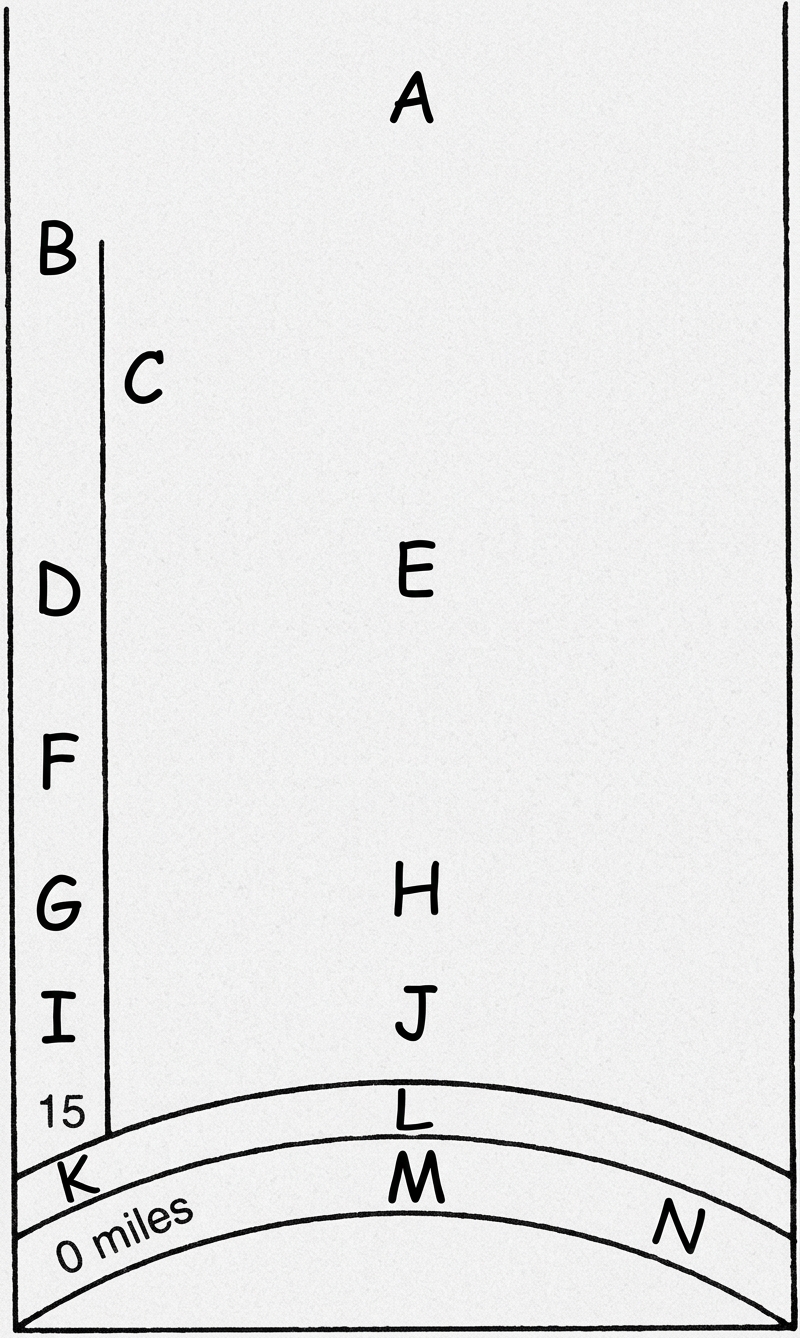
What should the label be for position B?
350

What should the label be for position C?
Thermosphere
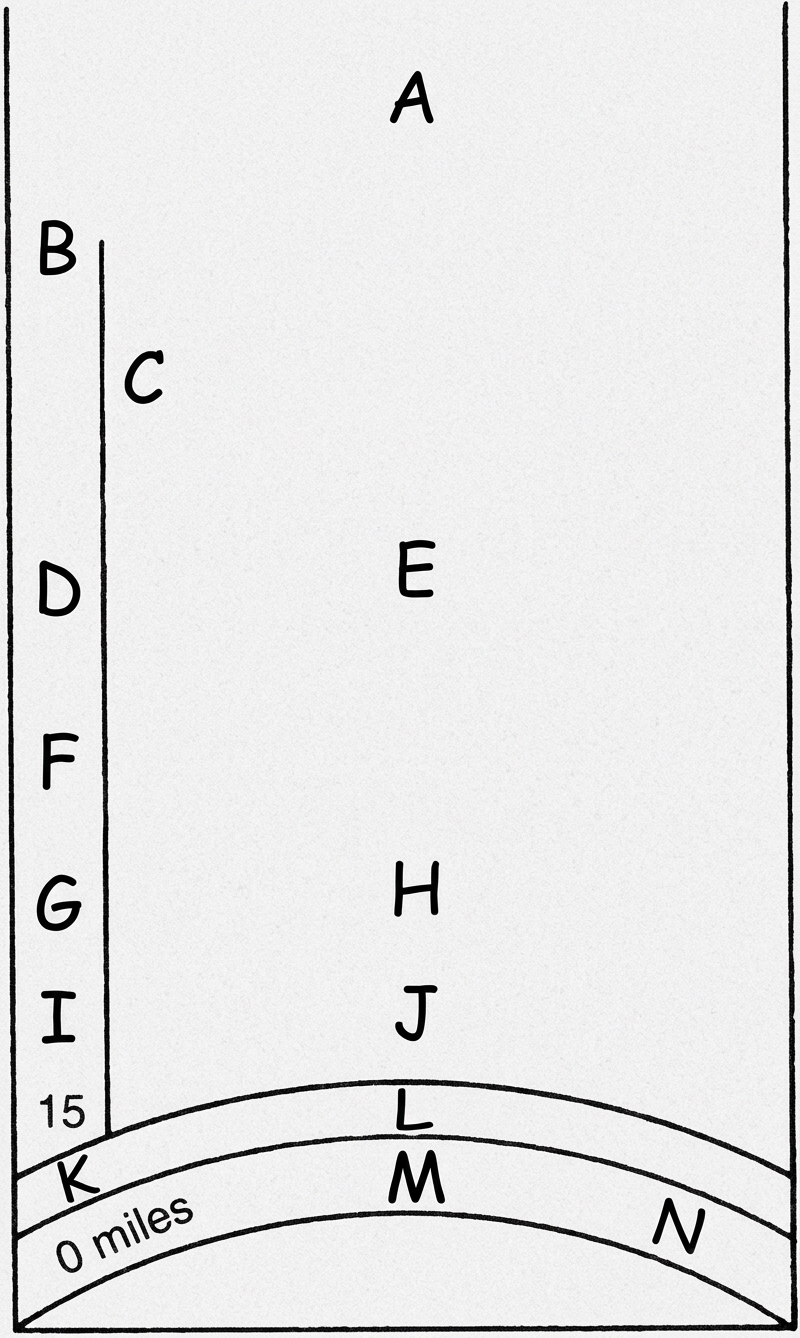
What should the label be for position D?
70
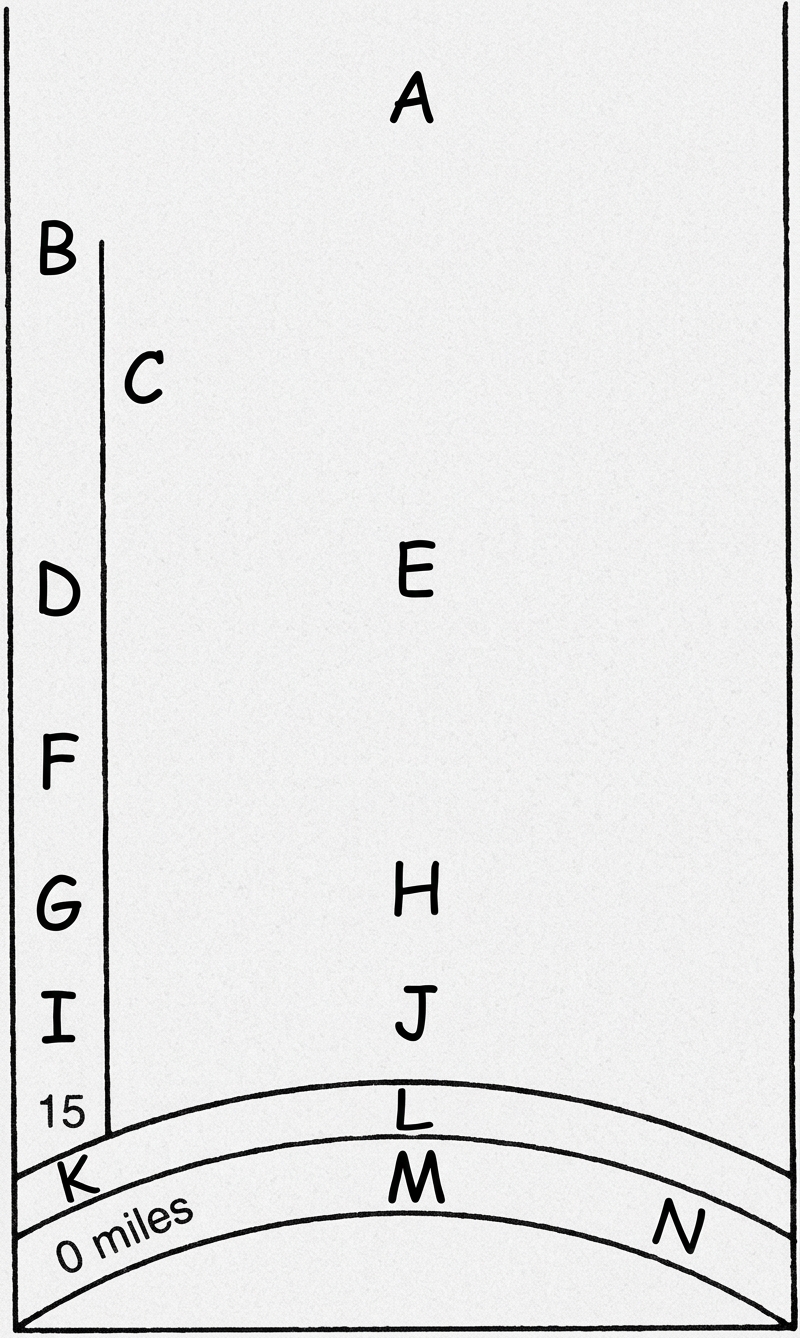
What should the label be for position E?
Ionosphere

What should the label be for position F?
Mesosphere
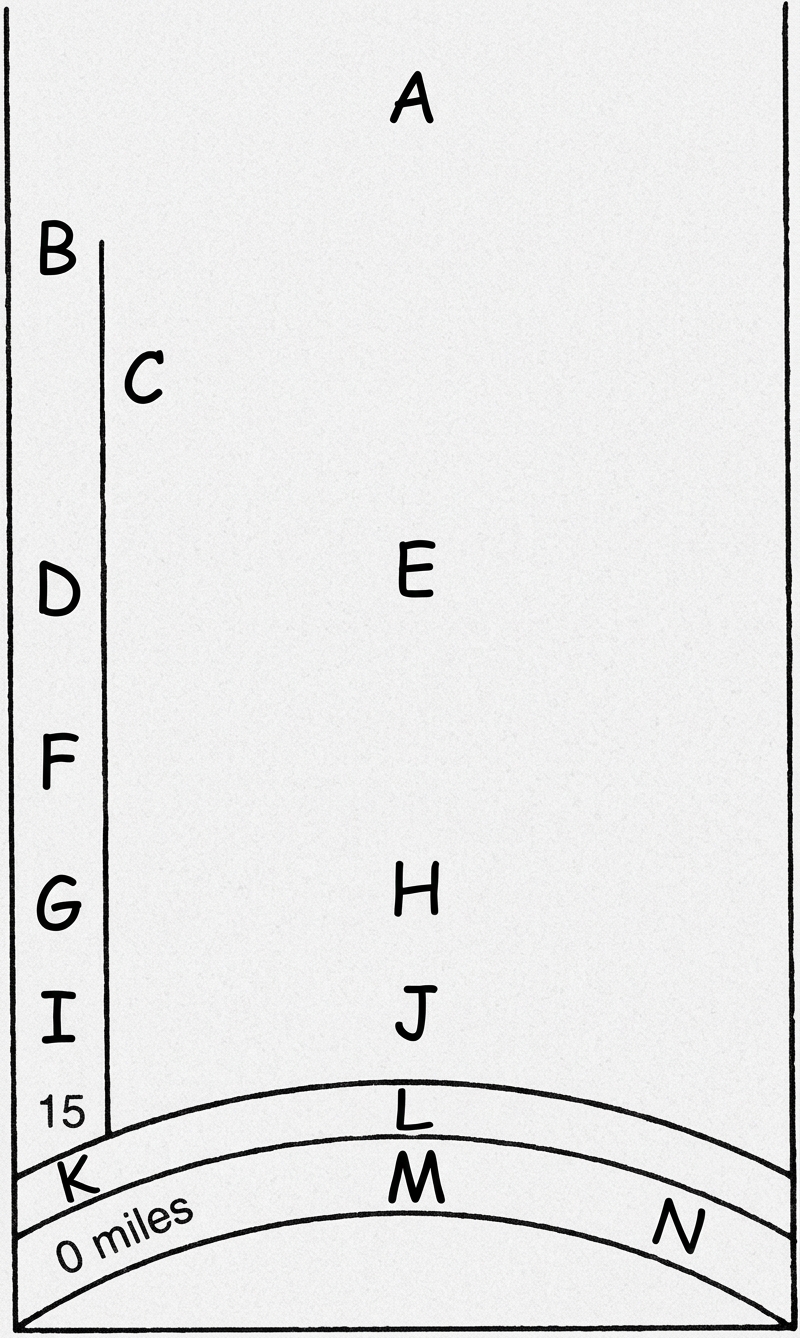
What should the label be for position G?
30

What should the label be for position H?
Chemosphere (ozone layer)
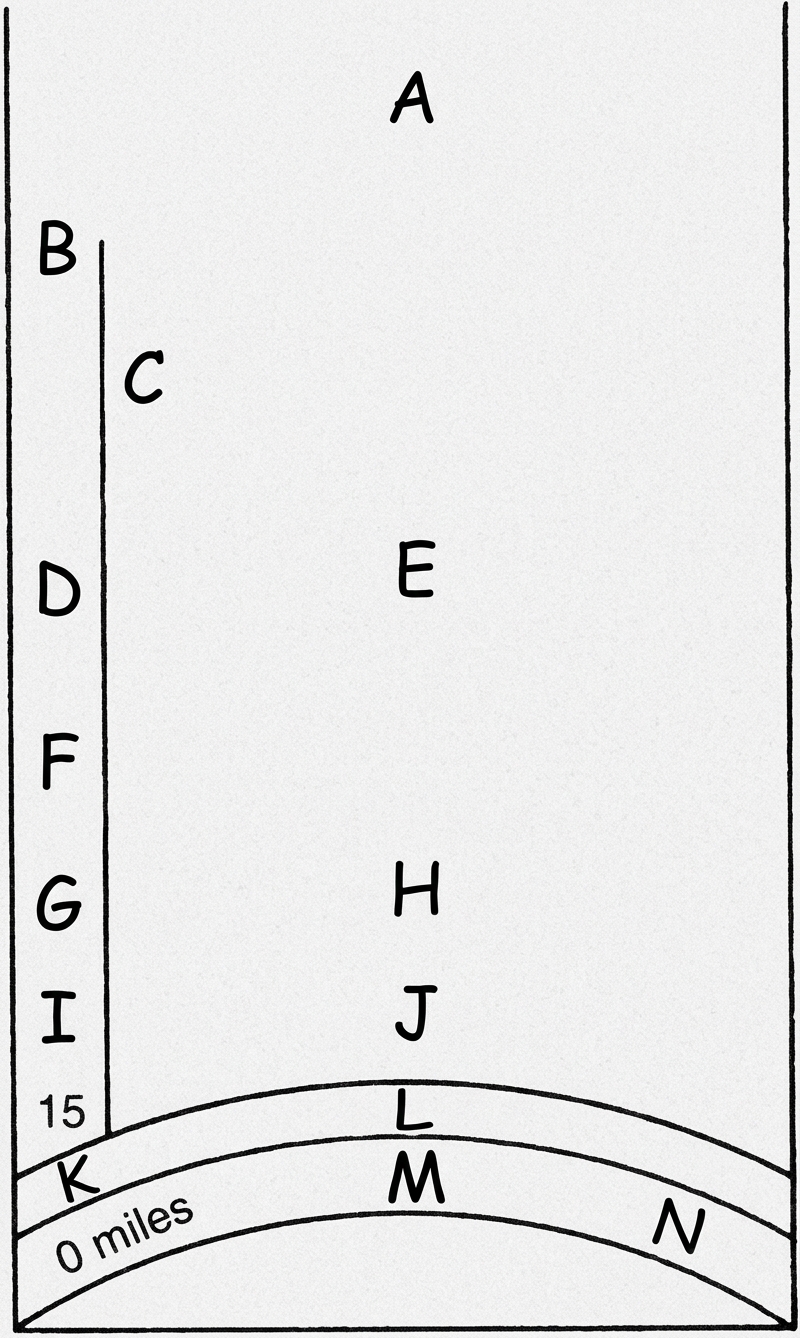
What should the label be for position I?
20

What should the label be for position J?
Stratosphere

What should the label be for position K?
10
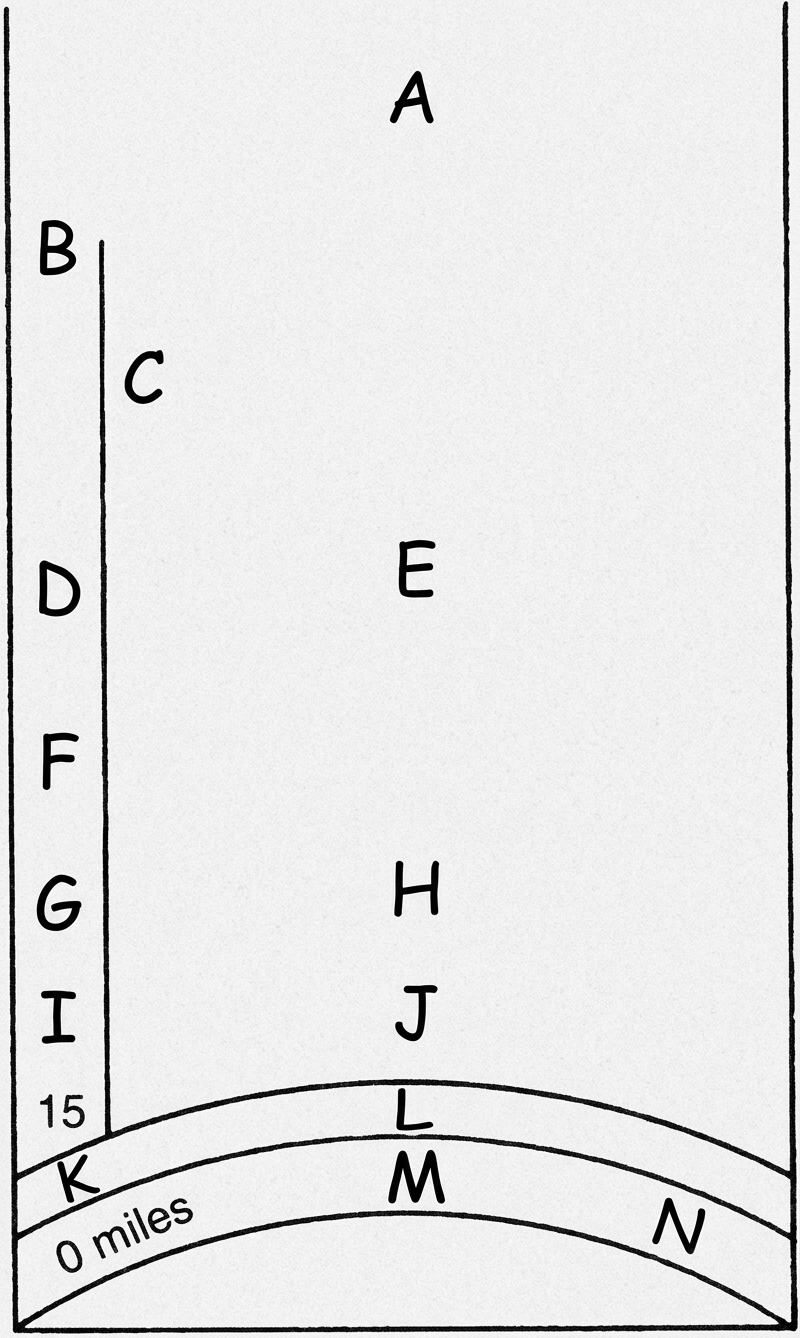
What should the label be for position L?
Tropopause

What should the label be for position M?
Troposhere

What should the label be for position N?
Jet stream
What does Earth's atmosphere consist of around Earth's surface?
Distinct layers of gas
Earth's atmosphere consists of distinct layers of __________ surrounding Earth's surface.
gas
Which layer of Earth's atmosphere comes first from the surface upward?
Troposphere
Which layer of Earth's atmosphere comes right after the troposphere from the surface upward?
Stratosphere
Which layer of Earth's atmosphere comes right after the stratosphere from the surface upward?
Mesosphere
Which layer of Earth's atmosphere comes right after the mesosphere from the surface upward?
Thermosphere
Which layer of Earth's atmosphere comes right after the thermosphere from the surface upward?
Exosphere
Which option lists the layers of Earth's atmosphere in order from the surface upward?
Troposphere, stratosphere, mesosphere, thermosphere, exosphere
Which layer of Earth's atmosphere is the lowest layer?
The troposphere
The troposphere is the __________ layer of Earth's atmosphere.
lowest
How high above Earth's surface does the troposphere extend?
To about 5 to 10 miles
The troposphere extends from Earth's surface to about 5 to 10 __________ above Earth's surface.
miles
Where do people live in Earth's atmosphere?
In the troposphere
People live in the __________.
troposphere
What occurs in the troposphere?
Weather and cloudiness
Weather and cloudiness occur in the __________.
troposphere
In which atmospheric layer is most of the atmosphere's mass found?
The troposphere
Most of the atmosphere's mass is found in the __________.
troposphere
Where is the stratosphere located relative to the troposphere?
Above the troposphere
The stratosphere is the layer of Earth's atmosphere above the __________.
troposphere
How high above Earth does the stratosphere extend?
To about 30 miles
The stratosphere extends to about 30 __________ above Earth.
miles
In which atmospheric layer is the ozone layer found?
The stratosphere
The ozone layer is found in the __________.
stratosphere
Why do commercial aircraft cruise in the lower stratosphere?
Because of the lack of weather turbulence
Where do commercial aircraft cruise because of the lack of weather turbulence?
In the lower stratosphere
How high above Earth does the mesosphere extend?
To about 50 miles
The mesosphere extends to about 50 __________ above Earth.
miles
In which atmospheric layer do most meteors burn up?
The mesosphere
Most meteors burn up in the __________.
mesosphere
How far upward does the thermosphere extend from the mesosphere?
To several hundred miles above Earth
The thermosphere extends from the __________ to several hundred miles above Earth.
mesosphere
What characterizes the air in the thermosphere?
It is extremely thin
The air in the thermosphere is __________.
extremely thin
Why do temperatures in the thermosphere rise sharply?
Because the thermosphere absorbs high-energy radiation from the sun
Temperatures in the thermosphere rise sharply because the thermosphere absorbs high-energy __________ from the sun.
radiation
Within which atmospheric layer does the International Space Station orbit?
The thermosphere
The International Space Station orbits within the __________.
thermosphere
Which layer is the outermost layer of Earth's atmosphere?
The exosphere
The exosphere is the __________ layer of Earth's atmosphere.
outermost
How does the exosphere connect with the vacuum of space?
The exosphere gradually fades into the vacuum of space
The exosphere gradually fades into the __________ of space.
vacuum
How is the ionosphere classified relative to the atmospheric layer list?
Not a separate layer in the list
The ionosphere is not a separate __________ in the atmospheric layer list.
layer
What is the definition of the ionosphere given here?
A region of charged particles (ions)
The ionosphere is a region of __________ particles (ions).
charged
Which region of the atmosphere is overlapped by the ionosphere in its upper portion?
The lower exosphere
Which region of the atmosphere is overlapped by the ionosphere in its lower portion?
The upper mesosphere
Which full layer of the atmosphere is overlapped by the ionosphere?
The thermosphere
Which option correctly lists the atmospheric regions overlapped by the ionosphere?
Upper mesosphere, thermosphere, and lower exosphere
What happens in the ionosphere when solar radiation strips electrons from atoms?
Ions and free electrons are left behind
Solar radiation strips electrons from atoms in the ionosphere, leaving ions and free __________ behind.
electrons
Why is the ionosphere important for long-distance radio communication?
Because the ionosphere reflects certain radio frequencies back toward Earth's surface
What does the ionosphere allow radio signals to do by reflecting certain radio frequencies back toward Earth's surface?
Travel beyond the horizon
About how much of the sun’s radiation passes through the atmosphere and reaches Earth’s surface?
Almost half
Almost half of the sun’s radiation passes through the atmosphere and reaches __________ surface.
Earth’s
What do the land and the water of the oceans do with solar radiation?
Absorb solar radiation and warm the air above
How do the land and the water of the oceans affect the air above them after absorbing solar radiation?
They warm the air above the land and oceans
How does land compare to water in absorbing energy and warming up?
Land absorbs energy and warms up faster than water
Land absorbs energy and warms up __________ than water.
faster
During the daytime, which air warms more than air over water?
Air over land
What happens to air over land compared to air over water during the daytime?
Air over land warms more than air over water
At night, which air gets cooler than air over water?
Air over land
How does air over land compare to air over water at night?
Air over land gets cooler than air over water
What is caused by temperature differences between air over land and air over water?
Differences in air density
Temperature differences between air over land and air over water cause differences in __________.
air density
What characterizes how the sun’s rays strike Earth’s surface?
They strike at different angles
The sun’s rays strike Earth’s surface at different __________.
angles
How does sunlight reaching the equator differ from sunlight reaching regions closer to the poles?
The equator receives direct rays, whereas regions closer to the poles receive slanted rays
Which part of Earth receives direct rays from the sun?
The equator
What do different angles of sunlight do to air temperatures?
They affect air temperatures
What do different angles of sunlight cause regarding air density?
Differences in air density