Engl: Exam #2
 Call Kai
 Learn
 Practice Test
 Spaced Repetition
 Match
 Flashcards
 Knowt Play
1/29

There's no tags or description
Looks like no tags are added yet.
30 Terms
Kazuo Ishiguro
Author born in 1954 in Nagasaki, Japan, who moved to England in 1960. Winner of the 2017 Nobel Prize in Literature and writer of 7 novels, including Never Let Me Go.
Ishiguro’s Writing Styles and Themes
Features first-person unreliable narration, genre experimentation, cross-cultural conflicts, and psychological disavowal.
Psychological Disavowal
A psychological state where characters repress reality while choosing to believe in something impossible, often framed as: I know very well that x is not y, but nonetheless I choose to believe that x is y.
Mise-en-scene
A French theatrical term meaning “place on stage” , referring to everything that appears before the camera, including the artful arrangement of actors, scenery, lighting, and props.
3 point lighting system
A standard lighting setup consisting of a key light (dominant source), fill light (softens shadows), and back light (provides depth)

High Key lighting
A lighting scheme where the key and fill lights are closely balanced in intensity, limiting shadows.

Low Key lighting
A lighting scheme where the key light is much brighter than the fill, creating deep pools of shadow.
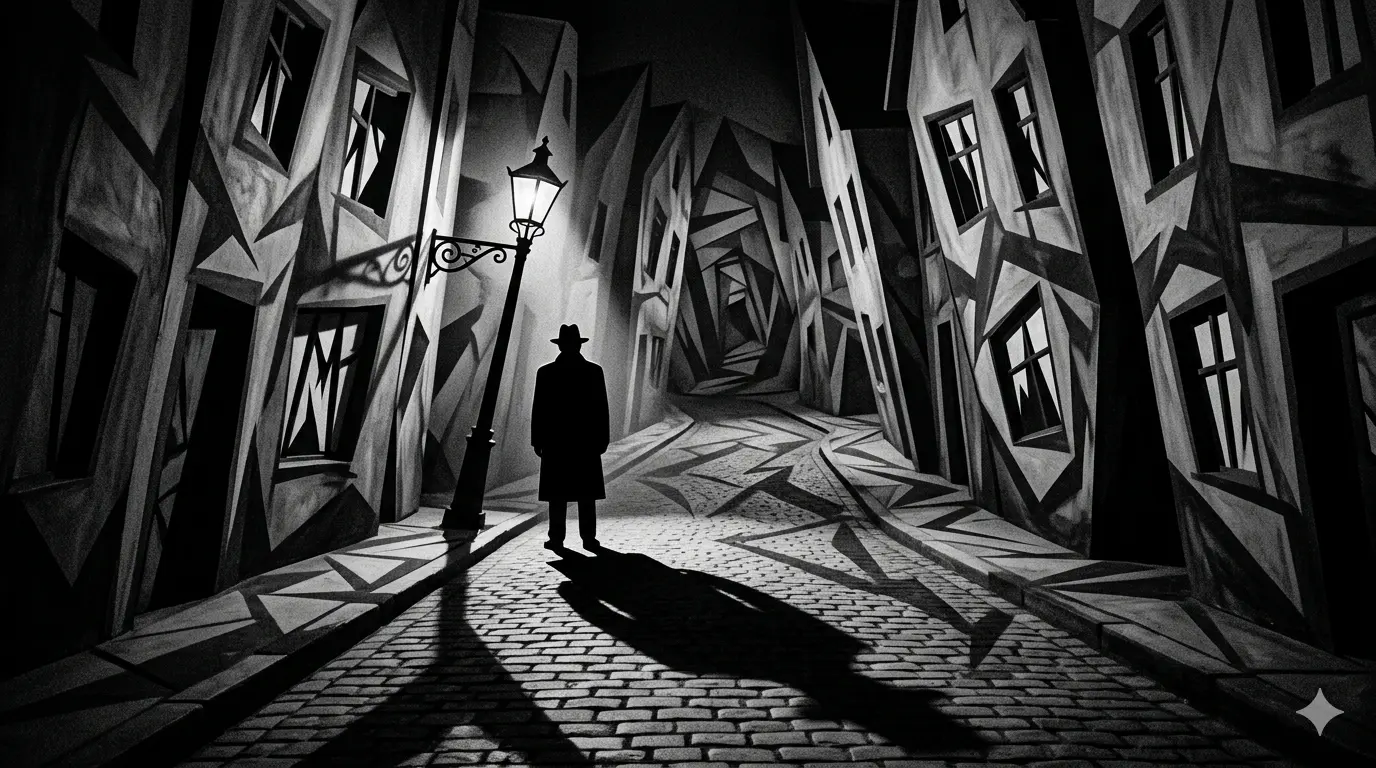
Expressionistic Lighting
Lighting designed specifically to express the psychological experience of characters.
Mark Romanek
Director of the film adaptation Never Let Me Go, who has a background in music videos, commercials, and writing/directing One Hour Photo.
Alex Garland
Screenwriter for the film Never Let Me Go, who enhanced its science-fiction aspects and is a close friend of Kazuo Ishiguro.
Barriers in Never Let Me Go Film.
Scenery, lighting, and prop light windows, walls, fences, and doorways used to emphasize emotional and physical barriers between characters.
P.D. James
Author of The Children of Men, born Phyllis Dorothy James in 1920, who used initials to remove gender distinction and was renowned for writing complex mystery novels.
Themes of P.D. James
Vivid, realistic settings, complex non-stereotyped characters, unhappy love and marriage, loneliness and alienation, realistic depictions of death, and ambiguous resolutions.
Part 1: Omega (The Children of Men)
The opening section exploring science vs. religion, featuring protagonist Theo Faron, Omegas, The Five Fishes, The Quietus suicide ritual, and the Sojourner immigrant underclass.
Part II: Alpha (The Children of Men)
The concluding section featuring Julian’s miraculous birth in a barn, Luke’s death, Theo killing Xan, donning Xan’s coronation ring, and baptizing the baby.
Camera movement
techniques used by directors instead of cuts to invite the audience to see how characters, places, and things are connected.
Pan
Moving the camera horizontally from a stationary point.
Tilt
Moving the camera vertically from a stationary point.
Tracking shots
Shots where the camera physically moves alongside characters or objects through space.
Dolly vs. Steadicam vs. Handheld
Dolly is mounted on a wheeled platform; Steadicam uses a body-mounted shock-absorbing ring; Handheld is held directly or via a shoulder ring by the operator.
On-screen Character Movement Meanings
Up signifies joy/power/authority; Down signifies grief/death/weakness; Left-to-right feels natural and good; Right-to-left goes against the grain, creating tension or evil.
Frame Rates and Speed Manipulation
Film runs at 24 frames per second; slow motion is created by overcranking (filming at >24 fps); fast motion is created by undercranking (filming at < 24 fps)
Camera Lenses: Normal lens
approximates human vision

Camera Lenses: Telephoto lens
compresses distance

Camera Lenses: Wide-angle lens
exaggerates depth

Camera Lenses: Zoom lens
changes focal length without moving the camera
Rack focus
changing the focus from one depth plane to another within a single continuous shot.
Long take
Any shot that runs longer than the standard 8-12 seconds without a cut, increasing audience anxiety.
Alfonso Cuaron
Global Mexican filmmaker born in 1961, known for long takes, moving camera, realism, and directing Children of Men, Gravity, and Roma.
Cultural References in Children of Men (Film)
Includes T.S. Eliot’s The Wasteland (Shantih chant), Michelangelo’s David and Pieta, Pink Floyd’s flying pig, Picasso’s Guernica, and street art by Banksy.