accounting remember stuff pt2
 Call Kai
 Learn
Learn Practice Test
 Spaced Repetition
 Match
Match Flashcards
 Knowt Play
1/164

There's no tags or description
Looks like no tags are added yet.
Name | Mastery | Learn | Test | Matching | Spaced | Call with Kai | Chat |
|---|
No analytics yet
Send a link to your students to track their progress
165 Terms
Trading businesses / Firm
A business that buys and sells purchased goods (inventory) - unlike a service firm that provides services only
Credit transactions - source document
goods are recieved now but payment is made later, the amount is owed, is recorded
source document - an invoice from the supplier, lists quantities, unit prices, gst and credit terms
rules of double entry accounting
- asset
- expense
- liability
- owners equity
- revenue
drawings is always recorded as a DEBIT increase - as it is classified as a negative owners equity
- for every transaction, the accounting equation must always balance total debits = total credits

double entry accounting
- the 'double entry' process determines the effect each account has on the system, more detailed version of effects of assets, liabilities and owners equity
- every transaction effects at least two accounts in accounting equation , one debit and one credit
- accounting equation is always balanced , total debits = total credits
general journal
records every transaction for a business, replacing the need for a business to record using the special journals
a transaction may affect multiple accounts
gst is treated as a liability
payments in general jounral
debit - expense, accounts payable, loan repayments (gst liability if in effect)
credit - bank or otherwise

faithful representation - qc
the information reported must be a faithful represenation of the real world economic event it represents . this means that user is assured that the information presented is complete, free from material error, and neutral (without bias)
general journal - purchases of inventory
debit - inventory, gst liability (decreases because the business can claim the GST back from the ATO), other purchases included
credit - account payable
accounts payable, if purchased on credit

accounting equation - purchases of inventory

general journal - paying an expense

impact on accounting equation - paying an expense
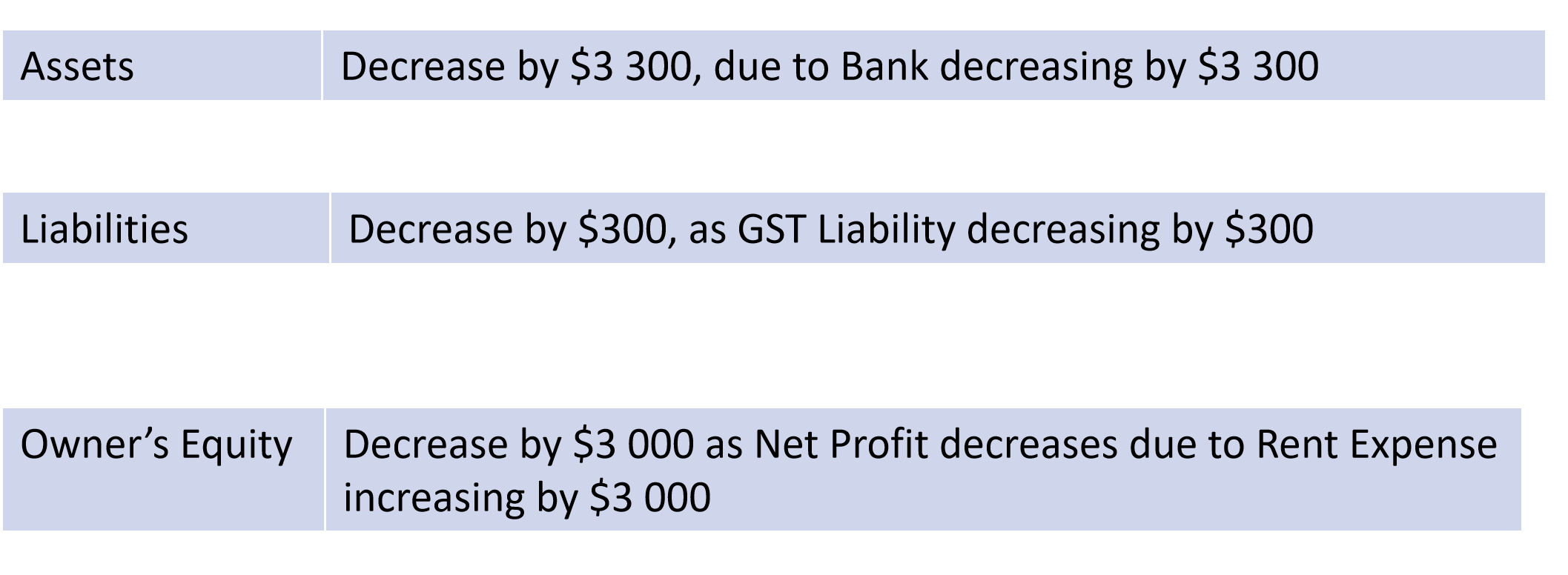
general journal - purchase returns, source document
occurs when inventory is sent back to the supplier
source document - credit note, from the supplier, identify what and how many items of inventory has been returned, and a cost price and a reason for the return
purchase returns can only be made on credit basis, so always accounts payable, not bank (decrease amount owed to accounts payable)

impact on accounting equation - purchase returns

general journal - payments to accounts payable - discount revenue
discount revenue - a reduction in the amount owed to a supplier if payment is made early (within the discount period stated in the credit terms)
meets revenue definition - decrease in liabilities - accounts payable, increase owners equity through increasing net profit, for discount, entire amount outstanding needs to be paid

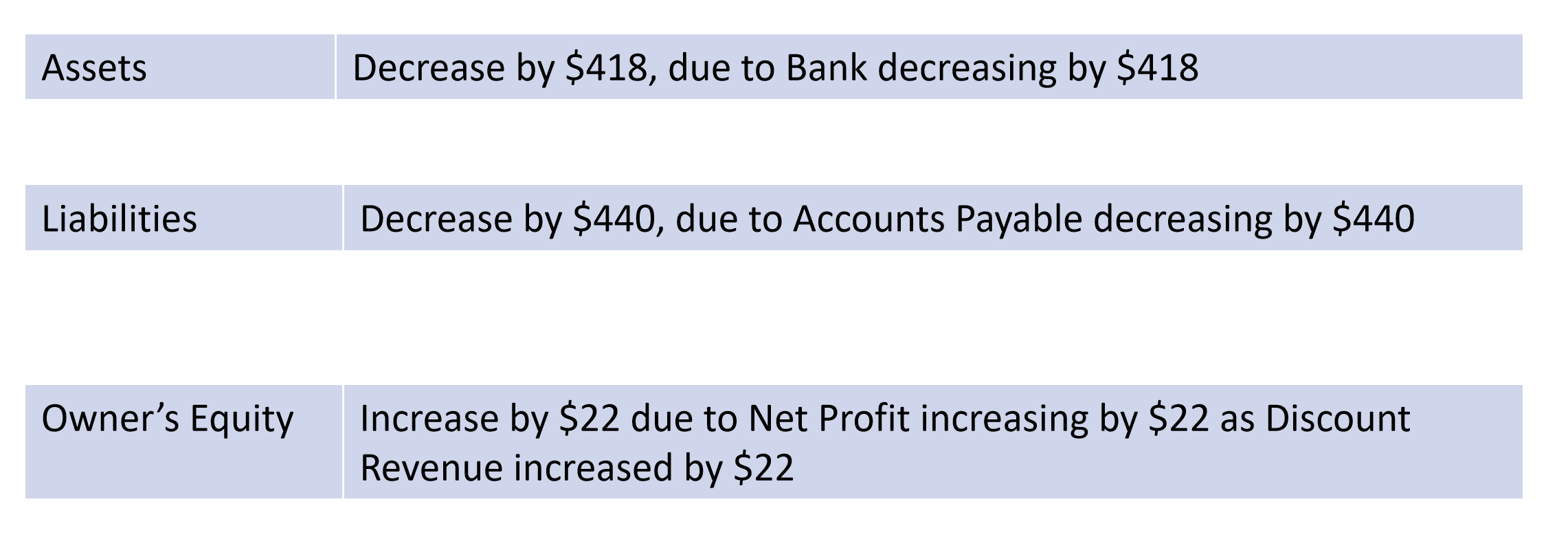
impact on accounting equation - accounts payable w. discount
discount revenue increases net profit so owners equity increases
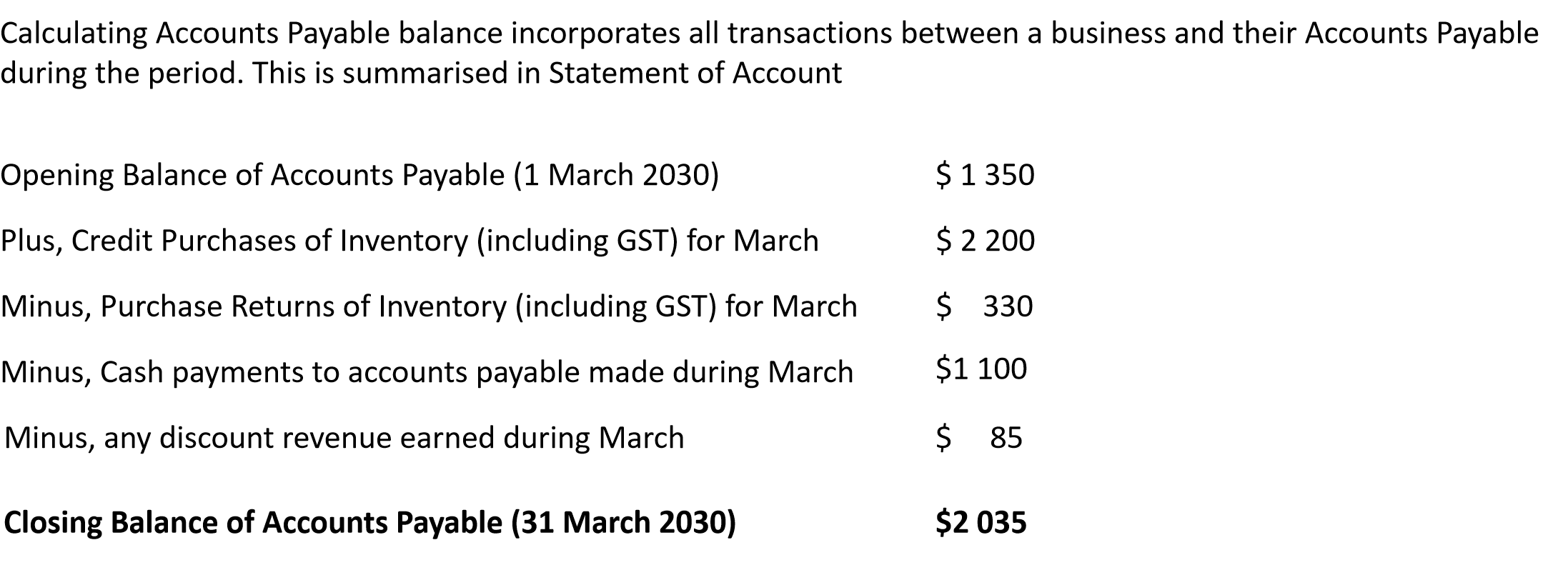
accounts payable balance
opening balance of accounts payable
+ credit purchases of inventory , including gst
- purchase returns of inventory, including gst
- cash payments to account payable
- any discount revenue earned
= closing balance of account payable
setting up accounts payable schedule
first day of the month - balance (details) (if nothing - don’t need to write the balance line)
payment - since its to the account payable - when there is no discount given (amount in brackets, reduces account payable)
payment/discount revenue - when there is a discount present (amount in brackets, reduces account payable)
Credit purchase including GST - when purchasing from that supplier
purchase return including GST - returning to the supplier (amount in balance)
last day of the month - total (details) (balance - can be 0)

accounts payable schedule
the accounts payable schedule lists the balance owing to each individual supplier, if accounts payable has a balance of 0, it will not appear in the schedule

sales - trading business
the revenue earned by a trading business from the sale of inventory
cost of sales
the expenses incurred when inventory leaves the business due to a sale. (the cost price of inventory being sold)
identifies the cost of inventory that is given to customers in process of completing sale, expense,
gross profit
the profit earned purely from the purchase and sale of inventory - what is made from selling inventory
sales revenue - cost of sales
credit sale - source document and credit terms
credit sale evidences by a sales invoice (the sellers name appears at the top of the invoice)
include credit terms 10/10, n/30 = 10 percent discount if paid within 10 days, net amount due within 30 days
gst listed seperately, amount business collects on behalf of ATO, increases obligation to them (or reduces GST asset)
cost price of inventory not listed (customer does not need to know)
general journal - recording a credit sale
accounts effected
step 1 - sales, gst liability, accounts recievable
step 2 - cost of sales, inventory

general journal - recording a cash sale
credit vs cash sale only difference
accounts recievable (credit) is replaced with bank (cash)

cost price formula
cost price = selling price (excluding gst) / (1 + markup as decimal)
period assumption
According to the period assumption, reports are prepared for a particular period of time, such as a month or a year, in order to obtain comparitability of results. Profit determination involves a process of recognising the revenue for a period and deducting the expenses incurred for the same period. A distinction can be made between assets, that will provide benefit for future reporting periods, and expenses which are totally consumed within one reporting period.
credit sale of inventory - impact on accounting equation
if an account effects, owners equity such as drawings and capital, state that it will affect owners equity
if an account effects, net profit such as sales revenue, sales return, purchase return, discount revenue, discount expense, discount revenue, etc - state that it will affect net profit

general journal - collections from accounts recievable - no discount, no gst
no gst to account for when cash is recieved from accounts recievable - gst is only recognised and reported only at the time the sale was made and not when cash is collected
can be collected cash, eft - under operating activites in the cash flow statement

general journal - collections from accounts recievable - with discount (discount expense)
discount expense - records the amount that will not be recieved but is also not owed to the business anymore, as the account recievable has paid within the discount terms
classified as an expense - decrease in assets (AR), decrease in owners equity (Net profit), not a distribution from the owner
tip - check the date for of the original credit sale, compare to payment date when deciding to apply a discount — if previous sales are not paid, the payment is attributed to those first

impact on accounting equation - collections from AR with discount

calculating discount expense
total amount eligible for discount (amount owed including gst) x % rate applicable
if there are two purchases and one is eligible for discount and the account pays outstanding, the discount expense is only applied to the purchase eligible for discount
general journal - sales returns
source document - credit note
sales returns - negative revenue
inventory comes back to business
decreases cost of sales, decrease profit,
business will not be collecting the gst charged on that sale any longer
sales return can only be recorded for credit sales, will always reference to accounts recievable - no bank

sales return - impact on accounting equation

calculating account recievable balance
opening balance for accounts recievable
+ credit sales, incl gst
- sales returns of inventory, incl gst
- cash receipts from account receivable
- discount expense
closing balance for account receivable

setting up account receivable schedule
balance - start of the month (if none, don’t write it)
receipt - account receivable pays business, no discount (amount recorded in brackets - reduces account receivable)
receipt/discount expense - account receivable pays business, with discount (amount recorded in brackets)
credit sale including GST - sale to account receivable
sales return including GST - account receivable returns inventory (amount recorded in brackets - reduces account receivable)
total - end of the month, 0 if they dont owe anything
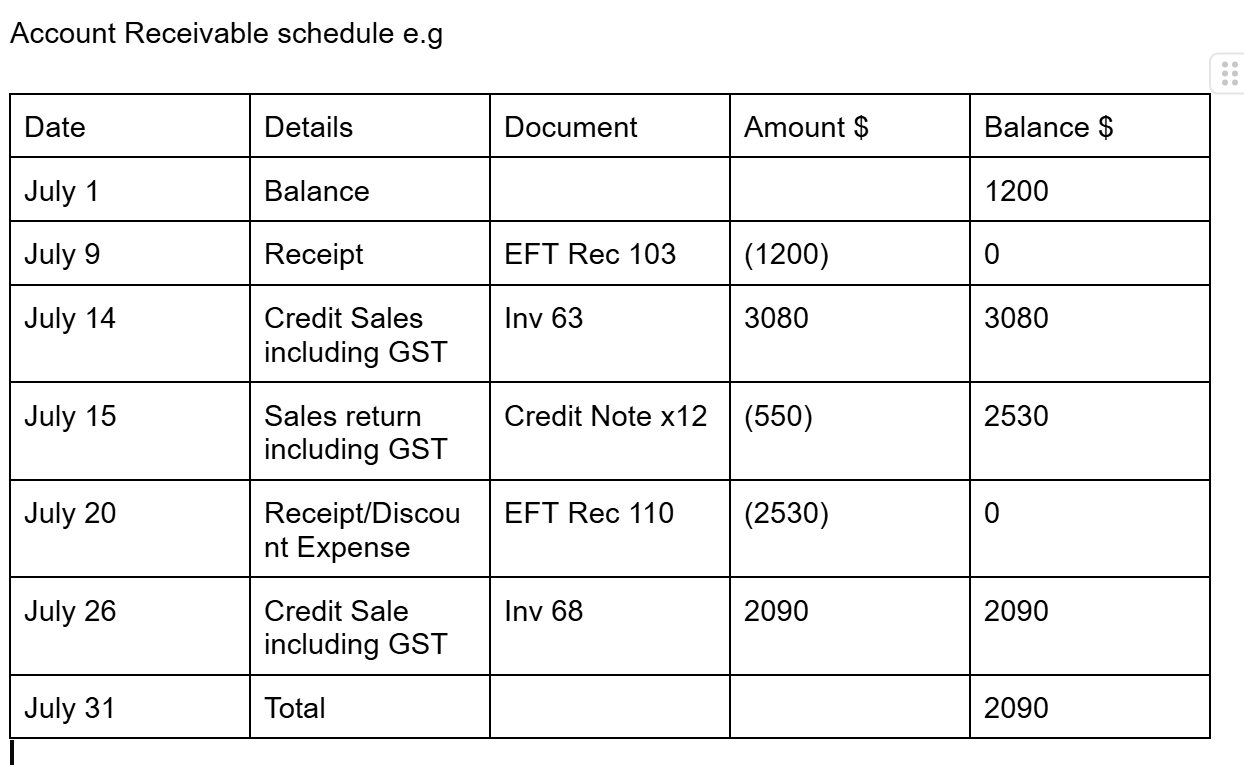
account receivable schedule
if the account receivable does not owe anything, then it is not recorded in the account receivable schedule

going concerns assumption
the going concerns assumption assumes that the business will continue to operate in the future and its records are kept on that basis. the life of the business is assumed to be continuous.
alt - Under the going concern assumption, financial reports are prepared on the assumption that an existing entity will continue to operate into the future. It is assumed that the entity will not be wound up in the near future but will continue its activities.
inventory - classification
inventory is the physical products that are purchased from suppliers and resold to the customer at a higher %markup,
this is different to inventory of materials that were used by a servicing business - goods held by a trading business for sale to customers
classified as a currrent asset

trading business characteristics
purchases goods from suppliers or wholesalers and sells them to customers at a higher price. the gap between the selling price and cost price is what generates profit.
differs from service business which sells skills/knowledge than a physical product
inventory importance
1. Sales of inventory is the MAIN source of revenue — key to earning profit for the business.
2. Inventory is likely to be one of the biggest assets on the Balance Sheet
internal controls
1. physical safeguards
2. preventative safeguards
3. authentication methods
4. separation of duties
5. rotation of duties
6. careful hiring practises
7. effective employee training
physical safeguards
if people cant access it they cant steal it - fences, padlocks, locked storerooms, safes, lock boxes
prevents unauthorised access to inventory
preventative safeguards
threat of apprehension deters theft and fraud - alarms, security cameras, dummy cameras
authentication methods
limits access to authorised staff only - smart cards, passwords, multi factor authentication, biometrics
seperation of duties
no single employee (except the owner) has full control of one asset type - reduces risk of collusion
rotation of duties
tasks change between the employees and the next person reviews the previous persons work - also multi skills staff
careful hiring practises
screen and assess candidates for trustworthiness - reduce reliance on other control mechanisms
effective employee training
staff trained in asset management and cyber security, reduces the damage through misuse - includes regular policy review
perpetual inventory system - inventory recording
a system of continous recording of inventory movements using inventory cards
what is the identified cost method
each item is individually tracked (e.g by code) - requires ability to track individual items
identifies actual cost price of specific item when sold or purchased
each different cost price creates its own line in the balance column of the inventory card
if new purchase shares the same cost price as existing inventory, two lines are combined

identified cost - adv + dis
advantages - accuracy, actual cost of every item is known at point of sale
disadvantages - time consuming and costly to maintain the individual tracking system
inventory card - gst when recording transactions
all items recorded in inventory card recorded at cost price excluding gst
this is because gst is not part of the future benefit of the inventory and therefore cannot be part of the cost price, and GST does not affect the valuation of inventory
selling price is ignored when recording in inventory card
inventory card - opening balance
how - record balance, ‘balance’ as source document, first day of the month
opening balance in balance column- each different cost price gets own line in balance column

inventory card - credit purchases
IN column, reenter existing balance if there is

inventory card - purchase return
why should they accept return
business sends inventory back to the supplier - only on a credit base
evidenced by a credit note issued by supplier - they keep a copy for accounting records and purposes
suppliers have to accept returns for faulty or damaged goods but can also accept them for other reasons like building a relationship with their customers - change of mind
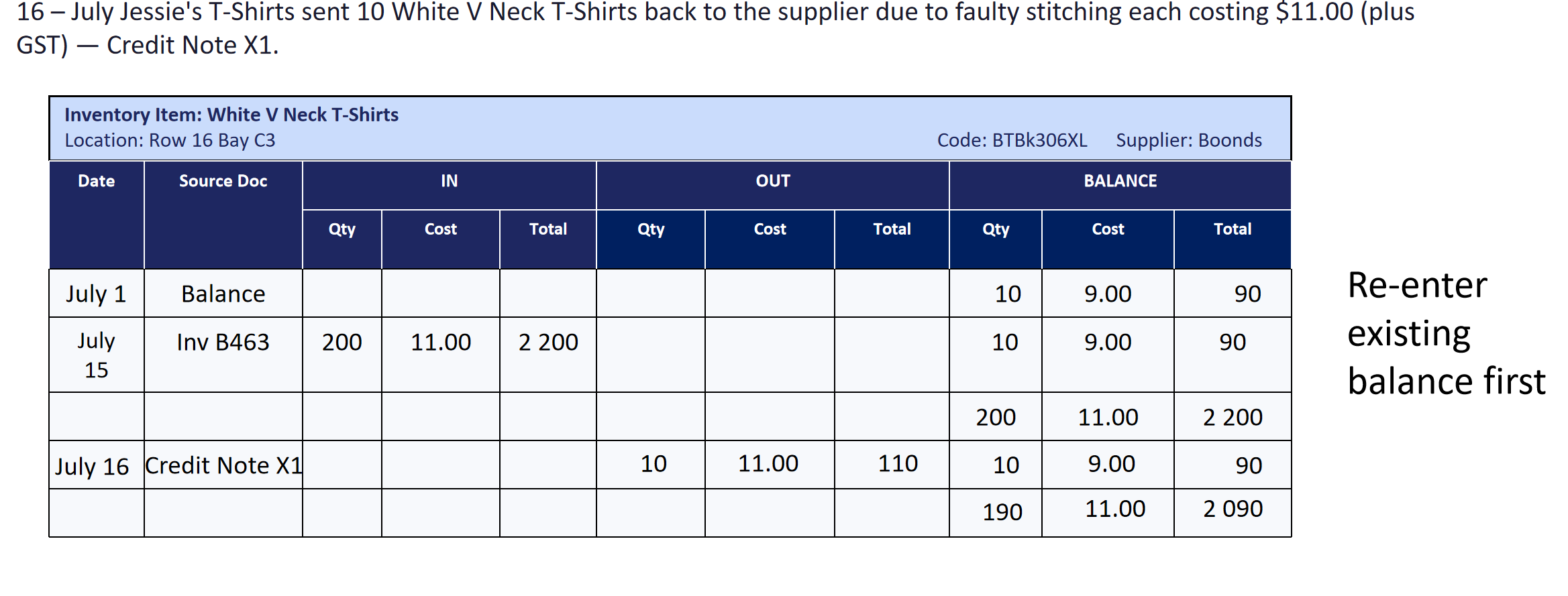
inventory card - credit sales
mutliple cost prices in one sale - each get its own row in OUT and BALANCE columns
do the order that appears in the balance column
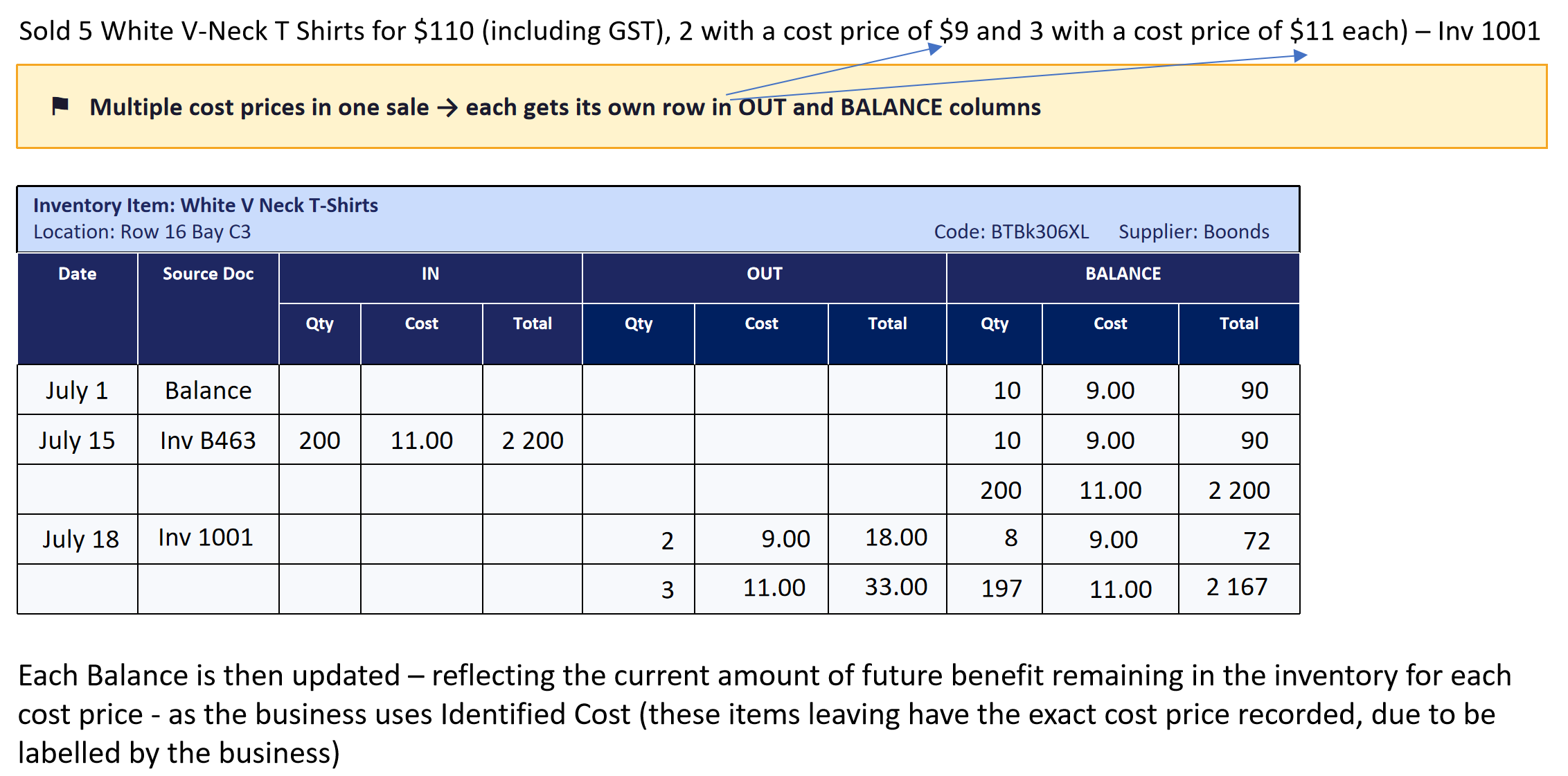
income statement - sales return
return by a customer of inventory previously sold on credit - no cash sales return so no bank
classified as a Negative Revenue
listed in income statement under Sales

why sales return recorded
sales return evidenced by credit note - business issues the document
upholding verifiability
help business identify issues within the business
quality of inventory being sold - poor quality will see larger amounts returned to the business
quality of Staff – staff providing the right sales support to customers, Providing correct or incorrect recommendations
Help assess relationship with customers – does the business have customers regularly returning products? Do they purchase larger amounts knowing they can return if not used/sold
recording sales return - inventory card
IN column

inventory card - drawings
why is it recorded
no gst to record, internal transaction - verified by a memo (covers other transactions not covered by other source documents)
recorded to ensure that the owner is seperate to the business and other entities - so that seperate records and reports can be prepared - upholding entity assumption

inventory card - donations - advertising
when the business takes out inventory and donates it to a third party or give it to someone
recorded as advertising (expense) as a donation creates an expense for the business
promotes the business within the community, regardless of the intention of the business owner

general journal - donations / advertising
no gst liability as it is a donation

what is a stocktake process
comparision between the inventory assumed by the business to be in the business (evidenced by inventory card) and results of physical count of inventory by employees
comparing will identify if business has incurred inventory loss or found an inventory gain
process completed on last day of reporting period (end of month, quarter, year - uphold period assumption)
physical count - why
process of counting every item of inventory on hand to verify the accuracy of the inventory cards and detect any losses or gains.
as each item of inventory has been labelled/coded, by counting every item, very easy to identify the cost price of inventory that exist within the business at the end of the period
inventory card - inventory loss
physical count is less then inventory card balance
Inventory loss is an expense account used to record this difference (OUT). decreasing inventory (asset) and decreasing net profit.
recorded in the OUT column
internal transaction so verified by a memo
causes
theft
damaged goods, not recorded
oversupply to customers
undersupply from supplier
incorrect count

general journal - inventory loss

inventory card - inventory gain
physical count is greater than the inventory card balance
inventory gain is a revenue account used to record this difference (IN). increasing inventory (asset) and increasing net profit
recorded in the IN column
internal transaction so verified by a memo
causes
undersupply to customers
oversupply from supplier
incorrect count

general journal - inventory gain

important reminders
always record inventory EXCLUDING GST - remove GST from any source document before recording in the inventory card
selling price is NEVER in the inventory card - card only shows COST price, selling price on invoices/credit notes
each different cost price = own line in balance - under identified cost, can combine lines only if cost prices is identical
drawings and advertising have NO GST - internal transactions (memos) do not involve third party, no GST implications
sales return are CREDIT basis only - vce study design does not include sales returns on cash sales
comparability
comparability enables the user to identify and understand similarities and differences between items. Information about an entity is more useful if it can be compared with similiar information about other entities, and with similiar information about the same entity for another date or period.
comparability - identified cost vs FIFO
This would apply to a business using Identified Cost method and changing to FIFO. It would make comparing results more difficult as the methods used are not consistent.
This can occur but needs to be notified in the reports of the business.
first in, first out (FIFO)
This method works on the assumption that the first inventory purchased (IN) will be the first out of the store (sold/OUT).
It is used by businesses that sell inventory that is high volume and not distinguishable — meaning it is not practical or cost-effective to track each individual item.
do we use GST when recording transactions
all transactions recorde in an inventory card are recorded at Cost price EXCLUDING GST
this is because GST is not part of the future benefit of the inventory, therefore cannot be part of the cost price
selling price of the transaction si ignored when recording in the inventory card
advantages of FIFO
Easy to apply — cheaper and less time-consuming than Identified Cost.
Suitable for high-volume, indistinguishable inventory items.
disadvantages of FIFO
Based on an assumption so the items leaving the business may not be the actual items
May not accurately represent the actual cost of inventory sold
FIFO - recording opening balance
same as identified cost
Opening Balance is a verifiable amount, evidenced by the inventory card/balance sheet from the previous period, there is no need to assume the value
source document - balance (in balance column)
important that balances are entered in the order that the inventory arrives in the business
You cannot add to older balances, even if the cost price is the same

FIFO method - purchases
Purchases are recorded at the actual cost shown on the invoice (same as Identified Cost) — source document evidence is available, so no assumption is needed.
a new line of inventory for every new purchase, regardless of cost price (unless they are the sequential purchases of the same price)
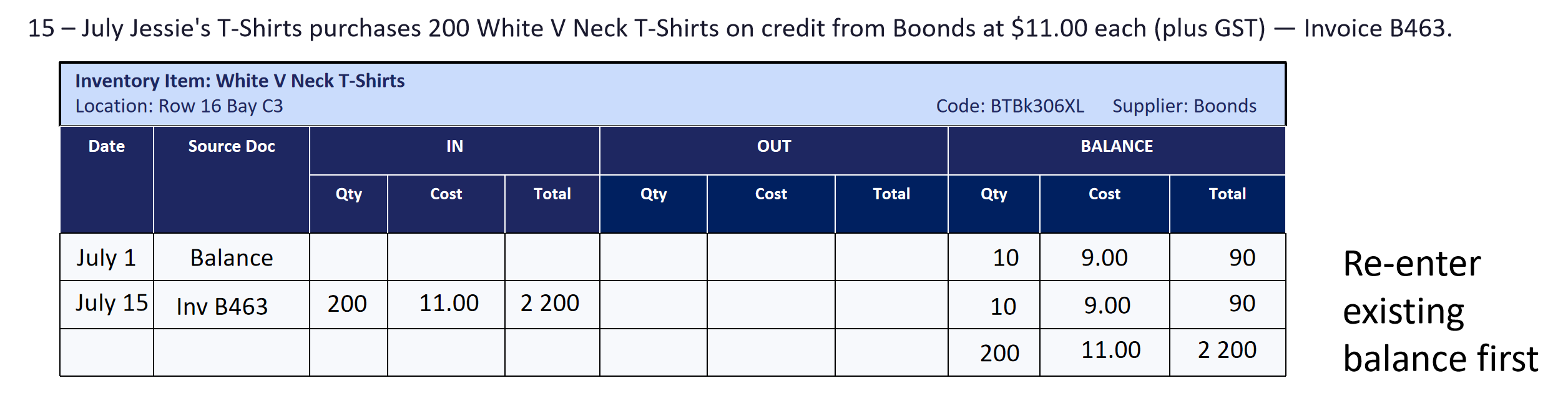
FIFO - purchase returns
business sends back inventory to supplier
Valued using the price shown on the supplier's Credit Note — actual cost is documented. (same as Identified Cost)

FIFO - recording sales
The OLDEST available balance is assumed to be sold first. Once exhausted, the next oldest balance is used, and so on.
use the 3 and 2 method
evidenced by either an EFT receipt (cash) or a Sales invoice (credit)
inventory value for that transaction comes from total in the inventory card in OUT column
if the oldest line of inventory is sold out, leave a gap and include lines to show that its gone

FIFO - sales return
Valued using the LAST price in the OUT column, – reversing the latest entry — regardless of what actually happened.
in IN column
negative revenue
account receivable return inventory previously sold on credit
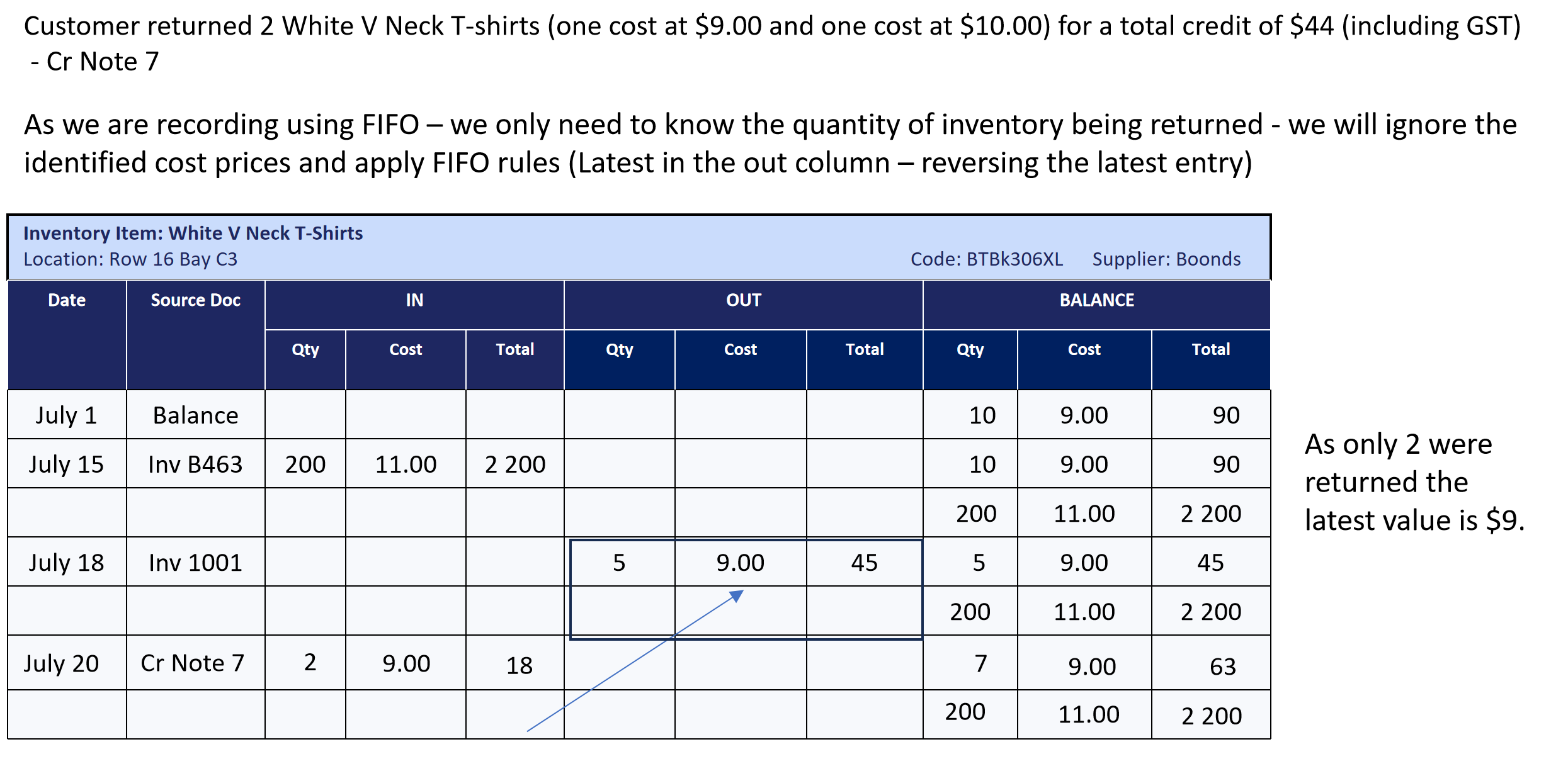
what if the oldest balance is no longer - sales return FIFO
still take the amounts from most recent OUT column transaction and replace the line of inventory in balance column
make it back into the order it was in before it was sold - see image

FIFO - drawings and donations (advertising)
Valued at the OLDEST available balance.
donations are advertising as it promotes the business regardless of the owners intention
recorded to ensure that the owner is separate to the business and other entities, so that separate records and reports can be prepared. (upholding entity assumption)

FIFO - inventory loss
Recorded in the OUT column – as the inventory valuation method is FIFO – Oldest Available balance is assumed.

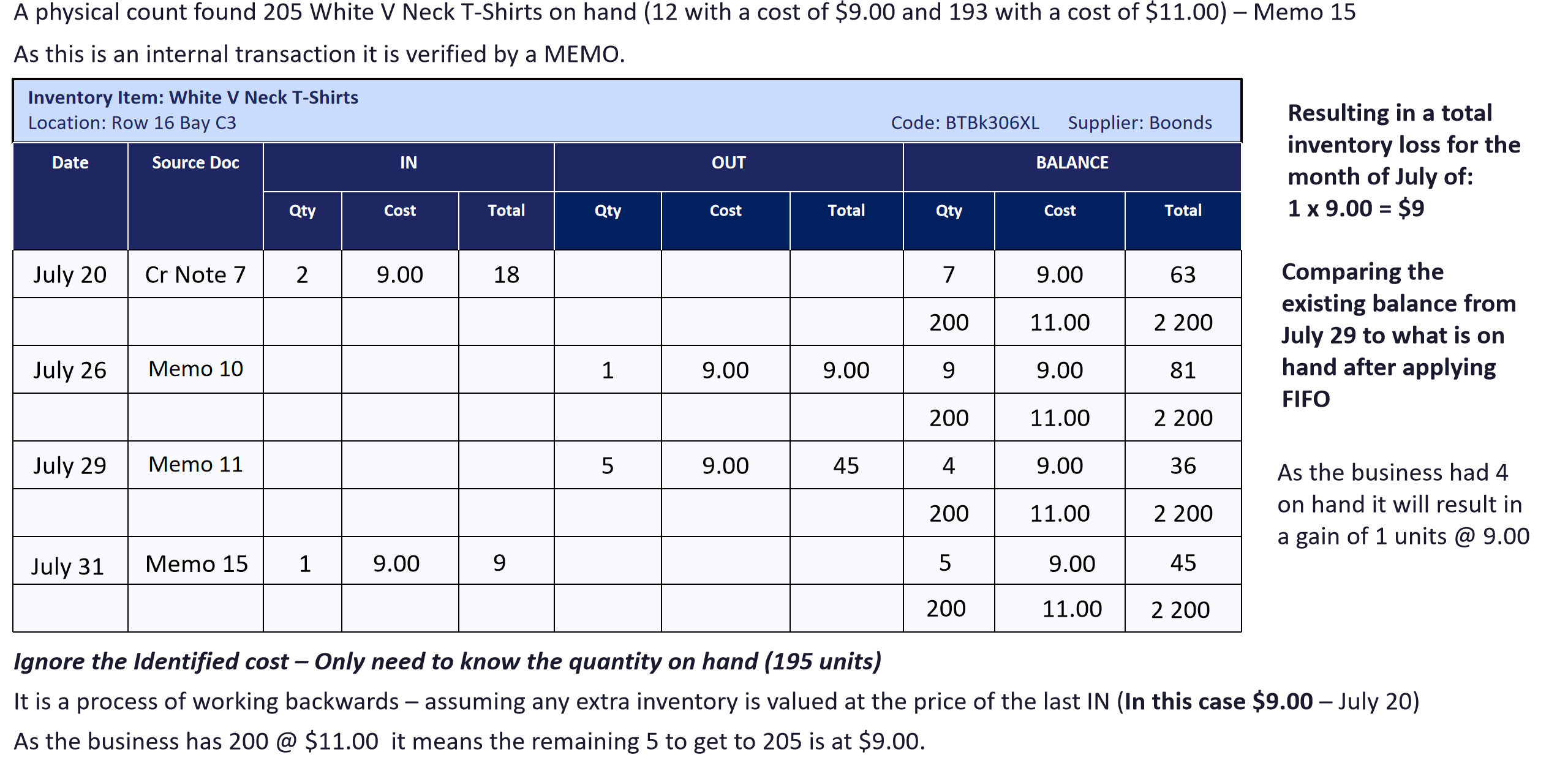
FIFO - inventory gain
It is assumed to be Valued at the LATEST cost price from the IN column (regardless of what the actual transaction was).
Accrual Basis – Recognising Sales & Cost of Sales
(defintino with sales and cost of sales)
Revenue is recognised in the period in which the expected inflow of economic benefits can be measured in a faithful and verifiable manner — that is, revenue is recognised when it is earned. (Sales)
Expenses are recognised when the consumption of goods and services can be measured — that is, when they are incurred. (Cost of Sales)
The accrual-basis profit for a period is determined by subtracting expenses incurred for the period from revenue earned in the same period. (Net Profit)
Verifiability – Source Documents
Verifiability means different knowledgeable and independent observers can reach a consensus that a particular depiction of an event is faithfully represented (The transaction).
Maintained by retaining the source documents (Source Document Number) used to record the transaction. Checked through auditing. The purpose of verifiability is to hold the accounting professional accountable for their work.
revenue (sales)
Increases in assets or decreases in liabilities
That result in increases in owner’s equity
Other than contributions from the owner
Arises in the ordinary activities of a business
expenses (cost of sales)
Decreases in assets or increases in liabilities
Other than those relating to distributions to the owner
That result in a decrease in owner’s equity
Encompass losses and expenses arising in ordinary activities
current assets - inventory
Inventory is classified as a current asset as it is present economic resource controlled by an entity as a result of past events (purchase of inventory)
Has the potential to produce future economic benefits, Held primarily for the purpose of sale or trading. because it is expected to be converted to cash, sold or consumed within 12 months (In this case likely Sold).
three financial reports
Cash Flow Statement - Reports on cash received and paid for the Operating, Investing and Financing activities, and the change in the firm’s cash balance over the period.
Income Statement - Reports on revenue earned and expenses incurred over the reporting period. Outlining the financial performance of the business for a period of time.
Balance sheet - Reports on assets, liabilities and owner’s equity showing the business financial position at a particular point in time.
calculating cost of sales using an inventory card
Find every sale transaction recorded in the OUT column of the inventory card. (EFT Rec or Inv from the OUT column)
Add together the value of each sale recorded in the OUT column
check the IN column for any sales returns and deduct their value (Cr notes from the IN column)
memos are ignored, although they are outflows of inventory they are not sales

how does cost of sales fit the definition of expense
An outflow of economic benefits (the inventory that has been sold)
In the form of a decrease in assets (Inventory)
And a decrease in owner’s equity (Net Profit) — not a distribution to the owner
Cost of Sales & The Cash Flow Statement
Any movement of inventory that causes a cash flow is recorded as an Operating Cash Flow, because it is in the ordinary course of business
The expense ‘Cost of Sales’ is NOT recorded in the Cash Flow Statement, because it involves a movement of inventory, not a movement of cash.
calculating sales using an inventory card
identify sales in OUT column - (EFT rec or Inv from the OUT column)
add the quantity of each sale together
check IN column for sales return and deduct their quantity
mulitply this quantity sold by the selling price

calculating sales - markup approach
sales = cost of sales x (1+markup%)
calculating cost of sales - mark up approach
cost of sales = sales / (1+markup%)
sales - revenue
An Inflow of economic benefit (Selling price being greater than cost price of the inventory)
In the form of a Increase in assets (Bank or Accounts Receivable)
And a decrease in owner’s equity (Net Profit) — not a contribution by the owner
sales and cash flow statement
Any movement of inventory that causes a cash flow is recorded as an Operating Cash Flow, because it is in the ordinary course of business
With a Cash Sale, there will also be the collection of GST to record separately in the operating activities of the business
cost of goods sold
Cost of Goods Sold is a heading used in the Income Statement for all costs incurred to bring inventory into a location and condition ready for sale — Cost of Sales is only one of these costs.
Other Items that appear in Cost of Goods Sold:
- Delivery In
- Buying Expenses
- Cartage Inwards
- Import Duties
These other Cost of Goods Sold are costs in bringing the inventory into a condition and/location ready for sale
income statement
Revenue (cash sales/credit sales - what has been earnt in Net Sales for the period, sales less sales return
less sales return
Less cost of goods sold (cost of sales etc - all costs associated with bringing inventory into a condition and location ready for sale)
= gross profit (revenue - cost of goods sold)
add inventory gain / less inventory loss
= adjusted gross profit (gross profit less adjustment for inventory gain or loss)
add other revenue (discount revenue - Alternative revenue that may have been earnt during the period (not through sales)
less other expenses (Things than are incurred in the process of earning revenue for the business.)
advertising
wages etc
= Net Profit (Loss)
if the business has other revenues then a subtotal needs to be created after other revenues - no name
