15. Head and neck injuries.
 Call Kai
 Learn
 Practice Test
 Spaced Repetition
 Match
 Flashcards
 Knowt Play
1/27

There's no tags or description
Looks like no tags are added yet.
28 Terms
how common are head and neck injuries
most common and most important regional injury
what are vulnerability factors of H+N injuries
heaby relative to its size
being attached to body in relatively unstable way
thin CT between bone and skin
ICP increase → solid walls unable to expand → secondary damage
what can be injured
skin + CT- scalp
bone
brain
vessels
what are the types of injuries to the skin
based on type of effect
mechanical force
heat/ cold
what are the mechanical injuries to skin
blunt force
sharp force
combined- shot and bite
what are the effects of blunt force on the skin
bone acts as an anvil
lacerations
more prominent patterns in bruise
haemorrhage in scalp
all layers affected- force from outside
only galea- lateral propagation of bleeding
skull fracture, surgery
describe shot wounds
muzzle touches skin → pressure of shot elevates it from skull → explosion pocket
what are the injuries to the skull
fractures of neurocranium
fracture of facial skeleton
what are the types of fractures of the neurocranium
skull cap
base of skull
describe skullcap fractures
linear
follows weakness in architecture of skull
depressed
due to focal impact
describe base of skull fractures
hinge fracture
ring fracture
what is the clinical relevance of fractures of neurocranium
linear fractures are hard to see→ CT
special type- suturolysis
shot wound, conus shaped holes
signs that indicate fracture of base
racon eyes→ anterior fossa
halo → anterior fossa
battle sign → middle fossa
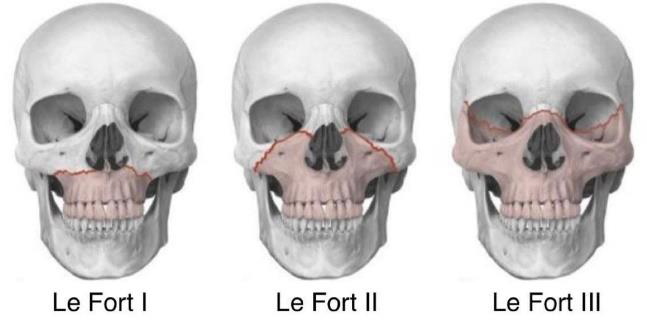
what are the types of fractures of facial skeleton
Le Fort fractures
1 → floating palate
2 → floating maxilla
3 → floating face
blowout fracture is an isolated fracture of the orbital walls without compromising the orbital rims
what are the injuries of the brain
commotion
contusion, lacerations
diffuse axonal injury
what is the cause of commotion
temporary dropout in the activity of the reticular formation
lack of oxygen due to temporary circulation disorder of brainstem
torsion of brainstem
electrochemical changes in the cells of cortex
what does commotion occur together with
cerebral oedema
especially in children
fast transudation of fluid into the EC space
children- head injury commotion → death
what is the clinical appearance of commotion
Loss of consciousness without structural damage
what are contusions of brain
without opening of skull- torsion, acceleration, deceleration
Coup
What is coup and countercoup

What is diffuse axonal injury
caused by shear forces
mostly no macroscopic changes
microscopic change → diffuse white matter damage
most vulnerable- corpus callosum, brain stem
what is the clinical appearance of diffuse axonal injury
patient being unconscious
no damage showsn on radiology
very slowly recovery or no recovery at all
what are the different injuries of vessels- haemorrhage
epidural
subdural
subarachnoid
traumatic or natural lol
describe epidural bleeding
from arteries
lense shape
fast- lucid interval
describe subdural haemorrhage
veins
crescent shaped
slow
describe subarachnoid haemorrhage
often together with lesion of the brain surface
berry aneurysm ruture → leak into haemorrhage due to stroke
which haemorrhage is traumatic or natural
epidural= always traumatic
exception post mortem epidural haematoma in burnt corpses
subdural= traumatic
subarachnoid= both
look for injury on surface
describe brain herniation
areas affected
cingulate herniation, tonsillar herniation, tentorial herniation
compression causes bleeding and functional abnormalities in brain tissue
describe neck injuries
prone to injury as consequqence of assault or accidents
penetrating trauma