B&R knots
 Call Kai
 Learn
 Practice Test
 Spaced Repetition
 Match
 Flashcards
 Knowt Play
1/56

Earn XP
Description and Tags
fairview college - Behaviour and Restraint
57 Terms
wrap around clove hitch
page 117 (drop around clove hitch)
Square Knot (reef knot)
page 113 (Square Knot (reef knot))
Reefer's Knot (Quick-Release Square Knot)
page 113 (reefers knot)
drop over clove hitch
page 117 (drop over clove hitch)
Quick release knot
page 116 (quick release knot)
Bowline (cowtie knot)
page 114 (bowline)
bowline on the bight (double bowline)
page 115 (double bowline)
overhand knot
page 112 (overhand knot)
Bovine TPR normals
T: 38-39C
P: 50-90 bpm
R: 26-50 rpm
Ovine/Caprine TPR
T: 38-39C
P: 60-90bpm
R: 12-19 rpm
Equine TPR
T: 37-38C
P: 30-40 bpm
R: 8-16 rpm
Canine TPR
T: 38.5-39.5C
P: 70-120 rpm
R: 10-30 rpm
Feline TPR
T: 38-39C
P: 110-130 bpm
R: 20-30 rpm
Foal up to 2 days TPR
T: 37-38C
P: 80-120 bpm
R: 20-40 rpm
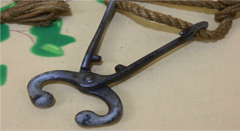
bull-nose pliers
Electric Cattle Prod

Tail jack
restraint technique used in cattle in which the tailhead is grasped and raised vertically

Cattle Defense Mechanisms
- fleeing
- kicking
- bunting, shoving with head
- charging
- crushing
Cattle signs of aggressive
- body tension
- direct stare, glassy, bulging eyes
- head held high or low
- head shaking/quivering
- snort or bellow
- pawing ground
- charging
Cattle Calm Behavior
- relaxed body posture
- may gently swish tail
- sniffing or licking at an object
- ears forward
- may vocalize (gentle mooing)
- chewing cud
- rubbing or licking themselves or objects
Casting a cow with Reuff's method and _______?

Cattle Rumen auscultation
L side of cow, just caudal to 13th rib .
1-2 contractions per min
Cattle IM injection locations
- lateral cervical muscles of the neck: one hand ventral to the nuchal crest, on hand dorsal to jugular groove, one hand cranial to the scapula.
Equine calm behavior
- curious
- head/neck level with body
- tail relaxed/ down
- ears forward showing interest
- droopy lower lip
- back leg cocked
- nickers
Equine Aggressive behaviour
- strike
- kick
- bite
- tail lashing
- head and neck parallel to the ground
- wide eyes
- ears constantly moving
- tight lips
- nostrils flared
- squeals
Equine Fearful behaviour
- trying to escape
- head and neck held high
- wide eyes
- ears constantly moving
- tight lips
- nostrils flared
- cocked leg
- snort
- blow
-
wrap around clove hitch
page 117 (drop around clove hitch)
Square Knot (reef knot)
page 113 (Square Knot (reef knot))
Reefer's Knot (Quick-Release Square Knot)
page 113 (reefers knot)
drop over clove hitch
page 117 (drop over clove hitch)
Quick release knot
page 116 (quick release knot)
Bowline (cowtie knot)
page 114 (bowline)
bowline on the bight (double bowline)
page 115 (double bowline)
overhand knot
page 112 (overhand knot)
Bovine TPR normals
T: 38-39C
P: 50-90 bpm
R: 26-50 rpm
Ovine/Caprine TPR
T: 38-39C
P: 60-90bpm
R: 12-19 rpm
Equine TPR
T: 37-38C
P: 30-40 bpm
R: 8-16 rpm
Canine TPR
T: 38.5-39.5C
P: 70-120 rpm
R: 10-30 rpm
Feline TPR
T: 38-39C
P: 110-130 bpm
R: 20-30 rpm
Foal up to 2 days TPR
T: 37-38C
P: 80-120 bpm
R: 20-40 rpm
bull-nose pliers
used to restrain animal for medical procedures

Electric Cattle Prod
used for movement

Tail jack
restraint technique used in cattle in which the tailhead is grasped and raised vertically

Cattle Defense Mechanisms
- fleeing
- kicking
- bunting, shoving with head
- charging
- crushing
Cattle signs of aggressive
- body tension
- direct stare, glassy, bulging eyes
- head held high or low
- head shaking/quivering
- snort or bellow
- pawing ground
- charging
Cattle Calm Behavior
- relaxed body posture
- may gently swish tail
- sniffing or licking at an object
- ears forward
- may vocalize (gentle mooing)
- chewing cud
- rubbing or licking themselves or objects
Cattle Rumen auscultation
L side of cow, just caudal to 13th rib .
1-2 contractions per min
Cattle IM injection using Lateral cervical neck muscle
one hand ventral to the nuchal crest, on hand dorsal to jugular groove, one hand cranial to the scapula.
Equine calm behavior
- curious
- head/neck level with body
- tail relaxed/ down
- ears forward showing interest
- droopy lower lip
- back leg cocked
- nickers
Equine Aggressive behaviour
- strike
- kick
- bite
- tail lashing
- head and neck parallel to the ground
- wide eyes
- ears constantly moving
- tight lips
- nostrils flared
- squeals
Equine Fearful behaviour
- trying to escape
- head and neck held high
- wide eyes
- ears constantly moving
- tight lips
- nostrils flared
- cocked leg
- snort
- blow
-
McBurneys casting method

Reuff's casting method

Skin twitch
Used as a distraction, do not perform for long periods of time
- Grab loose skin in shoulder area with both hands and roll
Nose Twitch
Applies pressure to the nose in order to restrain animal for medicine administration.

hand twitch
Hold its halter in your hand and grasp the upper lip with your left hand and rock the lip back and forth
Equine IM injection using lateral cervical neck
one hand ventral to nuchal crest (to protect nuchal ligament)
one hand dorsal to jugular groove (to protect jugular vein, carotid artery and cervical spine)
one hand cranial to the scapula (to avoid the scapula)