plant ecology exam 1
 Call Kai
 Learn
Learn Practice Test
 Spaced Repetition
 Match
Match Flashcards
 Knowt Play
1/254

There's no tags or description
Looks like no tags are added yet.
Name | Mastery | Learn | Test | Matching | Spaced | Call with Kai | Chat |
|---|
No analytics yet
Send a link to your students to track their progress
255 Terms
abiotic
non-living components of plant ecosystem
climatic
abiotic - rain, light, wind, temperature
edaphic
abiotic - soil, pH, minerals, topography
biotic
living components of plant ecosystem
biotic
producers, consumers, decomposers
autotrophs
producers - make their own food (ex: plants)
heterotrophs
consumers - cannot make their own food
saprotrophs
decomposers - get nutrients by breaking down dead matter (ex: fungi)
primary, secondary, tertiary, quaternary
four levels of consumers
primary
consumer that eats producers (ex: grasshoppers)
secondary
consumer that eats primary (ex: frog)
tertiary
consumer that eats secondary (ex: snake)
quaternary
consumer that eats tertiary (ex: hawk)
individual, population, community, ecosystem, biome
ecology levels of organization
individual
one singular plant
population
same species living in the same place
community
various organisms living in the same place
ecosystem
community of organisms interacting with each other and their environment
biome
large area defined by its abiotic factors and the species that live there
dichotomous key
tool used to determine the identity of organisms
plants
produce oxygen though photosynthesis
plants
fix carbon by taking CO2 from the atmosphere
plants
help cool Earth’s atmospherep
plants
formed coal and soil
plants
provide food and shelter that helped insects and terrestrial animals evolve
plants
the source of essentially all food and oxygen on the planet and convert sunlight into chemical energy through photosynthesis
botany
important to society because of food, medicine, science, materials, agriculture
botany
the study of plant life
botany
-virtually all foods come directly from plants or indirectly from animals that eat plants
-plants occupy the first trophic level (primary producers)
botany
-plants have been used medicinally for thousands of years
-50-60% of new drugs come from or are inspired by natural sources
botany
-plants have been important model organisms for studying cell division, protein synthesis, genetics, etc.
-medel used pea plants to discover the laws of inheritance
-Barbara McClintock discovered transposable elements using maize
botany
-plants make materials like wood, bark, fibers, cotton, linen, rubber, paper, etc.
botany
-the Green Revolution introduced new crop varieties and greatly increased food production
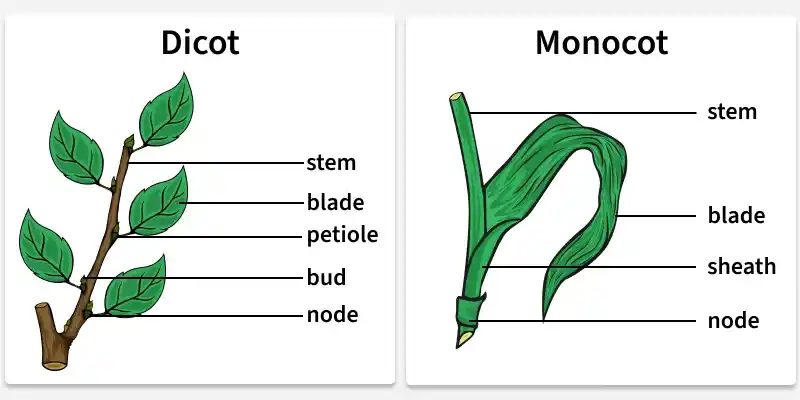
dicots
-petiole attached to stem
-broad leaf blade
-vascular bundles forming a network of veins

monocots
-blade & sheath
-sheath surrounds the stem
-veins run parallel
normal stem
characteristics:
-main axis of shoot system
-bears leaves, flowers, fruits
-transports materials
-nodes
-internodes
nodes
where leaves attach

internodes
stem sections between nodes

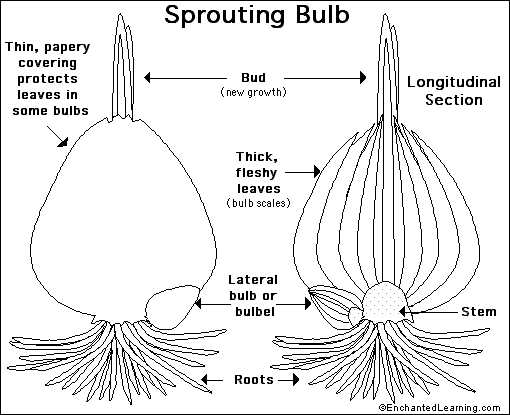
bulb
modified stem for onion
runner
modified stem for strawberry

stolon
modified stem for tubers (potato)

rhizozome
modified stem root for iris

root
functions:
-anchor plant
-absorb water and nutrients
modified roots
used for:
-food storage
-propagation
-photosynthesis
-support
-parasitism (parasite benefits at expense of host)
-symbiosis (interaction between two species)
pneumatophores
modified root for black mangrove

prop roots
modified root

buttress roots
modified root

photosynthetic roots
modified root or orchids

parasitic roots
modified root

symbiotic roots
modified root

mycorrhizae
modified root; plant-fungus symbiosis where the fungus increases root surface area for nutrient absorption and can protect against pathogens

simple leaves
a leaf with an undivided single blade attached to the stem via a petiole (ex: cottonwood)

compound leaf
a leaf divided into multiple separate leaflets attached to a central stalk or axis

palmately compound
leaflets radiate outward from a single central point (ex: white clover)

pinnately compound
leaflets are attached along both sides of a central axis/rachis
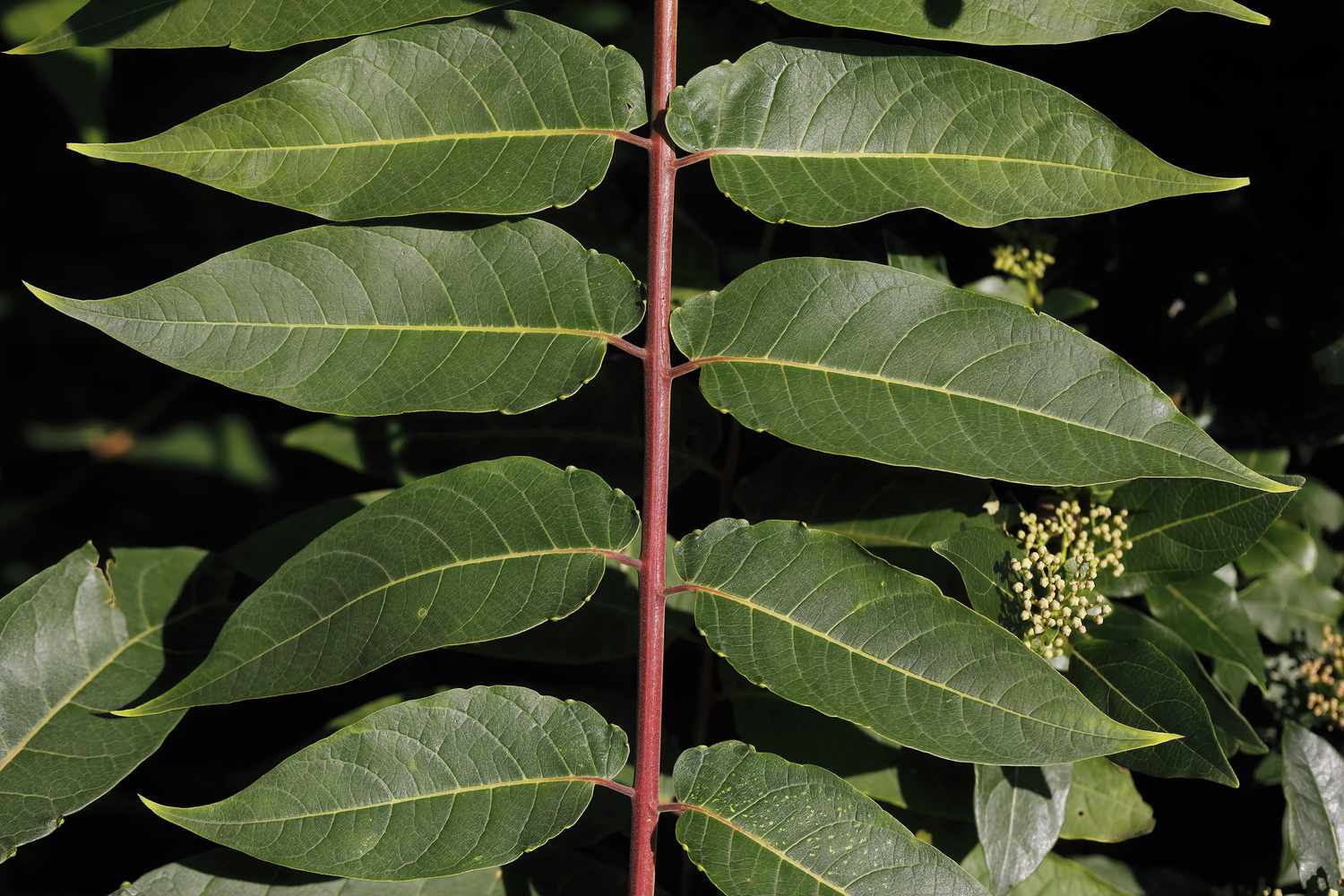
double compound
leaflets themselves are further divided into secondary leaflets (ex: black walnut)

alternate
leaves attach singly at alternating levels along the stem (ex: ivy)

opposite
leaves attach in pairs directly across from each other at the same stem node (ex: periwinkle)
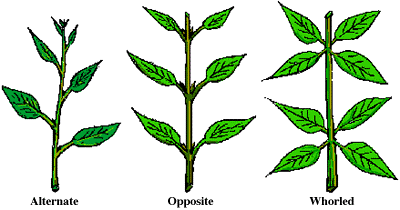
whorled
three or more leaves attach in a circular cluster at the same stem node (ex: sweet woodruff)

entire
smooth, continuous margin without any teeth, notches, or indentations

serrate
margin with sharp, forward-pointing, saw-like teeth

lobed
margin with distinct, deeply cut indentations or projections forming rounded or pointed lobes
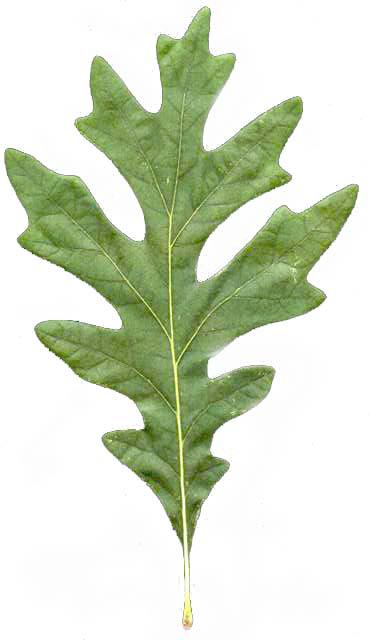
spine
-modified leaf
-a sharp, protective structure modified directly from a leaf or leaf part (ex: Cactaceae)

bract/spathe
modified leaves associated with reproductive structures, such as the large leaf-like spathe surrounding a spadix

thorn
modified stem with prickles (outgrowths from the stem epidermis)
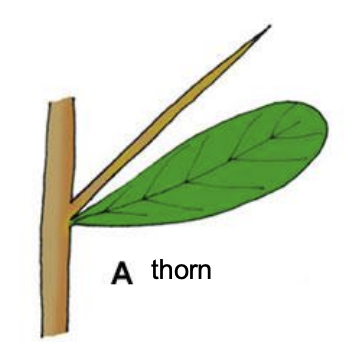
needle-like/scale-like
conifer leaf modifications adapted for reduced water loss (ex: Pinus, Cupressus)

actinomorphic (regular)
flower radial symmetry; can be divided into equal halves along multiple planes

zygomorphic (irregular)
bilateral symmetry; can only be divided into equal halves along a single vertical plane (ex: Papilionaceous flowers in Fabaceae)

peduncle
main stalk clusters of flowers are on
solitary
inflorescence type; single flower produced on a stem

spike
inflorescence type; unbranched stalk with sessile (stalkless) flowers directly attached

raceme
inflorescence type; unbranched stalk with flowers attached via individual pedicels (stalks)

panicle
inflorescence type; a branched raceme

corymb
inflorescence type; flat-topped or convex flower cluster where lower pedicels are longer, bringing all flowers to the same level (youngest flower in the center)

cyme
inflorescence type; flat-topped or rounded cluster where the central, oldest flower opens first

umbel
inflorescence type; pedicels arise from a single common central point

capitulum (head)
inflorescence type; dense cluster of ray and disk flowers, surrounded by a leafy spathe (ex: Arum family)
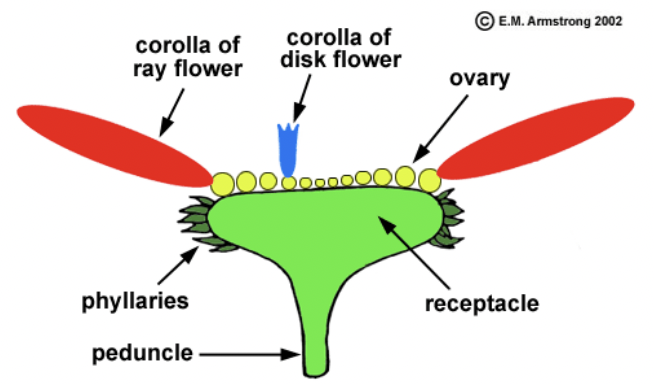
catkin
inflorescence type; a dropping, scaly spike of unisexual flowers (ex: hazel, alder, birch)

spikelet
inflorescence type; specialized unit of inflorescences in grasses, sedges, and rushes (Poaceae, Cyperaceae, Juncaceae)
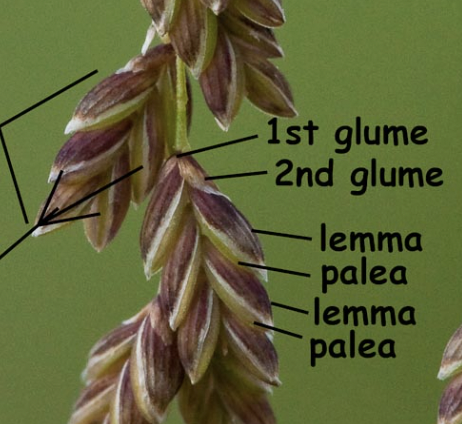
fleshy fruits
berry, hesperidium, pepo, drupe, pome
dry dehiscent
fruits that split open when mature
dry dehiscent fruits
legume, follicle, capsule, silique/silicle, loment
dry indehiscent
fruits that do not split open when mature
dry indehiscent fruits
achene, nut, samara, schizocarp, utricle
compound/complex fruits
aggregate, multiple, accessory
strobilus
a cone-like reproductive structure made of spirally arranged, seed-bearing scales found in gymnosperms (conifers), lacking a surrounding ovary/pericarp tissue
annual
a plant that completes its entire life cycle (germination, growth, reproduction, death) in one growing season or year
winter annuals
germinate in the fall, overwinter, and produce seeds in spring/summer
summer annuals
germinate in the spring, mature, and set seed by fallp
perennial
a plant that lives for more than two years
monocarpic
perennial plant that lives for multiple years (or 2-3 years like biennials) and reproduces only once in its lifetime, and dies after setting seed
polycarpic
perennial plant that lives for multiple years and reproduces repeatedly throughout its lifetime
berry
fleshy fruit; fleshy pericarp throughout with seeds embedded inside (ex: grape)

hesperidium
fleshy fruit; modified berry with a leathery rind containing flavedo and albedo sections (ex: citrus fruits)

pepo
fleshy fruit; modified verry with a tough, outer rind (ex: pumpkin)

drupe
fleshy fruit; fleshy outer layer with a hard, stony inner pit enclosing the seed (ex: peach)
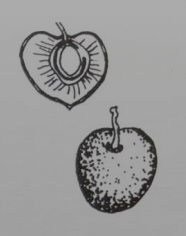
pome
fleshy fruit; fleshy accessory fruit with a central cored chamber (ex: apple)

legume
dry dehiscent fruit; opens along two seams (ex: bean)
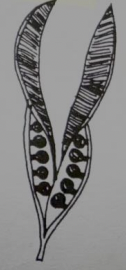
follicle
dry dehiscent fruit; opens along one seam (ex: delphinium)

capsule
dry dehiscent fruit; opens in various ways—loculicidal (Iris), septicidal (Yucca), or poricidal (Poppy)
