BIO485-Biology of inverts UH manoa EXAM 1
 Call Kai
 Learn
Learn Practice Test
 Spaced Repetition
 Match
Match Flashcards
 Knowt Play
1/44

Earn XP
Description and Tags
Exam 1 prep
Name | Mastery | Learn | Test | Matching | Spaced | Call with Kai | Chat |
|---|
No analytics yet
Send a link to your students to track their progress
45 Terms

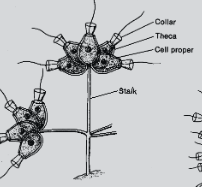
Where does collar, theca, cell proper and stalk go on the choanoflagellata?
Here
What are basic things that ALL organisms need to do?
get energy
metabolism
reproduce
excretion
exchange gas
sense the environment
respond to it
Grade of organization
single cell, tissue grade, organ grade
What is metazoa?
Cells organized into functional types, often tissues
Where do metazoa develop?
Development from blastula
type of protein metazoa make?
Collagen Protein
Metazoa start from what stage?
Larval stage

how do you fill this chart?
at the bottom: choanocytle type cells
middle : develop from blastra, collage protein, larva
parazoa: no true tissue, asymmetry
Eumetazoa: true tissue, symmetry

For sponges what does it mean to be monoecious and dioecious?
Monoecious:one house (sperm& egg)
Dioecious Two house (one has sperm one has egg)
Characteristics of Porifera?
No true tissue
specialized water movement cells-choanocytes
spicules of silica or calcium carbonate
spongin- collage like protein
lacks- guts/circulatory system, body cavity, nervous system/ any axis of symmetry
Sponges are_ , _water-pumping animals that lack _ level organization
sessile, multicellar, true tissue
Porifera has 3 things for tissue
1) simliar cells held together by intercellular matrix
2) cells areorganized to perform a sepcific function
3) cells origniate from embryonic germ layer
Porifera cell types
1- Choanocyes/collar cells- feeding and water flow
2-pinacocytes-surface cells
3-porocytes-opening to sponge
4-sclerocytes-secrete skeleton
5-archaeocytes-transport food/waste
6-lophocyte-secrete spongin
7 oocyte- reproductive cells
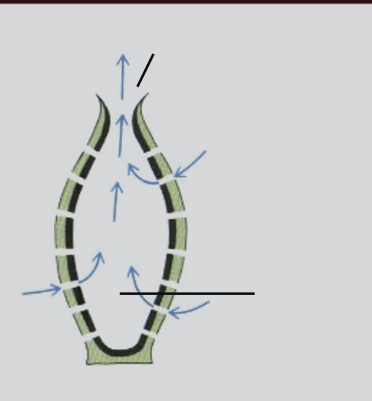
Where does osculum, ostium and atrium go?
Osculum- top where the water flows out
Ostium- the holes where it goes thru
atrium- body cavity
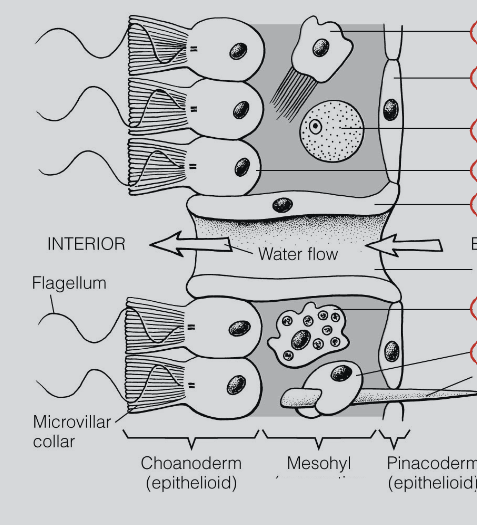
where do the major cell types go?
here

Reproduction of sponges?
Asexual- gemmule (send off parts of themself)
Spawning sponge-gametes(send sperm/egg into water column)

3 grades of body structure
Asconiod, syconiod, leuconoid
Porifera classes (4)
Class Hexactinellida(glass sponges)
Class Calarea (calcareous sponges)
Class Demospongia (most sponges)
Class Homoscleromorpha (carved out from demospongia)
Class Hexactinellida characteristics?
Syconiod grade
spicules made of silica
spicules fused to form lattice-like skeleton
deep water
6 rayed
no spongin or pinacoderm
Class Calcarea characteristics?
Calcareous
all 3 grades of structure
spicules made of calcium carbonate
spicules have 3,4 points
no spongin
Class Demospongiae characteristics?
90% all sponges
leuconoid grade
spicules made of silica, may have no spicules
spicules has 4 points
spongin fibers (some)
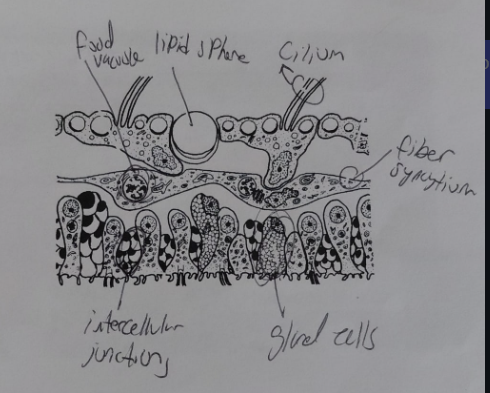
Placezoa characteristics?
no true tissue
2 layers of ciliated cells
develops from a blastula
intercelluar junctions
asymmetric
asexual-fission(spilts in half)
life style-solitary

where does food vacuole, lipid sphere, cilium, fiber syncytium, intercelluar junction and gland cells go?
here
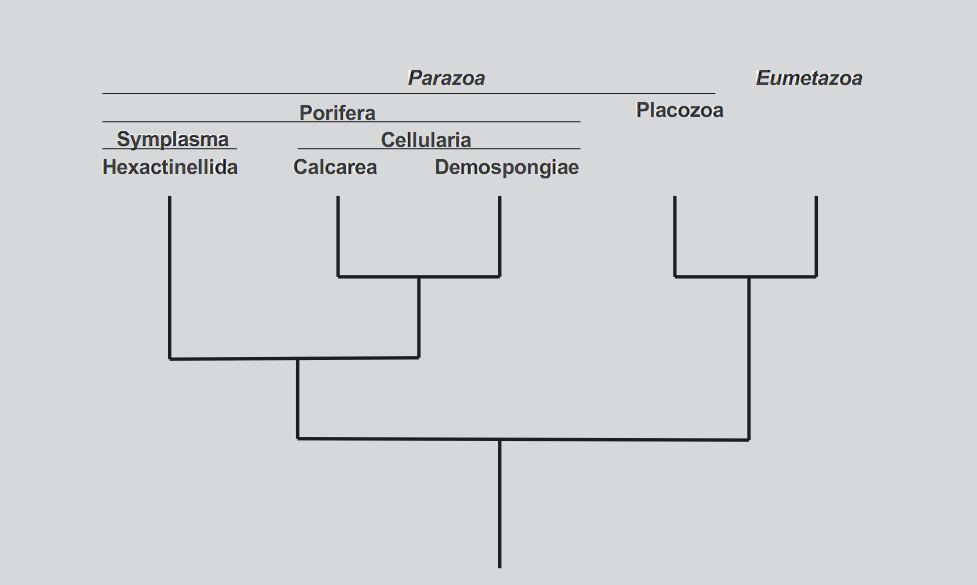
how do you put the characteristics on the map?
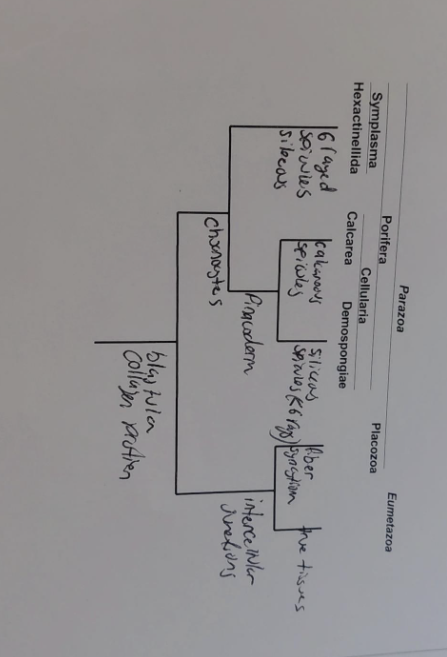
characteristics of eumetazoa
true tissue
cells have junctions (belt (stick together), septate(sealing together), and gap (communcation)
formed from embryonic germ layer
has intercellular and extracellular digestion
muscles & nurons
has receptors
Porifera vs Eumetazoa
Porifera(parazoa) Eumetazoa
No true tissues True tissues
no body symmetry radial or bilateral
intercellular digestion intercellular/extracellular
no muscles or nerves Muscles and neurons
no sensory organ has receptors

How to do this tree? parazoa(sponges) vs eumetazoa
here

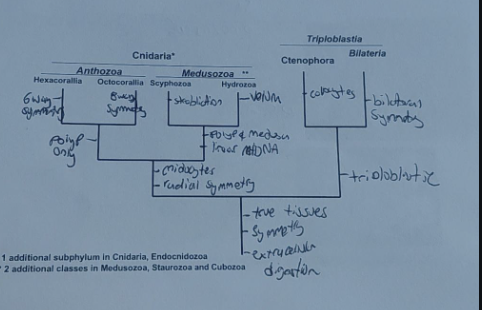
Phylum Cnidaria has what?
corals, aneomnes, jellyfish
tissues and organs
diploblastic- 2 embryonic germ layer
radial symmetry
life cycle: polyp and medusa
asexual and sexual
blind gut- one opening
solitary and colonial
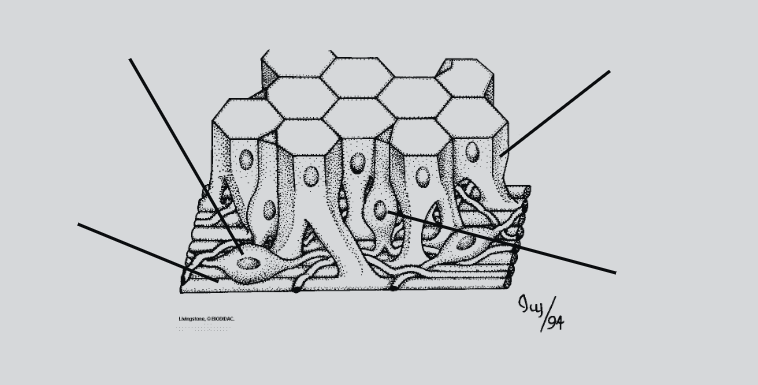
Name the motor neuron, epitheliomuscular cells, sensory neuron, muscle filament
here
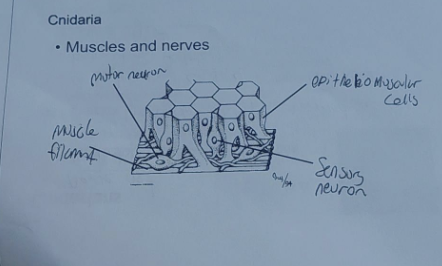
Cnidae is a unique structure for what? to help in prey capture
cnidocytes
each cnidocyte contains one of 3 types of cniade
nemayocyst- stabby, spirocyst or phtychocyst (sticky)

label tentacle, mouth, epidermis, gastrodermis, gastrovascular cavity, mesoglea,body stalk,

Cnidaria has 2 subphylums what is it?
Anthozoa, Medusozoa
Anthoza has 2 classes what it is?
Hexacorallia—> 6
Octocorallia—> 8

label mouth, tentacles, septum, pharginx, gonad, gastroval cavity
pedal dis, retaror muscle, acontium
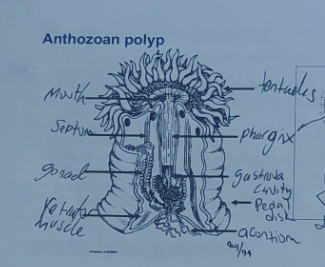
Anthozoa characteristic
all polyp, no medusa
asexual reproduction by fragmentation
soiltary or colonial
Medusozoa characteristic
medusa stage
linear mitochondrial dna
solitary or colonial
has 4 classes

label aboral, oral sides. gastrovascular cavity, phargnz, mouth, tentacles, epidermis mesoglea, gastrodermis

what are the 4 classes of medusozoa?
Scyphozoa-
cubozoa-
staurozoa-
hydrozoa-
Characteristic of scyphozoa
big medusa stage
small polyp stage
high developed eyes
cassiosomes- sting cells
Rhopalia is what?
sensory structure containing eyes on the bell of the margin for scyphozoan and cubozoan jellyfish
Characteristic of hydrozoa
colonial polyps
gastro-feeding
gono-gamete production
dactylo- colony defence
medusa is small and short lived
MEDUSA HAS A VELUM

label manubrium, velum, statocyst, radial canal, gonad, ring canal. tentacles
here

hydrozoa is soiltary or colonial and what stages does it contain
colonial, polypoid and medusoid
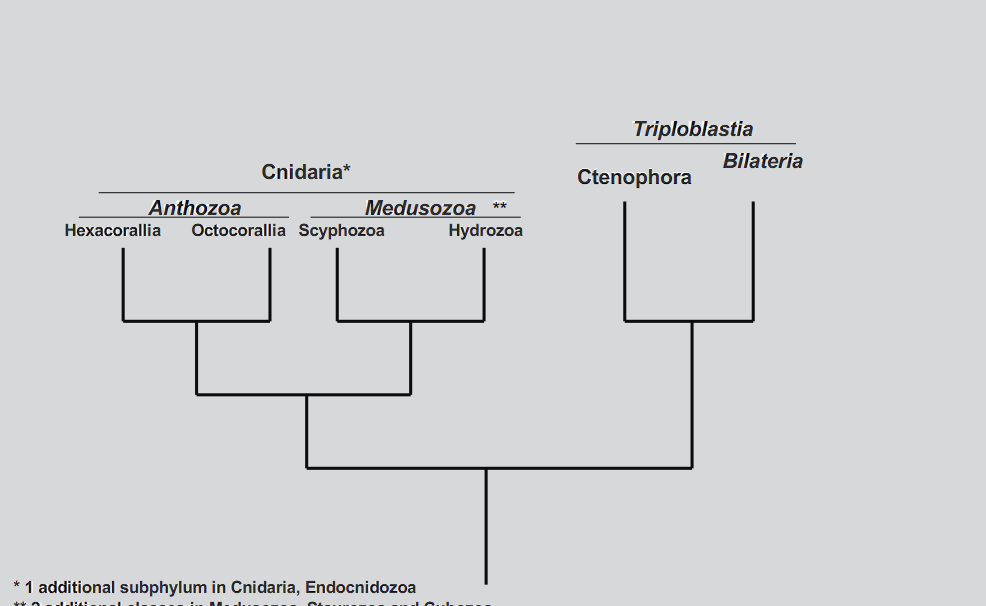
label tree
here