ansc314 - water soluble vitamin C & thiamin
 Call Kai
 Learn
 Practice Test
 Spaced Repetition
 Match
 Flashcards
 Knowt Play
1/35

There's no tags or description
Looks like no tags are added yet.
36 Terms
water soluble vitamins
tend to be absorbed in s. intestine & circulated → liver in blood
tend not stored in body
often added to foods (fortification) / when added in certain amts, foods can be labeled ‘enriched’
easily destroyed during cooking and storage
foritifed foods
have nutrients added to them that don’t naturally occur in the food
↑ nutrition & health benefits
enriched foods
means nutrients were lost during processing are added back
refined grains are enriched (wheat flour)
restore og vitamin levels
vitamin C
ascorbic acid
mostly water & vit C

vitamin C structure
acidic
least stable of all vitamins (easily oxidized/reduced)
good for rxns
ease of oxidation basis of its biological function

vit C summary
L-ascorbic acid (no scurvy)
water soluble
sources
citrus fruits
green, leafy veggies
synthesized by some animals
vitamin C roles
antioxidant & reduction of vit E
collagen synthesis & wound healing
hydroxylation of proline & lysine in collagen
reducing properties:
Fe3+ → Fe2+
Cu2+ → Cu+
vitamin C synthesis
can’t synthesize vit C
humans, non-human primates, guinea pigs, teleost fish, birds
dogs & cats can synth. vit C
UDP - uridine diphosphate - nucleotide sugar

vitamin C radical protection
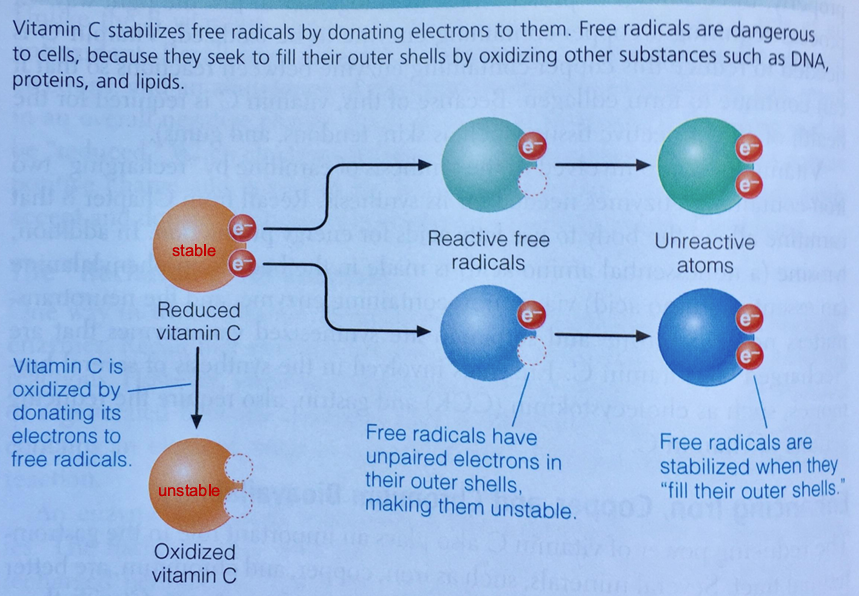
vitamin C recharge
vit C helps prevent lipid form oxidizing (reducing agent)
Fe2+ - cofactor
vit C donates e-. → Fe3+ (reduce) → Fe2+
enzyme to be active, needs to be in reduced form

vitamin C/E reduction
remember: vit E, selenium, glutathione reductase
vit E oxidized doing its job → vit C (oxidized) reduces vit E (reduced) → glutathione (GSH) reductase (oxidized) reduces vit C (reduced) → NADPH reduces glutathione reductase
cycle to keep vit E going

vitamin C & glutathione reduction
remember: vit E, selenium, glutathione reductase, NADPH
ascorbate (vit C) helps regenerate vit E
GSH helps regenerate vit C
NADPH helps regenerate GSH
if see an “H” → reduction

glutathione (GSH)
part of some enzymes (glutamate, cys, glycine)
glutamate linked to cysteine by R-group (COOH)

NADPH
reduced form of NADP+
reduces GSH to keep cycle going
collagen synthesis
vit C
most abundant connective tissue on body
primary building block & tensile support system for connective tissues
if no vit C → weak
OH groups allow formation of crosslinks between collagen strands
application
connective tissues ↑ rigid
tendon should be strong in animals (beef) so you can lift cattle by Achillies tendon to drain blood
↑ tendonous → ↑ cross linked needed connective tissue needs to hold tension

collagen hydroxy-proline/lysine synthesis

norepinephrine synthesis

vitamin C deficiency
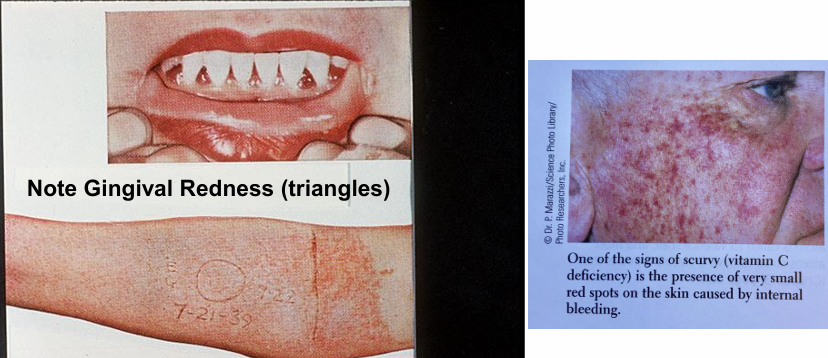
scurvy
poor wound healing
gum lesions, spongy gums and bleeding
loosening of teeth
scoliosis (bone matrix)
termination of bone growth
joint pain & swelling
increased sensitivity in extremities
vomiting of blood & bloody stools
edema of chest & stomach
cerebral hemorrhage & capillary fragility
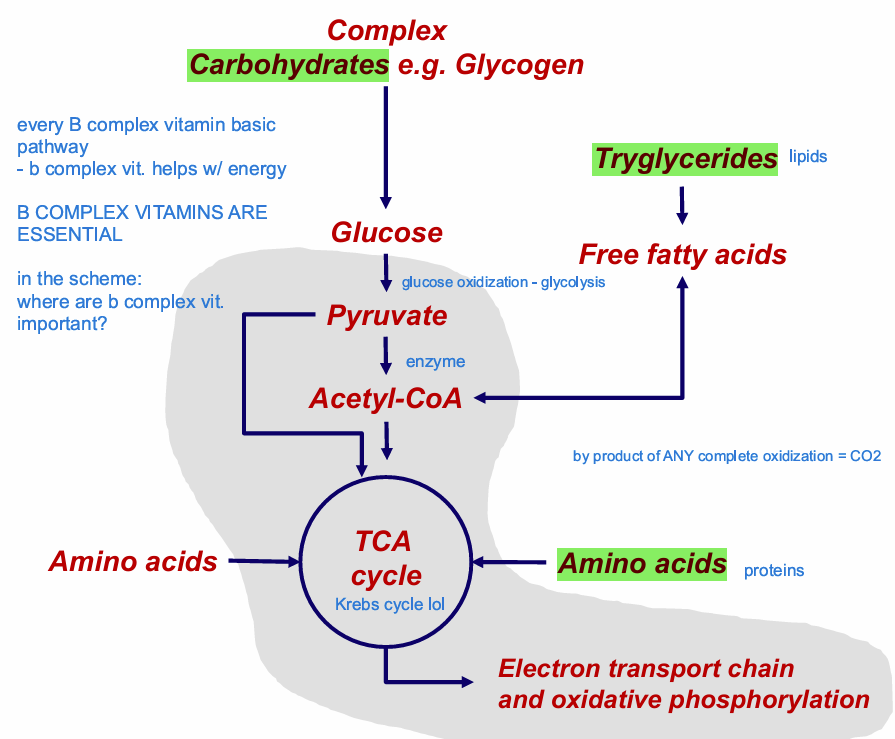
B vitamin energy metabolism
all B complex vitamins critical to mitochondria function
most uses B vit as cofactor
“w/o B vit → mitochondria dead → we dead”

pyruvate dehydrogenase complex
thiamine (B1)
vitamin B1
water soluble
1st vitamin discovered
beri-beri in humans (2600 BC) → weak-weak sheep (walk like)
responsible for odor associated w/ vitamins (sulfur)

thiamin sources
ruminant microbes → ↑ B complex vit. synthesis
↓ dietary requirement
monogastric ↑ dietary requirement (B vit)
concentrated in growing areas of roots, leaves & shoots
bacteria synthesize thiamin (rumen & gut bacteria)
animal products
egg yolk, liver, kidney, pork muscle
commercial supplement → thiamin-HCl

thiamin (B1)
thiamin → thiamin pyrophosphate (TPP)
w/ help of ATP → AMP (TPP-synthetase)
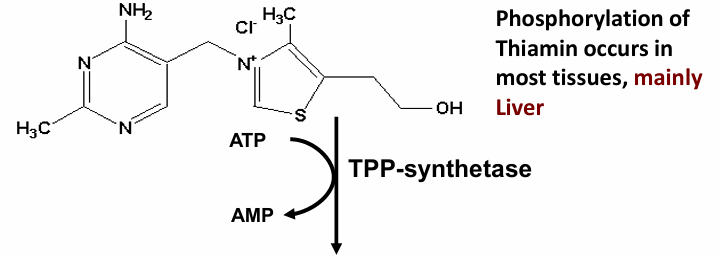
thiamin pyrophosphate (TPP)
80% total in body

thiamin (TRPP) functions
vit B1 needed for glucose oxidation & krebs cycle activity
NADPH - energy currency
acetyl CoA - carbon substrate for synthesis of free FA
3 C → 2 C | loss of C → spits out CO2

compound synthesis
no vit B1
impaired glucose oxidation, lipid production, pentose phosphate
acetyl-CoA
provides E & builds fats, hormones, steroids
precursor for any lipid intermediate

thiamin complex locations

thiamin utilization factors
Amprolium (coccidiostat)
inhibits absorption of Thiamin from intestine
blocks phosphorylation of Thiamin → TPP
Thiaminase (enzyme) activity destroys Thiamin activity by altering the structure of vitamin
“Chastek paralysis” – especially mink, fox, etc.
feeding raw fish that has a THIAMINASE
certain bacteria & molds also produce THIAMINASES
bracken fern poisoning in Horses results from THIAMINASE activity
amprolium
a thiamin analogue that prevents thiamin use by coccidia
protozoan common in poultry, swine, calves
thiamin (B1) requirements
requirements in some species difficult to establish
ruminant
synthesis by microbes in rumen
BUT, ↓ bacterial synthesis when ↑ concentrate (corn) diets are fed
monogastrics
bacterial synthesis too far down intestinal tract for Thiamin to be absorbed
horses
only 25% of free thiamin is absorbed from cecum
humans & most species (except ruminant and horse)
bacterial thiamin synthesis & absorption makes little contribution to body needs
thiamin deficiency

acetyl CoA
precursor for acetyl-choline
important for brain
neurotransmitter
if no B1 & glucose → end up w/ neurological disorders
thiamin deficiency symptoms
liver
fatty degeneration & hemorrhages (bleeding)
blood
lactic acid accumulation
CNS
Polyneuritis (inflammation of nerves) → numbness, tingling, incoordination
Poultry
incoordination (ataxia)
progressive paralysis leading to death
star-gazing, curled back neck
Cattle, sheep and goats
Polioencephalomalacia (necrosis of brain)
skin - edema, cyanosis
muscle
degeneration and fiber swelling
muscle weakness, lactic ac
polyneuritis
thiamin deficiency in chickens
curled neck
frequent convulsions
emaciation

polioencephalomalacia
thiamin deficiency in sheep
also in cattle & goats
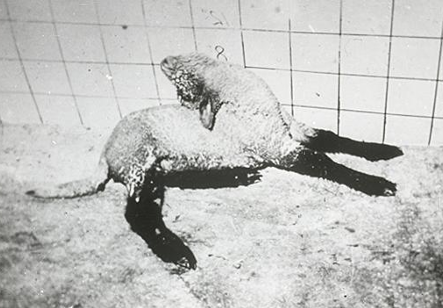
rolling disease
thiamin deficient rat
