Muscles of Facial Expression, Tongue, & Palate
 Call Kai
 Learn
 Practice Test
 Spaced Repetition
 Match
 Flashcards
 Knowt Play
1/192

There's no tags or description
Looks like no tags are added yet.
193 Terms
The Epicranius includes
Frontalis belly & Occipitalis belly

Occipitalis belly
Covers the posterior skull

Occipitalis belly originates from
occipital and temporal bones
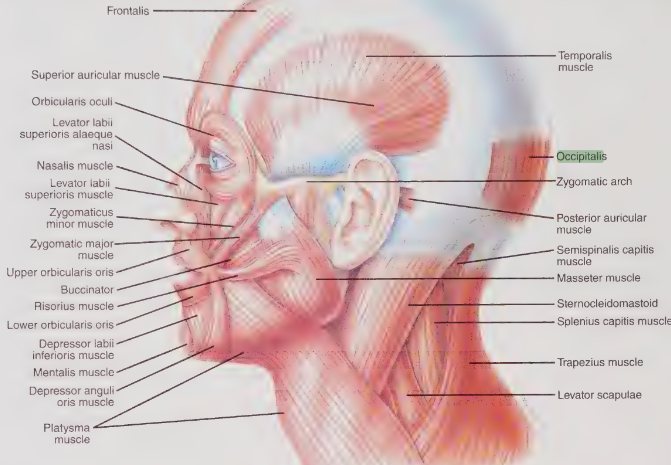
Occipitalis belly inserts into the
epicranial aponeurosis

The action that the Occipitalis belly does is it
pulls the scalp posteriorly
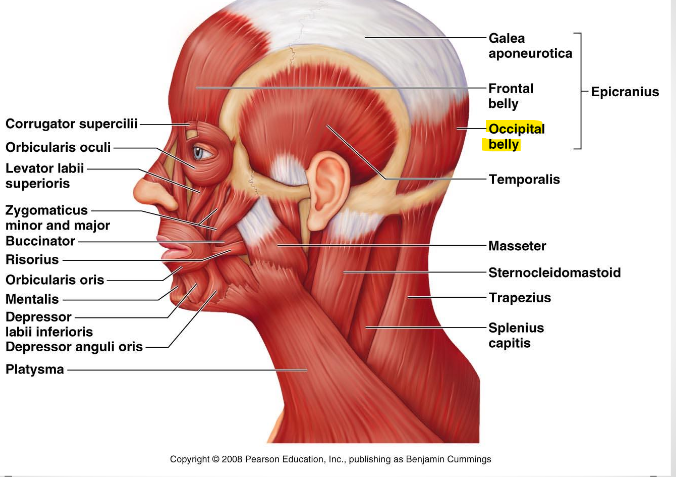
The Occipitalis belly muscle innervates
CN VII, posterior auricular branch
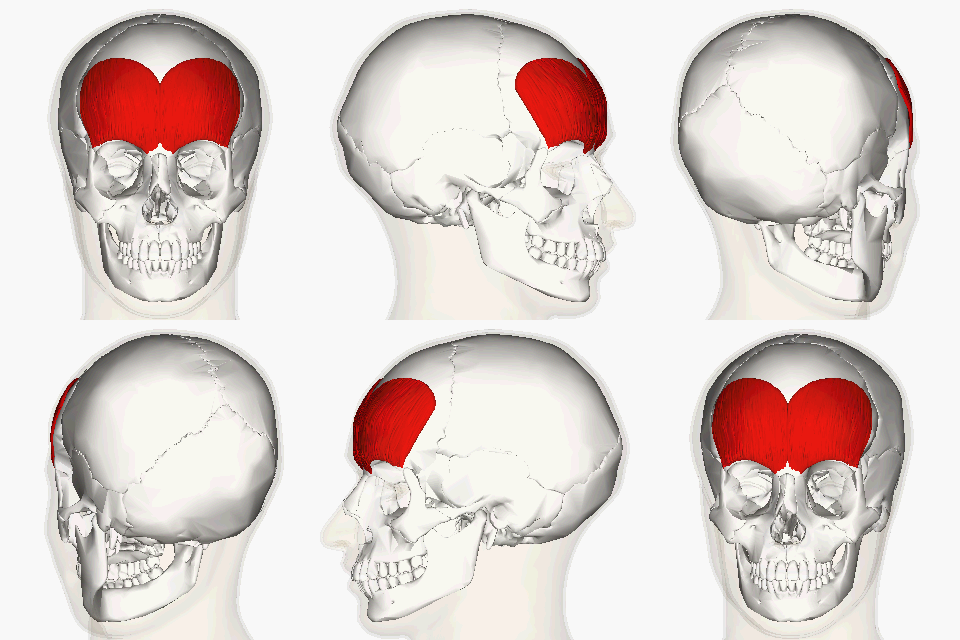
Frontalis belly
covers forehead and dome of skull

The frontalis belly originates from the
epicranial aponeurosis
The action the frontalis belly does is
Raises eyebrows (with aponeurosis fixed), wrinkles forehead

The frontalis belly innervates
CN VII, temporal branch

Frontalis belly of the epicranius
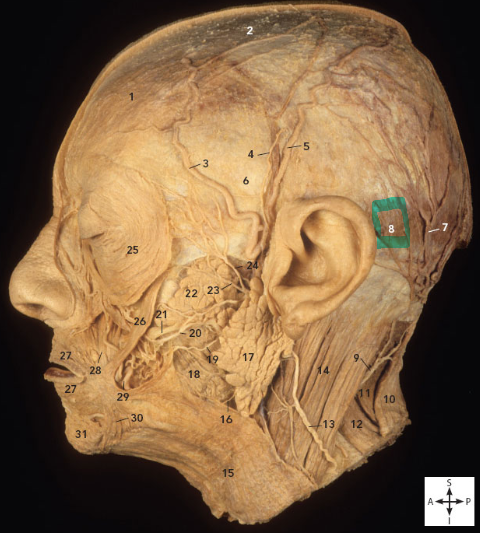
Occipital belly of the epicranius

Corrugator supercilii originates from the
arch of frontal bone, above nasal bones
Corrugator supercilii inserts into
skin of the eyebrows
The action of the corrugator supercilii is that it
draws the eyebrows together (‘knits’ eyebrows)
The corrugator supercilii innervates
CN VII, temporal branch

The procerus, runs down the front of the nose
The origin of the procerus is
nasal bone and lateral nasal cartilage
The insertion of the Procerus is
the skin over the glabella (between eyebrows)
The action of the procerus is that it
wrinkles the nose
The innervation of the Procerus is
CN VII, temporal and zygomatic branches
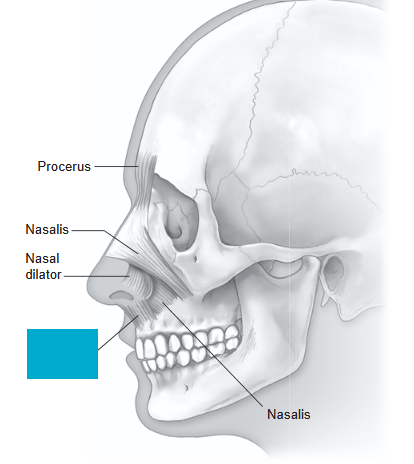
Depressor septi nasi/Depressor alae nasi
The origin of the depressor septi nasi
is the maxillary alveolar process
The insertion of the depressor septi nasi is
the nasal septum
The action of the depressor septi nasi is that it
constricts the nostrils
The innervation of the depressor septi nasi is
CN VII, zygomatic and buccal branches
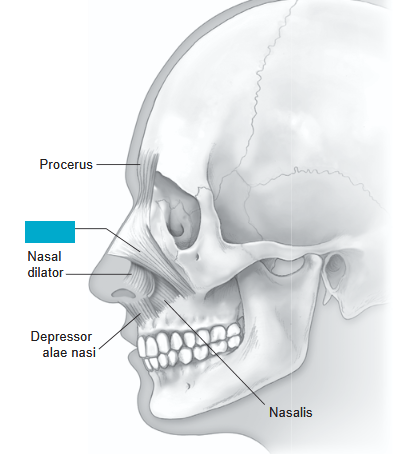
Nasalis, compressor naris
The origin of the nasalis is
the maxilla
The insertion of the nasalis is the
bridge of the nose
The action of the Nasalis is that it
compresses the back of the nose
The Nasalis innervates
CN VII, zygomatic and buccal branches
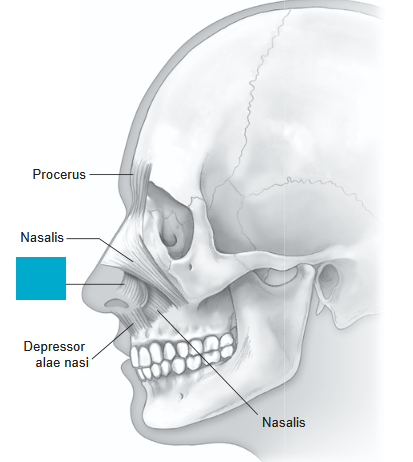
Nasalis, dilator naris
The origin of the nasalis, dilator naris
is the nasal side of the maxilla
The insertion of the Nasalis, dilator naris is the
cartilage of the nose
The action of the Nasalis, dilator naris is that it
dilates the nostrils
The Nasalis, dilator naris innervates
CN VII, zygomatic and buccal branches

Orbicularis oris, deep oval ring of muscle fibres (intrinsic)
The origin of the Orbicularis oris is the
maxilla and mandible
The insertion of the orbicularis oris is
encirles mouth; inserts into muscles and skin at angles of mouth
The action of the orbicularis oris is that it
closes and protrudes the lips, compresses lips for bilabial sounds, and presses lips against incisors
The orbicularis oris innervates the
buccal branches of VII
Transverse extrinsic muscles on the lips
course horizontally from origin to insert into orbicularis oris
Angular extrinsic muscles
approach corners of mouth obliquely from above and below
Vertical extrinsic muscles
enter lip directly from above and below
Extrinsic muscles that converge on the lip are
arranged like the spokes of a wheel
Modiolus is located at
the corners of the mouth
The modiolus is the region where
fibres from extrinsic lip muscles converge to intermingle with intrinsic orbicularis fibres
Damage to modiolus has major effect because
it interferes with cross-over of muscle fibres
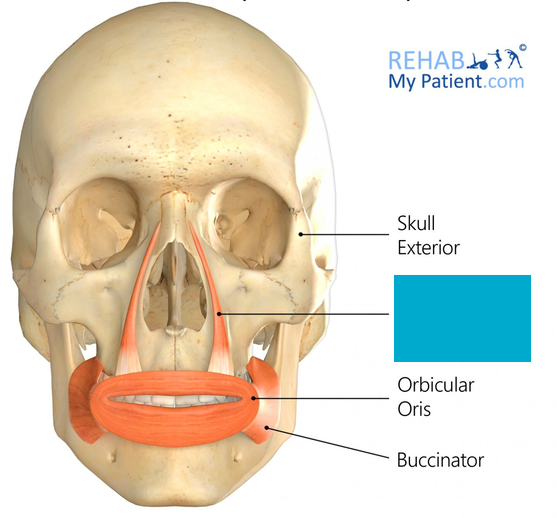
Levator labii superioris alaeque nasi
The origin of the Levator labii superioris alaeque nasi is the
frontal process of maxilla
The Levator labii superioris alaeque nasi inserts into the
nasal cartilage and upper lip
The action of the levator labii superioris alaeque nasi is that it
elevates the upper lip; flares nostril
The levator labii superioris alaeque nasi innervates the
buccal branches of VII
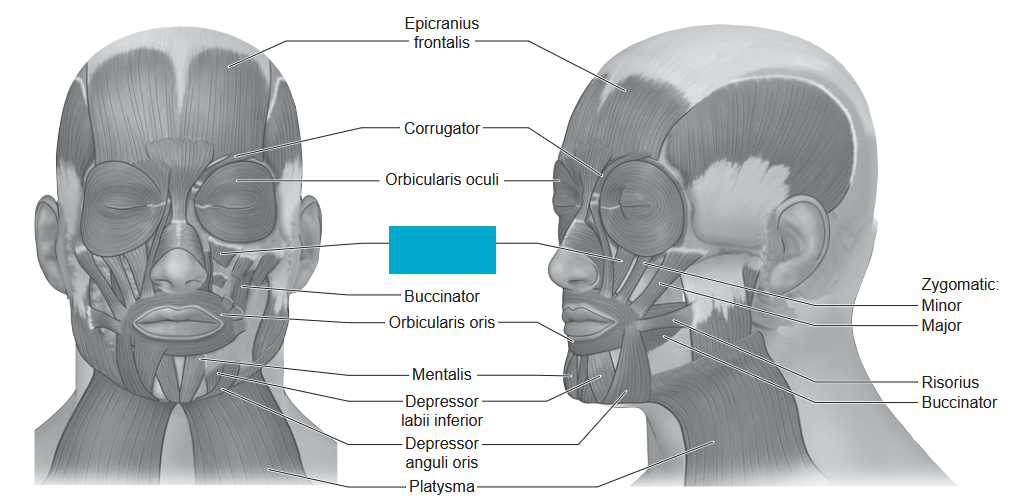
Levator labii superioris
The origin of the levator labii superioris is the
inferior orbital margin
Levator labii superioris inserts into the
upper lip lateral to alaeque nasi
The action of the Levator labii superioris is that it
elevates and everts the upper lip
The levator labii superioris is innervates the
buccal branches of CN VII

Levator anguli oris
The origin of the levator anguli oris is the
maxilla (canine fossa)
The levator anguli oris inserts into the
modiolus
The action of the levator anguli oris is that it
pulls the corners of the lips superiorly and laterally, it deepsn the nasolabial fold as in smiling, laughing
The levator anguli oris innervates the
buccal branches of VII
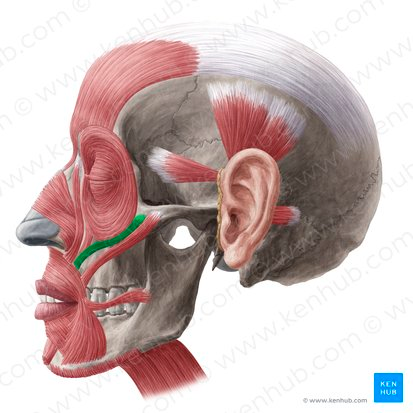
Zygomaticus minor (medial)
The origin of the zygomaticus minor (medial)
is the zygomatico-maxillary suture
The zygomaticus minor (medial) inserts into the
modiolus
The action of the zygomaticus minor (medial) is that it
elevates upper lip and deepens nasolabial fold
The innervation of the zygomaticus minor (medial) is the
zygomatic & buccal branches of VII
Zygomaticus major (lateral)
The origin of the zygomaticus major (lateral) is the
body of the zygomatic bone
The zygomaticus major (lateral) inserts into the
modiolus
The action of the zygomaticus major (lateral) is that it
pulls the lateral corners of the mouth superiorly and laterally as in smiling, laughing
The zygomaticus major (lateral) innervates teh
zygomatic & buccal branches of VII

Risorius, highly variable, sometimes absent
The origin of the risorius is the
fascia of the masseter
The risorius inserts into the
modiolus
The action of the risorius is that it
retracts the corner of the mouth (lateral movement); facilitates smiling & grinning
The risorius innervates the
zygomatic and buccal branches of CN VII

Depressor anguli oris
The origin of the depressor anguli oris is
oblique line of mandible
The depressor anguli oris inserts into the
modiolus
The action of the depressor anguli oris is that it
draws corners of the mouth downward and laterally
The depressor anguli oris innervates the
mandibular and buccal branches of CN VII

Depressor labii inferioris
The depressor labii inferioris originates from
deep to DAO
The depressor labii inferioris inserts into the
lower lip
The action of the depressor labii inferioris is that it
depresses the lower lip, as in pouting
The depressor labii inferioris innervates the
mandibular and buccal branches of VII

mentalis - paired, forms a V-shape on chin
The mentalis originates from the
mental symphysis of mandible
The mentalist inserts into the
inferior orbicularis oris
The action of the mentalis is that it
elevates, protrudes, and everts the lower lip, and wrinkles the chin
The mentalis innervates the
mandibular branch of VII

Platysma - neck muscle; very thin, superficial, wide, & flat (“shaving muscle”)
The platysma inserts into the
corner of the mouth (modiolus), cheeks, and muscles of the mouth
The action of the platysma is that it
lowers the jaw, pulls the lower lip down and back, and tenses the skin of the neck
The platysma innervates the
cervical branch of VII
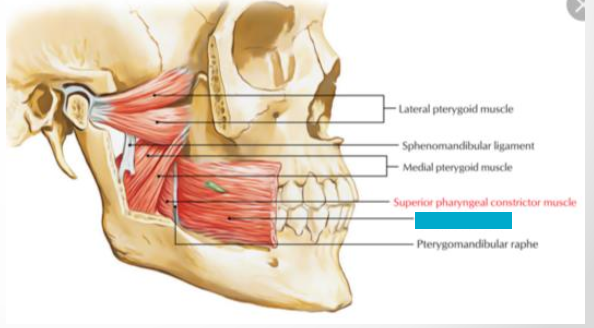
Buccinator (not a muscle of facial expression per se; associated with mouth)
The buccinator originates from
the maxilla, mandible
The buccinator inserts into the
modiolus