Arterial blood pressure, vascular resistance and blood flow
 Call Kai
 Learn
 Practice Test
 Spaced Repetition
 Match
 Flashcards
 Knowt Play
1/21

There's no tags or description
Looks like no tags are added yet.
22 Terms
Heart to tissues: a pressure and flow pathway diagram

What are large elastic arteries?
The major arteries that receive blood directly from the ventricles of the heart
Examples include:
Aorta
Pulmonary artery
Common carotid arteries
Subclavian arteries
They are known as elastic arteries because their walls contain large amounts of elastic tissue, allowing them to stretch and recoil in response to changes in blood pressure during the cardiac cycle
What are the main structural features of large elastic arteries?
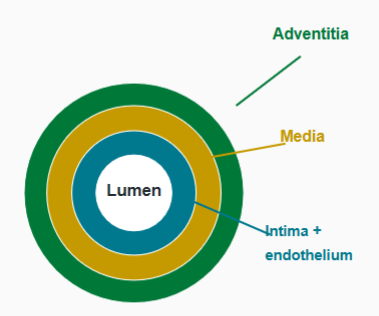
Tunica intima
Innermost layer
Endothelial lining senses blood flow and releases vasoactive signals
Provides a smooth surface to minimise friction and support blood flow
Endothelial cells release substances such as nitric oxide, which help regulate vascular tone
Tunica media
Thickest layer in elastic arteries
Contains numerous elastic lamellae (sheets of elastic fibres) interspersed with smooth muscle cells
Elastic fibres allow the vessel to stretch and recoil
Smooth muscle contributes to regulating vessel diameter
Tunica adventitia
Contains connective tissue, including collagen and elastic fibres
Provides structural support and prevents excessive stretching
Contains nerves and vasa vasorum, which supply larger vessel walls with oxygen and nutrients
Why do large elastic arteries contain so many elastic fibres?
Elastic fibres allow these vessels to:
Stretch when blood is forcefully ejected from the left ventricle
Store some of the energy generated during ventricular contraction
Recoil during ventricular diastole
Maintain arterial pressure and promote continuous blood flow between heartbeats
What is the Windkessel effect?
Describes how large elastic arteries help maintain relatively continuous blood flow despite the heart pumping blood intermittently
Occurs in 2 stages:
During systole:
The left ventricle contracts
Blood is ejected into the aorta
The aorta expands due to its elastic properties
Some of the energy from ventricular contraction is stored in the stretched arterial wall
During diastole:
The ventricles relax and stop actively ejecting blood
The stretched aortic wall recoils.
Stored elastic energy is released
This helps maintain arterial pressure and continues driving blood through the circulation

Blood pressure - mean arterial pressure and pulse pressure
MAP:
MAP = cardiac output x total peripheral resistance
CO = heart rate x stroke volume
Pulse pressure:
Systolic pressure - diastolic pressure
A useful approximation: MAP = DBP + 1/3 (PP) at a usual resting heart rate
Systolic pressure: influenced by stroke volume/ejection, arterial compliance and wave reflections
Diastolic pressure: influenced by arterial recoil, arteriolar resistance and the time available for pressure to fall between beats
What is arterial compliance?
Describes how easily an artery expands in response to an increase in pressure
Where:
ΔVolume = Change in arterial blood volume
ΔPressure = Change in arterial pressure
High compliance:
Artery stretches easily
Can accommodate an increase in blood volume with a relatively small increase in pressure
Low compliance:
Artery is stiffer and less able to expand
A relatively small increase in volume produces a larger increase in pressure
Large elastic arteries normally have relatively high compliance compared with muscular arteries

What happens to arterial compliance as a person ages?
Generally decreases with ageing because large elastic arteries become progressively stiffer

How does reduced arterial compliance affect the function of large elastic arteries?
The aorta becomes less able to stretch when blood is ejected from the left ventricle
Less energy is stored in the arterial wall during systole
Elastic recoil during diastole becomes less effective
The ability to maintain continuous blood flow and diastolic pressure is altered
The heart must generate greater pressure to eject blood into the less compliant arterial system
Why does systolic blood pressure tend to increase with ageing?
Ageing causes large arteries, particularly the aorta, to become stiffer
Reduced compliance means the aorta cannot expand as easily when blood is ejected
The same volume of blood entering the aorta produces a greater increase in arterial pressure
Consequently, systolic blood pressure tends to rise
Why can diastolic blood pressure decrease in older adults?
In younger individuals, elastic arteries recoil effectively during diastole
This recoil helps maintain arterial pressure between heartbeats
With ageing, reduced elasticity means the arteries recoil less effectively
Arterial pressure can therefore fall more rapidly during diastole
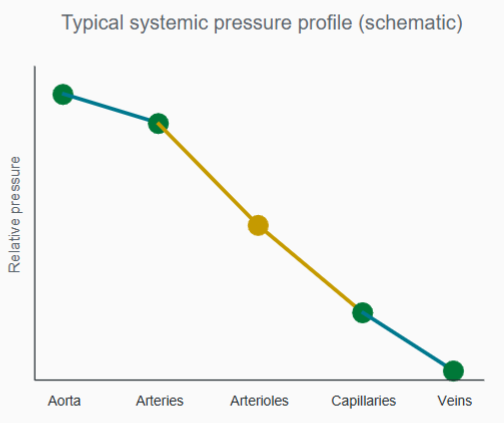
Arterioles - the principal resistance vessels
Small radius and active smooth muscle give arterioles strong control over resistance
Arteriolar tone is a major determinant of TPR and therefore influences MAP
Resistance is distributed across the vascular tree, but the largest pressure drop is typically across small arteries and arterioles
What is the arterial pressure pulse?
The rhythmic change in arterial pressure that occurs during each cardiac cycle
It is produced by:
Ventricular contraction
Ejection of blood into the aorta
Expansion of the arterial walls
Elastic recoil of arteries during ventricular relaxation
What factors influence systolic blood pressure?
Stroke volume
The volume of blood ejected from the left ventricle per heartbeat
Increased stroke volume generally increases systolic pressure because more blood enters the aorta
2. Rate of ventricular ejection
Faster or more forceful ejection can increase the peak arterial pressure
3. Arterial compliance
Less compliant arteries expand less easily
This produces a greater increase in systolic pressure for a given increase in arterial volume
4. Heart rate
Influences the time available for ventricular filling and arterial pressure changes between beats
Its effect on systolic pressure depends on changes in stroke volume and vascular properties
What factors influence diastolic blood pressure?
Total peripheral resistance
Increased resistance slows the movement of blood out of the arterial system
This generally helps maintain a higher diastolic pressure
2. Heart rate
A higher heart rate shortens diastole
Less time is available for arterial pressure to decline between heartbeats
This can increase diastolic pressure
3. Arterial compliance and elastic recoil
Elastic recoil helps maintain pressure during diastole
Reduced compliance and altered recoil can cause pressure to fall more rapidly
4. Blood volume
Changes in circulating blood volume can affect arterial pressure and the amount of blood returning to the heart
Small diameter can strongly alter resistance

Neural control: sympathetic noradrenergic fibres
Most systemic arterioles receive sympathetic noradrenergic innervation; basal activity contributes to resting vascular tone
Norephinephrine acting mainly at vascular alpha1 adrenoreceptors contracts smooth muscle → vasoconstriction
Greater sympathetic drive usually increases arteriolar resistance; reduced drive allows relaxation and dilation

Local controls tune arteriolar diameter to tissue needed

Functional hyperaemia matches flow to metabolism

Endothelium links flow, vascular tone and vessel health

Myogenic autoregulation: arterioles respond to stretch
Raised intraluminal pressure stretches arteriolar smooth muscle
Stretch triggers a myogenic constrictor response, increasing resistance and limiting the rise in downstream flow
Reduced pressure produces less stretch and relative dilation, helping support perfusion

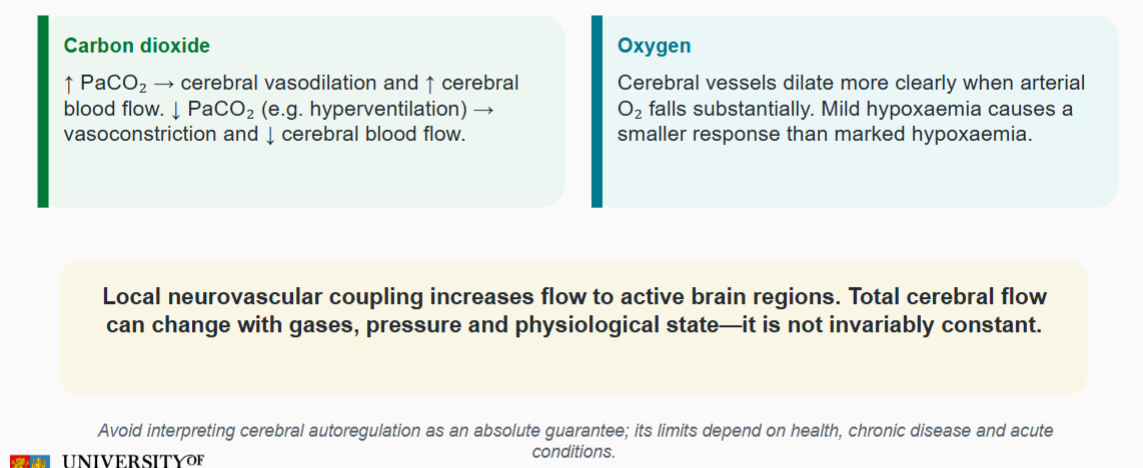
Cerebral blood flow responds strongly to carbon dioxide