WORKS | Exam 1 (Lec. 1-5) | ARCH 143
 Call Kai
 Learn
Learn Practice Test
 Spaced Repetition
 Match
Match Flashcards
 Knowt Play
1/37

There's no tags or description
Looks like no tags are added yet.
Name | Mastery | Learn | Test | Matching | Spaced | Call with Kai | Chat |
|---|
No analytics yet
Send a link to your students to track their progress
38 Terms

Name, City, Country, Year (50 years), Architect
Altes Museum, Berlin, Germany, 1822, Karl Friedrich Schinkel

Name, City, Country, Year (50 years), Architect
Kedleston Hall, Derbyshire, England (UK), 1770s, Robert Adam

Name, City, Country, Year (50 years), Architect
Bank of England, London, England (UK), 1788–1833, John Soane

Name, City, Country, Year (50 years), Architect
University of Virginia campus, Charlottesville (VA), USA, 1817–26, Thomas Jefferson

Name, City, Country, Year (50 years), Architect
Houses of Parliament, London, England (UK), 1840s, Charles Barry (with A.N.W. Pugin)

Name, City, Country, Year (50 years), Architect
Saint Louis Chapel, Carthage (Tunis), Tunisia, 1841, Charles-Joseph Jourdain

Name, City, Country, Year (50 years), Architect
Restoration of Notre-Dame, Paris, France, 1843–64 Eugène Viollet-Le-Duc

Name, City, Country, Year (50 years), Architect
Library of Saint Geneviève, Paris, France, 1843–50, Henri Labrouste

Name, City, Country, Year (50 years), Architect
Crystal Palace, London, England (UK), 1851, Joseph Paxton
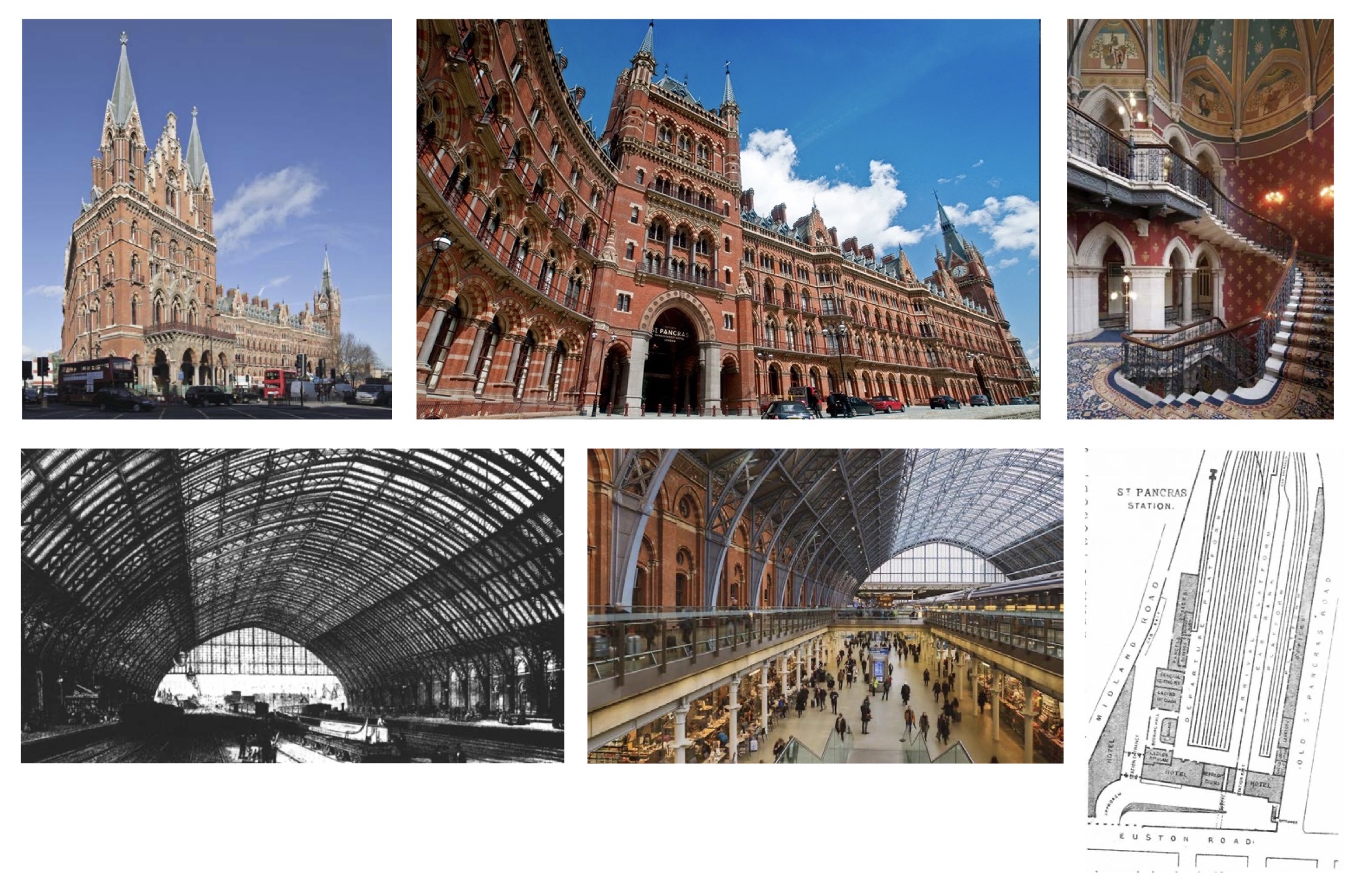
Name, City, Country, Year (50 years), Architect
Midland Grand Hotel and St. Pancras Station, London, England (UK), 1868, George Gilbert Scott (hotel) and William Henry Barlow (station)

Name, City, Country, Year (50 years), Architect
“Haussmannization” of Paris, France, 1853–70, Georges-Eugène Haussmann

Name, City, Country, Year (50 years), Architect
Palais Garnier (Opera), Paris, France, 1861–75, Charles Garnier

Name, City, Country, Year (50 years), Architect
Central Park, New York (NY), USA, 1860sFrederick Law Olmsted and Calvert Vaux

Name, City, Country, Year (50 years), Architect
Reliance Building, Chicago (IL), USA, 1893, John Root and Charles Atwood

Name, City, Country, Year (50 years), Architect
Guaranty Building, Buffalo (NY), USA, 1895, Louis Sullivan and Dankmar Adler

Name, City, Country, Year (50 years), Architect
Dakota residence hotel, New York (NY), USA, 1880s, Henry Janeway Hardenbergh

Name, City, Country, Year (50 years), Architect
Llewellyn Park (NJ), USA, 1870s, Alexander Jackson Davis

Name, City, Country, Year (50 years), Architect
Familistère, Guise, France, 1858–90, Jean-Baptiste-André Godin

Name, City, Country, Year (50 years), Architect
Utopian scheme for America, from The Human Drift, USA, 1894, King Camp Gillette

Significance of this building
The first public museum and held up the architect’s principle that unity is the fundamental principle of all building through its repetitive, united compromission and the ability for all in Paris to access it.
the building is designed in reference to Greek stoas and the Roman pantheon which demonstrates Schinkel’s knowledge and education on history and status as an architect.

Significance of this building
Wealth and status are established in the building through the use of references to Pompeiian frescos, the Roman Pantheon and Arch of Constantine all showcasing the Adam and the residences class, knowledge and education.
the wings designed for the house but were never built not only double as making the building look bigger than it really is but also served as fire resistance through the ability to distance the kitchen from the rest of the main house.
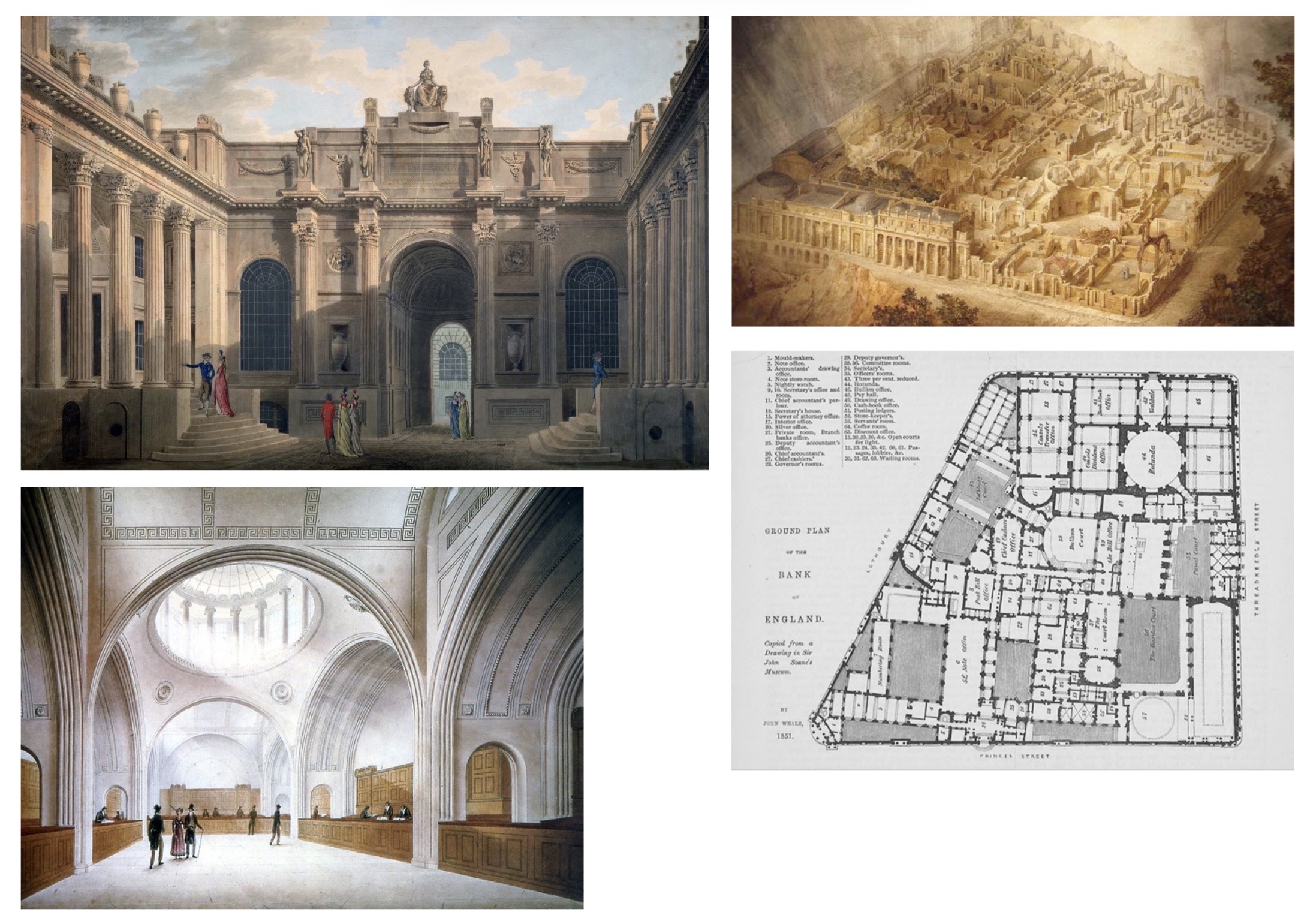
Significance of this building
The building and rebuilding of the bank demonstrates the wealth of the British Empire and the keystone to their economy.
The design with protection and fortification in mind focused on building thick rusticated walls meaning that light wells and lanterns were built on the roof to allow fr light to envelop the larger heavy space

Significance of this building
As one of the first state universities it would become a model of education in the US. It would be new in its lack of a church instead holding a library or temple of knowledge leading the way for secular eduction.
Designed and sponsored by Jefferson as an academic village he was inspired by the french and English neoclassical styles as well as the presence of Georgian and federal styles of the growing nation creating a sub style he deemed as “Jeffersonian Neoclassicism” demonstrated through the University.

Significance of this building
Pinnacle of British Neo-Gothic nationalism, this building is built in the historic English perpendicular gothic style through the presences of its long hallways and repetitive windows.
Though the building looks old in its historicism it contained many advanced technology like modern ventilation systems and iron.

Significance of this building
Dedicated to the king who made the gothic style the style of the french people therefore in his memory the building was design in his style.
Today it does not stand and the place now holds venues and tourist attractions.

Significance of this building
During the restoration Viollet-le-Duc prioritized perfecting the building rather than reverting it to its former glory he looked to bring it into the modern neo gothic day.
Demonstrated in action the idea of the conflicting philosophies of restoration at the time.

Significance of this building
Represented a radical departure from traditional library architecture embracing and glorifying the materiality and modern neoclassical style in France at the time.
The building is a representation of Plato’s allegory of the cave with its heavy floral/ natural decoration of the darker first floor as you as send up to the enlightened library, illuminated with massive glass windows, high ceilings, and educational stacks.

Significance of this building
Built initially temporarily for the first world fair, the England Expo of 1851 to showcase the modern technological achievements of England at the time putting them at the forefront of front of modern design.
The building was so popular that it was moved to a permanent location and served as a pinnacle for modern markets for city dwellers.

Significance of this building
London historicism and British nationalism these railway stations represent a shift in urban planning and restructuring of urban cities through the implementation of railways and modern travel
These train stations became a new form of public square and socializing and to accommodate this St. Pancras holds a hotel for those to stay in during their time in the city, fit with modern ventilation and air purification

Significance of this process
Completely reconstructed Paris through demolition and gentrification adding modern amenities like sewage systems, street lights, new city block housing, markets, operas, libraries, railways etc. creating the pinnacle of modern society for the wealthy upper and middle classes
Those who could not afford the new modern city were pushed to the outskirts of society and were left just outside modernity.

Significance of this building
This building is done in the second empire neo baroque style and demonstrated the Kings support for the liberal society through its cultural, artistic and public presence as a place for the people the experience the arts.
The building had an outstanding stair case and entrance that became the location for public gathering and socially showing off your status and position in high class society.

Significance of this building
The first landscaped public park in New York City and the United States it was built in response to the rapid industrialization of NYC it was meant be a place for everyone could come and socialize outside of class
The park reduces air pollution and provides habitat for flora and fauna allowing citizens an oasis with follies, water feature, paths, bridges and San quarry from the city.

Significance of this building
Steel construction curtain walls revolutionizing building allowing people to build taller. It served as a landmark for the Chicago school of architecture which emphasized function structure and light.
This innovation would for shadow the modern skyscrapers but its white glazed terracotta facade was both aesthetic and fire resistant referencing the Beaux-art influences of the time.

Significance of this building
This pioneering skyscraper was one of the first Chicago school style building to be built outside of its steel frame curtain walls construction
The building blends the modern technologies in America with Sullivan’s decorative style in ornate terracotta cladding.
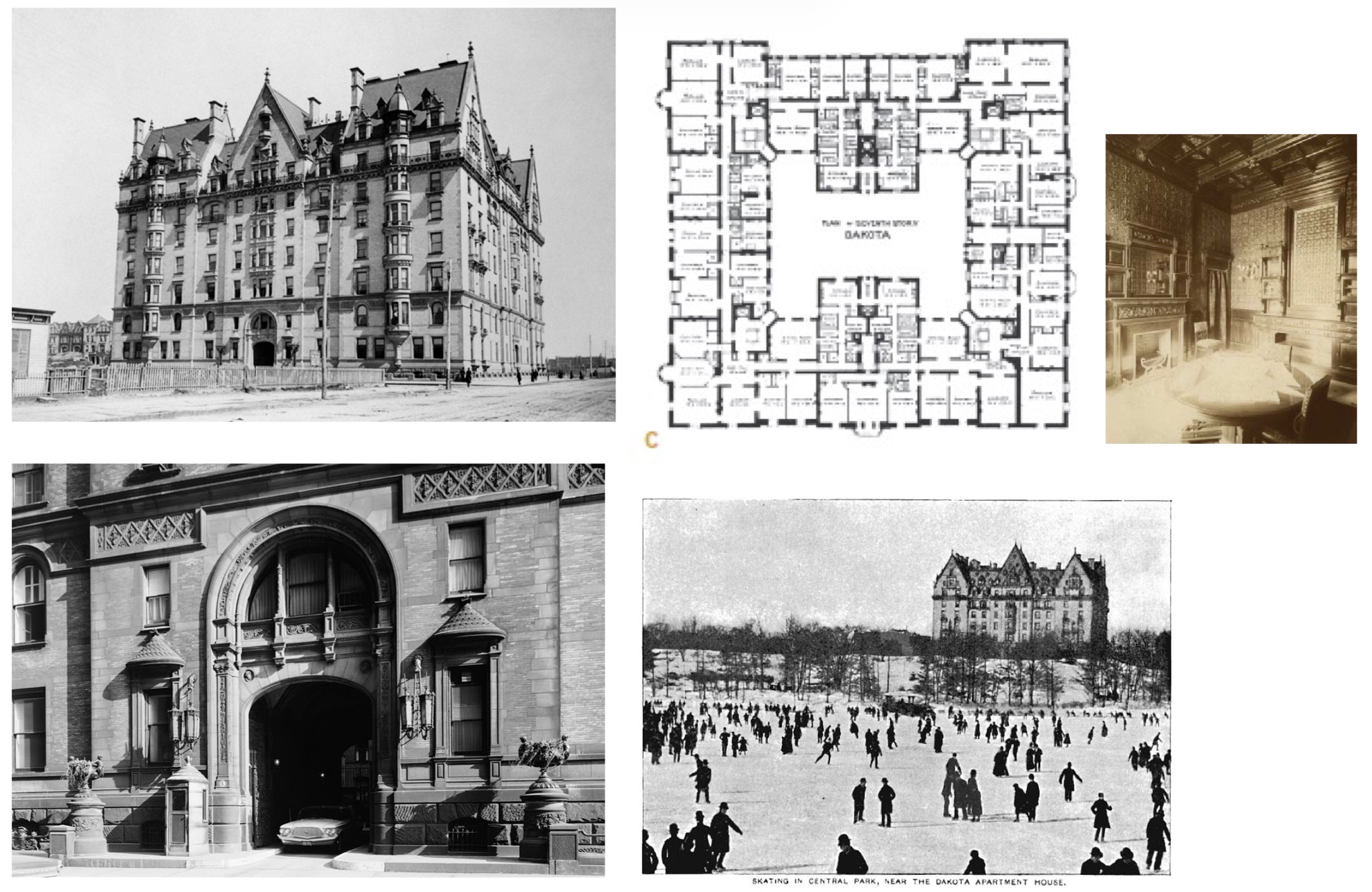
Significance of this building
Buildings like these provided housing and communities to the wealthy citizens of the city of New York City they functioned like clubs and social gatherings.
They replaced some of the row homes and acted like castles for the people of the modern city

Significance of this building
To get out of the overcrowded polluted cities people started to move out creating the beginning of suburbs, this is the first time we see a planned and developed suburb targeted to the upperclass.
With a classic picturesque style these developments drew people into the romance of the suburban city outskirts allowing those worked in the city to leave and come home to a lush green yard and gothic mansion.

Significance of this building
Affiliated housing for the workers and their families of the factories as another option of living so as to keep workers out of the slums of the city and provide a better quality of life.
The building held modern light wells, theaters, schools, libraries, and sport centers the idea for the housing came from more socialist ideas of the day the make the quality of living better for the modern class.

Significance of this building
This utopian America would be run under one company and one trust there would be no competition only virtue and happiness
The plan for these panopticon buildings were never built but they would have had modern plumbing, ventilation, glass, and technology