Bacteria, I hate microbiology
 Note
Note Call Kai
 Learn
Learn Practice Test
 Spaced Repetition
 Match
Match Flashcards
 Knowt Play
1/49

There's no tags or description
Looks like no tags are added yet.
Name | Mastery | Learn | Test | Matching | Spaced | Call with Kai | Chat |
|---|
No analytics yet
Send a link to your students to track their progress
50 Terms
Obligate Aerobe
Organisms that require a constant supply of oxygen in order to live
Obligate ANAerobe
Organisms that are killed in the presence of oxygen and must live in the absence of oxygen
Facultative Aerobe
Organisms that can survive w/ or w/o oxygen, can live just about anywhere
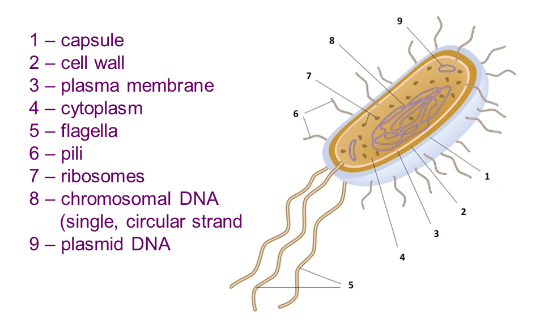
Capsule
Outside of the cell wall and made up of polysaccharide(carbohydrates)
Endospore
Thick wall that forms inside a cell when conditions of an environment are unfavorable for growth
Pili
Short stiff hair-like structures on the outside of a bacterial cell that are used to attach the bacteria to a food source or to one another
Flagella
Long whip-like structure used for movement
Prokaryote
A cell that has no nucleus or membrane bound organelles
What’s the difference between prokaryotic and eukaryotic cells?
Prokaryotic cells: singular, circular chromosome
Eukaryotic cells: singular, linear chromosome
What are the domains and kingdoms bacteria classified in?
Domain 1- Archaea
Kingdom: Archaebacteria
Domain 2- Bacteria
Kingdom: Eubacteria
One of the major differences in these 2 groups of bacteria is in the composition of the cell wall. True bacteria have what type of polysaccharide in the cell wall?
Peptidoglycan
What two ways can bacteria cause diseases?
Damage the cells + tissue
Release toxins/poisons into the host’s body
Give 2 reasons why bacteria are so successful
Adaptability
Population
What term is used to describe bacteria that are capable of causing diseases?
Pathogens
Bacteria that are NOT capable of making their own food are called?
Heterotrophs
This type of bacteria live on dead organic matter
Saprophytes
Bacteria that ARE capable of making their own food are called?
Autotrophs
This is a type of asexual reproduction where the bacterial cell divides to form two identical cells
Binary Fission
This type of bacterial “reproduction” occurs when two bacterial cells are connected in order to exchange genetic material
Conjugation
Bacteria have the ability to “fix” nitrogen into compounds other organisms can use. Why is nitrogen so important to all living things?
Plants and animals can’t use nitrogen gas directly to make amino acids(proteins) so they rely on bacteria to convert the nitrogen into nitrates, which plants can use, and animals can consume into their own proteins
A weakened or killed form of a pathogen that stimulates the immune system to produce antibodies
Vaccine
A close and permanent relationship between two organisms is called?
Symbiosis
The relationship is beneficial to both species
Mutualism
A relationship in which one species benefits from the association while the other is neither harmed or helped
Commensalism
A relationship in which one species benefits and the other is harmed
Parasitism
What are the three archaeal groups?
Methanogens
Halophiles
Thermoacidophiles
What habitat do Methanogens live in?
ANAaerobic environments (deep fresh water, marine mud, swamp mud, sewage) + digestive tracts of cows and termites
What habitat do Halophiles live in?
“Salt-loving”, very high salt concentration environments (Great Salt Lake + Dead Sea)
What habitat do Thermoacidophiles live in?
Acidic environments w/ high temperatures of 110 degrees Celsius and pH less than 2 (hot springs and “black smokers”-hydrothermal vents)
List 5 cell organelles that are never found in bacteria and explain why they are not found in bacteria
Nucleus
Mitochondria
Chloroplasts
Lysosomes
Endoplasmic Reticulum (ER)
They are not found in bacteria because bacteria are prokaryotic
What cellular organelles are found in a bacterial cell?
Nucleoid (genetic material)
Ribosome (synthesize proteins)
Cytoplasm (gel-like fluid for transport)
Pili
Cell membrane (controls what enters and leaves the cell)
Cell wall (protection + shape)
Capsule
Endospore
Flagella
Name 4 characteristics of how prokaryotes are identified/classified
Shape (tic-tac, sphere, spiral/corkscrew)
Materials composing the cell wall
The way they move
The way they obtain energy
What are the three shapes of bacteria? How are they shaped?
Cocci (spherical)
Bacilli (rod-shaped/tic-tac)
Spirilli (sprial shaped or curved/corkscrew)
What are the three functions of a capsule?
Enables prokaryotes to adhere to their substrate or to other individuals in the colony
Protect against dehydration
Shield pathogenic bacteria from attacks from their host’s immune system
What are PHOTOautotrophs?
-Photosynthetic organisms
-Use light energy from the sun to convert carbon dioxide and water to glucose and oxygen
What are CHEMOautotrophs?
-Use energy from inorganic reactions as a source of energy to build molecules of glucose
What 4 limitations prevent prokaryotic reproduction?
Eventual exhausting of food supply
Being poisoned by their own metabolic waste
Competition from other microbes
Being consumed by other organisms
What is the purpose of conjugation?
To increase the genetic diversity in future populations
List 3 reasons why bacteria are important to man
Decomposition
Digestion
Medicine
What are 3 methods of movement in prokaryotes?
Flagella
Pili
Gliding
What are the 5 characteristics of the best environment for growth for bacteria?
Suitable temperature” 80-100 degrees Fahrenheit
Moisture
Suitable food source
Darkness
Space to grow
What is the size difference between bacteria and viruses
Bacteria are very large compared to a virus
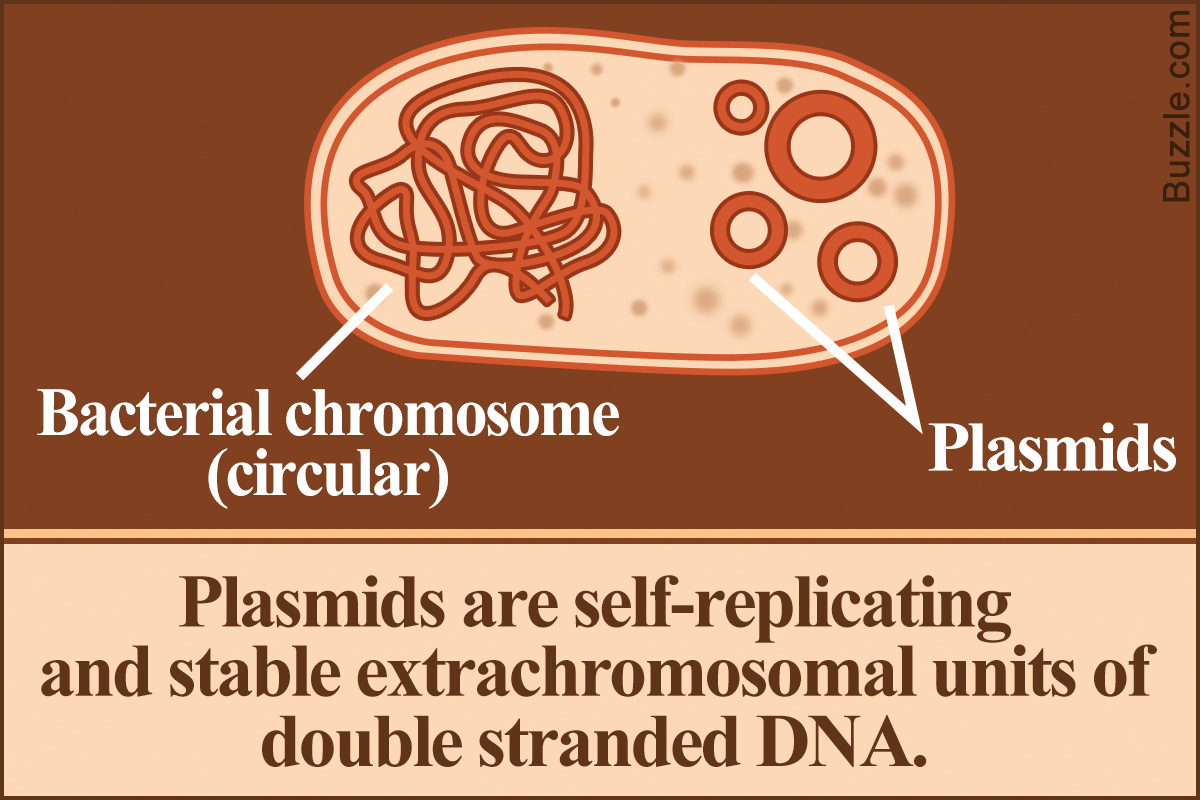
What is a plasmid?
-Small, circular DNA molecule found in bacteria.
-Physically separate from chromosomal DNA and replicate separately
- DO NOT depend on the organism’s chromosomal DNA for replication
What are antibiotics?
-Compounds that kill bacteria
-Antibiotics are only effective against bacteria, NO EFFECT on viruses
Cell structure of a prokaryotic cell LABELED