THIS IS SO DUMB Y DO WE HAVE TO KNOW THIS last one
 Call Kai
 Learn
 Practice Test
 Spaced Repetition
 Match
 Flashcards
 Knowt Play
1/7

There's no tags or description
Looks like no tags are added yet.
8 Terms
Hormonal pregnancy preparation
After ovulation, the dominant follicle becomes the corpus luteum (endocrine structure that produces large amounts of progesterone)
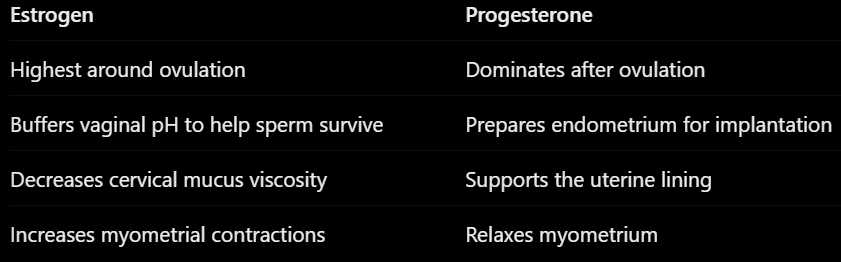
Progesterone raises basal body temperature during the luteal phase, supports the uterine lining, and promotes fertilization
Estrogen vs progesterone fertilization
Estrogen helps sperm travel toward the egg
Progesterone prepares the ute for the embryo
Fertilization
Sperm undergo capacitation (removal of cholesterol and glycoproteins from the membrane, changes in membrane potential, etc)
Occurs in the distal part of the fallopian tube
Sperm penetrates cumulus oophorus/corona radiata, zona pellucida (receptor ZP3), and the plasma membrane
Once sperm enters the oocyte cortical granules are released, zona pellucida is modified to decrease ZP2 binding and preventing polyspermy
Zygote cell division stages
Zygote= fertilized oocute
Morula= 16 cell stage
Blastocyst= fluid filled cavity develops and trophoblasts surround, enters uterine cavity 4 days after ovulation
Implantation= 5-7 days after ovulation
Trophoblasts
Outer layer of cells surrounding the blastocyst
Contribute to attachment, invasion, and formation of the placenta
Trophoblast differentiation
Cytotrophoblast= structural and supportive functions
Syncytiotrophoblasts= invade endometrium, secrete proteases that break down the extracellular matrix
Decidualization
Endometrial cells enlarge
glycogen accumulates
vascularity increases
immune conditions change to support implantation
hCG
Human gonadotropin
Secreted by trophoblasts 8 days after ovulation
Early pregnancy= maintains corpus luteum
Maintenance of the corpus luteum allows continued progesterone and estrogen production, supporting endometrium for early pregnancy
Peak at the end of the first trimester then declines
Can weakly bind to TSH receptors causing transient gestational hyperthyroidism