W9: Male/Female Reproductive Systems + lymph nodes
 Call Kai
 Learn
 Practice Test
 Spaced Repetition
 Match
 Flashcards
 Knowt Play
1/24

There's no tags or description
Looks like no tags are added yet.
25 Terms
what is the most inferior aspect of the uterus
cervix
uterus components
cervix
body
fundus of uterus — anteflexed (bent forward/horizontal)
if looking from ANT→ POST in axial pov, the first thing we see if fundus
fallopian/uterine tube: connect uterus to ovaries
ovary

why is fundus of uterus aneteflex
just natural anatomy, causing it to sit SUP/POST of bladder
relational anatomy if bladder full vs empty with uterus
empty = uterus fundus is horizontally sitting SUP/POST of bladder (anteflexed)
fully = more vertical (less antiflexed) bc full bladder pushes it upright a bit
what does ovary look like on scan
has bumpy texture (honeycomb-like) bc its made of follicles
relational anatomy of pubic symphysis and uterus/fallopian
pubic symphysis is anterior/superior to uterus/fallopian
relational anatomy btw testes and epidimysis
epididymis sits slightly SUPerior, POSTerolaterally of the testes

relational anatomy of testes and penis
penis = ANT to the tests

vas deferens
muscular tube in the male reproductive system that carries sperm from the epididymis toward the urethra during ejaculation
general pathway of sperm
testes produce sperm
epididymis = grow and stored here until ejacuation
vas deferens = muscle contractions that propel sperm thru tube into pelvic cavity (behind bladder)
seminal vesicles and ejaculatory ducts = add fructose-rich fluid, forming ejactulatory duct
prostate gland — ejac ducts will pass through and add more fluid (incl enzymes, citric acid, nutrients)
urethral/extenral urethral orifice — add lube fluid + expell thru opening at tip of penis
relational anatomy btw prostate, bladder
prostate = INF of bladder

relational anatomy btw bladder and seminal vesicles
between bladder and rectum (POST of bladder/ANT of rectum)

is bladder radiosensitive
more radioresistant — able to tolerate some radiation, compared to other structures nearby
∴ why its important to have a full bladder if treating prostate/uterus
why full bladder for RT
helps push nearby healthy organs—especially the small bowel—up and out of the high-dose radiation area while keeping pelvic structures in a consistent position
∴ protect small intestine
more reproducible
3 muscle groups in levator ani muscle group
puboccocygeus muscle, puborectalis mucles, iliococcygeus muscle
is the inguinal lymph node (deep/superficial) ANT/POST
superifical inguinal = ANT
deep inguinal = POST
how does full/empty bladder affect prostate position
full = push prostate down (below pubic symphysis?)
empty bladder = prostaet floating = more superior = above symphysis
which LNs are palpable
superifical inguinal nodes
which LNs are related to anal cancer
inguinal
which inguinal LN is more ANT/POST
superifical inguinal = ANT
deep inguinal = POST
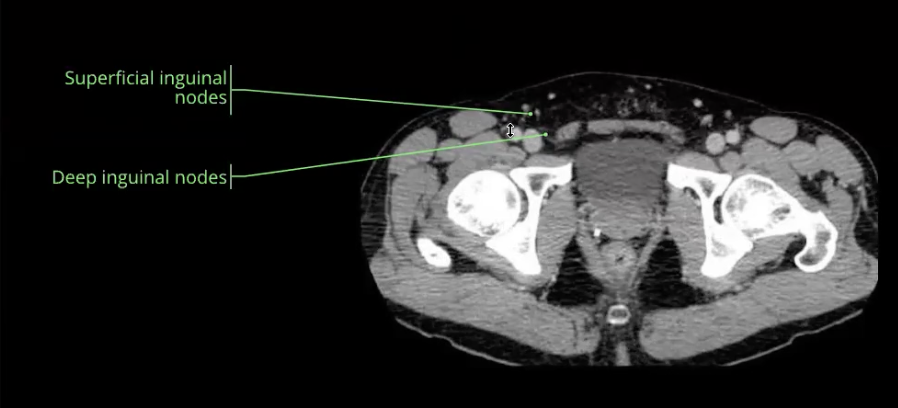
which inguinal LN is more medial/lateral
IF femoral heads visible = more superior/higher up
∴ superifical inguinal nodes = ANT/Lateral
∴ deep inguinal nodes = POST/medial
IF penis (spongy urethra), pubic arch is visible @ more inferior aspect
superifical inguinal nodes medial
deep inguinal nodes = lateral
** need to look at surrounding relational anatomy *
relationship between deep inguinal nodes to femoral vein
deep inguinal = more medial to femoral vein
where are postvesical nodes located?
posterior to bladder
external iliac nodes are located?
ANT/LATERAL to the external iliac arteries !
obturator nodes are located ?
ū located between bladder and acetublum/femoral heads