Week 3: Prenatal Development
0.0(0)
Studied by 3 people Call Kai
 Learn
Learn Practice Test
 Spaced Repetition
 Match
Match Flashcards
 Knowt Play
Card Sorting
1/52

There's no tags or description
Looks like no tags are added yet.
Last updated 12:10 PM on 10/11/26
Name | Mastery | Learn | Test | Matching | Spaced | Call with Kai | Chat |
|---|
No analytics yet
Send a link to your students to track their progress
53 Terms
1
New cards
Advanced maternal age pregnancy (35+)
increased risk of:
- fertility problems
- miscarriages
- C section
- still birth
- down syndrome
- increase in use of assisted human reproductive techniques
eg.
Fertility drugs
Cryopreservation
artificial insemination
2
New cards
Antenatal
conception to postpartum
3
New cards
Pregnancy
physical condition in which a woman's body is nurturing a developing embryo or fetus - 40 weeks
4
New cards
Prenatal
Process that transforms a zygote into a newborn
5
New cards
first trimester
zygote implantation to 12 weeks
6
New cards
second trimester
12 and 24 weeks you begin to feel the fetus moving
7
New cards
third trimester
25+ weeks increased emotional attachment to fetus
8
New cards
Key issues in first trimester:
- ectopic pregnancy
- abnormal urine or blood tests
- increased blood pressure
- malnutrition
- bleeding
- miscarriage
- abnormal urine or blood tests
- increased blood pressure
- malnutrition
- bleeding
- miscarriage
9
New cards
Key issues in second trimester
- gestational diabetes (too much glucose)
- excessive weight gain
- increased blood pressure
- Rh compatibility of mother and fetus
- miscarriage 13-20 weeks
- premature labour 21+ weeks
- excessive weight gain
- increased blood pressure
- Rh compatibility of mother and fetus
- miscarriage 13-20 weeks
- premature labour 21+ weeks
10
New cards
key issues in third trimester:
- increased blood pressure
- bleeding
- premature labour
- bladder infection
- toxemia
- bleeding
- premature labour
- bladder infection
- toxemia
11
New cards
Preeclampsia (or toxemia)
What is it?
- occurs in 3rd trimester
- sharp rise in blood pressure
- constricted blood vessels (including placenta, meaning poor
development of placenta)
- too much protein into urine
- end-organ dysfunction
- can result in hypertension
Symptoms?
- headache
- blurred vision
- swelling hands, feet, face
Treatment?
- deliver the baby
- lower BP
- occurs in 3rd trimester
- sharp rise in blood pressure
- constricted blood vessels (including placenta, meaning poor
development of placenta)
- too much protein into urine
- end-organ dysfunction
- can result in hypertension
Symptoms?
- headache
- blurred vision
- swelling hands, feet, face
Treatment?
- deliver the baby
- lower BP
12
New cards
Eclampsia
When preeclampsia causes seizures or even comas
- 2nd leading cause of maternal death in US
- 2nd leading cause of maternal death in US
13
New cards
Anoxia
- temporary lack of oxygen to the brain, babies who suffer low birth weight and anoxia are more likely to have learning disability's
14
New cards
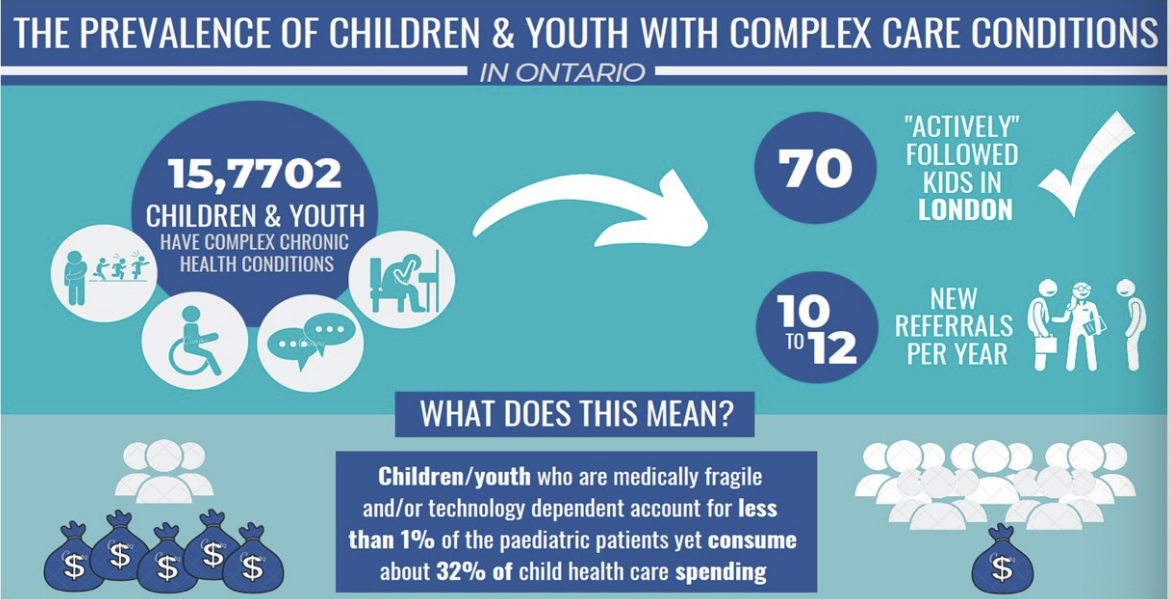
Age of viability
in Ontario: 23 weeks
- when medical professionals will intervene to save a baby
- the chance of survival is low
- In London, medical intervention starts at 24 weeks (depending
on the weight of the baby)
- Precision medicine is increasing, therefore the age of viability is
decreasing
- BUT this means an increase in children born with complex care
conditions
- these children use 32% of health care spending
- when medical professionals will intervene to save a baby
- the chance of survival is low
- In London, medical intervention starts at 24 weeks (depending
on the weight of the baby)
- Precision medicine is increasing, therefore the age of viability is
decreasing
- BUT this means an increase in children born with complex care
conditions
- these children use 32% of health care spending
15
New cards
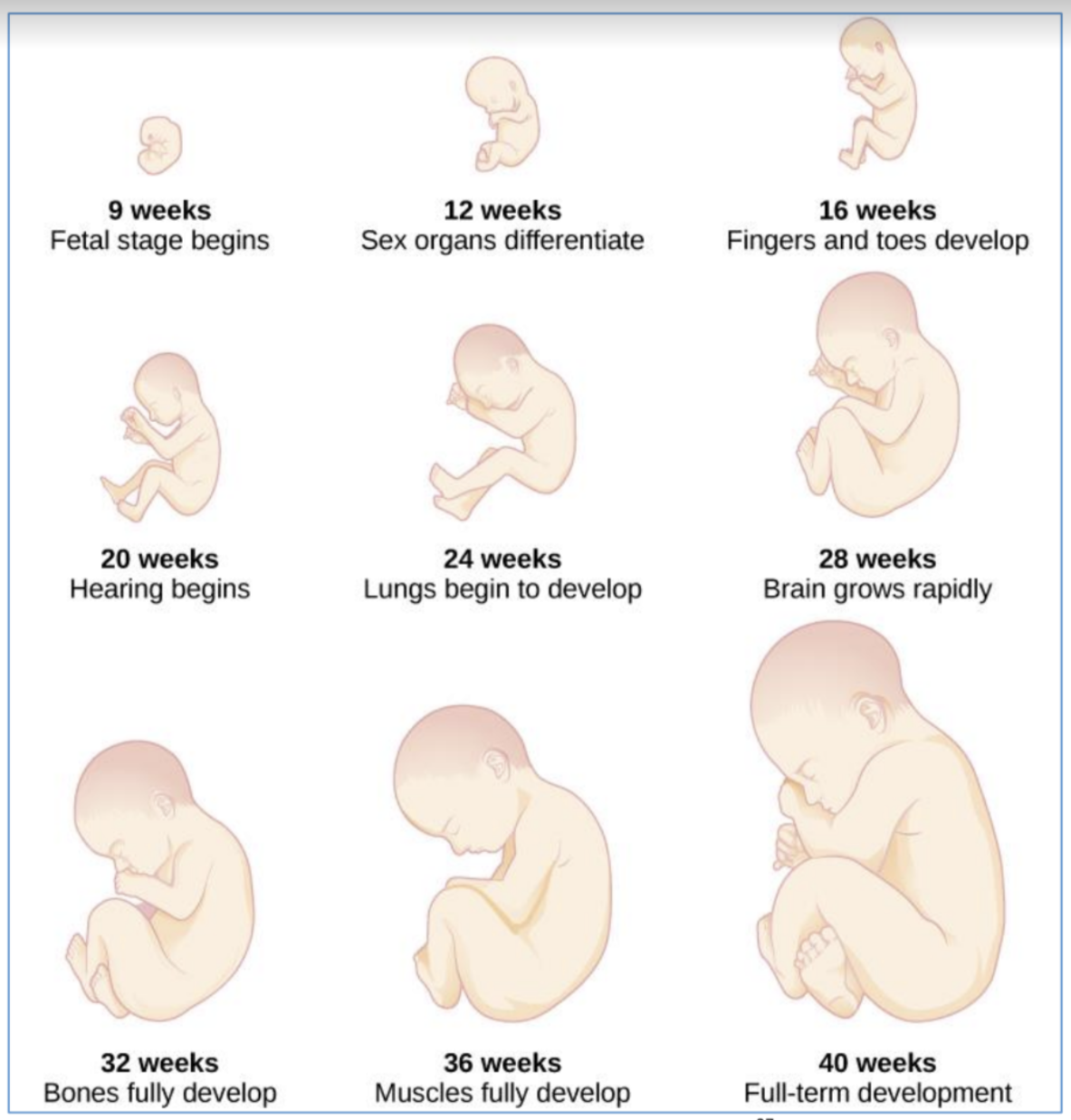
Prenatal Behaviour 9-12 weeks
fingerprints,
grasping reflex,
facial expressions,
swallowing and rhythmic 'breathing' of amniotic fluid,
urination,
genitalia appear,
alternating periods of physical activity and rest
grasping reflex,
facial expressions,
swallowing and rhythmic 'breathing' of amniotic fluid,
urination,
genitalia appear,
alternating periods of physical activity and rest
16
New cards
Prenatal Behaviour 13-16 weeks
hair follicles,
responds to mother's voice and loud noises,
8-12 cm long - crown to rump,
weights 25-100g
responds to mother's voice and loud noises,
8-12 cm long - crown to rump,
weights 25-100g
17
New cards
Prenatal Behaviour 17-20 weeks
fetal movements felt by mother,
heartbeat detectable with stethoscope,
lanugo (hair) covers body,
eyes respond to light introduced into the womb,
eyebrows,
finger nails
heartbeat detectable with stethoscope,
lanugo (hair) covers body,
eyes respond to light introduced into the womb,
eyebrows,
finger nails
18
New cards
Prenatal Behaviour 21-24 weeks
vernix (oily substance) protects skin,
lungs produce surfactant (vital to respiratory function),
viability becomes possible
lungs produce surfactant (vital to respiratory function),
viability becomes possible
19
New cards
Prenatal Behaviour 25-28 weeks
recognition of mother's voice,
regular periods of rest and activity,
good chance of survival if born now
regular periods of rest and activity,
good chance of survival if born now
20
New cards
Prenatal Behaviour 28-32 weeks
very rapid growth,
antibodies acquired from mother,
fat deposited under skin
antibodies acquired from mother,
fat deposited under skin
21
New cards
Prenatal Behaviour 33-36 weeks
movement to head-down position for birth,
lungs mature
lungs mature
22
New cards
Prenatal Behaviour 37+ weeks
full-term status
23
New cards
Issues in prenatal development - Genetic disorders
- autosomal dominant disorders:
eg. Huntington's disease, extra fingers
- autosomal recessive disorders:
eg. sickle-cell, cystic fibrosis
- Sex-linked recessive disorders:
eg. red-green colour blindness, missing front teeth
eg. Huntington's disease, extra fingers
- autosomal recessive disorders:
eg. sickle-cell, cystic fibrosis
- Sex-linked recessive disorders:
eg. red-green colour blindness, missing front teeth
24
New cards
Issues in prenatal development - chromosomal errors
Trisomy
- three copies - eg. Down Syndrome
Anomalies with sex
chromosomes
- Turner's syndrome
- three copies - eg. Down Syndrome
Anomalies with sex
chromosomes
- Turner's syndrome
25
New cards
Issues in prenatal development - Teratogens
maternal disease- deviations in prenatal development stemming
from teratogens (agents causing damage to the fetus) - greatest risk is in the first 8 weeks
from teratogens (agents causing damage to the fetus) - greatest risk is in the first 8 weeks
26
New cards
Teratogens - Obesity, Alcohol, Smoking
Obesity
- gestational diabetes
- hypertension
- childhood obesity
Alcohol:
- Fetal Alchohol syndrome
Smoking:
- higher likelihood of miscarriage
- higher risk of SIDS
- low birth weight
- gestational diabetes
- hypertension
- childhood obesity
Alcohol:
- Fetal Alchohol syndrome
Smoking:
- higher likelihood of miscarriage
- higher risk of SIDS
- low birth weight
27
New cards
Teratogens - Marijuana, depression, anxiety
Marijuana
- developmental problems?
- higher rates of depression and anxiety
Depression
- miscarriage
- low birth weight
- high risk of postpartum depression
Anxiety
- Lower APGAR scores
- low birth weight
- developmental problems?
- higher rates of depression and anxiety
Depression
- miscarriage
- low birth weight
- high risk of postpartum depression
Anxiety
- Lower APGAR scores
- low birth weight
28
New cards
4 Categories of teratogens
1. Physical teratogens:
- saunas, hot tubs, woman's body temp raised to 102 degrees or higher
2. Metabolic conditions affecting pregnant females:
- abnormalities in the chemical process of producing energy from food, thereby affecting the development and function of the body
3. infections:
- maternal infections eg. rubella virus, herpes, syphillis
4. Drugs and chemicals:
- cause a variety of different effects based on specific agents, exposure and timing.
- saunas, hot tubs, woman's body temp raised to 102 degrees or higher
2. Metabolic conditions affecting pregnant females:
- abnormalities in the chemical process of producing energy from food, thereby affecting the development and function of the body
3. infections:
- maternal infections eg. rubella virus, herpes, syphillis
4. Drugs and chemicals:
- cause a variety of different effects based on specific agents, exposure and timing.
29
New cards
Fetal Alchohol Syndrome
Physical:
- facial malformations that usually includes small eye sockets, smooth skin between the nose and upper lip instead of a crease, and flattened cheekbones
Developmental:
- struggle with interpersonal boundaries, has trouble remembering things, shortened attention span, and struggle with motor skills, hyperactivity, impulsivity, inability to complete tasks/disruptiveness, poor social skills, need for constant supervision, and disregard for rules and authority
- facial malformations that usually includes small eye sockets, smooth skin between the nose and upper lip instead of a crease, and flattened cheekbones
Developmental:
- struggle with interpersonal boundaries, has trouble remembering things, shortened attention span, and struggle with motor skills, hyperactivity, impulsivity, inability to complete tasks/disruptiveness, poor social skills, need for constant supervision, and disregard for rules and authority
30
New cards
Cannabis as a teratogen
may affect:
- brain development
- behaviour
- mental health
0 – 3 years:
- Difficulty calming down, exaggerated startles, sleep problems
3 – 6 years:
- Poorer memory, more impulsive, less attentive, less able to understand
and follow instructions
6 – 10 years:
More hyperactive and impulsive, more difficulty learning, symptoms of depression and anxiety, more difficulty making decisions, less attentive
14 – 18 years:
Poorer school performance, delinquency problems, may try and/or use cannabis earlier, continue to be hyperactive, impulsive and less attentive
- brain development
- behaviour
- mental health
0 – 3 years:
- Difficulty calming down, exaggerated startles, sleep problems
3 – 6 years:
- Poorer memory, more impulsive, less attentive, less able to understand
and follow instructions
6 – 10 years:
More hyperactive and impulsive, more difficulty learning, symptoms of depression and anxiety, more difficulty making decisions, less attentive
14 – 18 years:
Poorer school performance, delinquency problems, may try and/or use cannabis earlier, continue to be hyperactive, impulsive and less attentive
31
New cards
Depression as a teratogen
Untreated depression after the birth can lead to:
more negative face-to-face interactions with the baby, less eye contact during feeding, less playfulness with the baby, more withdrawal from the baby
Infants of untreated depressed mothers tend to:
look away from their mother, react with more crying, sadness and fussiness, have more trouble sleeping
more negative face-to-face interactions with the baby, less eye contact during feeding, less playfulness with the baby, more withdrawal from the baby
Infants of untreated depressed mothers tend to:
look away from their mother, react with more crying, sadness and fussiness, have more trouble sleeping
32
New cards
Female fetuses
- more sensitive to external simulation
- advance more rapidly in skeletal development
- advance more rapidly in skeletal development
33
New cards
Male fetuses
- more physically active in utero
- more vulnerable to all kinds of prenatal problems
- more likely to be spontaneously aborted and have birth defects
- more vulnerable to all kinds of prenatal problems
- more likely to be spontaneously aborted and have birth defects
34
New cards
A mothers voice - Queens Study
Newborns appear to remember stimuli from the womb -they respond to their mothers voice
why?
- emotional connection
- bonding and attachment
why?
- emotional connection
- bonding and attachment
35
New cards
Preterm/ low birth weight
- cerebral palsy,
- cognitive impairment
- visual and hearing impairment
- cognitive impairment
- visual and hearing impairment
36
New cards
extremely low birth weight, very low birth weight, low birth weight
ELBW
< 2.3lbs
VLBW
< 3.9lbs
LBW
< 5.5lbs
Normal
< 5.8 - 8.13lbs
- negative effects on mental and motor development
- negative impact on growth at 9-24 months
< 2.3lbs
VLBW
< 3.9lbs
LBW
< 5.5lbs
Normal
< 5.8 - 8.13lbs
- negative effects on mental and motor development
- negative impact on growth at 9-24 months
37
New cards
Types of Care
Prenatal:
health of mother
- blood pressure, urine, weight gain
health of baby
- uterus growth, heart beat, fetal movement
Intrapartum care:
- labour and delivery
Postpartum care:
- generally from birth to 6-8 weeks
health of mother
- blood pressure, urine, weight gain
health of baby
- uterus growth, heart beat, fetal movement
Intrapartum care:
- labour and delivery
Postpartum care:
- generally from birth to 6-8 weeks
38
New cards
Care: OB and Midwife
OB:
- twins
- high risk pregnancies
- high risk deliveries
Midwife:
- 'normal' baby
- single baby deliveries
- twins
- high risk pregnancies
- high risk deliveries
Midwife:
- 'normal' baby
- single baby deliveries
39
New cards
Birth location
In London:
Hospital vs home
Home
- better health outcomes
- only offered to moms with with low risk births
- natural birth
- fear of hospitals
- 9% of 1st time moms, 21% of second time moms
Hospital vs home
Home
- better health outcomes
- only offered to moms with with low risk births
- natural birth
- fear of hospitals
- 9% of 1st time moms, 21% of second time moms
40
New cards
Julia Moment
- steady increase in hospital births
- 2020 was highest year for home births
- In 2018, 71% of women received an epidural
Global shortage of 1.1 million reproductive, maternal, newborn and adolescent healthcare providers
Canada has 0.51 midwives per 10,000 population. Australia has 17.41
- 2020 was highest year for home births
- In 2018, 71% of women received an epidural
Global shortage of 1.1 million reproductive, maternal, newborn and adolescent healthcare providers
Canada has 0.51 midwives per 10,000 population. Australia has 17.41
41
New cards
The 4 stages of Labour
1.
Muscles of uterus start to tighten and then relax these contractions help to thin (efface) and open (dilate) the cervix so the baby can pass through the birth canal
- typically longest stage
2.
The cervix is dilated completely (10cm) and the baby is born
-
3.
This stage occurs after the baby is born you have contractions until the placenta is delivered
4.
This is the first few hours after birth (breastfeeding etc)
Muscles of uterus start to tighten and then relax these contractions help to thin (efface) and open (dilate) the cervix so the baby can pass through the birth canal
- typically longest stage
2.
The cervix is dilated completely (10cm) and the baby is born
-
3.
This stage occurs after the baby is born you have contractions until the placenta is delivered
4.
This is the first few hours after birth (breastfeeding etc)
42
New cards
The 3 types of Environment correlations
1. passive genotype-environment correlation
- children passively inherit the genes and the environments their family provides
eg. being athletic
2. Evocative genotype-environment correlation
- individuals seek out environments that support their genetic tendencies - niche picking
3. genotype-environment interactions
- genetic susceptibility to the environment
- adoption studies
- children passively inherit the genes and the environments their family provides
eg. being athletic
2. Evocative genotype-environment correlation
- individuals seek out environments that support their genetic tendencies - niche picking
3. genotype-environment interactions
- genetic susceptibility to the environment
- adoption studies
43
New cards
The Germinal period
14 days
- conception to implantation of the fertilized egg in the lining of the uterus
- organism begins cell division through cell mitosis
- after 5 days of mitosis a blastocyst forms
- conception to implantation of the fertilized egg in the lining of the uterus
- organism begins cell division through cell mitosis
- after 5 days of mitosis a blastocyst forms
44
New cards
Embryonic Period
3rd week
- blastocyst implants into uterine wall
- multi-cellular organism is called an embryo
- blood vessels grow to form the placenta
- blastocyst implants into uterine wall
- multi-cellular organism is called an embryo
- blood vessels grow to form the placenta
45
New cards
The fetal period
9th week until birth - organism is a fetus
46
New cards
Gestational Diabetes
- too much glucose in blood stream
- usually goes away after giving birth
- if untreated can cause:
- premature birth
- jaundice
- stillbirth
- usually goes away after giving birth
- if untreated can cause:
- premature birth
- jaundice
- stillbirth
47
New cards
Hypertension
- pressure against artery walls becomes too high
gestational BP
- only occurs in pregnancy and goes away after birth
Chronic BP
- developed before or during pregnancy and goes away after birth
gestational BP
- only occurs in pregnancy and goes away after birth
Chronic BP
- developed before or during pregnancy and goes away after birth
48
New cards
Rh Disease
Rh = a protein found in the blood
most people have this protein, but people who don't are Rh negative
- mothers who are rH negative are at risk for having a baby with a form of anemia called rH disease
most people have this protein, but people who don't are Rh negative
- mothers who are rH negative are at risk for having a baby with a form of anemia called rH disease
49
New cards
hyperemesis gravidarum
characterized by severe nausea, vomiting, weight loss, and sometimes dehydration.
- if severe it can result in damage to the brain and liver and kidney
- treatment: drinking fluids and bland diet
- if severe it can result in damage to the brain and liver and kidney
- treatment: drinking fluids and bland diet
50
New cards
Ectopic pregnancy
Zygote becomes attached to the fallopian tube before reaching the uterus.
- number of these pregnancies have been increasing because of the higher rates of pelvic inflammatory disease and chlamydia
- number of these pregnancies have been increasing because of the higher rates of pelvic inflammatory disease and chlamydia
51
New cards
Spontaneous abortion
experienced in 20-40% undiagnosed pregnancies and 10% in diagnosed pregnancies
- usually the body aborts due to chromosomal abnormalities before the 12th week of pregnancy
- usually the body aborts due to chromosomal abnormalities before the 12th week of pregnancy
52
New cards
APGAR assesment
conducted 1 minute and then 5 minutes after birth
A: Appearance
P: Pulse
G: Grimace
A: Activity
R: Respiration
a score from 0-2 is given to each measure
A: Appearance
P: Pulse
G: Grimace
A: Activity
R: Respiration
a score from 0-2 is given to each measure
53
New cards
Vernix
a newborn baby is covered in white substance - vernix that acts as an antibacterial barrier