APAH Greek, Etruscan, & Roman Art
 Call Kai
 Learn
 Practice Test
 Spaced Repetition
 Match
 Flashcards
 Knowt Play
1/61

There's no tags or description
Looks like no tags are added yet.
62 Terms
Greek Humanism
Emphasis on the individual, self-reliance, and conceptualizing gods as idealized humans.
Greek Idealism
The artistic attempt to make the human body and art perfect.
Doryphoros Creator
The Classical sculptor Polykleitos
Parthenon Architects
Iktinos and Kallicrates.
Hellenistic Sculpture Style
Dramatic motion, extreme emotion, and theatrical compositions like the Laocoon.

Doric Order
The simplest and sturdiest of the classical Greek architectural orders, featuring plain capitals.

Ionic Order
A classical architectural order characterized by scroll-like volutes on the capitals.

Corinthian Order
An ornate classical architectural order featuring capitals decorated with acanthus leaves.
Etruscan Necropolis
A large ancient cemetery or city of the dead.

Etruscan Tumulus
A circular mound of earth and stone covering tombs.
Sarcophagus
A stone or terracotta coffin often decorated with sculpted figures.
Etruscan Temple Characteristics
High podium, frontal access only, and deep front porch.
Terra Cotta Apollo from Veii
Archaic-style Etruscan statue created by the sculptor Vulca c. 500 BCE & placed on the rooftop of the Temple of Minerva

Etruscan vs Greek Temples
Etruscan: Front-only access and high podiums, wood & mud-brick, 3 cella
Greek: Peristyle plans, marble/stone, 1 cella
Tomb of the Triclinium
Etruscan tomb known for lively painted banquet scenes and dancers on fresco
Tuscan Order
A simplified Roman architectural order resembling the Doric order with an unfluted column shaft.
Four Roman Architectural Contributions
Building for use, arch and vault, concrete verticality, and designed interiors.
Advantages of Roman Concrete
Less expensive, easier to build, stronger, and allows complex forms.

Pantheon Architecture
Massive domed Roman temple featuring a central circular oculus.
Colosseum Function
Amphitheater used for gladiatorial combats and public spectacles accommodating up to 50,000.
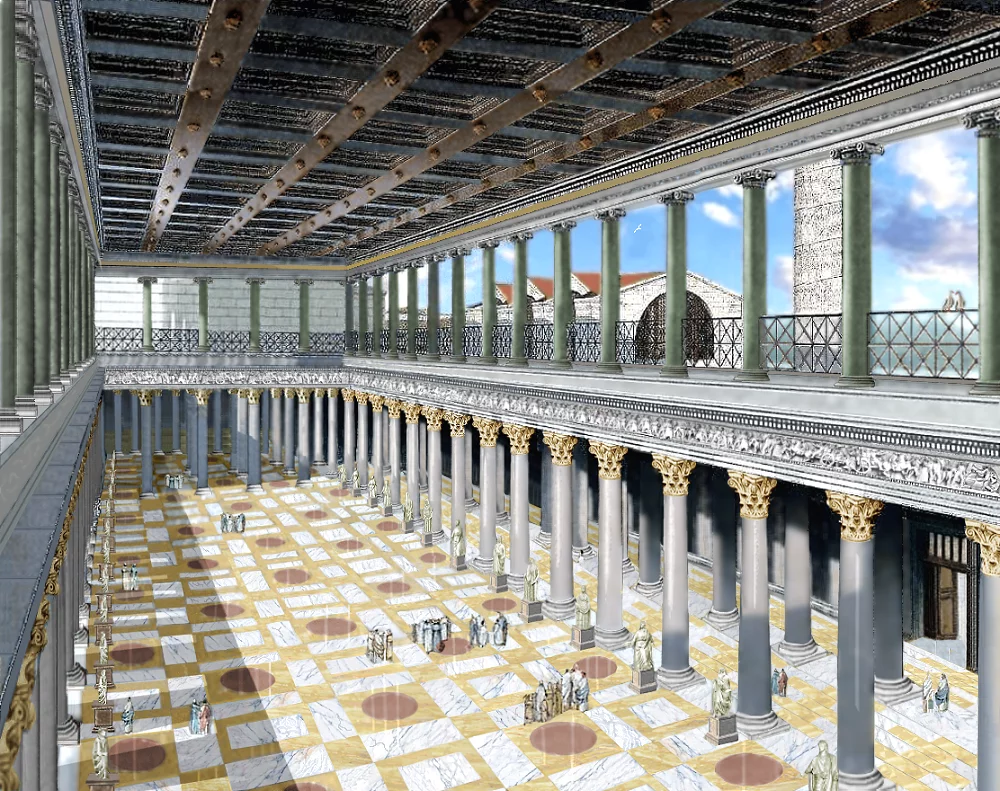
Basilica of Ulpia
Served as civic courts in the Forum & features clerestory windows + apses on each side
Verism
Excessively realistic portraits emphasizing age and experience, typical of Patricians.

Trajan's Column Purpose
Commemorative column featuring narrative relief sculpture celebrating military victories.
Ara Pacis Augustae Date
Commissioned between 13 and 9 BCE.

Pont du Gard Function
Roman aqueduct bridge utilizing arches for water transport and engineering.
Oculus Function
A circular opening at the apex of a dome allowing light to enter.
Coffering Purpose
Sunk paneling in a ceiling to reduce weight and add decoration.

Pseudoperipteral Temple
A temple with engaged columns along the sides and back walls.
Arch of Constantine Date
Erected around 313 CE to commemorate imperial victory.
Appropriation
Borrowing or adopting existing images, styles, or ideas for new works of art.
Pragmatism
A practical approach to solving problems, central to Roman engineering and architecture.
Eclecticism
A tolerant and open-minded approach that combines elements from various styles.
Utilitarianism
Engineering and public works focused on practical utility and civic management.
Longitudinal Axis
An architectural layout organized along a straight central line, common in basilicas.

Spandrel
The triangular space between the exterior curves of two adjacent arches.

Pilaster
A rectangular column projecting slightly from a wall, used for architectural relief or decoration.

Clerestory
A high section of wall with windows that lights the central nave of a basilica.
Aisles
Longitudinal passageways flanking the central nave in a basilica or church.

Exedrae
Semi-circular recesses or alcoves, often found in Roman forums and basilicas.

Cross Vaulting
A vault formed by the perpendicular intersection of two barrel vaults, also known as a groin vault.
Colonnade
A long sequence of columns supporting an entablature.
Patina
A green or dark surface film that forms on bronze through aging and oxidation.
Cuirass
A piece of armor consisting of a breastplate and backplate worn by Roman leaders.
Gravitas
A Roman virtue emphasizing dignity, seriousness, and moral weight.
Death Mask
A wax or plaster cast made of a person's face shortly after death, influencing veristic portraits.
Equestrian Portrait
A sculpture or painting of a rider on a horse, symbolizing imperial power and authority.
Frigidarium
The cold-water room in a Roman public bath complex.
Tepidarium
The warm-water room in a Roman public bath complex.
Caldarium
The hot-water room in a Roman public bath complex.
Peplos Kore
Archaic Greek statue of a young woman wearing a peplos.
Anavysos Kouros
Archaic Greek statue of a young man serving as a grave marker.
Kritios Boy
Early Classical Greek statue marking the introduction of contrapposto.

Grave Stele of Hegeso
Classical Greek marble grave marker featuring a woman examining jewelry made by Kallimachos

Niobides Krater
Classical Greek red-figure krater depicting the massacre of the Niobids.
Athenian Agora
The center of public life in ancient Athens, featuring civic and commercial buildings.
Erechtheion
Ionic Greek temple on the Acropolis featuring the Porch of the Maidens.
Aphrodite of Knidos
Late Classical sculpture by Praxiteles depicting the goddess nude.
Hermes and Infant Dionysos
Late Classical sculpture by Praxiteles showing Hermes with the infant god.
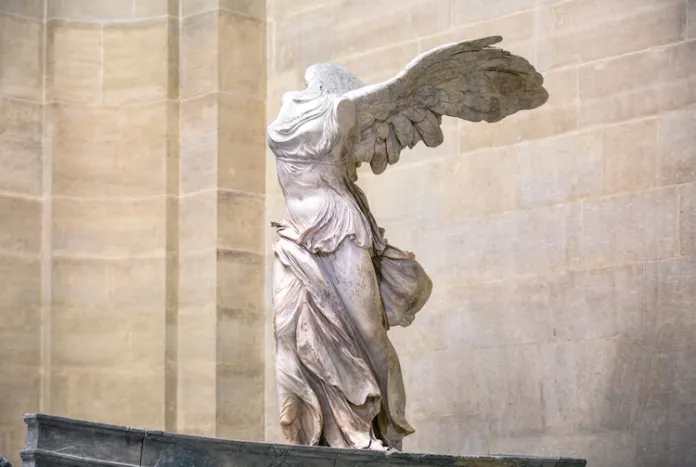
Nike of Samothrace
Hellenistic masterwork of the Greek goddess of victory landing on a ship.

Seated Boxer
Hellenistic lost-wax bronze casting sculpture depicting a defeated, exhausted athlete

Altar of Zeus at Pergamon
Hellenistic monumental structure famous for its dramatic high-relief frieze.
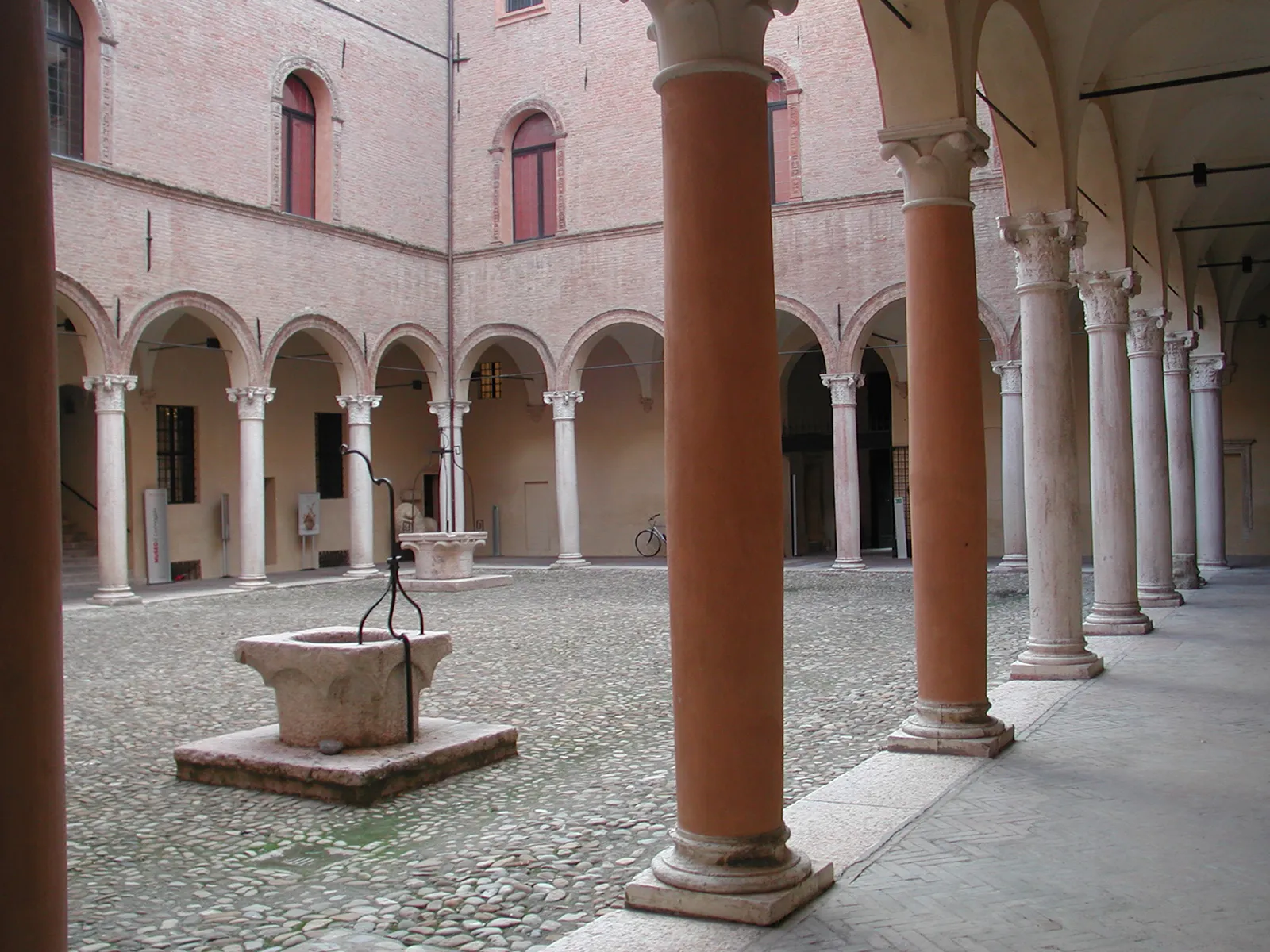
Portico
Roofed open space or porch supported by colonnade