1062: CHEM Ch 6
 Call Kai
 Learn
Learn Practice Test
 Spaced Repetition
 Match
Match Flashcards
 Knowt Play
1/56

There's no tags or description
Looks like no tags are added yet.
Name | Mastery | Learn | Test | Matching | Spaced | Call with Kai | Chat |
|---|
No analytics yet
Send a link to your students to track their progress
57 Terms
Solutions
Homogeneous mixture of two or more components
Solute: minor component
Solvent: major component
Solutions vs. Mixtures
Solution: Homogeneous (same composition throughout) and typically won’t unmix once mixed
Subtype of a mixture
Mixture: Heterogenous (different throughout) and easy to unmix
Solution Volume
Isn’t always equivalent to the sum of the volume components but somewhere between
Affected by the density of the solution versus the components density
Aqueous (aq)
When a solution is dissolved in water (solvent)
solubility rules and ions diffuse
Immiscible
Solute and solvent don’t mix and they form two separate layers instead
Miscible
The solute and solvent mix into one solution and don’t unmix
Saturated Solution
No more solute will dissolve
Unsaturated Solution
Added solute will dissolve
Solution Notes (Mass and Volume)
Masssolution = Masssolute + Masssolvent
Mass = A + B
Volumesolution ≠ Volumesolute + Volumesolvent
Volume ≤ A + B
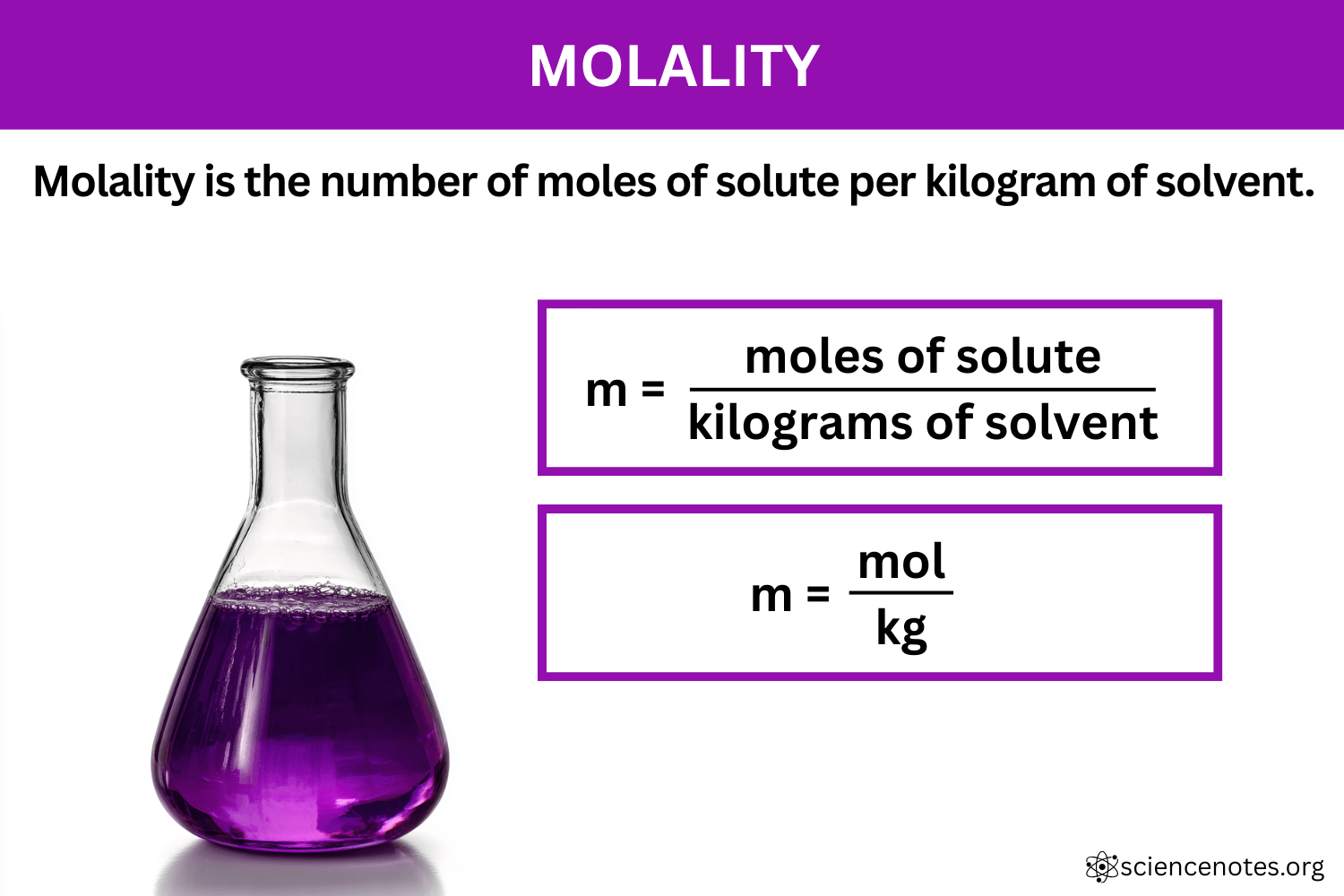
Molality
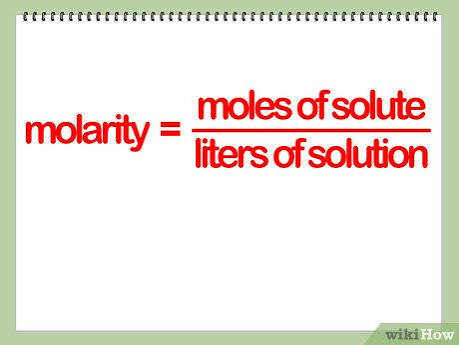
Molarity
Moles of solute per liter of solution
Affected by the temperature
Making a Solution
Add enough solvent to the solute sitting in the flask to make the correct concentration of solution.
Same process for mass/L solution and dilution
Mass to Mass Concentrations
Use %concentration, ppm, or ppb concentrations
10% solution has 10g solute for 90g solvent ( = solute/solution)(same as pph)
10ppm solution has 10 micrograms (10-6) solute per gram of solution (mg solute/mg solution x 106)
10ppb solution has 10 nanograms (10-9) solute per gram solution
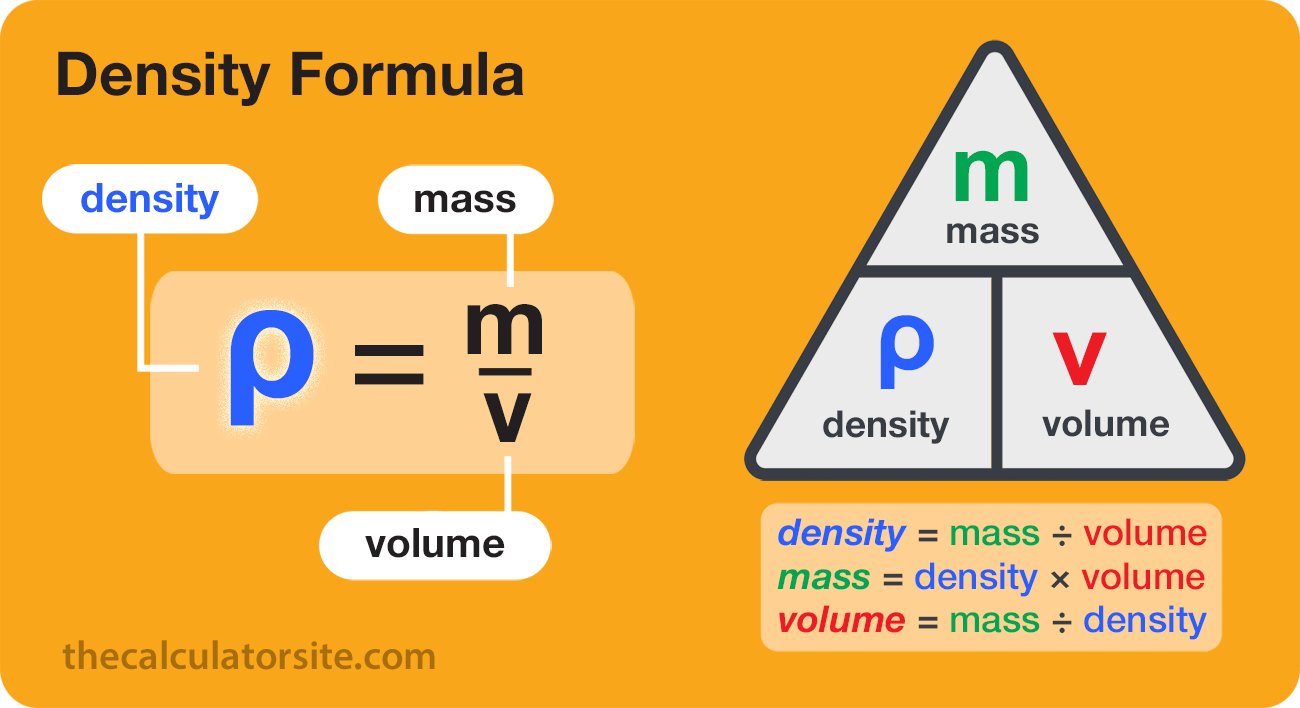
Mass % Given Density
Use the volume multiplied by the density to find the solution’s mass and divide the solute by the calculated solution’s mass
Mass/Mass Conversion Example - A beverage contains caffeine at a concentration of 35 ppm, interpreted as mass per mass.
Correct Conversions:
The same as 0.0035% by mass
The same as 35 mg of caffeine per kg solution
The same as 3.5 × 10⁴ ppb
The same as 35 micrograms of caffeine per g solution
Concentrated vs. Diluted
Concentrated: more moles per volume
Diluted: fewer moles per volume
The moles of solute between these two doe’t change but the volume of the solution does
Dilution Formula

Latent Heat
Additional heat stored during a phase change that is released when the substance reverts phases.
Furthering Reactions
Cooling it, lowers the temperature, causing ∆G to become more negative
-T∆S: decreases in magnitude
Factor Affecting Solubility
Molecule structure, molecule size, polarity, temperature, pressure, enthalpy change, entropy change, strength of solute-solute interactions, strength of solvent-solvent interactions, strength of solute-solvent interactions.
Solubility + Temperature
Solubility is always specified by the temperature at which it is measured
Temperature affects solubility
Solubility Trends (Water)
Hydrocarbons (CH3): not very soluble in water
Alcohols (OH): very soluble
Solubility + Entropy
It is favorable for molecules to mix into a solution
Smixed > Sunmixed
Determining A Molecules Solubility
Assess the molecule’s structure
Is it polar, an ion, covalently bonded, and what IMFs are present?
Compare the strength of the solvent-solvent and solute-solute IMFs to determine if the solute-solvent interactions are stronger
“Like dissolves like”: molecules with similar structures and IMFs tend to be soluble in each other
Changes During Dissolving
Endothermic as interactions between particles in the solute are overcome
Endothermic as some interactions between particles in the solvent are overcome
Exothermic as new interactions are formed between the solute and solvent (the stronger the more soluble)
IMFs
London Dispersion Forces: happen in all molecules (especially non-polar) when there are momentary charge distributions
Hydrogen Bonding: the strongest and happens in polar molecules, especially alcohol groups (OH)
Can go both ways and are stronger if they do
Dipole-Dipole Interactions: attractions between partial charges of polar molecules; they are the second strongest
Mass → Volume
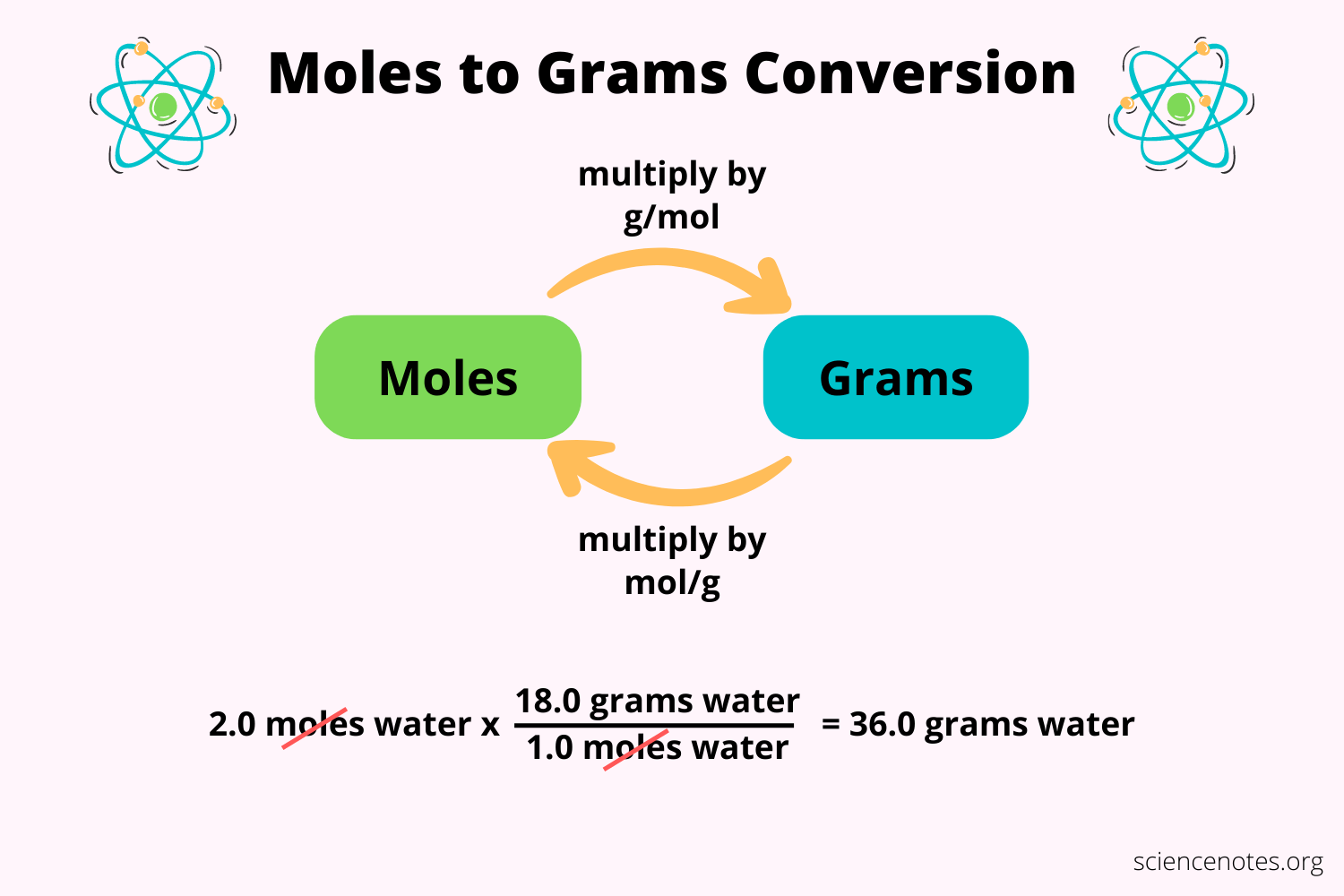
Moles → Mass
IMFs For Molecular Compounds
Draw out the lewis structure
Find polar bonds (highly electronegative bond)
Determine molecular geometry (electron geometry)
VESPER Theory
Hybridization → # of electron groups → groups
Combine for overall geometry and use with bond polarity to determine overall polarity
Ionic Bond
Electrostatic attraction between ions
Stronger than other IMFs
Largely synonymous with ion-ion interactions
ion-ion > ion-dipole > other IMFs
Ionic Solid
A 3D ionic lattice, ordered every other, and held together by ionic bonds
High melting, brittle, non-conducting solid, conducting liquid, and soluble in water
Conducts electricity when dissolved in water (aq)
Carbon Tail
The longer the carbon chain, the lower the solubility
Non-Polar Molecules + Water
Solubility is influenced by entropy so water molecules form a cage-like structure, which decreases entropy, so oil molecules clump instead.
Salts - Solubility
Ionic compounds whose electrostatic interactions within the crystal must be disrupted
When molecular compounds dissolve IMFs between separate molecules are disrupted
Salt Dissolution (Water)
Water interacts with ions on the surface, forming a dynamic cluster around the ion with the oppositely charged end orientated towards an ion. This collision drives the ion and its water shell to separate.
Strongly stabilizing (-∆H) and dynamic, as the water molecules of the shell are interchangeable
Solvation
When solvent molecules interact with and stabilize solute molecules
Hydration: water is the solvent
Dissolution - System vs. Surroundings
System: solute and solvent molecules that interact with it
Surroundings: water molecules not interacting
Temperature change measures surroundings, not the system specifically
Dissolution - Exothermic
As the measured temperature rises, the formed bonds are stronger and more stable than the reactants’ bonds.
Enthalpy-driven
Dissolution - Entropy Driven
If a reaction is endothermic, entropy must increase, and -T∆S must overcome ∆H, such that it is entropy-driven
Needs -∆G to occur
∆G more negative = more soluble
Amphipathic Molecules
Molecules large enough to have different regions that can be classified as polar or non-polar
Ex: biomolecules
Non-polar regions case a decrease in entropy (∆S) when interacting with water
Polar regions interact with water and little to no increase in entropy
Amphipathic Molecules in Water
Molecules form structures, such as spherical micelles, which orient polar regions in contact with water and non-polar regions inside
Other ordered structures
Larger molecular aggregates
Colloid
When the particles in a solution maintain the structure of a solid
Stable, as thermal motion is suspended
Particles are suspended before they settle
Larger molecules are unstable and settle due to gravity
Reaction Rate
As the reaction proceeds the probability of collisions between the reactants decreases
Reaction forward = probability of collision of reactions
Reaction begins occurring backward as the concentration of products reaches capacity, until it reaches equilibrium
Emulsions
When the particles of a solution occupy a separate, suspended, appearance
Unstable, and the two liquid phases often separate
Solubility of Gas + Temperature Increase
Not highly soluble and vaporizes as heat is added because gases’ IMFs (especially with liquids are weak)
Gas Dissolution - Dipole Induced Dipole
Most gases have a slightly favorable -∆H and a slightly unfavorable -∆S of solution
Less disordered in liquid and escape when the temperature rises/thermal energy is added
Increasing temperature doesn’t always increase solubility
Alloys
Solutions of solids in solids, as atoms mix and are resolidified with emergent (new) properties
New Interactions
Ion-dipole interactions are weaker than ion-ion interactions and stronger than hydrogen bonding
If a process occurs, incorporate the increased number of ion-dipole interactions in aqueous solutions when determining new bond strength
Exothermic Dissolution
Some thermal energy is required to break bonds, but even more energy is released when forming new bonds
Products are more stable with stronger bonds (solute-solvent interactions are stronger)
Entropy of Dissolution
Mixing doesn’t always increase entropy so use context to determine its sign
Doesn’t determine solubility alone
∆G must always be negative
Polyatomic Ions
Don’t dissociate when dissolved in water
Represented in a similar ionic structure
Water molecules surround dissolved ions
Endothermic Dissolution
More thermal energy is required to break bonds than is released when new bonds form.
Products are less stable, and the solute-solvent interactions are weaker
+∆S is necessary
Ionic Concentration
Multiply by the number of ions or total ions to determine the molarity of an ion or total ion molarity of a solution
Temperature Effects on Solubility
Affects the entropy (∆S) and thus determines the sign of ∆G when ∆H is positive
-∆S = low T
+∆S = high T
Lattice Energy
Energy is released when an ionic lattice forms from ions in the gas phase
More charge = stronger attractions
Larger ions = smaller attractions
The stronger the interactions, the more energy required to overcome, which decreased solubility and increased the melting point
Solubility Trends
Ionic compounds with a ± 1 charge are soluble and ions with higher charges tend to be insoluble
Insoluble = +∆G (-∆S)
Lower charges means the water molecules in the hydration shell can exchange (≠ -∆S)