L12-antihypertensive drugs; MOA for drugs acting on RAAS
 Call Kai
 Learn
 Practice Test
 Spaced Repetition
 Match
 Flashcards
 Knowt Play
1/14

There's no tags or description
Looks like no tags are added yet.
15 Terms
what is hypertension
it is a condition where the force of blood pushing against the artery walls is consistently too high making the heart work harder to circulate blood

what are the risk factors associated with untreated hypertension/ why should we worry about it
high blood pressure is an independent risk factor for cardiovascular diseases and strokes
the high blood pressure produces damage to the endothelial cells which can provoke cardiovascular diseases e.g. atherosclerosis
it can cause internal organ damage. kidney, eyes nerves
the extra strain on the heart can lead to heart failure
what are the factors that increase the risk of getting hypertension

explain how the body senses volume
the body has no mechanism to measure volume so it relies on measuring pressure instead

what are the three main types of hypertension
essential ( primary ) hypertensions- most people, no apparent cause
secondary hypertension- hypertension caused by another identifiable medical condition e.g. endocrine gland like cushing’s disease disorders, kidney diseases or drug induced like using anti-inflammatory corticosteriods e.g. prednisone
" white coat hypertension- when a persons blood pressure increases when being checked at doctors but then at home its fine
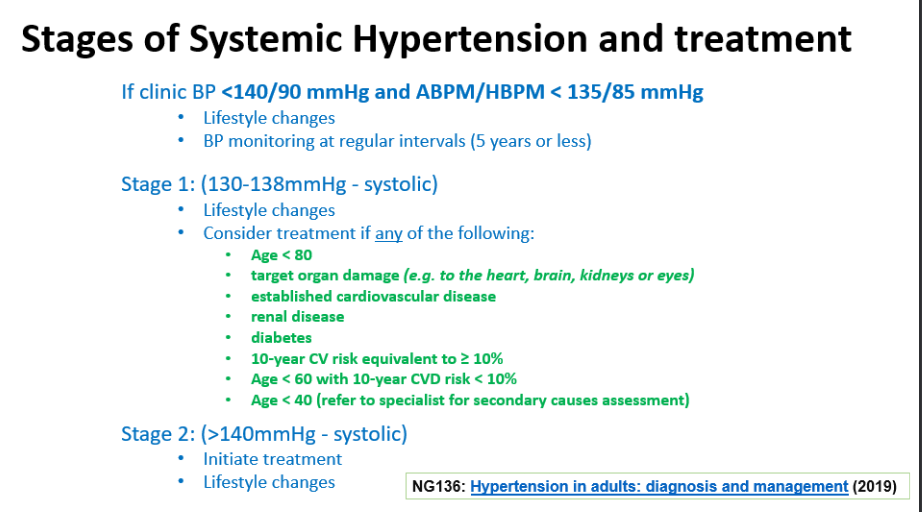
what are the stages of systemic hypertensions and its treatment/ when should we intervene
when treating systemic hypertension what factors are we aiming to change with the treatment to reduce blood pressure
reduce the total peripheral resistance- promote vasodilation
reducing stroke volume- we want drugs that can cause less filling of the heart
reducing the heart rate- lower heart rate = lower cardiac output and blood pressure drugs that can do this will be effective
the renal artery in the kidney senses low blood pressure and the endothelium on the kidney will secrete renin, an enzyme used to cleave angiotensin to angiotensinogen -> angiotensin one
the angiotensin one travels in the blood to the lung tissue and it encounters angiotensin converting enzyme which converts it into angiotensin 2, this is the active molecule that is responsible for effecting the blood pressure
it goes into systemic circulation and impacts the adrenal gland to cause aldosterone release
it also impacts the pituitary to cause ADH release
what happens to cause renin release
when the blood pressure falls
when blood volume decreases
when sympathetic activation occurs
the production of prostaglandin E2 and I2
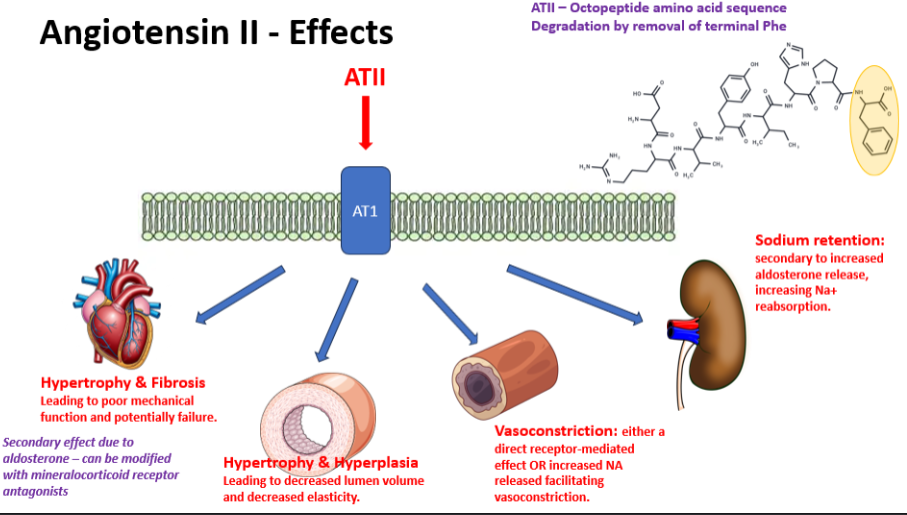
what are the effects of angiotensin 2
what are some of the pharmaceutical targets of the RAAS system + examples
ace inhibitors-which block the conversion of angiotensin 1 ->2 e.g.ramipril
renin inhibitore.g aliskerin
diuretics- increase the water and salt loss to decrease the volume e.g thiazide,carbonic anhydrase inhibitors
mineralcorticoid receptor antagonists e.g spironolactone
why are ace inhibitors often the first choice to treating hypertension compared to ARBs
they only need to target one tissue/the lungs and they have an effect earlier on in the pathway compared to ARBs which need to target individual tissues/receptors and have an effect later on.
but ace inhibitors have a potential to increase bradykinin relases, increasing the cough response which reduced patient compliance
whist ARBs demonstrate fewer intrusive side effects.
why are ace inhibitors often the first choice to treating hypertension compared to ARBs
they only need to target one tissue/the lungs and they have an effect earlier on in the pathway compared to ARBs which need to target individual tissues/receptors and have an effect later on.
but ace inhibitors have a potential to increase bradykinin releases, increasing the cough response which reduced patient compliance
whist ARBs demonstrate fewer intrusive side effects.
when cant ace inhibitors and ARBs be used to treat hypertension.

what are some of the common side effects ace inhibitors and ARBS/drugs that impact hypertension
hypotension,potential hypokalemia, cough reflex tachycardia