Mammals Of the World #1
 Call Kai
 Learn
 Practice Test
 Spaced Repetition
 Match
 Flashcards
 Knowt Play
1/16

There's no tags or description
Looks like no tags are added yet.
17 Terms
List at least three characteristics that determine if something is a mammal.
-Hard secondary palate
-2 occipital condyles
-Single dentary bone (2 bones total for lower jaw but derived single dentary bone)
-3 ear ossicles (malleus, incus, stapes)
-heterodont dentition (mostly)
What are some characters that define Subclass Prototheria?
-Lack of teeth, lacrimal bone, auditory bullae, and jugal usually absent or reduced.
-Complex pectoral girdles.
(Also has epipubic bones like marsupials)
What Order is in Prototheria? What are the two families?
Order Monotremata
Family Ornithorhynchidae (platypus)
Family Tachyglossidae (echidna)
name order and family
Where did it originally evolve?
Where is it located now?

Order Monotremata
Family Ornithorhynchidae - platypus
-premaxilla expanded and separates anteriorly
-soft hair and webbed feet
-'duck-bill snout'
-horny pads
>Australia, New Guinea
>Australia, New Guinea

name order and family
Where did it originally evolve?
Where is it located now?
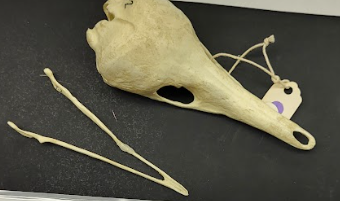
Order Monotremata
Family Tachyglossidae - echidna
-premaxilla expanded and fused anteriorly
-covered in spines
-snout long and slender
>Australia, New Guinea
>Australia, New Guinea
What are some characters that define Subclass Theria?
-Teeth, lacrimal, jugal, and auditory bullae usually present
What are some characters that define Infraclass Metatheria?

-inflected angular process of dentary
-jugal forms part of mandibular fossa
-Fenestrated palate
-Epipubic bones
-Choriovitelline placenta
What is the Sublass, Infraclass, Order, and Family?
Originally evolved?
Located now?

subclass Theria, infraclass Metatheria, order Didelphimorphia,
family Didelphidae - oppossums
-5/4 incisors
-polyprotodont
-polydactyl
-tribosphenic molars
>Laurasia
>Australia, South and Central America (but Virginia opossums are in North America as well)

What is the Sublass, Infraclass, Order, and Family of phalangers and brush-tailed possums?
Characteristics?
Originally evolved?
Located now?
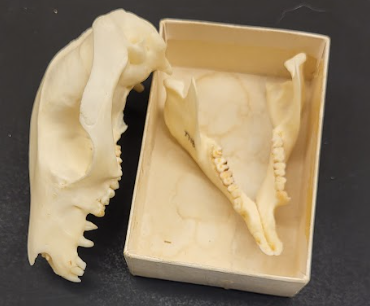
>Theria, Metatheria, Diprotodontia, Phalangeridae
-3/2 incisors
-syndactyl hind feet
-diprotodont
-bilobed/transversely lophodont
>Laurasia
>Australia, South and Central America


What is the Sublass, Infraclass, Order, and Family of kangaroos and wallabies?
Characteristics?
Originally evolved?
Located now?
>Theria, Metatheria, Diprotodontia, Macropodidae
-3/1 incisors
-syndactyl hind feet
-diprotodont
-bilobed/transversely lophodont
-large diastema between canines and premolars (canines absent in lower jaw)
>Laurasia
>Australia, South and Central America
What are characteristics of Infraclass Eutheria?
-No inflected angular process
-Jugal does NOT form part of mandibular process (usually)
-No fenestrated palate (usually)
-No epipubic bones
-chorioallantoic placenta
What are the 4 clades of Infraclass Eutheria?
Xenarthra
Euarchontoglires
Laurasiatheria
Afrotheria
What characteristic do all all animals in Clade Xenarthra have?
Zygapophyses on thoracic and lumbar vertebrae

What 2 orders and 3 families are in clade xenarthra
order cingulata - family dasypodidae
order pilosa - family bradypodidae and family myrmecophagidae

What is the Sublass, Infraclass, Clade, Order, and Family?
Originally evolved?
Located now?
subclass Theria, infraclass Eutheria, clade Xenarthra, order Cingulata,
family Dasypodidae
-cheek teeth homodont
-body covered in keratin scutes
-complete zygomatic arch
>South America
>South, North, and Central America


What is the Sublass, Infraclass, Clade, Order, and Family of sloths?
Characteristics?
Originally evolved?
Located now?
>Theria, Eutheria, Xenarthra, Pilosa, Bradypodidae
-cheek teeth homodont
-jugal bifurcated
-short rostrum
-incomplete zygomatic arch
>South America
>South and Central America


What is the Sublass, Infraclass, Clade, Order, and Family?
Originally evolved?
Located now?
subclass Theria, infraclass Eutheria, clade Xenarthra, order Pilosa
family Myrmecophagidae - anteaters
-no teeth (edentate)
-small jugal
-rostrum very long and curving down
>South America
>South and Central America
