Thermal Physiology
 Call Kai
 Learn
 Practice Test
 Spaced Repetition
 Match
 Flashcards
 Knowt Play
1/54

There's no tags or description
Looks like no tags are added yet.
55 Terms
Increase in [atmospheric CO2] leads to ocean acidification.
Animals and plants are not able to adapt at the same speed.
What are short term changes (within a fer min or hour) that an animal will do to adapt to a change in temperature?
Increase in effective conc of an enzyme (through phosphorylation or allosteric mod).
Changes in intracellular environment.
Synthesis of low mol weight solutes (treahalose that stabilises protein structure at lower temp).
How does trehalose stabilise protein structure?
Trehalose forms a matrix that acts as a cocoon and physically shields the protein.
Trehalose sequesgters water molecules away from the protein, decreasing its hydrated radius and increasing its compactness and stability.
Trehalose-forming hydrogen bonds are not exposed to water molecules, thus 3D structure is stabilised.
What happens within days or weeks to adapt to changes in temperature/?
Modulation of enzyme conc (ainly rate limiting enzymes) via new synthesis or degradation.
Changing the suite of isozymes. For example, there are 5 different iso-enzymes of lactate dehydrogenase (LDH1, LDH2, etc). They are expressed in different tissues, and due to the differences in the amino acid sequence means they have different thermal stabilities. In forgs and fish, colder temperatures inducing the synthesis of the cardiac H4-LDH in skeletal muscles indstead of M4-LDH.

Describe the changes in the isoenzymes found in trout.

What is the difference between isozymes and allozymes?
Isozymes are coded by genes at different loci, though perfomring the same function.
Allozyme are variant forms of an enzyme which differ structurally but catalyse the same reaction coded for by different alleles at the same locus (essentially alternative splicing)
What are long term or evolutionary changes to temperature?
Permanent changes in enzyme conc.
Genotypic changes in enzyme sequence and structure. The binding site is generally conserved, but adjacent areas are modified to provide thermal stability.
Allelic variation maintained by selection providing homologous enzymes iwth different properties in different population.
OVERALL: enzymes from animals with higher body temperature need more compact
and rigid enzyme structure; enzymes from animals with lower body temperature have a
more open structure. Enzymes form cold- species show a higher Kcat (so turnover
number) and have a lower activation energy. Km remains quite similar
Describe membrane fluidity.
Most of the lipids and some proteins drift laterally, where lateral movement of phospholipids is rapid, and proteins is slow.
Flip-flopping of phospholipids is rare, where fluidity is enhanced by unsaturated hydrocarbon tails of phospholipids.
Cholestrol molecules reduce fuidity but help prevent solidification at low temperatures by preventing tight packing of phospholipids.
What is the phase trasition temperature?
The temp required to induce a change in the lipid physical state from the ordered gel phase, where the hydrocarbon chains are fully extended and closely packed, to the disordered liquid crystaline phase.
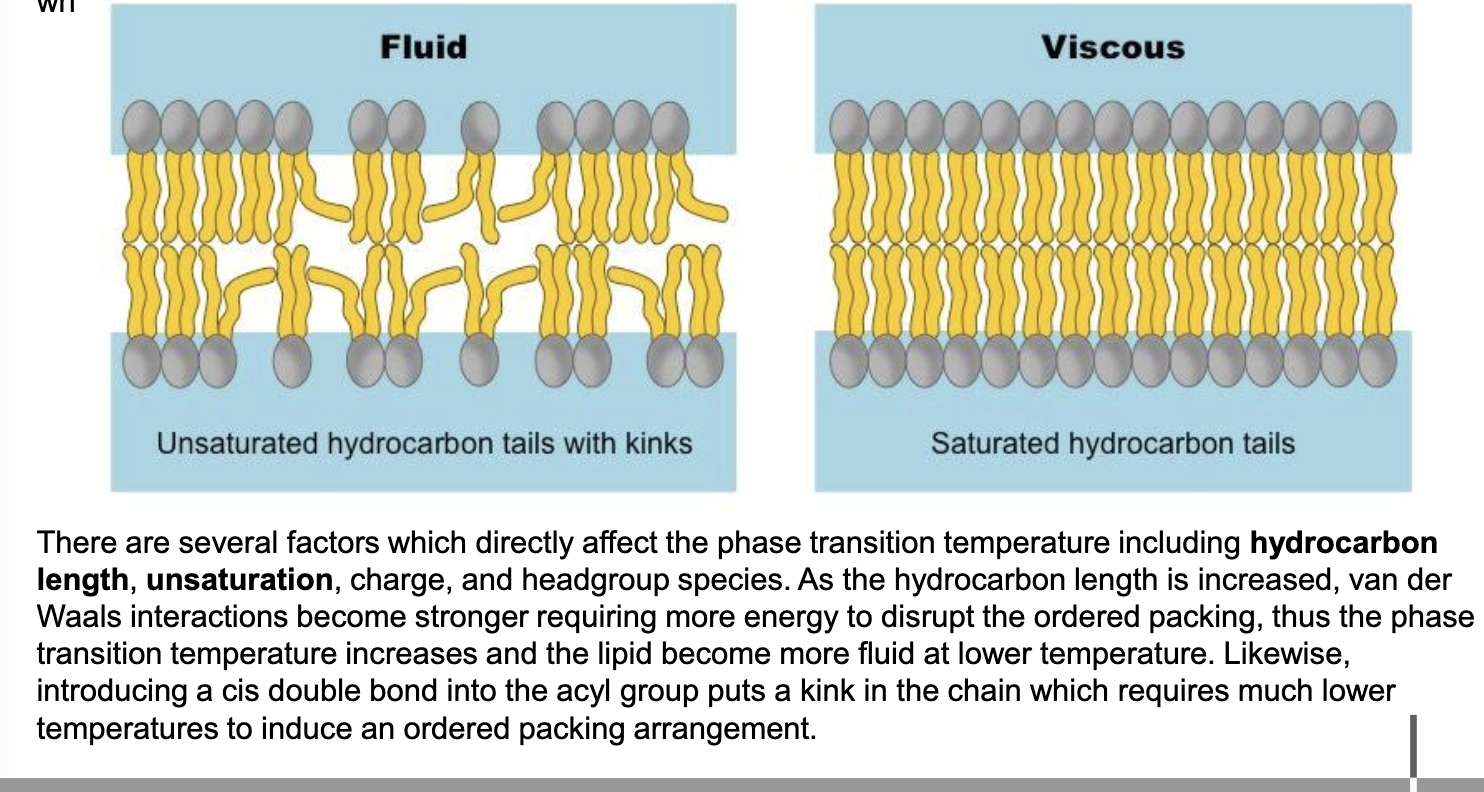
How does double bonds effect the fluidity of phospholipids.
Kinks.
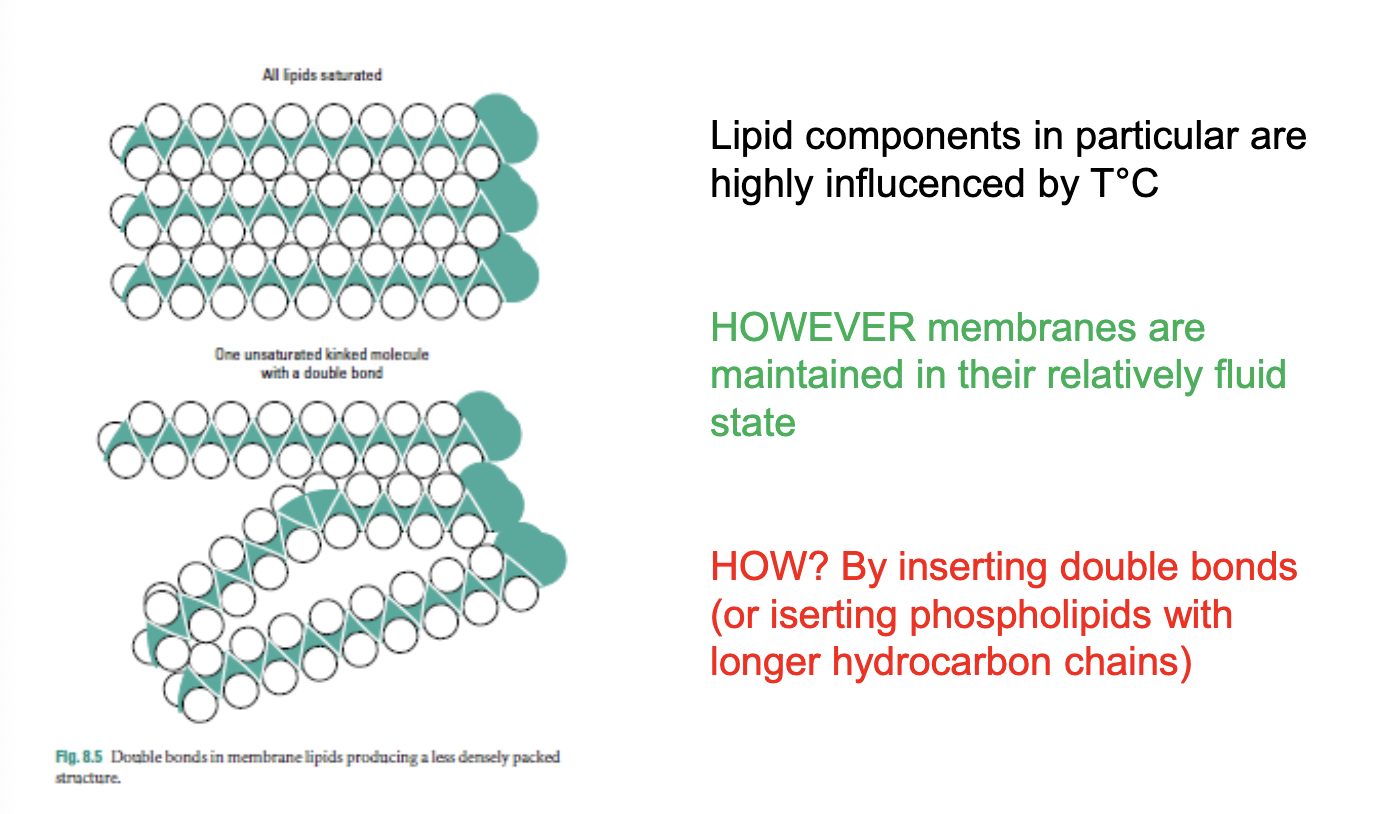
Describe homeoviscous adaptation.
Desaturation of a fatty acid, done by desaturase enzymes.
Enzyme transcription is transiently induced by a decrease in temp. Response is extremely fast, and may be different between tissues within the smae cell.
What are ectotherms, endotherms and eterotherms?
Ecto: body temp depends on external heat sources.
Endo: body temp depends on internal heat generation.
Eterotherms: several intermediate conditions; partial endotherm, faculattive endothermy, interstitial endothermy, regional endothermy
Describe active thermoregulation by bees.
Facultative endothermy.

How are swordfish an example of regional endothermy?

How do tuna fish regulate their temperature?
Unlike standard fish (such as the cefalo in the diagram), which quickly lose the metabolic heat generated by their muscles to the surrounding water as blood passes through their gills, tuna have evolved a distinct circulatory architecture to retain it.
Regional endothermy.
Instead of sending cold, freshly oxygenated blood from the gills straight to the muscles, they route this cold blood to the outer edges of the body. Alongside this arterial blood, warm deoxygenated venous blood leaving the muscles travelling opposite to the cold oxygenated arterial blood, where the thermal energy heats it up.
This is countercurrent heat exchange.

Describe difference between countercurrent and concurrent heat exchange.
In the concurrent system, water and blood flows in the same direction. Because they travel together, the conc grad diminishes quickly as O2 transfers, eventually hitting a hard equilibrium at 50% where all exchange stops.
IN a countercurrent system, the twoo fluid flow in opposite direction. THis means there is a continuous gradient, where there is a small, constant temp gradient along the entire length of the blood vessels. As the incoming cold arterial blood absorbs heat and gets warmer, it continously encounters even warmer venous blood that has just left the muscle.

How do marine mammals like whales and dolphins thermoregulate?
The Anatomy: A single, large artery carrying warm blood from the body's core to the extremity is completely surrounded by a dense ring of smaller veins carrying cold blood back from the surface.
The Heat Transfer: Because the blood in the central artery and the surrounding veins flows in opposite directions, heat radiates outward from the warm artery and is immediately absorbed by the cold venous blood returning to the heart.
The Result (Heat Conservation): By the time the returning venous blood reaches the body's core, it has been successfully re-warmed. Conversely, by the time the arterial blood reaches the outer surface of the fin or the massive surface area of the tongue (which constantly takes in freezing water during filter-feeding), it is already cool, meaning very little thermal energy is lost to the ocean.
Thermoregulation (Dumping Heat): This system can also be bypassed if the animal overheats. The central artery can dilate, physically compressing and collapsing the surrounding countercurrent veins. This forces the returning venous blood to detour through alternate vessels right under the skin's surface, allowing excess heat to dissipate easily into the water.

What are thermoregualtors and thermoconformers?
Thermoregulators, which actively control their internal body temperature, or thermoconformers, whose body temperature simply mirrors the temperature of their environment.
TC are rare, as most animals need to regualt their temperature to some degree. TC typically only exist in highly stable environments where the temp never fluctuates, like the deep sea. Only ectotherms can be conformers, but they can be both regualtors or conformers.
Bahavioural thermoregulation is the idea that the physical behaviour (basking in the sun) of an animal is critical to temp management.
What are eurythermal and stenothermal animals?
E can survive within a wide range of temps
S survive within a narrow range of temps.
Insects and reptiles continue feeding and locomoting within a T°C range of 8-38
degrees.
Many aquatic animals are very strict stenotherms with polar fish tolerating only 6
degrees of total T range.
What is conduction, convection, radiation, evaporation?

Describe how evaporation can help with heat loss.
Transforming liquid water into vapor requires substantial thermal energy 2500 J g-1 at 0ºC and 2400 J g-1 at 40ºC. Because this heat is absorbed directly from the animal’s body to drive the phase change, every gram of water evaporated carries a significant amount of heat energy away with it.
The rate of heat loss via evaporation is goverened by three factors:
Surdface temperature: affects the kinetic energy available to drive vaporisation from the animal’s boundary.
Water vapor density difference: evaporation depends on the gradient between the water vapor density at the animal’s surface and the environment.
Resistance to water loss: physcal barriers at the surface - such as skin properties, lipid layers, or fur - dictate how easily water can escape into the air.
Evaporative cooling only funcitons in air, as water cannot vaporise into an aqueous medium.
In the desert, animals cannot afford the high rate of fluid loss required to couynteract intense heat . Rather than relying on heavy sweating or panting, desergt animals like camels employ specialised strategies to conserve water. These include tolerating wide fluctuations in daily body temperature (storing heat during the day and releasing it passively at night) and using dense fur to block external heat gain, preventing lethal dehydration.
How does sweat cool skin down?
The water molecules in sweat use heat energy from the skin to change state from liquid to gas (evaporation).
About 10 cm3 of evaporating sweat use about 6 J of energy from the skin, thus the skin is cooled down.
Where is heat generated from internally (endothermy)?
Every biochemical reaction releases heat as a thermodynamic byproduct of converting and using ATP. However, the primary contributors shift depending on physical activity:
At rest: the visceral core produces roughly 75% of all heat.
During activity: skeletal muscle contraction becomes the dominant source of thermogenesis.
Across all major organs, endothermic tissue has higher mitochondrial inner-membrane area, compared to lizards. Higher SA means more sites of CR.
PC IV activity is much higher in endotherms.
Because lizard cells have a lower mitochondrial density and reduced respiratory enzyme capacity, their baseline rate of aerobic respiration is much lower, meaning they produce far less metabolic heat as a byproduct.

What is the thermoneutral zone?
TNZ is the range of ambient temp over which the animal’s metabolic rate and thus heat production is not varied, that is the animal keeps its energy metabolism fairly constant.
Animal can regulate body temp through passive processes - such as piloerection, vasoconstriction.
Once ambient temp drops below the LCT, to prevent hypothermia and keep Tb constant, the animal must ramp up active thermogenesis (shivering), as passive processes are already maximised.
When above the UCT, the animal must resort to active heat loss via radiation and convection. Active evaporative methods like panting, sweating.

What is torpor? Describe hypothermia
Controlled state of emtabolic depression where an animal drastically reduces its metabolic rate, HR and respiration to conserve energy during periods of extreme cold or food scarcity.
Hibernation (multi-day topor)
-Controlled and regulated reduction of body temperature setpoint.
Entry into topor begins when CNS suppresses the hypothalamic temp setpoint, rapidly slowing HR, respiration and basal metabolic rate.
With internal heat production drastically reduced, Tb drops steeply towards the temp of the burrow.
The animal is still actively thermoregulating. If the ambient burrow temps were to drop to below freezing, the animal would detect the change and ramp up metabolic heat production. Suppressing cellular metabolic rates and allowing Tb to fall reduces caloric consumption by up to 90-95%, enabling stored fat reserves to last through months of food scarcity.
Rapid endogenous rewarming within a matter of hours. It is done by intense non-shivering thermogenesis in brown adipose tissue. These brief, periodic arousals occur repeatedly throughout winter and consume the vast majority (70-85%) of the animal’s total winter energy reserve.

Describe daily torpor.
O2 consumption drops to roughly 0,5 mL O2/g*h. This reflects the coordinated downreg of cellular respiration, HR and body temp setppoints, as the animal retreats to its nest after nocturnal foraging.
Metabolic rate remains flat and suppressed for roughly 8 to 9 hours throughout the morning and early afternoon. This conserves the animals cruicial energy stores during the hours when ambient temps outside are cold and foraging is inefficient or risky.
Arousal from torpor, we see O2 consumption spiking violently, overshooting the baseline. The rewarming is energetically demanding and the mouse must rapidly consume large amounts of O2 to power non0shivering thermogenesis via BAT, and intense muscle shivernig to bring body temp back to normal. Then once normal BT is reached, O2 consumption stabilises abck down to normal.

Describe voluntary muscle activity, shivering and non-shivering thermogenesis.
VMA: exercising or moving around burns ATP and releases metabolic heat as a byproduct.
It isn;t that simple because movement increases heat loss to the surrounding enviro.Phsyical motion disrupts the insulating boundary layer of still air trapped against the skin or fur, which significantly accelerates convective heat loss. Movivng muscles also demand increased peripheral blood flow, shunting warm core blood towards the body surface, where thermal dissipation is highest.
Shivering is used by adult endotherms to produce internal heat without the penaltiers of movement. Shivering relies on the rapid alternative activation of antagonistic skeletal muscle pairs (flexors and extensors pilling against each other) (oscillatory antagonistic contraction).
Maximum thermal efficincy: because the opposing muscle forces cancel out, net external mechanical work close to zero. As a result, virtuall all chemical energy releasefd from ATP hydrolysis is dissipated directly as heat. This is mediated via the NMJ in the nervous system.
Nonshivering generates heat purely thorugh biochemical uncoupling bypassing mechanical muscle contractions entirely. It is cruicial for newborns and small mammals which have high SA:V, meaning they lack muscular bulk for shiverig and lose heat easier. BAT is specialised for thermogenesis dure to high number of mitochondria and being heavily wired for sympathetic innervation and high vascularisation.
How do marine mammals (like seals and dolfins) thermoregulate through their blubber?
BEcause water conducts heat more rapidly than air, marine mammals must maintain a thich layer of adipose tissue (blubber) to insulate the body core, while retaining the ability to shed excess heat during intense swimming.
Capillary loops extend all the way up through the blubber to the underside of the skin, while deep ateriovenous anastomoses form direct bypass channels connecting arterioles to venules near the muscle boundary before entering the fat layer.
During the generation of excess heat, it needs to dump heat into the environment.
The AV anastomoses constric, this prevents blood from travelling through the deep shortcut. Also there is vasodilation opening the capillary pathways.
For heat retention, we vasodilate the AV anastomoses, and constrict the arterioles closing the capillary pathway.

How are arteries and veins situated to prevent excess heat loss?

How do cetaceans (whales and dolphins) maintain internal testicular temperatures lower than core body temp?
Spermatogenesis requires cooler temps, and cetaceans do not have a scrotum. Because the testes are located inside the abdominal cavity, they are surrounded by the warm body core and sit directly adjacent to large swimming muscles that generate substantial heat during locomotion.
Cetaceans solve this by routing chilled venous blood returning from their uninsulated extremities directly past the blood supply of the reproductive organs. The dorsal fin and tail flukes lack thick blubber, allowing heat to dissipate rapidly into the surrounding seawater. The superficial veins of the dorsal fin and tail collect this cold venous blood.
Warm, oxygenated blood leaves the core via the aorta to supply the testes through the testicular artery. The cold venous blood runs countercurrent the warm arterial blood. By the time the arterial blood enters the capillary beds of the testes and epididymis, the temp has dropped by several degrees, ensuring optimal thermal environment for viable sperm.

How do seals keep their testes cool?
The posterior limbs/flippers have high SA:V and minimal blubber, meaning blood flowing through them rapidly loses heat.
The chilled venous blood collects into deep and superficial veins liek the femoral saphenous vein.
Warm, O2 blood leaves the aorta into the genital artery bound for the testes.
The genital artery runs directly alongside the cold veins returing fromt he hind flipper.
Heat transfer between the cold and warm blood leads to significant pre-cooling the arterial blood before it enters the testicular capillary beds.

How do manatees cool their testes?

Describe water conservation in camels.
In an arid desert, water is too precious to spend on evaporative cooling.
Overnight, the camel dissipates heat into the cold desert air until its core body temp drops to a minimum of roughly 34.5ºC by dawn.
As daytime solar radiation and ambient air temp climb, the camel does not sweat. It instead absorbs and traps the heat internally, allowing core body temp to rise passively up around 41ºC by evening.
Allowing Tb to rise towards 40ºC drastically narrows the temp differential between the animal’s skin and the ambient air. This smaller ∆T dramatically reduces the rate of external heat conducted and convected into the animal’s body.Once the sun sets and desert air temperatures drop sharply, the stored heat is dumped passively via longwave radiation and convection into the cool night sky—dissipating all stored calories without losing a single drop of water.
If the camel has access to water, the camel can afford sweating to keep its body temp stable and avoid extreme daytime thermal spikes.

Explain
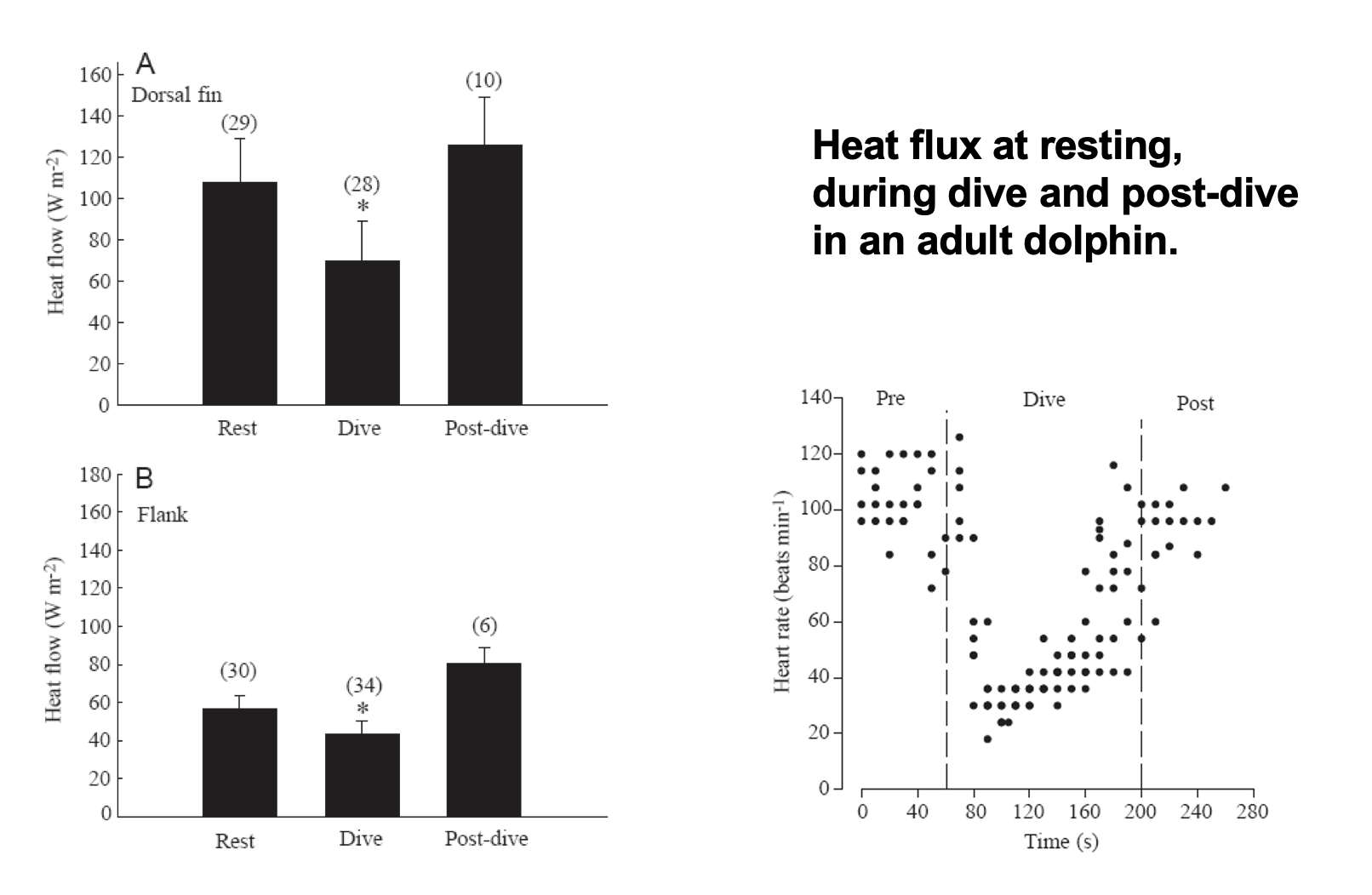
This slide demonstrates how the diving response in cetaceans couples cardiovascular regulation with thermoregulation to balance oxygen conservation and heat management during a dive.
1. Diving Bradycardia (Right Graph)
The scatter plot tracks heart rate across the dive cycle:
Pre-dive: Baseline resting heart rate sits around 100–120 beats min⁻¹.
Dive phase (60–200 s): Heart rate plummets abruptly to 20–40 beats min⁻¹. This profound diving bradycardia is a core component of the mammalian dive response, conserving circulating blood oxygen by drastically reducing cardiac output and myocardial energy demand.
Post-dive: Immediately upon surfacing, the heart rate spikes back up (post-dive tachycardia, >100 beats min⁻¹) to rapidly clear metabolic end-products (such as lactate), re-oxygenate hemoglobin and myoglobin, and restore perfusion.
2. Heat Flux at the Dorsal Fin vs. Flank (Left Graphs A & B)
Heat flux measures the rate of thermal energy leaving the body surface per unit area (W m−2).
Baseline differences at rest:
Dorsal fin (A): Baseline heat flux is high (~110 W m−2). Because the dorsal fin lacks insulating blubber and is packed with vascular networks, it acts as a primary thermal window/radiator.
Flank (B): Baseline heat flux is much lower (~55–60 W m−2) due to the thick layer of continuous subcutaneous blubber acting as an effective thermal insulator.
During the dive (marked with asterisks *):
Heat loss drops significantly at both locations (falling to ~70 W m−2 at the fin and ~40 W m−2 at the flank).
Mechanism: To match the reduced cardiac output, intense peripheral vasoconstriction shuts down blood flow to superficial capillary beds and non-essential extremities.
Dual benefit: Trapping warm blood in the visceral core prevents cold seawater from stripping away internal body heat while simultaneously reserving oxygen for obligate aerobic organs like the brain and heart.
Post-dive overshoot:
Heat loss rebounds sharply above baseline levels at both the fin (~125 W m−2) and the flank (~80 W m−2).
Mechanism: Once at the surface, high heart rate and widespread peripheral vasodilation re-perfuse the outer skin and extremities. This allows the dolphin to rapidly dump the excess metabolic heat that built up in the active swimming muscles during the dive.
How does the hypothalamus thermoregulate? Major neurotransmitters involved?
It contains its own thermal receptors that measure the temperature of blood flowing through the brain. It also receives extra data from peripheral thermoreceptors located in the skin that feel environmental changes.
It integrates all sensory data to an internal baseline set point. If the temperature deviates, it triggers automatic negative feedback responses.
Responses to Heat
When the body is too warm, the anterior hypothalamus activates heat-loss mechanisms: Sweating: Sweat glands release water onto the skin, which cools the body as it evaporates.• Vasodilation: Blood vessels near the skin surface widen to let extra heat radiate into the air.
Responses to Cold When the body is too cold, the posterior hypothalamus triggers heat-conserving and heat-producing mechanisms:
Vasoconstriction: Blood vessels near the skin narrow to keep warm blood centralized in the core.
Shivering: Rapid, involuntary muscle contractions generate metabolic heat.
Non-shivering thermogenesis: Hormones like norepinephrine stimulate heat production in brown adipose (fat) tissue.
Major Neurotransmitters Involved:
GABA (Gamma-Aminobutyric Acid): Serves as the primary inhibitory neurotransmitter mediating heat defense pathways by suppressing thermogenesis.
Neurotensin: Acts as an excitatory neuropeptide co-released with GABA in the preoptic area to modulate thermal responses.
Monoamines (Norepinephrine, Dopamine, Serotonin): Act as central modulators in the rostral hypothalamus, altering the central set-point and modifying autonomic/behavioral effector responses (shivering, non shivering…).

Describe non-shivering thermogenesis in BAT.
Relies on mitochondrial uncoupling.
BAT mitochondria contains mitochondrial protein UCP1. This protein acts as a p[roton channel capable of uncoupling oxidative phosphorylation from ATP production.
This mechanism is triggered by the production of noradrenaline and enhanced by thyroid hormones.
Usually, there is a proton gradient illustrated during the ETC, where during oxy phos, it will diffuse through ATP synthase generating ATP, where in cells expressing thermogenin protein channel, H+ ions re-enter by bypassing ATP synthase, hence no ATP production. Consequently, no ATP produced, instead, the energy is dissipated as heat.

Describe the range of different thermoreceptors
There are multiple thermoreceptors that detect a range of different temperatures.

Describe thermoregulation in humans via the body’s surface.

Describe eccrine sweat glands.

Describe the effect of thyroxin on thermoregulation in humans,

Describe the neural pathway for shivering thermogenesis.
The pathway begins in the brain, where the higher centres of the brain modulate a thermoregulatory response, which send these signals to the brainstem, utiliising glutamine as an excitatory neurotransmitter.
Somatic premotor neurones wthin the brainstem respond to the hypothermia signals. They terminate at the ventral horn of the spinal cord. At the ventral horn, the glutamate signals activate alpha and gamma motor neurons. These motor neurons innervate skeletal muscle fibers. This triggers sustained muscular contractions (shivering). The mechanical energy expended during these rapid contractions produces heat, which subsequently promotes an increase in body temp.
It is a feedback loop, where there are sensory nerve fibers travelling from the muscle back to the spinal cord via the DRG, allowing for regulation of the shivering response.

What are the consequences of extremer hyperthermia?
Fevers above 41-42ºC result in severe or fatal damage if the body temp is not quickly lowered by treatments like water or alcohol sponging of the skin. The high temps injure or kill body cells, particularly in the brain, liver and kidneys, and cause internal bleeding.
Damage to brain cells from extremely high fever is irreversible and causes permanent impairment or death within minutes.
Under some conditions, such as on hot and humid days, the normal physiological reactions regulating body temperature are ineffective and body temperature may rise uncontrollably. Under such conditions, internal body temperature may rise to damaging levels, particularly if physical exercise is attempted. The resulting reaction, known as hyperthermia or heat stroke, may include dizziness and abdominal distress or pain in milder cases; more severe heat stroke may produce delirium or even death (we see local shortening, thickening and lengthening of the myocardium).
Describe the relationship between vasodilation and BP.
Vasodilation reduces vascular resistance, which leads to a drop in BP. This causes hypotension, which may result in dizziness, fainting or hypotensive shock. the heart must compensate for this drop in BP by beating faster and harder, increasing its workload and stress. This increased strain on the heart in individuals with pre-exisiting heart conditions can worsen their conditions.
Why is dehydration dangerous, in regard to blood?
Decrease BV, which makes it harder for the heart to pump sufficient blood to organs and tissues. To maintain adequate circulation, tachycardia occurs, placing additional strain on the cardiovascular system.
Increase in blood viscosity makes blood harder to circualate, increasing risk of thrombosis, which can cause heart attacks or strokes.
Increased blood clots can lead to DVT, where the clots form in the deep veins in the legs. If the clots travel to the lungs, they can cause a pulmonary embolism.
Why is heat stroke dangerous?
Heat stroke is when the body temp rises above 40ºC, which can cause cardiac arrythimas, heart failure and circulatory collapse. The heart struggles to maintain adequate circulation in extreme heat, which can lead to multiu-organ failure.
Hyperthermia increases the heart’s oxygen deman, where in people with pre-existing heart conditions, the heart may not be able to supply this additional oxygen, leading to myocardial ischemia, which can trigger heart attacks.
Describe the effect of heatwaves psychosocially (and how does this psychosocial factor impact the cardiovascualar system).
Increased stress, which activates the SNS. SNS increases BP and HR, which can lead to heart attacks and strokes.
What are heat shock proteins?
Molecular chaperones that protects cells from stress.
There are multiple different Hsp’s.
Constitutive: these proteins are produced under normal physiological conditions and are involved in the folding and transfer or newly produced protein.
Inducible: these protieins are produced specifically under stress conditions to perform a protective role.
Dual function: certain Hsp’s can funciton as both constitutive and inducible types.
What are some different Hsp’s?

What are some physiological roles of Hsp’s?
• - Cell Protection: Assist in protein folding and assembly.
• - Stress Response Regulation: Produced in response to stimuli.
• - Apoptosis and Survival: Modulate cell fate through interactions with apoptotic proteins.
What is the structure of HSP70?

What are some mechanisms of HSP action?
Molecular chaperones: aids in protein 3D structure formation.
Misfolded protein repair: bind and refold damaged proteins.
Protein degradation: guide irreparable proteins to degradation systems.
Describe the heat shock response.
Stress causes cellular damage, notably leading to protein denaturation. Under normal conditions, Hsp act as chaperones bound to Hsd (heat shock factor), keeping it inactive.
When stress occurs, and denatured proteins accumulate, Hsp molecules leave their inhibitory complexes with Hsf to help refold the damaged proteins. Released from Hsp control, the individual Hsf monomers undergo trimerisation to form active Hsf trimers.
The active Hsf trimers enter the nucleus, where they bind to specific DNA sequences called HSE located upstream the Hsp gene. This activates the transcription of Hsp, producing mRNA.
The mRNA is exported and translated into new Hsp in the cytoplasm, which assist in refolding denatured proteins, restoring cellular homeostasis and re-establishing the inhibitory Hsp-Hsf complex until the next stress even.

What produces Hsps?
HSF1 is the primary transcription factor responsible for driving the synthesis of HSPs. Rather than responding only to heat, HSF1 integrates various physiological stressors like ischemia, ROS, sepsis and hypoxia.
When HSF1 is activated by these stress cascades it drives HSP expression and antioxidant defenses (to neutralise ROS’)
Describe the relationship between HSPs and human diseases.
Cancer: HSPs may aid tumor cell survival.
Cardiovascular Diseases: Protect myocardial cells from stress.
Cancer cells hijack HSP70 to promote cell survival, drive cell proliferation and prevent apoptosis. It acts as a co-chaperone for HSP90, where once it forms this complex it drives cancer. Because cancer cells rely heavily on heat shock proteins to survive, these pathways are therapeutic targets:
-HSP90 inhibitors in cancer.
Modulating HSP Activity in Non-Cancer Diseases:
Neurodegenerative Diseases: Upregulating or enhancing HSP activity helps clear misfolded/aggregated proteins (e.g., in Alzheimer's or Parkinson's disease).
Cardiovascular Diseases: Boosting HSP chaperone function protects cardiac tissue from ischemic injury and oxidative stress.