exam # 3 for art history 2026 :P
 Call Kai
 Learn
 Practice Test
 Spaced Repetition
 Match
 Flashcards
 Knowt Play
1/94

Earn XP
Description and Tags
rome-late antiquity-early christian
95 Terms
Republican Art Period

Early Empire
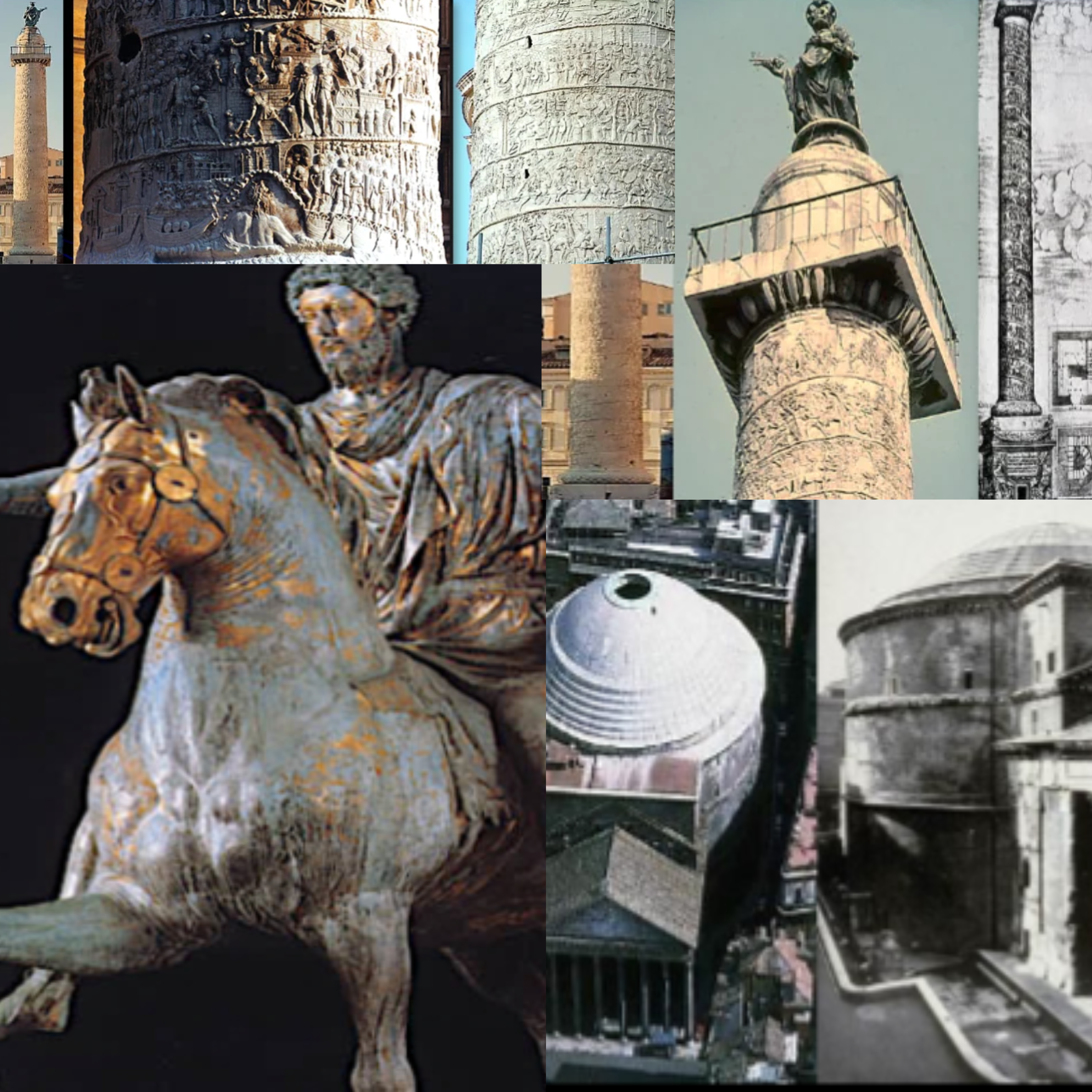
High Empire, Apollodorus of Damascus (trajan’s column)

Late Empire

Early Christian/Roman Empire
Early Christian/Egypt

Early Christian/Aksum

Early Christian/Nubia
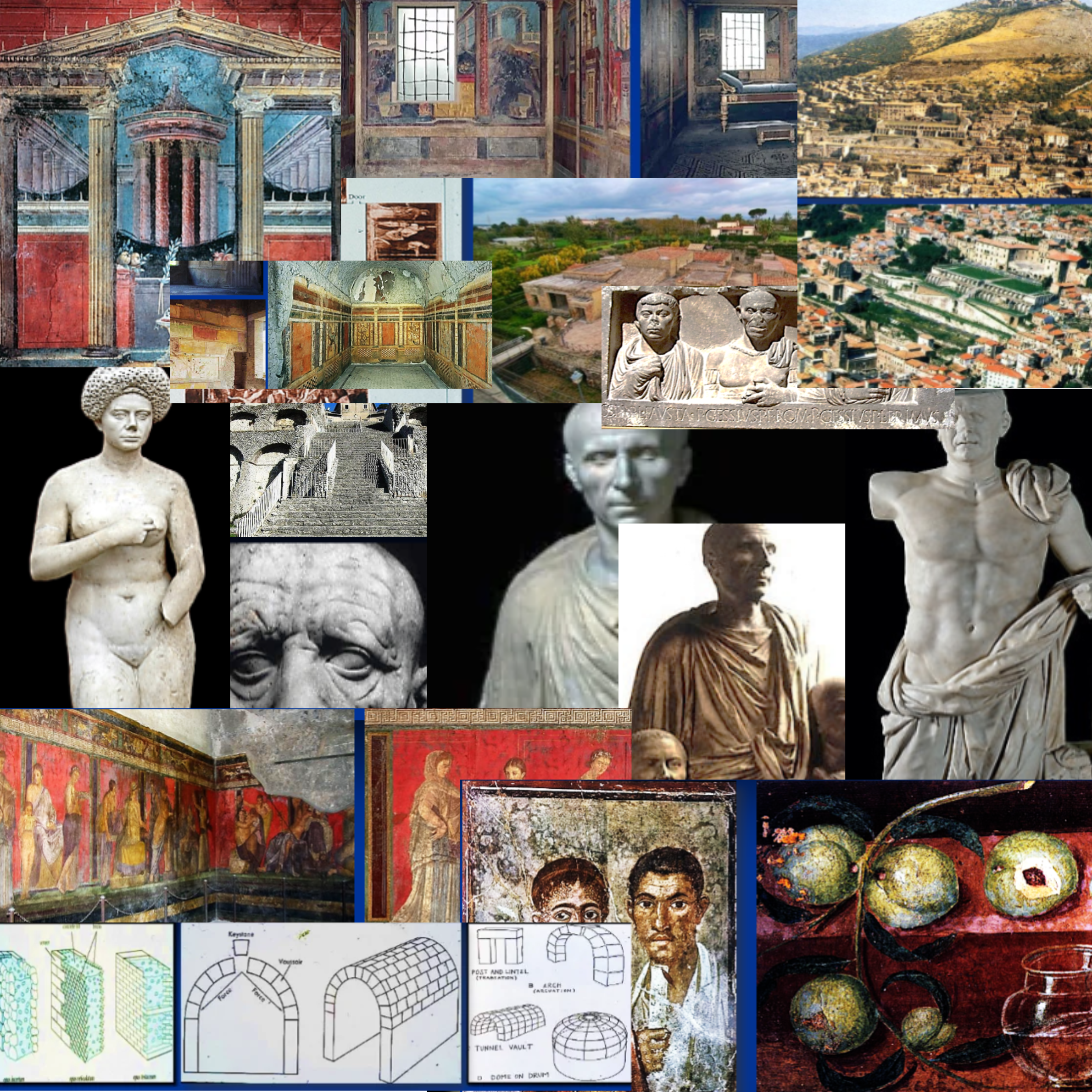
15 facts about painting in Rome during the Republican Period, including examples and descriptions of the four different styles.
For murals, Romans applied 2-3 layers of plaster, made of earth, minerals, and vegetable fat and water.
15 facts about painting in Rome during the Republican Period, including examples and descriptions of the four different styles.
There are two methods of painting a fresco: buono, which is on wet, fresh plaster, and on secco, or dried plaster for finishing touches of a mural.
15 facts about painting in Rome during the Republican Period, including examples and descriptions of the four different styles.
The masonry style of Roman painting originated with the Greeks during the 4th century.
15 facts about painting in Rome during the Republican Period, including examples and descriptions of the four different styles.
Masonry painting includes painted imitations of expensive yellow, purple, and pink marbles, connected by stucco moldings to create a three-dimensional effect. Some examples of this are the House of the Sallust and the House of the Griffins.
15 facts about painting in Rome during the Republican Period, including examples and descriptions of the four different styles.
The Illusionistic style developed during the 1st century BC and is considered a Roman invention.
15 facts about painting in Rome during the Republican Period, including examples and descriptions of the four different styles.
It is an illusion of a three-dimensional world with architectural elements.
15 facts about painting in Rome during the Republican Period, including examples and descriptions of the four different styles.
An example of Illusionistic murals is the Villa of Mysteries, which depicts rites associated with Bacchus and a woman’s symbolic marriage to him.
15 facts about painting in Rome during the Republican Period, including examples and descriptions of the four different styles.
In the Villa of Mysteries, figures interact across the room/walls, which intensifies emotional content and the sense of spatial illusion.
15 facts about painting in Rome during the Republican Period, including examples and descriptions of the four different styles.
The Mature 2nd style has an emphasis on architectural elements and views, such as in the Villa of Synistory Publius Fannius.
15 facts about painting in Rome during the Republican Period, including examples and descriptions of the four different styles.
In the Mature 2nd style, artists used multiple vanishing points and linear perspective.
15 facts about painting in Rome during the Republican Period, including examples and descriptions of the four different styles.
In the Ornate style, it is broader and more monochromatic, such as black or dark red, instead of being heavily intricate.
15 facts about painting in Rome during the Republican Period, including examples and descriptions of the four different styles.
The Eclectic style is a mix of all of the Roman mural styles. They feature large flat planes of color, illusionistic architectural scenes, faux marble blocks, and much more.
15 facts about painting in Rome during the Republican Period, including examples and descriptions of the four different styles.
An example of the Eclectic style is the Portrait of Husband and Wife and the Still Life with Peaches.
15 facts about painting in Rome during the Republican Period, including examples and descriptions of the four different styles.
The Eclectic style merges Hellenistic idealism with Etruscan realism.
15 facts about painting in Rome during the Republican Period, including examples and descriptions of the four different styles.
Many of Roman art told stories in their pieces and immersed the viewers into feeling that they were apart of it, such as in the Gardenscape piece.
15 facts about Roman art and architecture as propaganda, discussing how the Portrait of Augustus Prima Porta, Ara Paces Augustae, and Pont-du-Gard express political ideas associated with the reign of the Emperor Augustus Caesar.
The Ara Pacis Augustae Tellus Panel is an allegory of Mother Earth and communicates the benefits of being a citizen of the Roman Empire.
15 facts about Roman art and architecture as propaganda, discussing how the Portrait of Augustus Prima Porta, Ara Paces Augustae, and Pont-du-Gard express political ideas associated with the reign of the Emperor Augustus Caesar.
The Portrait of Augustus Prima Porta represents Octavian as an eternally youthful and divinely favored leader instead of a human. He is also represented as a greek hero, Chief Priest, and as Zeus.
15 facts about Roman art and architecture as propaganda, discussing how the Portrait of Augustus Prima Porta, Ara Paces Augustae, and Pont-du-Gard express political ideas associated with the reign of the Emperor Augustus Caesar.
The Portrait of Augustus Prima Porta features Cupid riding a dolphin, symbolizing the belief that he descended from Venus and is divine, rather than earning his title through force.
15 facts about Roman art and architecture as propaganda, discussing how the Portrait of Augustus Prima Porta, Ara Paces Augustae, and Pont-du-Gard express political ideas associated with the reign of the Emperor Augustus Caesar.
In the full sculpture, there are roman gods the frame it which represents that they support his rule.
15 facts about Roman art and architecture as propaganda, discussing how the Portrait of Augustus Prima Porta, Ara Paces Augustae, and Pont-du-Gard express political ideas associated with the reign of the Emperor Augustus Caesar.
The Pont du Gard expressed Augustuan political ideology and imperial proaganda by transforming monumental engineering into a visible symbol of Roman order and control, giving the French millions of gallons of water from a water source 31 miles away.
15 facts about Roman art and architecture as propaganda, discussing how the Portrait of Augustus Prima Porta, Ara Paces Augustae, and Pont-du-Gard express political ideas associated with the reign of the Emperor Augustus Caesar.
The Arch of Titus was built to commemorate military victories, completion of bridges ad roads, and this celebrates Emperor Titus and teh Jewish Wars.
15 facts about Roman art and architecture as propaganda, discussing how the Portrait of Augustus Prima Porta, Ara Paces Augustae, and Pont-du-Gard express political ideas associated with the reign of the Emperor Augustus Caesar.
It also features his success symbolized as with a winged goddes in the chariot, a youth in front and a woman leading the horses, (victory, honor, valor).
15 facts about Roman art and architecture as propaganda, discussing how the Portrait of Augustus Prima Porta, Ara Paces Augustae, and Pont-du-Gard express political ideas associated with the reign of the Emperor Augustus Caesar.
The Ara Pacis Augustae expresses Augustus Caesar’s politcal power and propaganda by linking his rule to divine favor, a golden age of peac,e family values, and a newly established imperial dynasty.
15 facts about Roman art and architecture as propaganda, discussing how the Portrait of Augustus Prima Porta, Ara Paces Augustae, and Pont-du-Gard express political ideas associated with the reign of the Emperor Augustus Caesar.
The Ara Pacis Augustae translates to the Altar of Augustan Peace.
15 facts about Roman art and architecture as propaganda, discussing how the Portrait of Augustus Prima Porta, Ara Paces Augustae, and Pont-du-Gard express political ideas associated with the reign of the Emperor Augustus Caesar.
The Tellus panel also represents Augustus putting an end to bloody civil wars, and instead restored nature, fertility and economical abundance.
15 facts about Roman art and architecture as propaganda, discussing how the Portrait of Augustus Prima Porta, Ara Paces Augustae, and Pont-du-Gard express political ideas associated with the reign of the Emperor Augustus Caesar.
Augustus is also made as a chief priest and a first citizen, which frames his political control and civic duty to restore roman religion and social order.
15 facts about Roman art and architecture as propaganda, discussing how the Portrait of Augustus Prima Porta, Ara Paces Augustae, and Pont-du-Gard express political ideas associated with the reign of the Emperor Augustus Caesar.
On the short side panels, is displays Cupid making a sacrifice, connecting Augustus to the gods and destine, authorizing his rule over Rome.
15 facts about Roman art and architecture as propaganda, discussing how the Portrait of Augustus Prima Porta, Ara Paces Augustae, and Pont-du-Gard express political ideas associated with the reign of the Emperor Augustus Caesar.
The Pont du Gard emphasized Augustus’ generous status and built loyalty to the state by reminding subjects that their security and high standard of living depended on Augustus.
15 facts about Roman art and architecture as propaganda, discussing how the Portrait of Augustus Prima Porta, Ara Paces Augustae, and Pont-du-Gard express political ideas associated with the reign of the Emperor Augustus Caesar.
(Portrait) He is barefoot, which was usually reserved for gods and heroic figures, which signals Augustus’ status.
15 facts about Roman art and architecture as propaganda, discussing how the Portrait of Augustus Prima Porta, Ara Paces Augustae, and Pont-du-Gard express political ideas associated with the reign of the Emperor Augustus Caesar.
The stance and proportions imitate the Spear-Beares statue, which links him to the ancient Greece linage of art works.
15 points about the spread of Christianity in Africa focusing on Egypt, Aksum, and Nubia.
Biblical ties to Christianity date to the New testament, where the Holy Family sought refuge in Egypt, where Jesus spent his childhood.
15 points about the spread of Christianity in Africa focusing on Egypt, Aksum, and Nubia.
Christians fled persecution in rome, which led them to settle in the Egygptian desert, wher ethey established the first monastic communities.
15 points about the spread of Christianity in Africa focusing on Egypt, Aksum, and Nubia.
Egyptian, syrian, and armenian monks from the eastern roman empire brought monasticism to axum.
15 points about the spread of Christianity in Africa focusing on Egypt, Aksum, and Nubia.
Monks also brought traditions of making Christian art, like books, manuscripts, icons, murals, churches and monasteries to Axum.
15 points about the spread of Christianity in Africa focusing on Egypt, Aksum, and Nubia.
Debra Damo Monsastery is one of the earliest monasteries established in Ethiopoia.
15 points about the spread of Christianity in Africa focusing on Egypt, Aksum, and Nubia.
Artists begane illustrating figures that looked like Ethiopians and included everyday objects, such as the King David Entroned as an Ethiopian Moncarch.
15 points about the spread of Christianity in Africa focusing on Egypt, Aksum, and Nubia.
Axumn scribes created their own books, manuscripts, icons in secluded areas of the churches, and decorated them with murals.
15 points about the spread of Christianity in Africa focusing on Egypt, Aksum, and Nubia.
Nubia converts to Christianity from influence from Constantinople and Egypt who send missionaries to Nubia, who ended up converting the Ballana kings.
15 points about the spread of Christianity in Africa focusing on Egypt, Aksum, and Nubia.
They believed that Jesus was Monophysite, or one nature. Jesus was either divine, or divine and human.
15 points about the spread of Christianity in Africa focusing on Egypt, Aksum, and Nubia.
The Faras Cathedral is the most important Christian site in Nubia.
15 points about the spread of Christianity in Africa focusing on Egypt, Aksum, and Nubia.
Influenced from western ways of painting, Nubian murals were painted on successive layers of dry mud plaster with mineral based paints.
15 points about the spread of Christianity in Africa focusing on Egypt, Aksum, and Nubia.
Nubian Christian painting depicts traditional subject matter, such as the nativity, crucifixion of Jesus, the Holy Family, the saints and angels.
15 points about the spread of Christianity in Africa focusing on Egypt, Aksum, and Nubia.
Nubian Christian painting also depicted portratits of Bishops, Kings and government officials, such as the Queen Martha painting, who is portrayed under the protection of Mary.
15 points about the spread of Christianity in Africa focusing on Egypt, Aksum, and Nubia.
14 of the 33 bishops who serves the Faras Cathedral were painted, often shown protected by the apostle Peter or Mary.
15 points about the spread of Christianity in Africa focusing on Egypt, Aksum, and Nubia.
The Nubian Mary enthroned as Queen of Heaven mural depicts the manger scene, with the additional royal figure, insinuating that the King was a relative of Mary.
TYRRHENIAN SEA
a part of the Mediterranean Sea located off the western coast of Italy
ETRUSCAN
a tribal non-Indo-European people,(possibly from Asia Minor), who dominated northern Italy (c. 1000 BC until birth of Roman Republic/509 BC. Extensively influenced Roman culture & history.
TUFA
a porous variety of limestone formed when calcium carbonate precipitates out of ambient-temperature water in rivers, lakes, or springs
AUGUR
etruscan priest
CHARUN
demon of death who guides spirits to the underworld.
carries hammer, sometimes covered with snakes, sometimes has blue
skin/decay.
TUMULI
mound grave over an underground tomb, up to
130 ft. wide & built from tufa/volcanic rock.
carved like the homes people lived in
(earthen huts) with families grouped together
TRICLINIUM
a type of couch structured for reclining
MONTERROZZI NECROPOLIS
Cemetery near Tarquinia, Italy: about 6,000 graves. 9th century BC: earliest graves are round tombs for cremation burials.
8th century BC: elite buried with sarcophagi, possessions & murals.
About 200 tombs decorated with murals.
THE SOCIAL WAR
Etruscans were forced to become Roman citizens.
THE CAPITOLENE WOLF
Artists interested in the depiction of animal ferocity as a symbol of Rome’s growing power, like the she-wolf.
LARS PULENA
he deceased rolls out a scroll recording his good deeds.
He is beaten by charuns, the Etruscan demons of death
PLEBIAN
a member of the common people
TRAVERTINE
a natural form of freshwater limestone deposited by mineral and hot springs.
FORTUNA PRIMIGENIA
goddess of fortune, luck, and fate in Roman mythology, who often carries a cornucopia as a symbol of abundance
PRAENESTRA
an ancient Roman city
CORNUCOPIA
a timeless symbol of abundance, nourishment, and good fortune
GIUSEPPE FIORELLI
Italian archaeologist that discovered that mounds of ash often contained the molds of those who perished in the catastrophe.
MARCUS PORCIUS CATO
Marcus Porcius: soldier, senator, historian, known to be anti-Hellenization.
Also known as Cato the Censor: he maintained the list of citizens and taxes they
owed and could remove people from the citizen list.
He wrote Origins, a history of Rome.
FAUSTA GESSIUS
Roman freedwoman from the late Republic or early Augustan period.
PLINIAN
1st stage of volcanic eruptions which may last for hours or days when no lava flows.
FORUM
The Forum/public square the center of civic life, business and
government in a Roman town-city grid plan structured as four quarters, with
north-south and east-west streets
BASILICA
a long narrow building with an administrative function. , serves as the model for the Christian church
AMPHITHEATER
flat surface
concrete barrel vaults support mounds of earthconcrete barrel vaults support mounds of earth
stone seats imbedded in the earthstone seats imbedded in the earth
velarium/awningvelarium/awning protected theprotected the
crowds from the weathercrowds from the weathe
HOUSE OF THE VETII
Pompeii rebuilt 62-79 AD.
FaucesFauces/foyer/foyer
AtriumAtrium/opening in the roof/opening in the roof
ImpluviumImpluvium/basin/basin
CubiculumCubiculum/rooms
SILENUS
a major companion, tutor, and foster father to the Greek wine god Dionysus
THYRSUS
a sacred wand or staff in ancient Greek and Roman religion
VILLA OF SYNISTOR PUBLIUS FANNIUS
a Roman aristocratic and agricultural villa located in Boscoreale, near Pompeii, Italy
JULIUS CAESAR
a Roman general, statesman, and author who was the dictator of the Roman Republic almost continuously from 49 BC until his assassination in 44 BC.
AUGUSTUS CAESAR
(octavian) the founder of the Roman Empire and the first Roman emperor from 27 BC until his death in AD 14.
ALLEGORY
a narrative, picture, or artwork in which characters, settings, and events act as symbols to convey a deeper moral, spiritual, or political meaning
BANDITTACCIA
necropolis
DACIANS
Considered a northern or related subgroup of the Thracians
CHIMERA
a legendary beast in Greek mythology, a mental illusion, or a distinct biological organism
THE CONSUL
the highest-elected public official and chief executive of the Roman Republic
TITUS
a Roman emperor who reigned from June 24, AD 79, until his death on September 13, AD 81.
JEWISH WARS
a series of three major military revolts by Jews in Judaea and the Eastern Mediterranean against the Roman Empire between 66 and 136 CE
PARTHIANS
a major ancient Iranian political and cultural power that lasted from 247 BC to 224 AD
HADRIAN
Spanish, a lover of art, an author, and an architect.
21 when he came to the throne and ruled for 20 years.21 when he came to the throne and ruled for 20 years.
Portraits show him as a mature ruler in the prime of his life.Portraits show him as a mature ruler in the prime of his life.
Portraits modelled after the portrait of the Greek General Pericles.Portraits modelled after the portrait of the Greek General Pericles.
Hadrian wore a beard in admiration of Pericles: emperors after Hadrian also wore beards.Hadrian wore a beard in admiration of Pericles: emperors after Hadrian also wore beards.
more portraits of Hadrian than any other emperor, except Augustus Caesar.more portraits of Hadrian than any other emperor, except Augustus Caesar.
OCULUS
a circular opening in a wall, ceiling, or dome that lets in natural light and air
ANTONINES
Roman emperors who ruled during the height and golden age of the Roman Empire from 138 to 192 CE
PORPHYRY
an igneous rock with a distinct porphyritic texture
EDICT OF MILAN
Constantine ended the persecution of all Christians. Emperor Constatine legalizes Christianity & returns confiscated property