Lab 1 & 2
 Call Kai
 Learn
Learn Practice Test
 Spaced Repetition
 Match
Match Flashcards
 Knowt Play
1/8

There's no tags or description
Looks like no tags are added yet.
Name | Mastery | Learn | Test | Matching | Spaced | Call with Kai | Chat |
|---|
No analytics yet
Send a link to your students to track their progress
9 Terms

Human Ethical Cell 40X
a unicellular sample of animal tissue with a nucleus, cell membrane, and cytoplasm.
➡ What is it? → Animal cells from the cheek lining
➡ Cell type? → Eukaryotic
➡ Auto or heterotroph? → Heterotroph
➡ Important structures? → Cell membrane, cytoplasm, nucleus
➡ What do they do? → Membrane = controls entry/exit; nucleus = DNA; cytoplasm = cellular processes
➡ Plant structures? → No cell wall or chloroplasts
Picture clue: Thin, irregular cells; no cell wall or chloroplasts
⭐ Remember: Cheek cell = eukaryotic + heterotroph + animal cell

Potato is a plant tissue used to observe cells containing stored starch.
➡ What is it? → Plant cells/tissue
➡ Cell type? → Eukaryotic
➡ Auto or heterotroph? → Autotroph
➡ Important structure? → Amyloplast
➡ What does it do? → Stores starch
➡ Important substance? → Starch = stored carbohydrate/energy
Picture clue: Plant cells containing starch-storage structures
⭐ Remember: = plant + eukaryotic + autotroph + starch

onion eukaryotic plant cells that can be stained with methylene blue to make structures such as the nucleus easier to observe.
➡ What is it? → Plant cells
➡ Cell type? → Eukaryotic
➡ Auto or heterotroph? → Autotroph
➡ Important structures? → Cell wall, cell membrane, nucleus, cytoplasm
➡ What do they do? → Wall = support; membrane = controls movement; nucleus = DNA
Picture clue: Rectangular/brick-like cells
⭐ Remember: plant + eukaryotic + autotroph + cell wall

Plant Cell Elodea - Unstain
Definition:
is a multicellular aquatic plant whose cells contain many chloroplasts for photosynthesis.
➡ What is it? → Aquatic plant
➡ Cell type? → Eukaryotic
➡ Auto or heterotroph? → Autotroph
➡ Important structures? → Cell wall, chloroplasts
➡ What do they do? → Cell wall = support; chloroplast = photosynthesis
➡ Special process? → Cytoplasmic streaming = movement of cytoplasm/materials
Picture clue: Rectangular cells with many green chloroplasts
⭐ Remember: = plant + eukaryotic + autotroph + chloroplasts
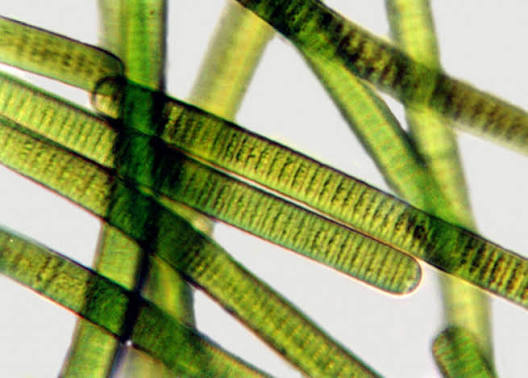
Oscillatoria
Definition:
is a filamentous cyanobacterium that performs photosynthesis.
➡ What is it? → Filamentous cyanobacterium
➡ Cell type? → Prokaryotic
➡ Auto or heterotroph? → Autotroph
➡ Important feature? → Long filament/chain of cells
➡ What does it do? → Photosynthesis
➡ Special classification? → Cyanobacterium
Key feature: Long chains/filaments
Picture clue: Long, unbranched strands of cells
⭐ REMEMBER: = PROKARYOTIC + AUTOTROPH + CYANOBACTERIUM

Gloeocapsa
Definition:
is a cyanobacterium consisting of small cells surrounded by a gelatinous material.
➡ What is it? → Cyanobacterium
➡ Cell type? → Prokaryotic
➡ Auto or heterotroph? → Autotroph
➡ Important feature? → Gelatinous coating around cells
➡ What does it do? → Photosynthesis
➡ Organization? → Individual cells or groups
Picture clue: Small round cells surrounded by a jelly-like material
⭐ REMEMBER: = PROKARYOTIC + AUTOTROPH + CYANOBACTERIUM + GELATINOUS COATING

Paramecium is a unicellular, eukaryotic protist that uses cilia for movement and obtains food from its environment.
➡ What is it? → Unicellular protist
➡ Cell type? → Eukaryotic
➡ Auto or heterotroph? → Heterotroph
➡ Important structure? → Cilia
➡ What do they do? → Movement + help direct food
➡ Other structures? → Oral groove, food vacuoles, contractile vacuole
Picture clue: Slipper-shaped cell covered in tiny cilia
⭐ Remember: = eukaryotic + heterotroph + unicellular + cilia

Amoeba
Definition:
is a unicellular, eukaryotic protist that moves and captures food using pseudopodia.
Cell type: Eukaryotic
Autotroph/heterotroph: Heterotroph
Organization: Unicellular
Movement: Pseudopodia
Key structure: Pseudopodia
Picture clue: Irregular/blob-like shape
⭐ Remember: = eukaryotic + heterotroph + unicellular + pseudopodia

Spirogyra multicellular, filamentous green alga made of chains of cells with spiral chloroplasts. spirogyra
➡ What is it? → Filamentous green alga
➡ Cell type? → Eukaryotic
➡ Auto or heterotroph? → Autotroph
➡ Important structure? → Spiral chloroplasts
➡ What do they do? → Photosynthesis
➡ Organization? → Multicellular/filamentous
Picture clue: Long chains with spiral green chloroplasts
⭐ Remember: = eukaryotic + autotroph + multicellular + spiral chloroplasts