Dairy Cattle -Reproduction, Genetics, & Health
 Call Kai
 Learn
 Practice Test
 Spaced Repetition
 Match
 Flashcards
 Knowt Play
1/40

There's no tags or description
Looks like no tags are added yet.
41 Terms
Pasteurization
Controlled heating of a product to destroy microorganisms
Babcock Cream Test
Introduced in 1890; determines the fat content of milk (Highest milk fat percentage: Hooded Seal w/ 60%, Lowest milk fat percentage: Black Rhinoceros w/ 0/2%)
California milk and cheese seals
"Real California Cheese" (1984) and "Real California Milk" (2007)
State with the most dairy cattle in the US
California
City that once held the most dairy cattle
Chino (400+ dairies, 400,000+ cows)
Where over 50% of California dairies are located (2005)
Merced, Madera, Fresno, Kings, Tulare, and Kern counties
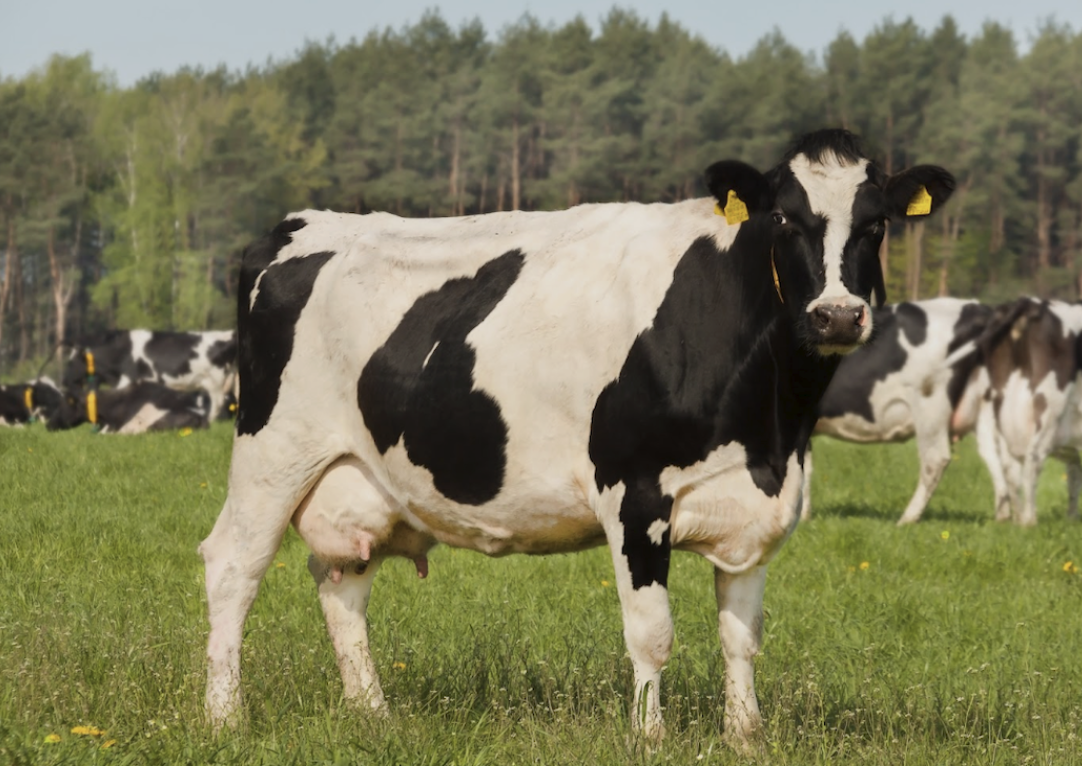
Holestein
Black & white, large, from the Netherlands, most popular US breed; milk fat 3.7%

Red and White
Red & white "red Holstein," from the Netherlands, large; milk fat 3.7%

Ayrshire
Red & white, from Scotland, moderate size; milk fat 3.9%

Milking Shorthorn
Red, white, or roan, from England, large, docile; milk fat 3.6%

Brown Swiss
Brown, black, grey, or white, from Switzerland, moderate size, docile, long-lived; milk fat 4.1%

Guernsey
Tan or brown, from the Isle of Guernsey, smaller, calm, hardy; milk fat 4.6%

Jersey
Tan to brown, from the Isle of Jersey, small; milk fat 4.8%
Marsupials
can control what goes into their milk based on offspring age
Dry Cow
female dairy cow that has previously lactated but who is not currently producing milk
Dry Period
when a lactating dairy cow stops getting milked and is allowed about 60
days to gain back weight that may have been lost during lactation (2 months prior to calving)
Fresh Cow
a dairy cow that has recently calved
Weaning
the process of transitioning a calf away from a diet containing milk or milk
replacers to an all-solid feed diet or ration
Withdrawal Period
the period that is required to elapse following the administration of an approved animal drug before the milk can be sold for human consumption and/or the animal can be harvested for meat.
Dry Cow Treatment
an intramammary antibiotic that is administered into each teat at the beginning of the dry period to prevent and/or treat udder infections
Lactating Cow Treatment
an intramammary antibiotic that is designed for use during the normal lactation period.
Teat Sealant
a paste that is infused into the end of each teat following dry cow treatment to prevent introduction of infectious agents
Voluntary Waiting Period
a two to three month period following calving before the cow is rebred by AI or allowed exposure to a bull allowing for the cow’s reproductive system to recover
Sterility
Reproductive failure is the permanent or temporary sterility (inability to reproduce) of an animal
Five main categories of causes of reproductive failure
physical defects, diseases, environmental factors, and nutritional factors. Freemartinism is a specific physical-defect example in females
Physical defects that cause reproductive failure in males
Cryptorchidism, malformed penis, or scrotal hernia
Physical defects that cause reproductive failure in females
Absence of ovaries or hormonal imbalance
Freemartinism
the female twin of a male calf whose reproductive tract is incompletely developed
Two diseases are named as infectious causes of reproductive failure in cattle
Infectious Bovine Rhinotracheitis (IBR) and Bovine Viral Diarrhea (BVD)
Environmental factors that cause reproductive failure
Physical damage to reproductive organs or stress
Nutritional factors that cause reproductive failure
Nutritional deficiencies, obesity, or ingestion of toxic plants
Veal
meat from a calf or young beef animal
‘Bob’ Veal
veal calves that are up to 3 weeks of age or 150 pounds (about 15% of veal production)
‘Special-Fed Veal
milk and formula fed veal calves raised until 5 months of age or 500 pounds (majority of veal production)
Grain-Fed Veal
veal calves fed grain, hay, or other solid food in addition to milk
Rose Veal (Pasture-Raised Veal)
veal calves raised on open pasture where they are provided grass and milk until 6 months of age or 550 pounds
Mastitis
Inflammation of the udder
Causes: Bacterial infection or other infectious organisms that enter the udder from the outside environment
Symptoms: Decreased milk quality and production, swelling, redness
Treatment: NSAIDs (nonsteroidal anti-inflammatories), aspirin or ibuprofen
Prevention: Clean environment, udder disinfection and hygiene, regular testing and maintenance of milking machines
Milk Fever (Hypocalcemia)
Sudden loss of calcium when milk production begins, because the mineral is sent to the milk. This disrupts nerve and muscle function.
Symptoms: Restlessness, muscle tremors, unable to stand
Treatment: Intravenous calcium supplementation
Prevention: Nutritional supplementation of calcium during late pregnancy
Displaced Abomasum
Excess gas makes the abomasum (the true stomach) rise to the top of the abdomen
Symptoms: Loss of appetite, reduced rumination, abdominal pain, bloating
Treatment: Surgical correction (or rolling the cow in mild cases)
Prevention: Slowly introduce high-grain diets, provide adequate roughage, manage weight at calving, minimize stress
Johne’s Disease
Contagious intestinal infection from a bacterium embedded in the wall of the ileum of the small intestine
Transmission: Oral ingestion, contact with infected feces or saliva, passed from mother in the uterus, infected milk
Symptoms: Chronic diarrhea, weight loss, bottle jaw
Treatment: No effective treatment
Prevention: Prevent contact with infection, vaccination, testing to aid detection, sanitation
Hardware Disease (Traumatic Gastritis)
Ingested metal pierces the wall of the reticulum, causing infection and/or damage to the stomach and other organs
Symptoms: Loss of appetite, arched back, stiffness in moving, bloating
Treatment: Surgery to remove the metal, plus antibiotics
Prevention: No metal in feed, keep pastures clear of metal, and ingestion of a magnet