Econ Exam 2
0.0(0)
Studied by 1 person Call Kai
 Learn
Learn Practice Test
 Spaced Repetition
 Match
Match Flashcards
 Knowt Play
Card Sorting
1/65

Earn XP
Description and Tags
Last updated 12:55 PM on 11/17/22
Name | Mastery | Learn | Test | Matching | Spaced | Call with Kai | Chat |
|---|
No analytics yet
Send a link to your students to track their progress
66 Terms
1
New cards
Average Product of Labor (for the chart)
= Total output / amount of labor
2
New cards
Marginal Product of Labor (To define and calculate in the chart)
Number of additional products produced as a result of additional labor, the incremental amount of the average product of labor
3
New cards
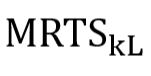
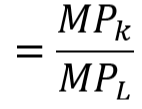
Marginal Rate of Technical Substitution of Labor and Capital
= Marginal Product of Capital/ Marginal Product of Labor
4
New cards
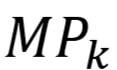
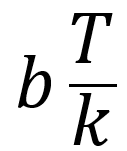
Marginal Product of Capital
=
5
New cards
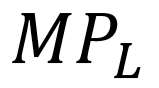
Marginal Product of Labor
=
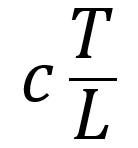
6
New cards
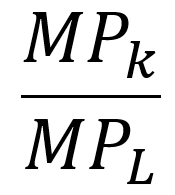
Marginal Product of Capital / Marginal Product of Labor
=
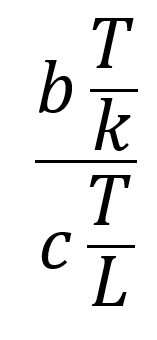
7
New cards
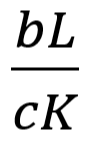
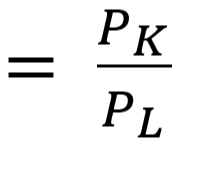
= Price of capital / price of labor
8
New cards
For the chart: Total Variable Cost (TVC)
= Total cost - Total fixed cost (TC - TFC)
9
New cards
For the chart: Total Cost (TC)
= Total fixed cost - total variable cost (TFC +TVC)
10
New cards
For the chart: Marginal Cost (MC)
= difference between each incremental total cost (TC1 - TC2)
11
New cards
For the chart: Average Fixed Cost (AFC)
= Total fixed cost / output (TFC/q)
12
New cards
For the chart: Average variable cost (AVC)
= Total variable cost / output (TVC/q)
13
New cards
For the chart: Average total cost (ATC)
= Total cost/output (TC/q)
14
New cards
Factors that affect the long run supply curve
Changes in:
- Production of technology
- Price/supply of inputs (land, labor, capital)
- Production of technology
- Price/supply of inputs (land, labor, capital)
15
New cards
Four main assumptions of a perfectly competitive model
(1) Large number of buyers and sellers
(2) Free entry and exit
(3) Homogeneous product
(4) Full information
(2) Free entry and exit
(3) Homogeneous product
(4) Full information
16
New cards
Marginal cost (MC)
= Price (P)
17
New cards
Total profit (π)
= Total revenue (TR) - total cost (TC)
= P * Q - AC *Q
= P * Q - AC *Q
18
New cards
Total revenue (TR)
= P * Q
19
New cards
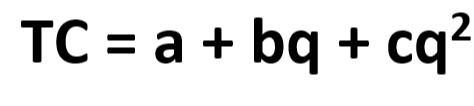
=

20
New cards
Break even point
MC = ATC
if the price is higher than break even then profits will be 0
if the price is higher than break even then profits will be 0
21
New cards
ATC
= TC / Q
22
New cards
Shut down price
MC = AVC
23
New cards
Perfectly competitive price and quantity
P = a - bQ
P = MC
P = MC
24
New cards
Monopoly price and quantity
P = a - 2bQ
25
New cards
Three necessary conditions for successful price discrimination
(1) Have a monopoly
(2) be able to tell the difference between customer types
(3) be able to prevent resale
(2) be able to tell the difference between customer types
(3) be able to prevent resale
26
New cards
Four major determinants of the elasticity of an industry's demand for an input
The industry's demand for inputs is more elastic when...
(1) ...the demand for the industry's products is more elastic
(2) ...the inputs have better substitutes
(3) ...there is more time for the firm to adjust
(4) the industry's demand for *one input* is more elastic when the supply of the other inputs is more elastic
(1) ...the demand for the industry's products is more elastic
(2) ...the inputs have better substitutes
(3) ...there is more time for the firm to adjust
(4) the industry's demand for *one input* is more elastic when the supply of the other inputs is more elastic
27
New cards
Production possibilities frontier (PPF)
Describes all the combinations of input 1 and input 2 that produce the same quantity of output
28
New cards
Land
input in production
natural resources
(ex) oil L
natural resources
(ex) oil L
29
New cards
Labor
input in production
Effort of humans, time, muscle, brainpower
Effort of humans, time, muscle, brainpower
30
New cards
Capital
input in production
the output of one production process that's used as an input in another production process
there are two categories of capital: human capital and physical capital HU
the output of one production process that's used as an input in another production process
there are two categories of capital: human capital and physical capital HU
31
New cards
Human capital
People being taught or trained
32
New cards
Physical capital
tangible, touchable, not the byproduct of the learning process
33
New cards
Marginal revenue
the addition to total revenue for selling one more unit of a product
34
New cards
Marginal cost
the addition to total cost from selling one more unit of a product
35
New cards
isocost
all the combinations of inputs that cost a firm the same amount of money i
36
New cards
isoquant
all the combinations of inputs that produce the same quantity of output
37
New cards
fixed costs
part of cost that do not change when the level of output changes su
38
New cards
sunk costs
costs you cannot avoid by producing a quantity of 0
39
New cards
variable costs
part of cost that does change with the quantity produced
40
New cards
long run
enough time so that everything changes
no fixed costs
no constraints of firms behavior
in the long run all firms make 0 profit
no fixed costs
no constraints of firms behavior
in the long run all firms make 0 profit
41
New cards
short run
a period of time in which something can change (any time less than the long run)
Production When Only One input is Variable
has both fixed costs and variable costs
Potential for positive economic profit
Production When Only One input is Variable
has both fixed costs and variable costs
Potential for positive economic profit
42
New cards
monopoly
a single seller in a market c
43
New cards
classical monopoly
single firm sets one price for all their customers
Policy solution: break it up, prevent it from forming, make it illegal, force it to be a competitive industry
Policy solution: break it up, prevent it from forming, make it illegal, force it to be a competitive industry
44
New cards
natural monopoly
industry that would not exists if it were not a monopoly
where average cost is falling everywhere in the neighborhood of the demand curve
Total surplus is better in a protected natural monopoly than in a competitive industry
no natural monopolies in the long run
have high initial fixed costs and low (or 0) marginal costs
(ex) vaccine industry, movie industry
where average cost is falling everywhere in the neighborhood of the demand curve
Total surplus is better in a protected natural monopoly than in a competitive industry
no natural monopolies in the long run
have high initial fixed costs and low (or 0) marginal costs
(ex) vaccine industry, movie industry
45
New cards
price discriminating monopoly
single firm that sets different prices for different customers
46
New cards
first degree price discrimination
everybody's price is different s
47
New cards
second degree price discrimination
volume discount
48
New cards
third degree price discrimination
different groups/categories of people get different prices
49
New cards
monopsony
where there is a single buyer in a market
50
New cards
duopoly
industry where two firms have a monopoly
51
New cards
oligopoly
industry where a small number of firms have a monopoly
52
New cards
labor demand
what the firm is willing to pay their workers depends on what the workers will bring to the firm
53
New cards
solutions to natural monopolies
Patents, trademarks, copyrights, regulated rate of return (RRR), two tier pricing (TTP)o
54
New cards
orphan drug
Nickname for any kind of medication/treatment for a disease that not a lot of people get
No firms want to go into this industry because there are no profits and would loose money
The government might go into the market if benefits outweigh the cost
No firms want to go into this industry because there are no profits and would loose money
The government might go into the market if benefits outweigh the cost
55
New cards
factor markets
markets to the inputs of the production process
56
New cards
compensating wage differentials
differences in wages paid that are created by the forces of supply and demand when workers view some jobs are intrinsically more attractive than others
Employers will pay a premium for job/working conditions and location (not for worker characteristics)
Employers will pay a premium for job/working conditions and location (not for worker characteristics)
57
New cards
Three factors that affect wages workers are willing to acccept
(1) Worker characteristics
(2) job/working conditions
(3) location
(2) job/working conditions
(3) location
58
New cards
Labor market discrimination
wage differentials
hiring discrimination
hiring discrimination
59
New cards
marginal value product
additional value a frim can make form working one more unit of labor
60
New cards
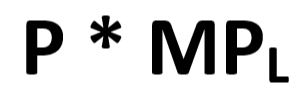
MVP
=
61
New cards
aggregate industry demand
total demand from al firms in an industry R
62
New cards
Regulated rate of return (RRR)
Policy strategy/solution for natural monopolies
the government decided a maximum price that the monopolists are allowed to charge - Tries to set prices as low as they can go without driving the firms out of business
maximizes total surplus in society
creates additional consumer surplus
the government decided a maximum price that the monopolists are allowed to charge - Tries to set prices as low as they can go without driving the firms out of business
maximizes total surplus in society
creates additional consumer surplus
63
New cards
two tier pricing (TTP)
policy strategy for natural monopolies
Covers the loss of the firm
Two parts
- Charge marginal cost per unit
- Second fee/fixed cost to make sure firm does not loose money
Best solution
Covers the loss of the firm
Two parts
- Charge marginal cost per unit
- Second fee/fixed cost to make sure firm does not loose money
Best solution
64
New cards
when marginal revenue is equal to marginal cost
firms are maximizing profit
65
New cards
when marginal revenue exceeds marginal cost
then firms should sell more because the cost of producing a product is less than what a firm is selling it for w
66
New cards
when marginal cost exceeds marginal revenue
firms are loosing money because its costing them more to product a product than how much they are selling it for