Topic 2: Evolution and Genetics
 Call Kai
 Learn
Learn Practice Test
 Spaced Repetition
 Match
Match Flashcards
 Knowt Play
1/174

There's no tags or description
Looks like no tags are added yet.
175 Terms
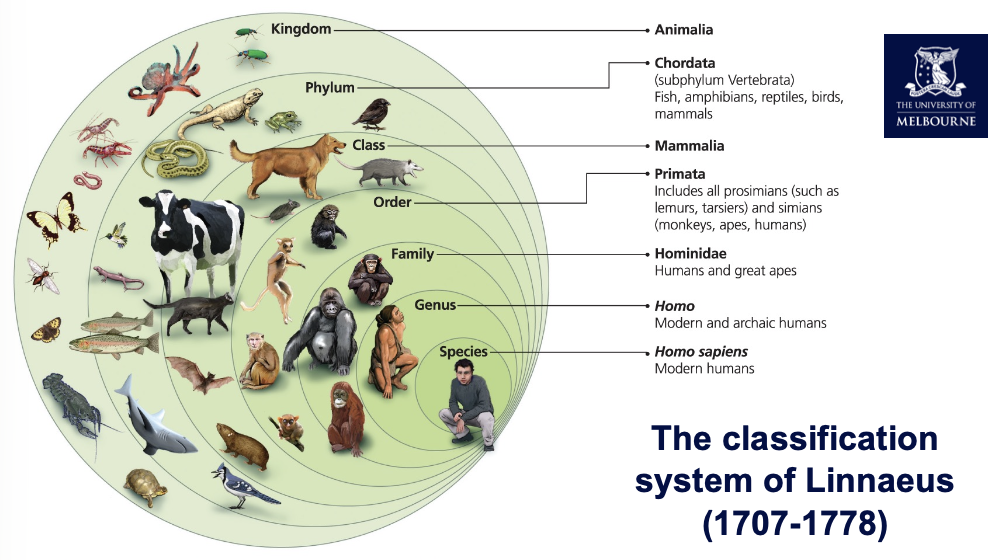
The classification system of Linnaeus (1707-1778)
based on morphology classification
Lamarckism
Single celled organisms can become more complex over time - it’s all about effort - eg. a giraffe can keep stretching and stretching and longer necks are passed on
no evidence
The Fossil Record (Nicolaus Steno 1638-86)
Discovered fossils from ancient sharks which were found far from oceans near mountains
first evidence and idea that the Earth can change over time
Mary Anning (1799-1847) - extinction introduction
She found fossils of organisms that were extinct - it was controversial
Darwin (1809-82)
He collected many specimens to shape his theories on evolution
Galapagos finches all being the same genus but so much diversity
Evolution
Evolution is the cumulative change in the genetic composition of a population or species over time.
Darwin’s 3 major propositions: 1
diversity has to exist. - there is some variation

Darwin’s 3 major propositions: 2
changes over time in how structures are applied and used

Darwin’s 3 major propositions: 3
3. Natural selection: differences in the phenotypes of individuals cause some of them to survive and reproduce more effectively than others and therefore outcompete them.
Natural selection
Individuals with phenotypes most suited to the environment (fittest) are more likely to produce offspring. Natural Selection is a ‘driver’ of evolution and acts on heritable variation within a population

Speciation: galapagos islands

Humans can drive evolution as well
Artificial selection for different vegetables

Adaptation
An adaptation is an inherited aspect of an individual that allows it to outcompete other members of the same population that lack the trait (or that have a different version of the trait).
Adaptations are traits that have evolved through the mechanism of natural selection.
Macroevolution
Macroevolution explains evolutionary changes among large taxonomic groups above the species level.
Macroevolution includes the origin, diversification and extinction of species over long periods of time.
eg. dinosaurs
Monophyletic group
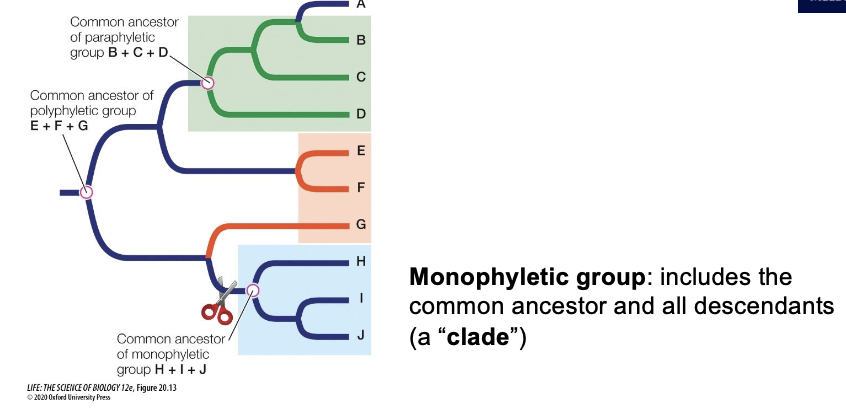
Polyphyletic group

Paraphyletic group

Node, branch, taxon
branch is usually a species

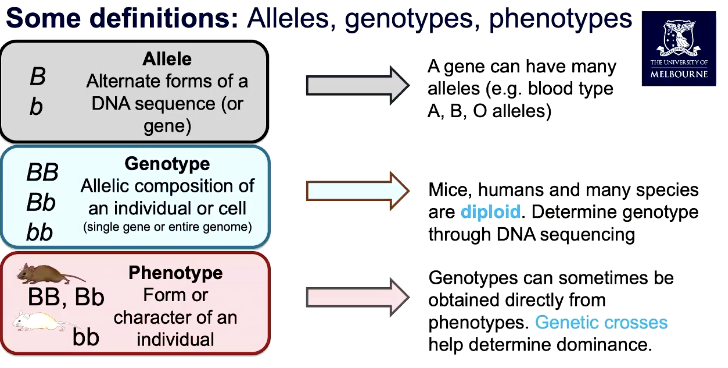
Definitions of alleles, genotypes and phenotypes
Mutation
ultimate source of genetic variation
Mendel (1822-1884) and Franklin, Wilkins, Crick and Watson (DNA)
Trying to investigate genetics
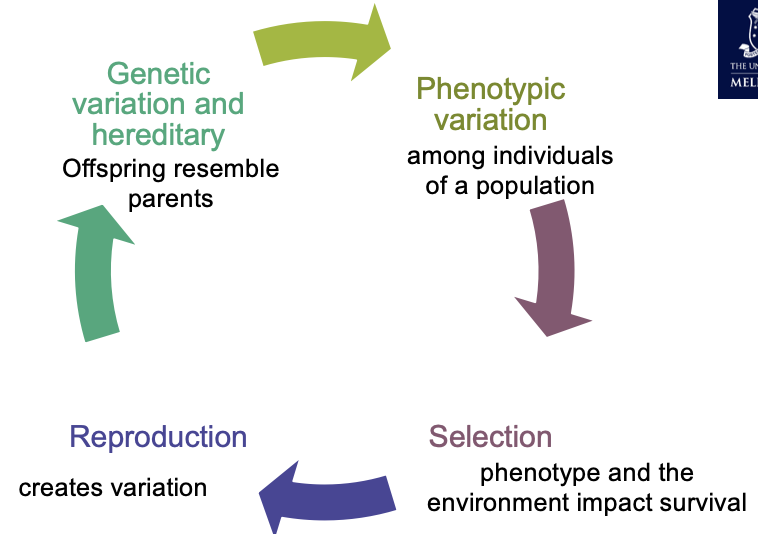
The cycle of evolution
DNA encoding and replication

Replication is not always accurate
DNA polymerase adds to the 3’ end of the new strand
It should add the complementary nucleotide
Occasionally there is a misincorporation error
Causes of mutations

Mutations can occur at diff scales and have diff impacts

Germline mutation
This is what we’re most interested in as they can be transferred to next generation
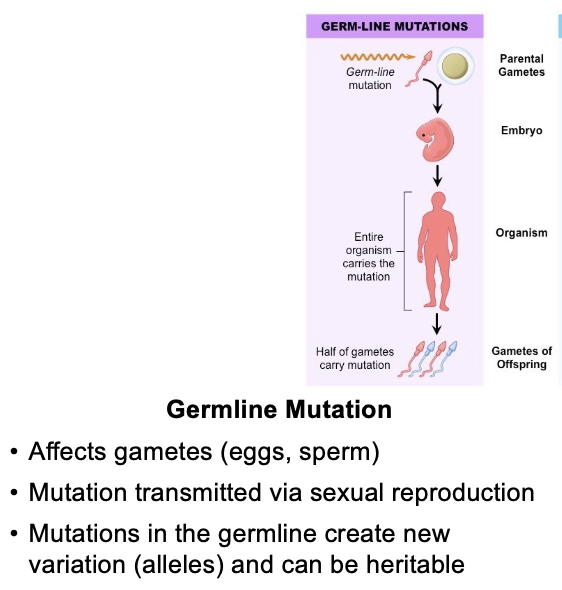
Somatic mutations

Mutation occurs without respect to phenotypes

Genetic drift
involves random changes in allele frequencies
Alleles become more or less common simply by chance
There is always an element of randomness in determining which alleles are passed on by the parental population
The effect of population size on genetic drift

Genetic bottlenecks
Genetic bottlenecks are caused by events that reduces the size and genetic diversity of a population significantly

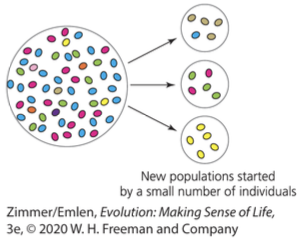
Founder effects
are caused by a small number of individuals founding a new population. Random differences in allele frequencies occur when a small colony splits from a large population.
What is a population?
A group of individuals that share genetic information.
In sexual organisms, a population is a group of individuals that have the potential to exchange genetic information over a small number of generations.
What is a gene pool?
A gene pool is the sum of genetic information (the genetic composition) that is carried in the population.
Microevolution versus Macroevolution
Macroevolution: Evolution among species spanning long periods of time.
It is revealed through:
Changes in the fossil record
Transitions across the phylogeny of life
Microevolution: Evolution within species that can be observed directly acting upon natural populations.
T
he microevolutionary process can be influenced by the ‘agents of change’.
Adaptive mutations occur
The match between phenotype and function can be exquisite
Adaptation refers to a trait:
Advantageous mutations contribute to a trait that is adaptive
Natural selection is a process:
It can act on advantageous mutations and deleterious mutations
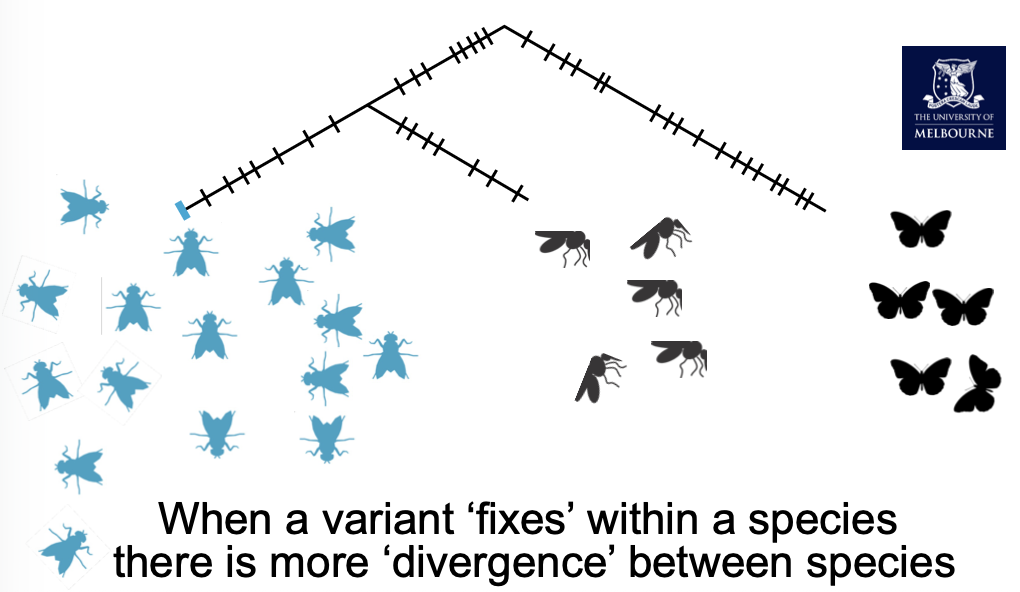
When a variant ‘fixes’ within a species there is more ‘divergence’ between species
Sexual mating systems influencing evolution of populations

Plant populations can also have non-random mating
Many plants (like the model plant Arabidopsis thaliana) tend to “self” rather than “outbreed”.
Some plant species have flowering time polymorphisms (i.e. some plants that are similar might flower at different times of the year to prevent cross pollination and gene flow)
Assortative mating
increases the frequency of homozygous genotypes and allele frequencies may remain very similar unless genetic drift causes fixation of one allele over time

Disassortative mating
maintains genetic diveristy and allele frequencies may remain very similar but heterozygotes will have higher than expected frequencies

Assortative mating can shift the gene pool
hummingbirds pollinate the pink ones and moths pollinate the red ones
differences in genotypes

Gene flow
Migration, gamete dispersal and hybridization
For gene flow to occur, individuals must be able to disperse, interbreed and produce viable offspring
What does the impact of gene flow on the gene pool depend on?
i. The genetic difference between populations
ii. The level of migration, movement or hybridisation (m)
in this case, no impact on allele frequencies bc frequencies as the same

Different population allele frequencies (migrants vs residents)
Here gene flow is increasing the frequency of A alleles in the resident population. The greater the gene flow the faster the change in frequency

How we calculate how allele frequency might change in one generation
What this means is that the new allele frequency after one generation will change from 0.4 to 0.41

Particular combinations of traits might be beneficial
Many traits are determined by the action of multiple genes
e.g. multiple genes contribute to the difference in anthocyanin amount

Inheritance of multiple genes
During meiosis, the chromatids can cross over and undergo recombination
Recombination creates new combinations of alleles at different genes
New combinations may be adaptive
Recombination frequencies vary between genes

The two fold cost of sex
Evolution should favour asexual reproduction
Asexual lineages multiply faster than sexual lineages
No ‘search’ costs associated with finding a mate
No risk of sexually transmitted infections
Benefits of Sexual Reproduction
Combining beneficial alleles
Generation of novel genotypes
‘Faster’ evolution
Clearance of deleterious mutations
Allele definition
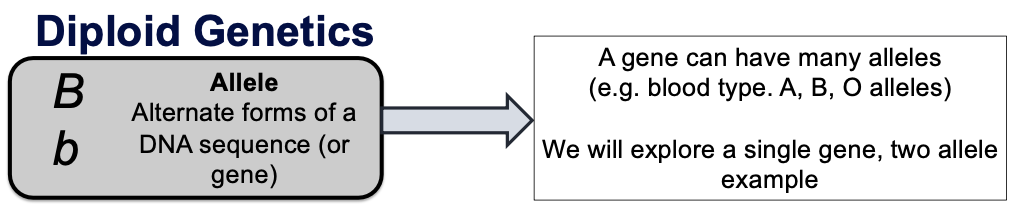
Genotype

Phenotype

Punnet squares
The genotypic ratios and phenotypic ratios that we can get from punnet squares can be useful to predict successful genotypes from crosses
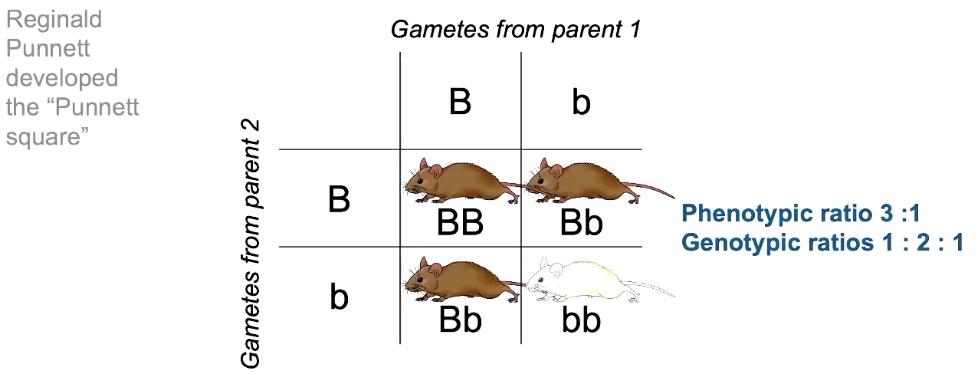
Mendelian frequencies applying to a pedigree
If there is a absence of selection, due to chance via genetic drift the b and B alleles can overun each other - just depends on chance
Hardy-Weinberg Theorem - Basis of notation
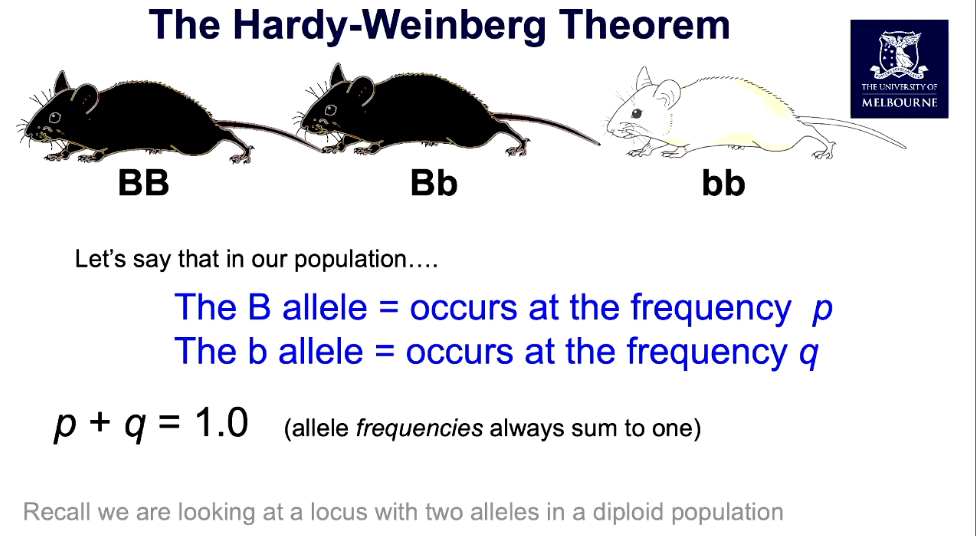
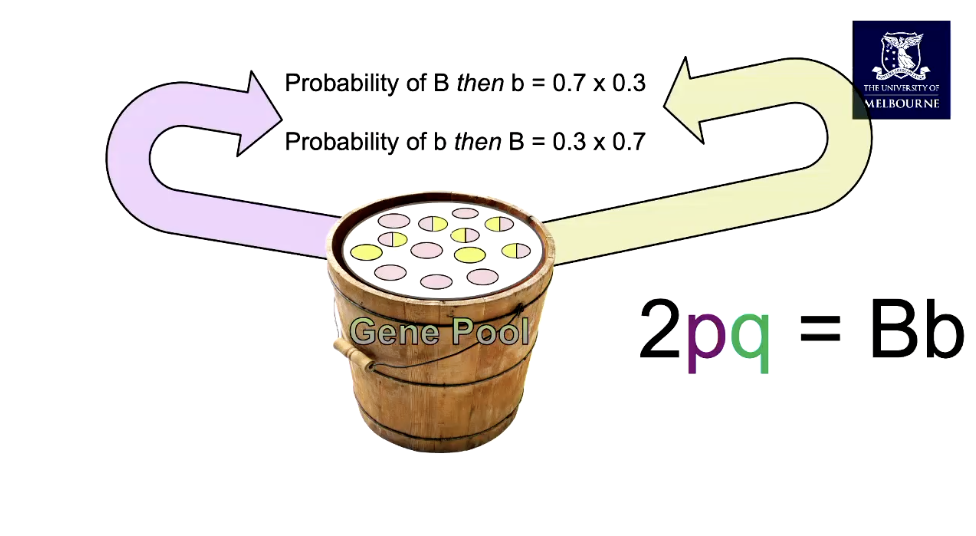
How to figure out the probability of a homozygous genotype

How to figure out the probability of a heterozygous phenotype
The final Hardy-Weinberg Equation
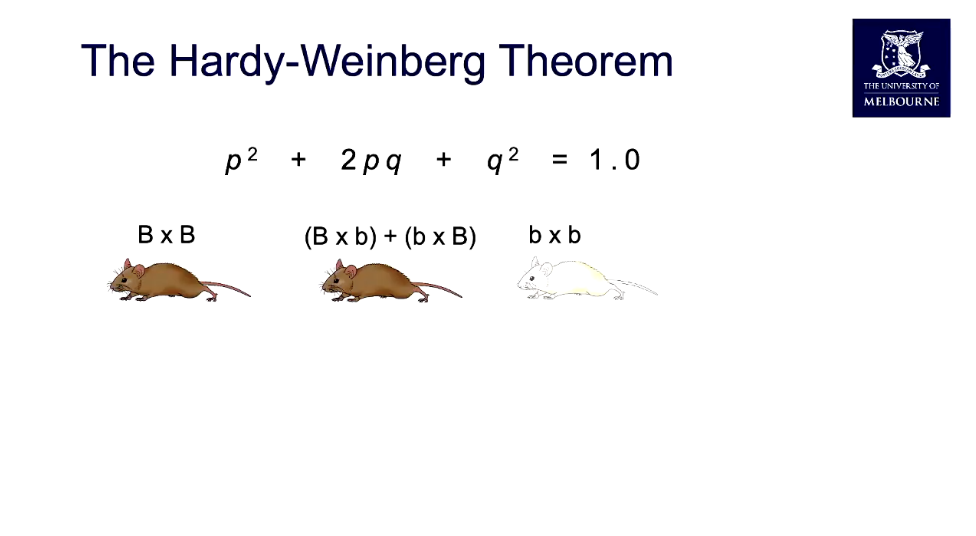
Using the probabilities of genotypes, how do we calculate the allele frequencies in a population of 1000 mice?
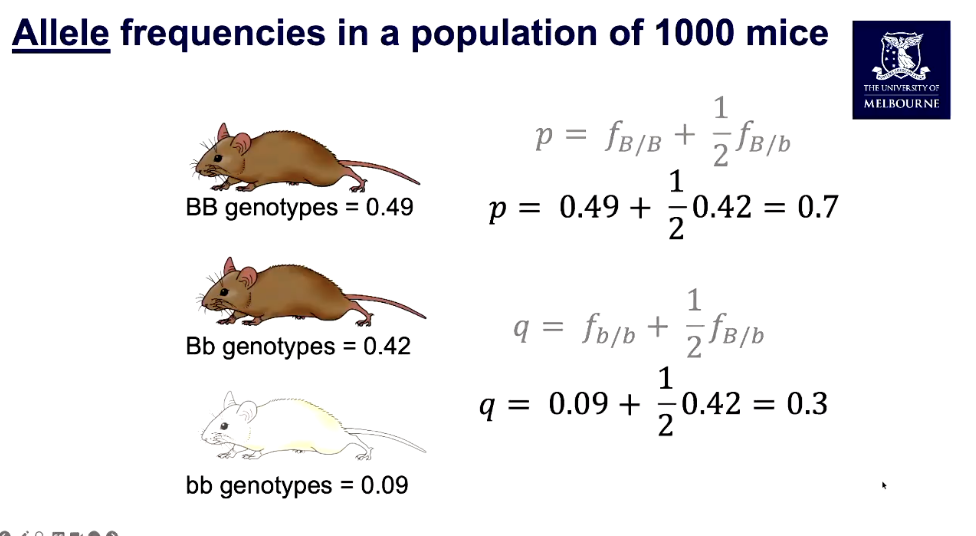
How to calculate expected genotype frequencies from known allele frequencies
The Hardy-Weinberg theorem shows allele frequencies will not change from one generation to the next.

How to infer frequencies of 3 genotypes from one genotype frequency (using plot)
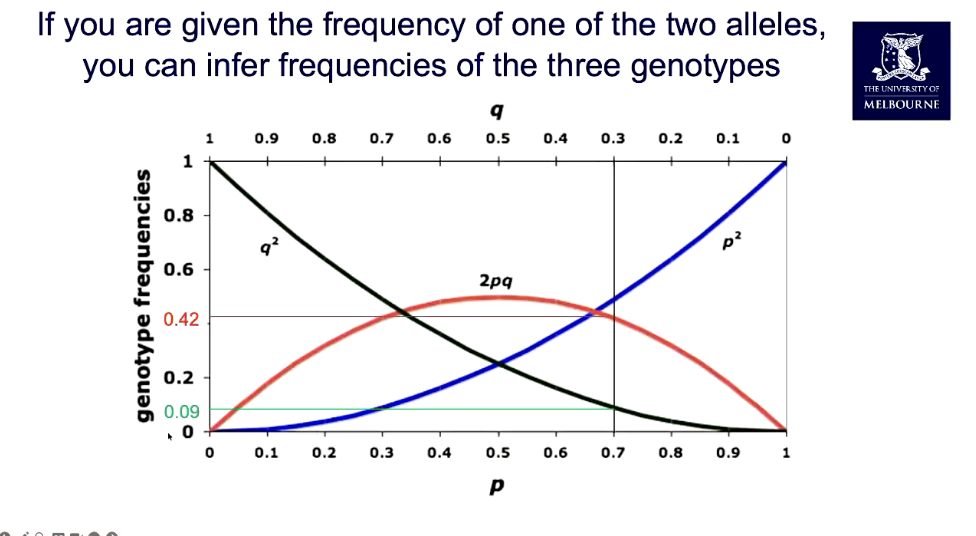
Under Hardy-Weinberg equilibrium (HWE), allele frequencies do not change over time…What are the assumptions?
The assumptions of the Hardy Weinberg Equilibrium are that the ‘agents of evolutionary change’ are not acting!
1. No gene flow from other populations
2. No mutation
3. No drift
4. No non-random mating
5. No selection
6. Recombination not relevant
1. No Gene flow
No new phenotypes migrating into populations
2. No mutations
We don’t have new mutations introducing different phenotypes/genotypes
3. Assuming infinite population size
Genetic drift changes allele frequency (more quickly in smaller populations). So the larger the population, the more constant the allele frequency.
4. Mating is random
We cannot have assortative mating where brown mice mate with brown mice - instead it must be random
5. Equal fitness (no selection)
Everyone is equally fit to survive and reproduce

o.66 + 0.12 (half of 0.24)
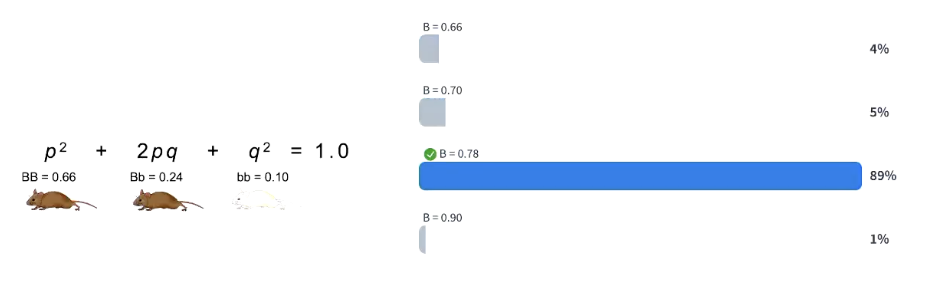
What happens when we violate assumptions of Hardy-Weinberg?
The genotype will differ from expected.
How to use Hardy-Weinberg equation to calculate expected genotype frequencies (null hypothesis)
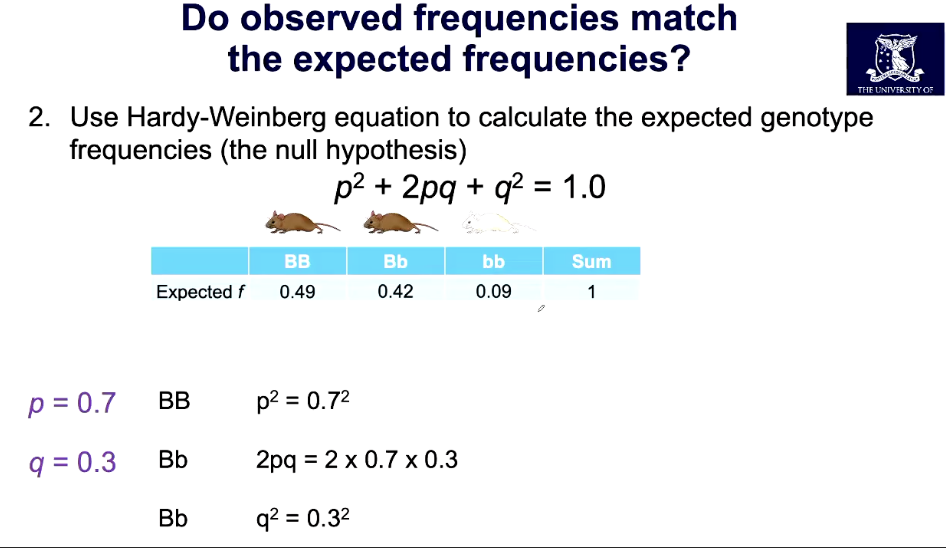
How to find the expected number of mice using genotype frequencies and population

To check if observed frequencies match expected frequencies

We also need to see if that X2 value is significant or not
degrees of freedom is usually 1 bc number of alleles is usually 2
Chi-squared test identify loci that deviations from Hardy-Weinberg expectations can reveal microevolutionary change
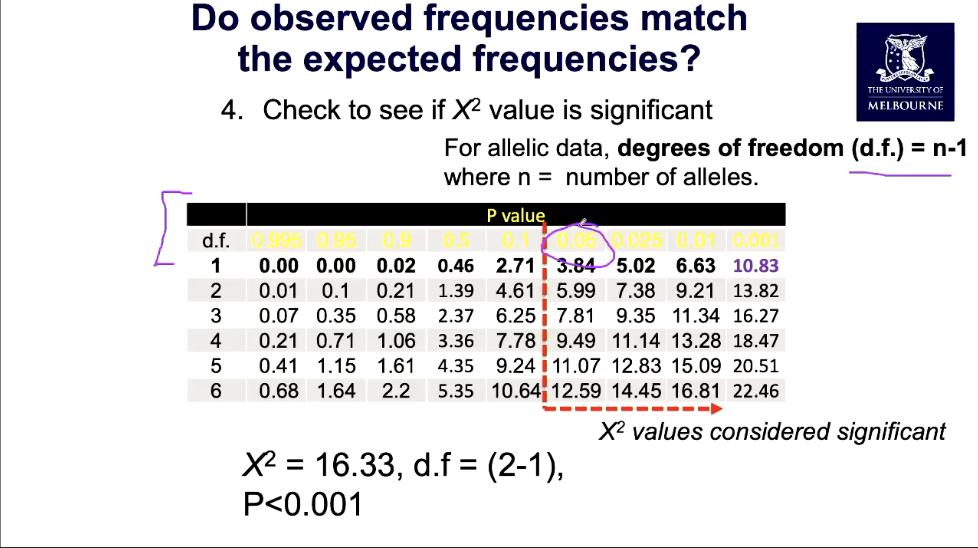
IF observed genotype frequencies are significantly different to expected genotype frequencies…
• Migration may be occurring
• Mutation may have an unexpected impact
• Population sizes may be small
• Mating may not be random
• Selection may be operating
The null hypothesis of the Hardy-Weinberg Theorem
The Hardy-Weinberg principle has a null hypothesis: genotype frequencies will not change over generational time. Drift, selection and gene flow can all have large effects.
Selection on genotypes
balancing selection
Balancing selection
maintains allele diversity in populations
Balancing selection: Negative Frequency dependent selection
Basically the more rare a phenotype becomes, the more selective advantage it has
the less frequent it becomes, the higher reproductive success = fitness

Fitness
Fitness : success of an organism at surviving and reproducing
Relative fitness (w)
describes the success of a genotype. Relative fitness standardised by the success of other genotypes in the population and ranges from 0 to 1.0
Balancing selection: heterozygote advantage
Relative to other genotypes, the heterozygote is the fittest genotype
is able to fight off malaria best

Selection on phenotypes types
Stabilising, directional and disruptive selection
Stabilising selection
bringing everything closer to the mean

Directional selection

Disruptive selection
can be evident with associative mating

What are the genes and alleles are causing these adaptations (reductionist approach - looking at cellular level)
Monkey flower pollination: Pink flowers make it easy for bees to pollinate and red are pollinated by birds.
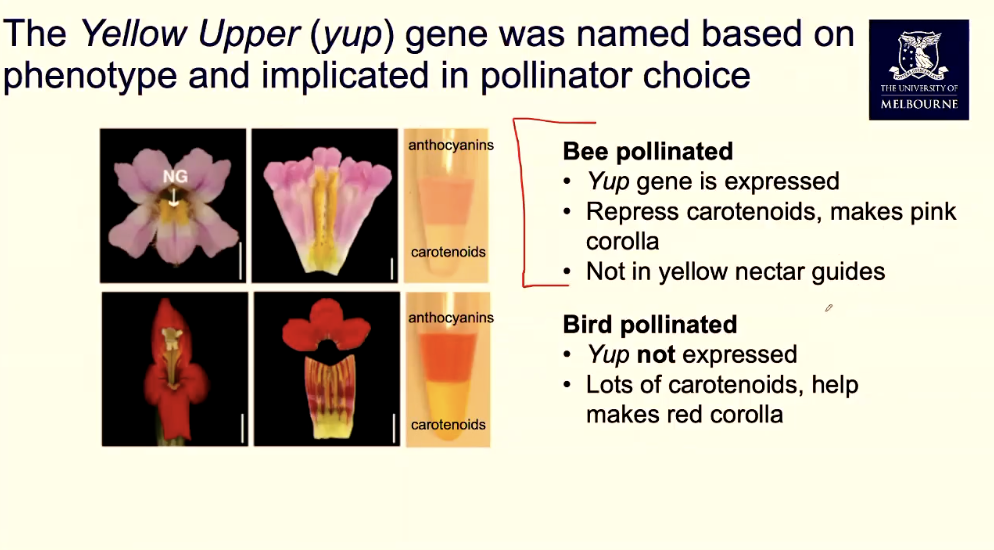
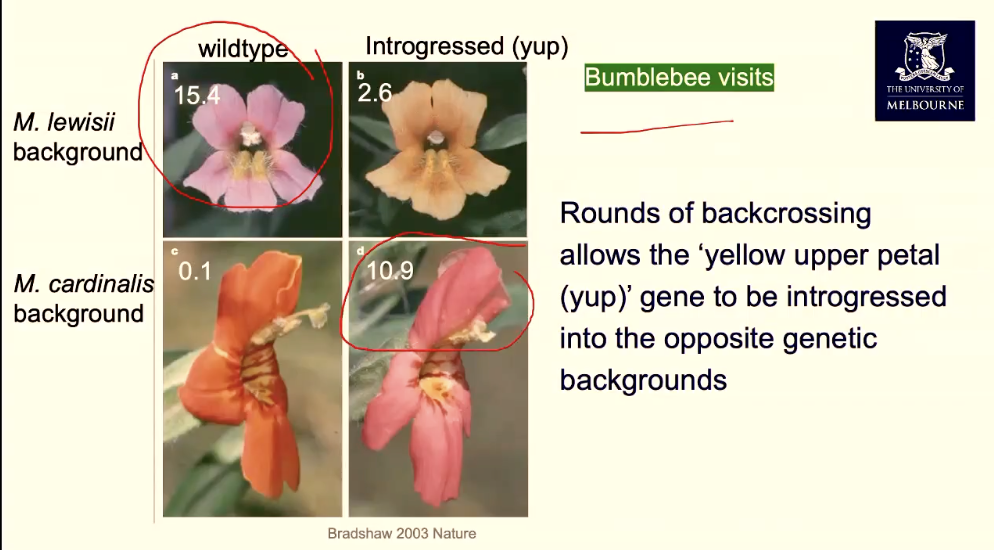
Monkey Flower pollination cross example
They crossed the red and pink flowers which produced an F1 hybrid darker pink flower and then tracked the number of bumblebee visits.
Yup was caused by a partial duplication on another chromosome and the RNA would hairpin loop on itself and bind to a protein that expressed the carotenoids needed to turn a flower red. If this carotenoid was not expressed, the flower would be darker pink.
Industrial melanism of the peppered moth
He found that there was an increase in the number of the darker moths. He then took 488 light and 496 dark moths and released them in an unpolluted forrest. He recaptured them and found that twice as many were light (light had better survival) but in another forrest with pollution, when recaptured, twice the number of dark moths survived.
Dark mutation is large insertion caused by a transposable element hopping into the first intron
Genetic changes in Drosophila over time
Transposable elements increasing expression of protein that detoxifies and gets rid of DTT (repellent)

Speciation
the evolutionary process by which new species arise through reproductive isolation. Speciation causes one evolutionary lineage to split into two or more lineages.
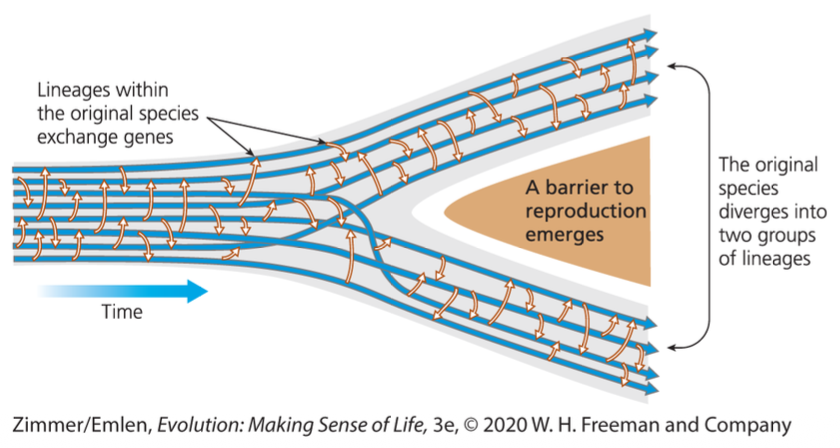
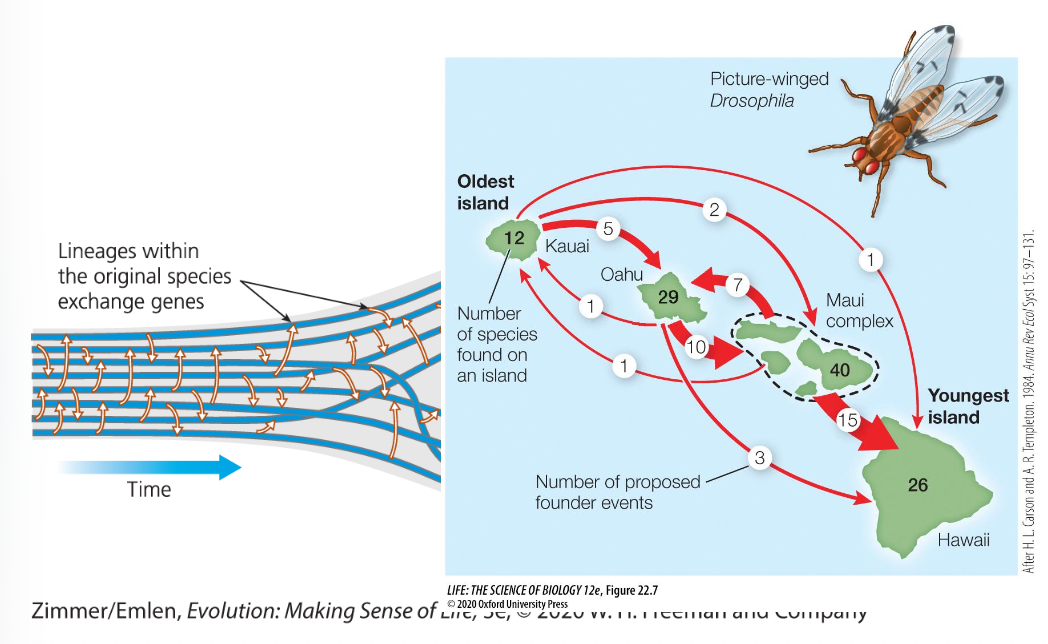
Allopatric speciation
ancestral population is divided by a physical barrier
no gene flow bw drosophila on different islands
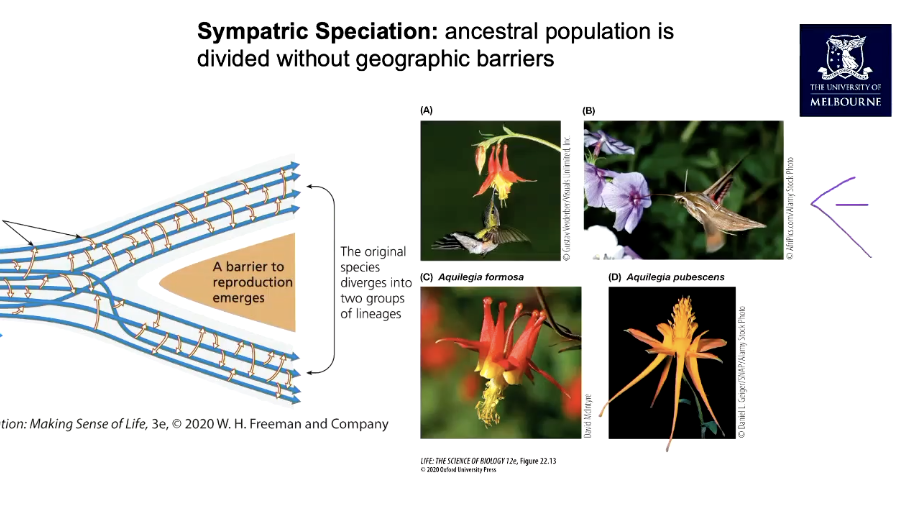
Sympatric speciation
ancestral population is divided without geographic barriers
monkey flower species are in the same geographic location but birds pollinate some and bees pollinate the others - leads to reproductive isolation without geographic barrier
Two explanations of the genetics of speciation
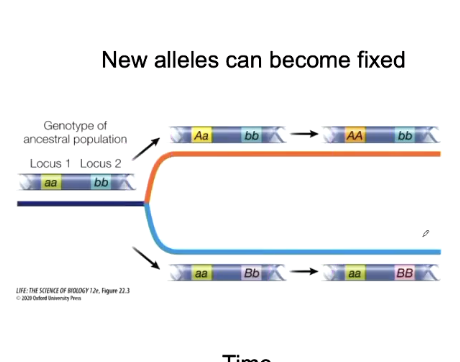
New alleles can become fixed
Chromosomal rearrangements
Speciation: New alleles can become fixed
Original genotype may be as shown and then speciation happens and after divergence mutations may arise and new alleles are introduced, introducing new genotypes.
Eventually if the lineages were to connect - the offspring would be infertile
Chromosomal rearrangements
In one lineage, fusion of blue and green chromosomes have fused and in the other, another two may have fused or not
Reproductive barriers preventing gene flow to enable speciation types
Prezygotic isolation
Postzygotic isolation
Prezygotic isolation
geographical isolation - allopatric speciation, when meet again, too different to reproduce
mechanical: hummingbird vs bird - prevents cross pollination bw varieties
behavioural isolation - different mating calling signals
mating time differences - different times of the day
ecological differences -
Postzygotic isolation
There are some zones where multiple species of frogs may cross over at their region boundaries - zygotes can form but they won’t develop/ not viable
Prezygotic isolation example
When both frog species live in same environment, there is more of a difference in mating calls in order to not confuse species
prezygotic isolation maintains species boundaries in sympatry

Genetic distance
reproductive isolation increases with genetic divergence
usually we would expect A and C to be more reproductively isolated but with A and B are sympatric there must be a stronger barriers to prevent hybridisation
