Read w3
 Call Kai
 Learn
 Practice Test
 Spaced Repetition
 Match
 Flashcards
 Knowt Play
1/29

There's no tags or description
Looks like no tags are added yet.
30 Terms
6.1 Units of a Neural Network
Unit Overview

6.1 Units of a Neural Network
Why Non-Linear Activation Functions are Necessary

6.1 Units of a Neural Network
Common Activation Functions

6.3 Feedforward Neural Networks
Architecture & Terminology

6.3 Feedforward Neural Networks
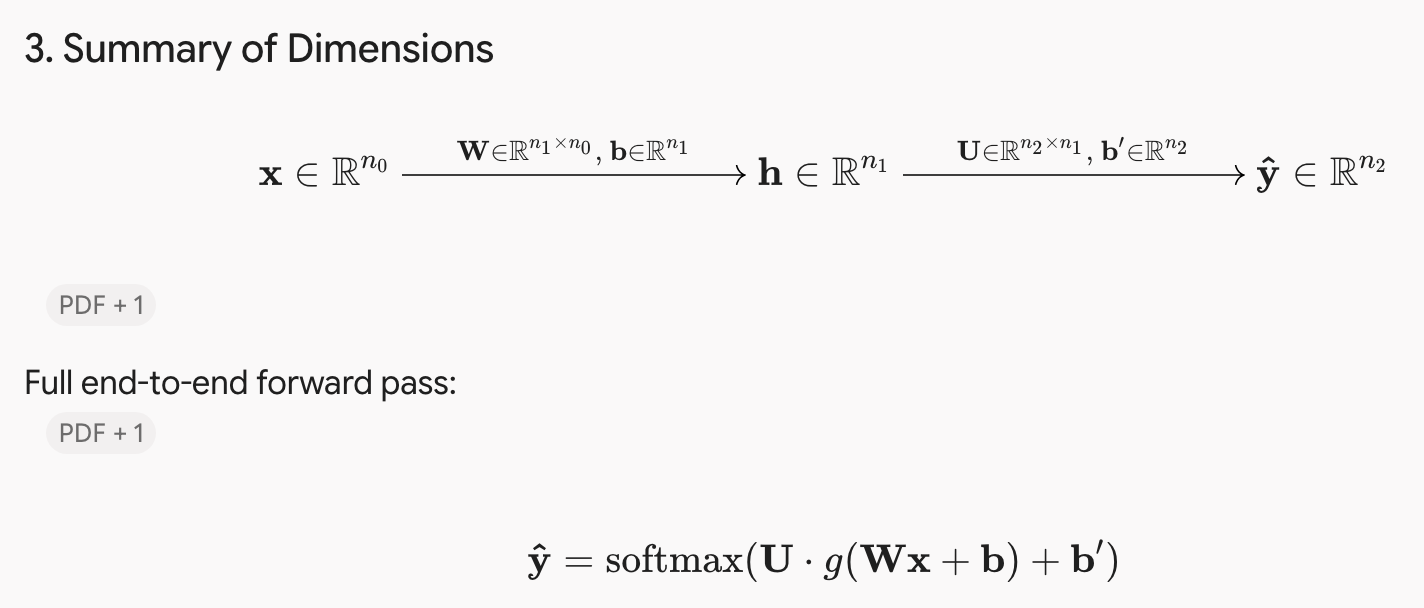
Vectorized Layer Computation

6.3 Feedforward Neural Networks
Summary of Dimensions
Lexical Semantics
Goal

Lexical Semantics
Lemma, Word Sense, Synonymy, Antonymy, Hypo/Hypernymy

Lexical Semantics
Similarity vs Relatedness, Affective Meaning

Lexical Semantics
Vector Semantics: Intuition

Lexical Semantics
Count-based embeddings

Lexical Semantics
Dot Product & Limitation

Lexical Semantics
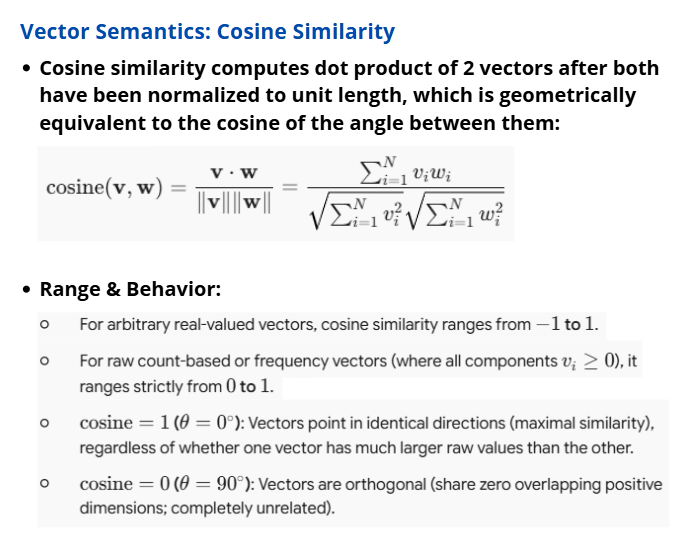
Cosine Similarity Metric
Lexical Semantics
Cosine Similarity vs Euclidean Distance

Lexical Semantics
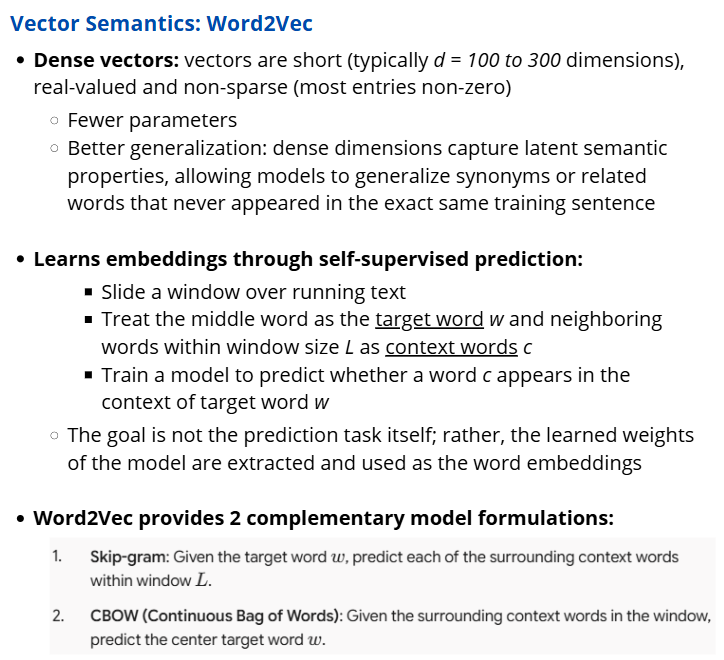
Word2Vec Overview
Lexical Semantics
Word2Vec: SGNS

Lexical Semantics
Word2Vec: Embeddings Learned

Lexical Semantics
Word2Vec: Learning via Cross-Entropy Loss

Lexical Semantics
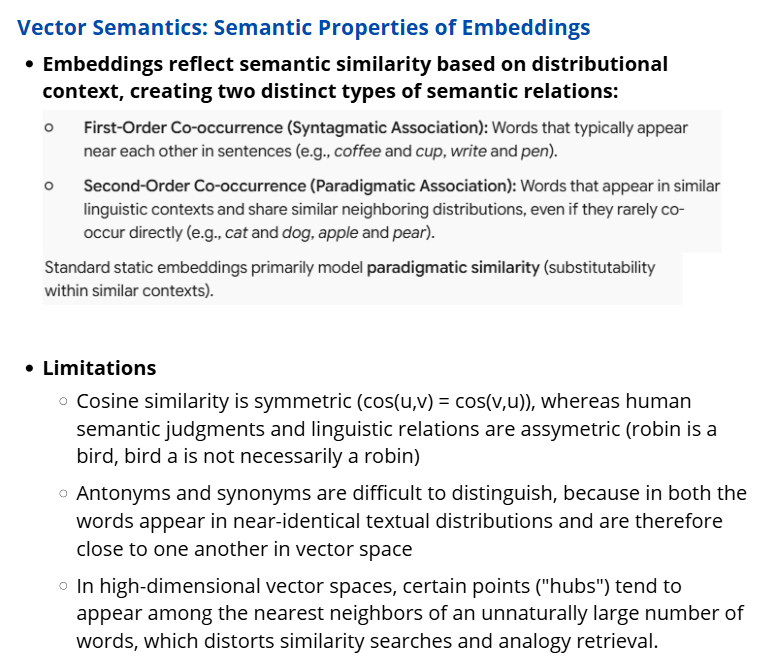
Semantic Properties of Embeddings

Lexical Semantics
Semantic Properties of Embeddings

Lexical Semantics
Semantic Properties of Embeddings
FO vs SO co-occurrence, Limitations
Lexical Semantics
Bias and Embeddings

Lexical Semantics
Debiasing Embeddings

Lexical Semantics
Evaluating Vector Models

Lexical Semantics
Summary

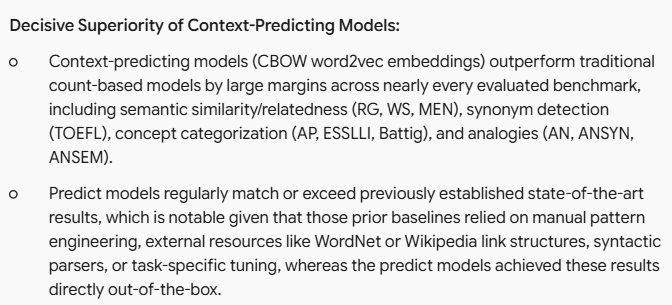
Findings of Paper
Decisive Superiority of Context-Predicting Models
Findings of Paper
Failure to Dominate Only on Selectional Preferences

Findings of Paper
Parameter Robustness vs. Brittleness

Findings of Paper
Optimal Architectural and Hyperparameter Insights

Findings of Paper
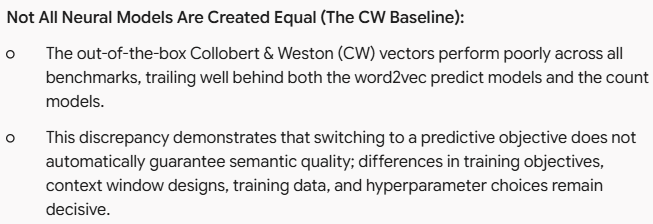
Not All Neural Models Are Created Equal (The CW Baseline)