HC2226 Radiography Audit: Audit Cycle, Governance and Patient Safety
 Call Kai
 Learn
 Practice Test
 Spaced Repetition
 Match
 Flashcards
 Knowt Play
1/18

There's no tags or description
Looks like no tags are added yet.
19 Terms
What is an audit?
A systematic review of processes to ensure quality and compliance.
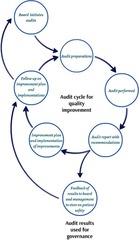
What is the Audit Cycle?
The process of collecting data, presenting results, implementing change, and re-measuring outcomes.
Why does audit matter in healthcare?
It impacts patient care, radiation exposure, image quality, resources, and departmental efficiency.
What are common issues in audit implementation?
Staff shortages, increasing imaging demand, lack of protected audit time, variable staff engagement, poor documentation, IT/data collection difficulties, new staff, and competing clinical priorities.
How do departmental challenges affect audits?
Challenges can either hinder audits or highlight their importance for improving practices.
What is the difference between participating in an audit and leading an audit program?
Participating involves understanding metrics and collecting data, while leading includes planning, governance, and department-wide implementation.
What is the relationship between clinical governance and audit?
Audit is a component of clinical governance that ensures quality assurance and evidence-based practice.
How should audit be viewed in relation to clinical practice?
As a mechanism for radiographers to evaluate and improve the quality and safety of their services.
What are the implications of audit for patient care?
Improved quality of care and safety for patients.
What role does audit play in service improvement?
It identifies areas for enhancement and ensures adherence to standards.
What are the key components of effective audit participation?
Understanding measurements, collecting accurate data, following methodology, discussing findings, and reflecting on learning.
What is the importance of re-audit?
To assess the effectiveness of changes implemented from previous audits.
What does MDT stand for in the context of audit?
Multidisciplinary Team.
What are the potential consequences of poor documentation in audits?
It can lead to inaccurate data collection and ineffective audits.
What is the significance of understanding what is being measured in an audit?
It ensures that the audit focuses on relevant and impactful metrics.
What challenges might new staff face in the audit process?
They may lack familiarity with protocols and data collection methods.
How does audit contribute to patient safety?
By identifying risks and ensuring compliance with safety standards.
What is the role of evidence-based practice in audits?
It provides a foundation for evaluating and improving clinical practices.
What does 'variable staff engagement' imply for audits?
Inconsistent participation can affect the quality and outcomes of the audit process.