Guide to the North Pacific Coast Marine Life of Costa Rica
 Call Kai
 Learn
 Practice Test
 Spaced Repetition
 Match
 Flashcards
 Knowt Play
1/51

Earn XP
Description and Tags
Comprehensive vocabulary flashcards covering marine fauna, avifauna, flora, and conservation classifications along the North Pacific Coast of Costa Rica.
52 Terms

Humpback whale: A large baleen whale reaching up to 18m (60feet) and 40tons (88,000pounds) that feeds on krill, plankton, and small fish; noted for performing the longest recorded mammalian migration of 5,160miles (8,300km) between Costa Rica and Antarctica. Threats are entanglement in fishing gear, ship strikes and habitat impacts.
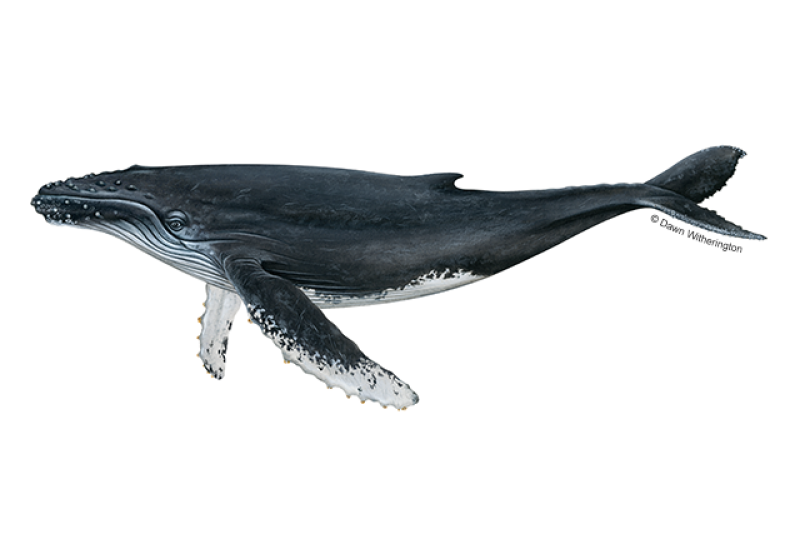
Bubble-Netting
A highly complex cooperative hunting technique unique to humpback whales (Megaptera novaeangliae), where individuals release curtains of exhaled air bubbles while swimming in circles to herd, corral, and concentrate schooling fish before lunging upward through the center.

Humpback Whale Song
Complex acoustic sequences sung by male humpback whales during wintering that can last up to 20minutes, be heard over 20miles (30km) away, and repeat for hours; all males within a breeding population sing the same song, which continually evolves over time.
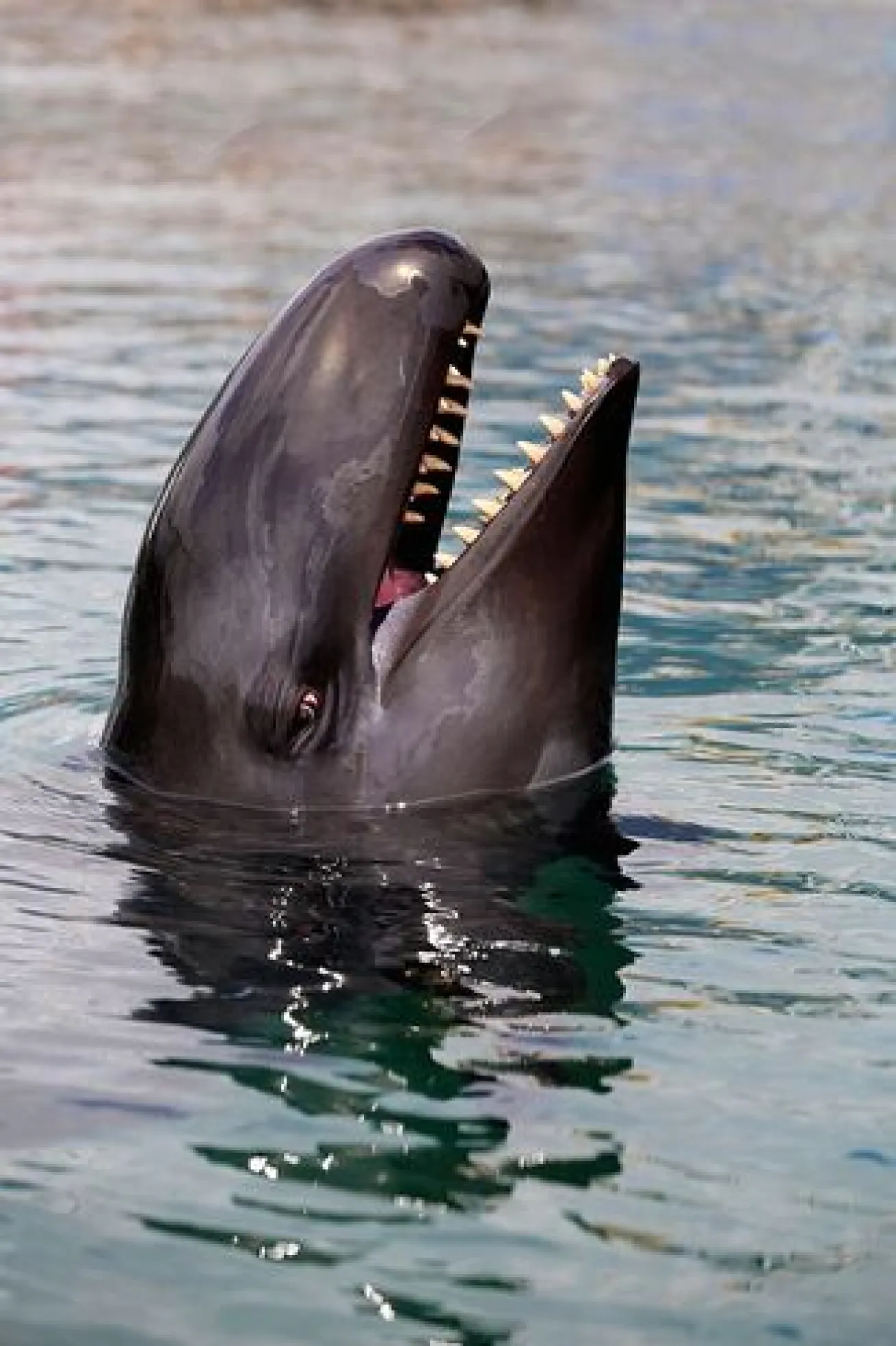
False Killer Whale (Pseudorca crassidens): A large, gregarious oceanic delphinid reaching up to 6m (20feet) and 2tons (4,400pounds); known from fossils 15years before living specimens were found, it forms strong social bonds in pods of 10 to 20 individuals and feeds on fish, cephalopods, and smaller dolphins. Threats are bycatch and hunting in Indonesia, Japan and West Indies.
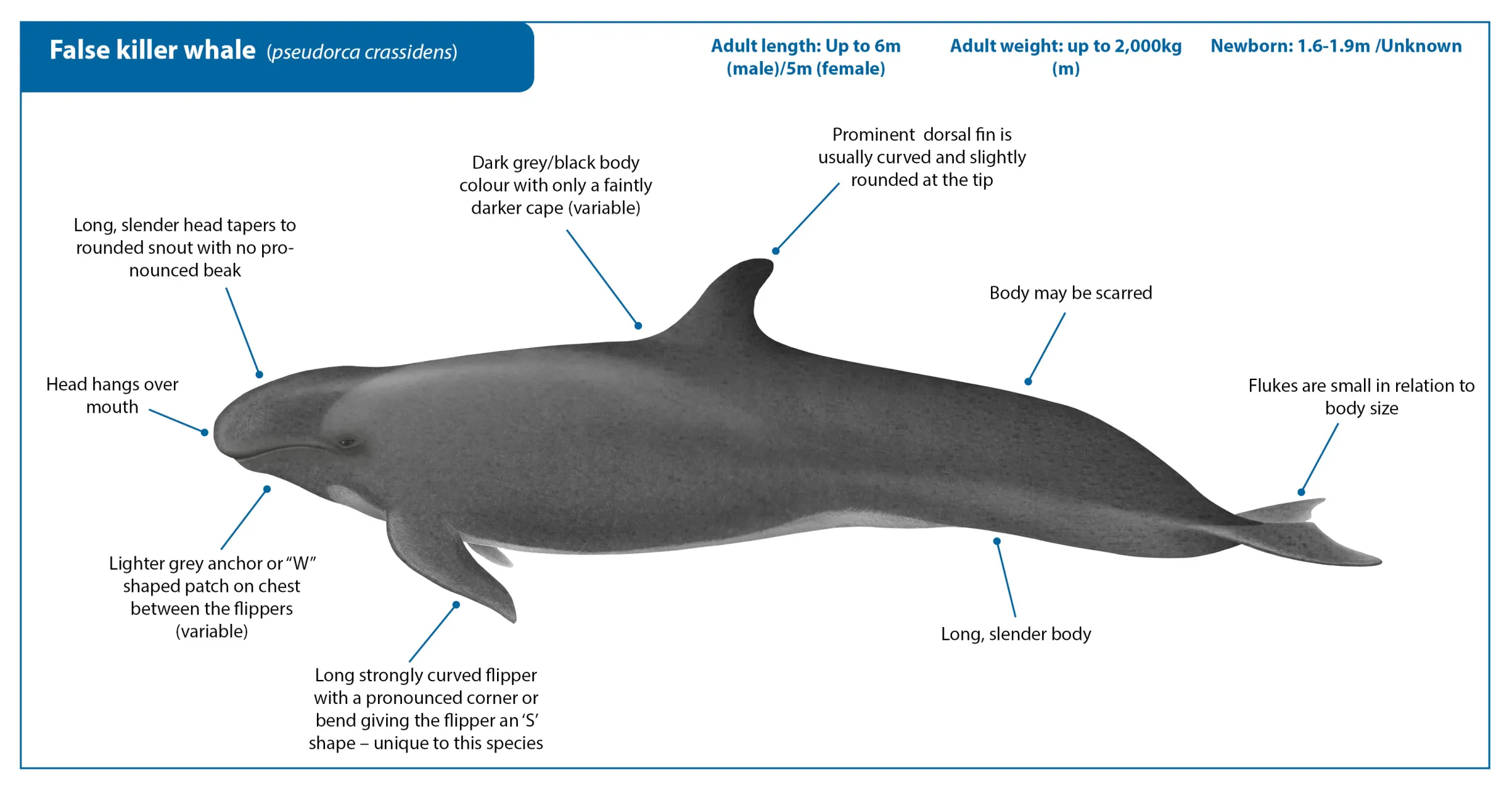
Crassidens
The Latin-derived species name for the false killer whale (Pseudorca crassidens), which translates literally to 'thick or dense tooth.'

Spinner Dolphin (Stenella longirostris subsp. centroamericanus): A deep-ocean delphinid subspecies whose species name translates to 'long beak'; reaching up to 77kg (170pounds), it is famous for its acrobatic displays of leaping and spinning along its longitudinal body axis up to 14 times consecutively. Threats are getting trapped in nets and drowning.

Tuna-Dolphin Association
A common ecological association in the Eastern Tropical Pacific where large yellowfin tuna school under spinner and spotted dolphins; tuna purse-seine vessels use the surfacing dolphins to locate fish schools, resulting in dolphin encirclement, stress, entanglement, and drowning.

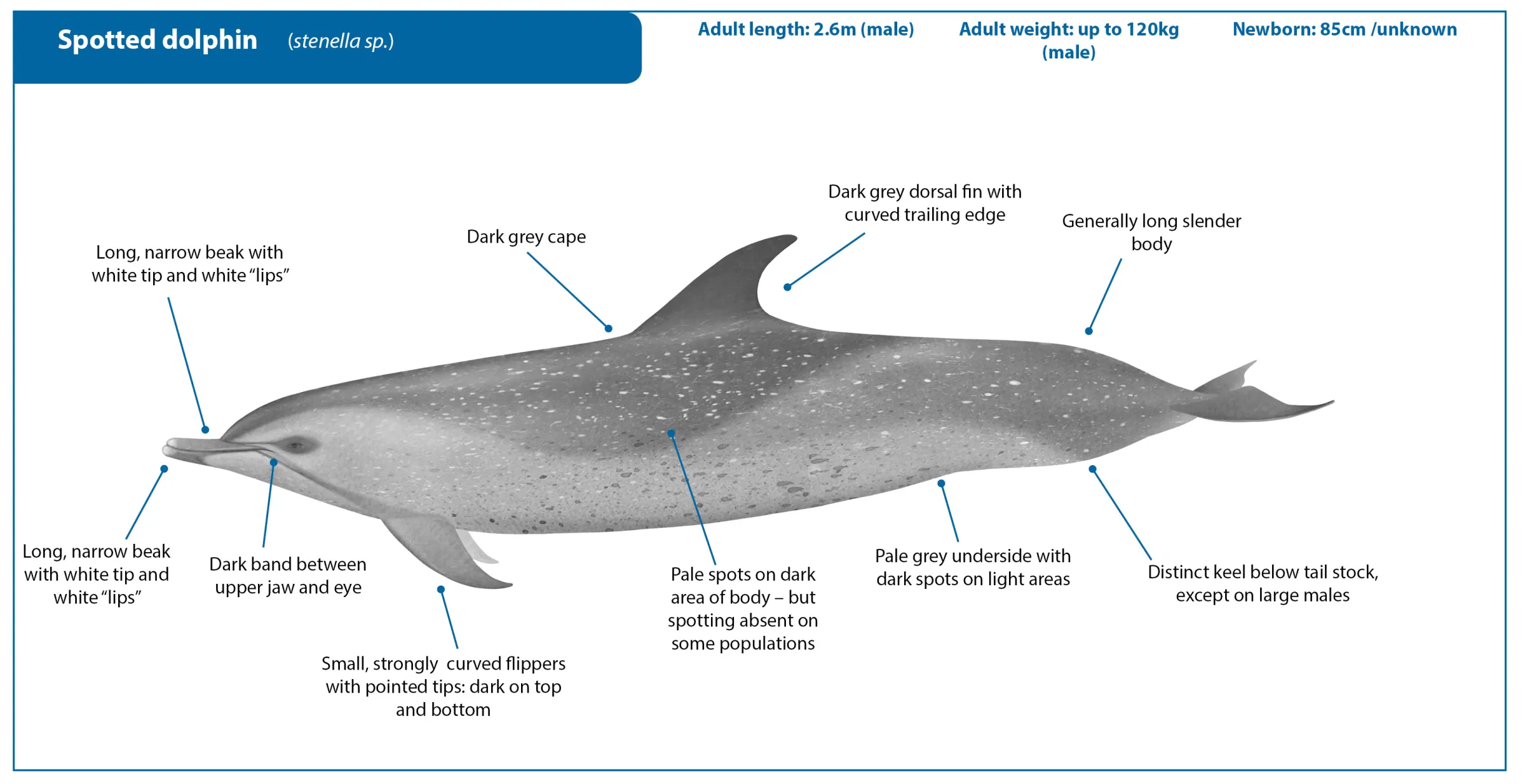
Pantropical Spotted Dolphin (Stenella attenuata): A pelagic dolphin species characterized by a white-tipped beak and a dark dorsal cape; calves are born solid gray without spots, gradually accumulating overlapping spotted patterns as they mature into adulthood. Threats are purse-seine fishery and being hunted for food in Asia and parts of the Pacific.

Short-beaked Common Dolphin (Delphinus delphis): A fast-swimming oceanic dolphin featuring 40–57 small sharp conical teeth per jaw, a dark gray dorsal cape that forms a 'V' beneath the dorsal fin, and a distinctive yellowish/tan hourglass pattern on its flanks. Threats are being hunted for meat and oil and bycatch.


Bottlenose Dolphin (Tursiops truncatus): A widely distributed dolphin species born with sensory hairs on its rostrum that are shed shortly after birth; exhibits distinct ecotypes where inshore populations are smaller and lighter, while offshore forms are larger, darker, and possess smaller flippers. Threats are fishing gear, exposure to pollutants, viral outbreaks and direct harvest in Taiwan and Japan.


Short-finned Pilot Whale (Globicephala macrorhynchus): The second-largest member of the dolphin family (Delphinidae), growing up to 24feet (7.3m); recognized by a bulbous melon head without a distinct beak, a far-forward dorsal fin, a polygynous mating structure, and a high susceptibility to mass strandings. Threats are bycatch, entanglement in fishing gear and ship strikes.

Arribada
A mass synchronous nesting phenomenon where thousands of solitary female sea turtles, notably Olive ridleys (Lepidochelys olivacea), congregate offshore and emerge onto their natal beaches simultaneously to lay eggs.
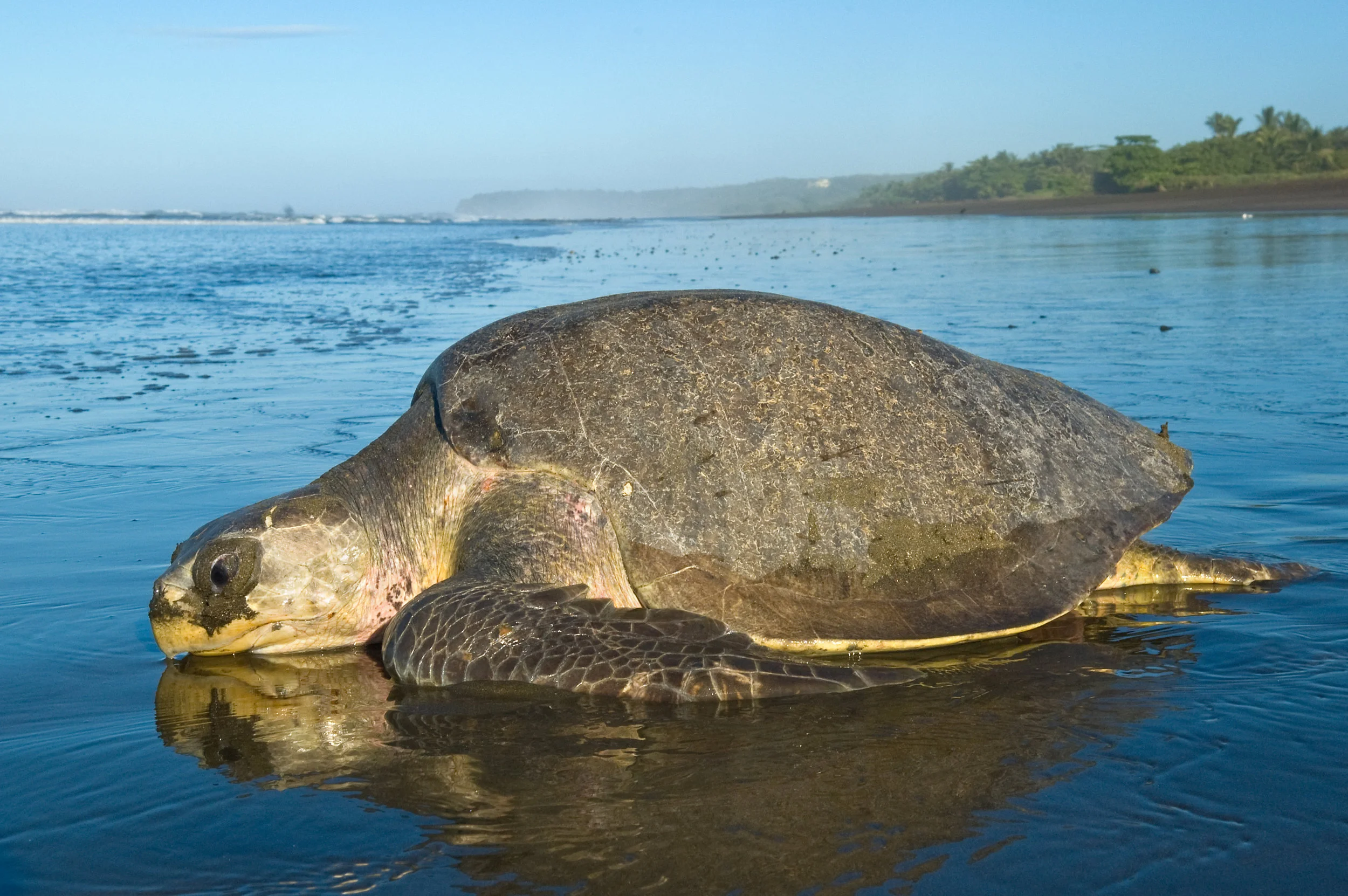
Olive Ridley Sea Turtle (Lepidochelys olivacea): One of the smallest marine turtles in the world, growing to 2feet (65cm) and 11lbs (45kg); characterized by a nearly circular dark gray carapace with 6 or more costal scutes and more than 2 pair of prefrontal scales. Eats jellyfish, snails, crabs, shrimp, algae and seaweed. Threats: eggs taken, nesting females slaughtered for their meat and skin, fishing nets.

Green Turtle (Chelonia mydas)
A large coastal sea turtle named for the green color of its body fat and skin rather than its brown/olive shell; adults are primarily herbivorous, have 4 costal scutes and 1 pair of prefrontal scales, and are among the few marine turtles that haul out onto land to sunbathe.
Hawksbill Turtle (Eretmochelys imbricata)
A critically endangered reef-dwelling turtle characterized by a narrow, sharp bird-like beak, 2 pairs of prefrontal scales, and 4 pairs of overlapping (imbricated) costal scutes; primarily preys upon sponges in coastal waters.
Leatherback Turtle (Dermochelys coriacea)
The largest living sea turtle, reaching up to 7feet (2m) and 2,000pounds (900kg); lacks a bony shell and scales, possessing instead a rubbery, inky-blue carapace with longitudinal ridges, and feeds almost exclusively on jellyfish.
Sea Turtle Scute and Scale Identification Key
A diagnostic morphological reference distinguishing sea turtle species: Olive ridley (6+ lateral scutes, >1 prefrontal pair), Green turtle (4 lateral scutes, 1 prefrontal pair), Hawksbill (4 imbricated lateral scutes, 2 prefrontal pairs), and Leatherback (longitudinal ridges, 0 scutes, 0 scales).

Temperature-Dependent Sex Determination (TSD)
An environmental mechanism in sea turtles where incubation temperature within the nest dictates hatchling sex; in leatherbacks, temperatures near 85.1∘F (29.5∘C) produce a balanced sex ratio, higher temperatures yield females, and lower temperatures yield males.
Yellow-bellied Sea Snake (Pelamis platura)
A fully pelagic, venomous elapid snake distributed across tropical Pacific and Indian oceans; recognized by a dark brown or black dorsum, bright yellow venter, and a flattened paddle-like tail adapted for undulating propulsion in open water.
Slicks (Pelagic Drift Lines)
Calm-water surface drift lines formed by converging ocean currents, foam, and debris where thousands of yellow-bellied sea snakes (Pelamis platura) congregate to ambush small fish that seek shelter beneath floating debris.
Knotting Behavior (Pelamis platura)
A behavior in which the yellow-bellied sea snake loops and ties its body into a sliding knot, passing it along the length of its trunk to scrape off attached algae, barnacles, and marine fouling organisms, as well as to shed skin.
Great Blue Heron (Ardea herodias)
A large wading bird measuring 3–4ft (0.9–1.22m) with a 6ft wingspan, long yellow bill, blue-gray body, and black head plumes; colonial nester that typically tucks its neck into an S-shape during flight and rest.
Siblicide
A competitive behavior observed in heron and egret nestlings (such as the great egret), in which older and larger chicks aggressively kill their smaller nest-mates, often aggravated by poor food availability.
Great Egret (Casmerodius albus)
A tall, all-white wading bird with black legs, black feet, and a yellow bill; hunted close to extinction in the 19th century for its delicate breeding plumes, its plight sparked early bird conservation laws and made it the symbol of the National Audubon Society.
Snowy Egret (Egretta thula)
A small white egret with a black bill, black legs, and bright yellow feet ('golden slippers'); during peak breeding season, its facial skin turns reddish and its feet blush an intense orange-yellow hue.
Yellow-crowned Night-Heron (Nyctanassa violacea)
A nocturnal and crepuscular wetland heron featuring a gray body, black-and-white face pattern, stout bill, and pale yellowish crown stripe; feeds heavily on crustaceans and preys on emerging sea turtle hatchlings.
Tricolored Heron (Egretta tricolor)
A slender coastal heron that pursues aquatic prey in deeper water by running with its head held low; its yellow winter bill and legs change dramatically to bright blue and pink during breeding season.
Green Heron (Butorides virescens)
A compact coastal and wetland heron with a velvet-green back, rich chestnut neck and breast, and short orange-yellow legs; known to wander long distances outside its breeding territory following the nesting season.
Magnificent Frigatebird (Fregata magnificens)
A soaring oceanic seabird with an 88.2in (224cm) wingspan that rarely alights on water; females care for chicks for over a year while males abandon the nest after the chick is half-grown to molt and breed annually.
Gular Sac (Magnificent Frigatebird)
An expandable, featherless red throat pouch possessed by male magnificent frigatebirds, which is inflated like a scarlet balloon during courtship to attract flying females while clattering bills and vibrating wings.

Kleptoparasitism
A feeding strategy exhibited by magnificent frigatebirds where they chase other foraging birds in flight, harassing them until they regurgitate caught fish, which the frigatebird snatches before it hits the sea surface.
Brown Pelican (Pelecanus occidentalis)
A coastal seabird that plunge-dives into schools of fish from the air; during the plunge, it rotates its body to the left and tucks its head to cushion its vulnerable trachea and esophagus situated on the right side of its neck.
Foot-Incubation
A specialized nesting behavior in brown pelicans (Pelecanus occidentalis) where parents stand over and incubate their eggs using the warm, vascularized skin of their webbed feet instead of a conventional brood patch.
Spinetail Devil Ray (Mobula mobular)
A large pelagic filter-feeding ray with a slate-blue dorsal surface, bright white underside, an elongated dorsal fin with a white tip, and a black crescent headband running shoulder to shoulder; renowned for leaping out of the water.
Giant Oceanic Manta Ray (Mobula birostris)
The largest ray species in the world, reaching wingspans up to 8.8m (29feet) and weights up to 2,405kg (5,300pounds); filter feeds on plankton and possesses the largest brain of any fish species studied to date.
Cephalic Lobes (Manta Ray)
Two flexible forward-projecting flaps flanking the mouth of manta rays that unroll during feeding to funnel plankton-rich seawater directly into the terminal mouth, representing the third set of paired appendages.

Pacific Longtail Stingray (Dasyatis longa)
A bottom-dwelling stingray reaching up to 2.57m and 46.4kg; inhabits sandy and muddy substrates, mangrove lagoons, and estuaries down to 90m (300ft), preying on benthic fish and crustaceans.
Shovelnose Guitarfish (Rhinobatos productus)
A primitive benthic batoid measuring up to 1.5m (21kg) that bridges rays and sharks; characterized by a flattened, sharply pointed triangular snout, sandy coloration, and two distinct dorsal fins on an elongated tail.
Panamic Green Moray (Gymnothorax castaneus)
A large tropical reef eel growing up to 2m with an unmarked green to brown body; continually pumps its mouth open and shut while resting in rocky crevices to facilitate gill water flow for respiration.
Tiger Snake Eel (Myrichthys tigrinus)
A fossorial ophichthid eel measuring up to 0.5m that inhabits sandy flats and boulder rubble; distinguished by small brown spots on its snout that progressively grow larger down the length of its body.
Jewel Moray (Muraena lentiginosa)
A nocturnal moray eel reaching 1m in length that hides in rocky holes and reefs, easily identified by prominent tubular nostrils and a yellowish-tan body marked with dark rosettes.
Starry Moray (Echidna nebulosa)
A reef-dwelling moray eel reaching 1m in length, characterized by a white body overlaid with star- or snowflake-like black reticulated blotches and bright yellow-gold eyes.
Zebra Moray (Gymnomuraena zebra)
A distinct, blunt-headed moray eel reaching 1m in length, marked with tight alternating vertical stripes of black/dark brown and white; equipped with flattened, molar-like teeth to crush crabs and mollusks.
White-Tip Reef Shark (Triaenodon obesus)
A slender carcharhinid reef shark reaching up to 2.1m and 18.3kg, named for the distinct white tips on its dorsal and upper caudal fins; capable of resting motionless on the sea floor.
Nurse Shark (Ginglymostoma unami)
A sluggish, bottom-dwelling shark reaching 4.3m and 110kg; distinguished by a broad rounded head, minute eyes, and two fleshy sensory barbels flanking its mouth used to forage for benthic prey.
Red Mangrove (Rhizophora mangle)
The most seaward mangrove species in Costa Rica, directly facing ocean surf; characterized by extensive stilt-like prop roots branching from the trunk and viviparous seedlings that germinate into 6-inch propagules before dropping.
Prop Roots (Red Mangrove)
Curving, stilt-like adventitious roots growing downward from the trunk and branches of Rhizophora mangle that anchor the tree in shifting marine mud, buffer shorelines from storm surge, and create sheltered marine nurseries.

Black Mangrove (Avicennia germinans)
An intertidal mangrove growing behind red mangroves; lacks prop roots, actively excretes absorbed salt crystals from the surface of its leaves, and produces thousands of erect breathing roots called pneumatophores.
Pneumatophores
Specialized, pencil-shaped vertical root projections developed by black mangroves (Avicennia germinans) that extend above waterlogged, anoxic coastal mud to breathe and transport oxygen to root tissues.

White Mangrove (Laguncularia racemosa)
The most inland-growing mangrove tree species, occupying the highest intertidal ground; typically possesses no visible aerial root structures, developing small peg roots only when subjected to severe, prolonged oxygen depletion.
Brown Sea Cucumber (Isostichopus fuscus)
A benthic deposit-feeding holothurian that sifts through bottom sediment and decaying organic detritus with oral feeding tentacles; severely depleted across the Eastern Tropical Pacific due to overharvesting for international trade.
IUCN Red List of Threatened Species
A global conservation assessment system founded on standardized objective criteria introduced in 1994 to classify species extinction risks into defined tiers ranging from Least Concern (LC) to Extinct (EX).