Learning Cycle 1-2
 Call Kai
 Learn
 Practice Test
 Spaced Repetition
 Match
 Flashcards
 Knowt Play
1/52

There's no tags or description
Looks like no tags are added yet.
53 Terms
Which subatomic particle identifies the element?
Proton
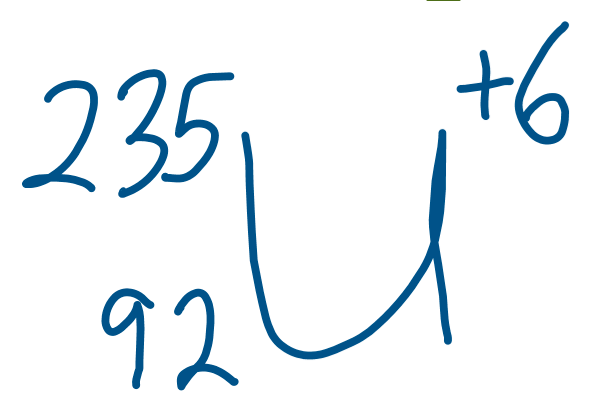
For the isotope provided, determine the number of each subatomic particle.
Protons: 92
Neutrons: 143
Electrons: 86
What did Bohr, Chadwick, Millikan, Rutherford, Schrodinger and Thomson discover?
Energy levels, neutrons, charge of electron, proton, ECM, electron

What element in the second period has the largest atomic radius?
Lithium
Which of the following factors contributes to the increase in atomic size within a group in the periodic table as the atomic number increases?
more shielding of the electrons by the highest occupied energy level

What is the element with the lowest electronegativity value?
Cesium
Which of the following factors contributes to the decrease in ionization energy within a group in the periodic table as the atomic number increases?
increase in atomic size
Which statement is true about electronegativity?
Electronegativity generally increases from left to right across a period.
Based on your knowledge of families, select all the characteristics you would expect helium to have.
Non-reactive, gas at room temperature
Metal reactivity of the alkali metals increases top to bottom.
True

What order is the periodic table written in?
Increasing atomic number
Period (7 of these in total)
Horizontal row
Group (18 groups in total)
Vertical column

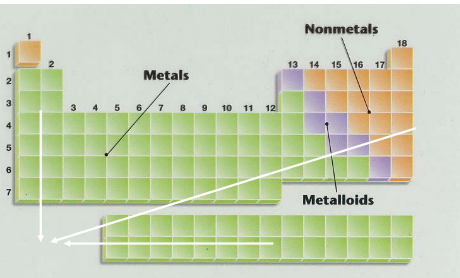
Metals
Largest number of elements and found on left side of the table. Lustrous, ductile, malleable, good conductors of heat and electricity, solid state at room temperature (except Hg).
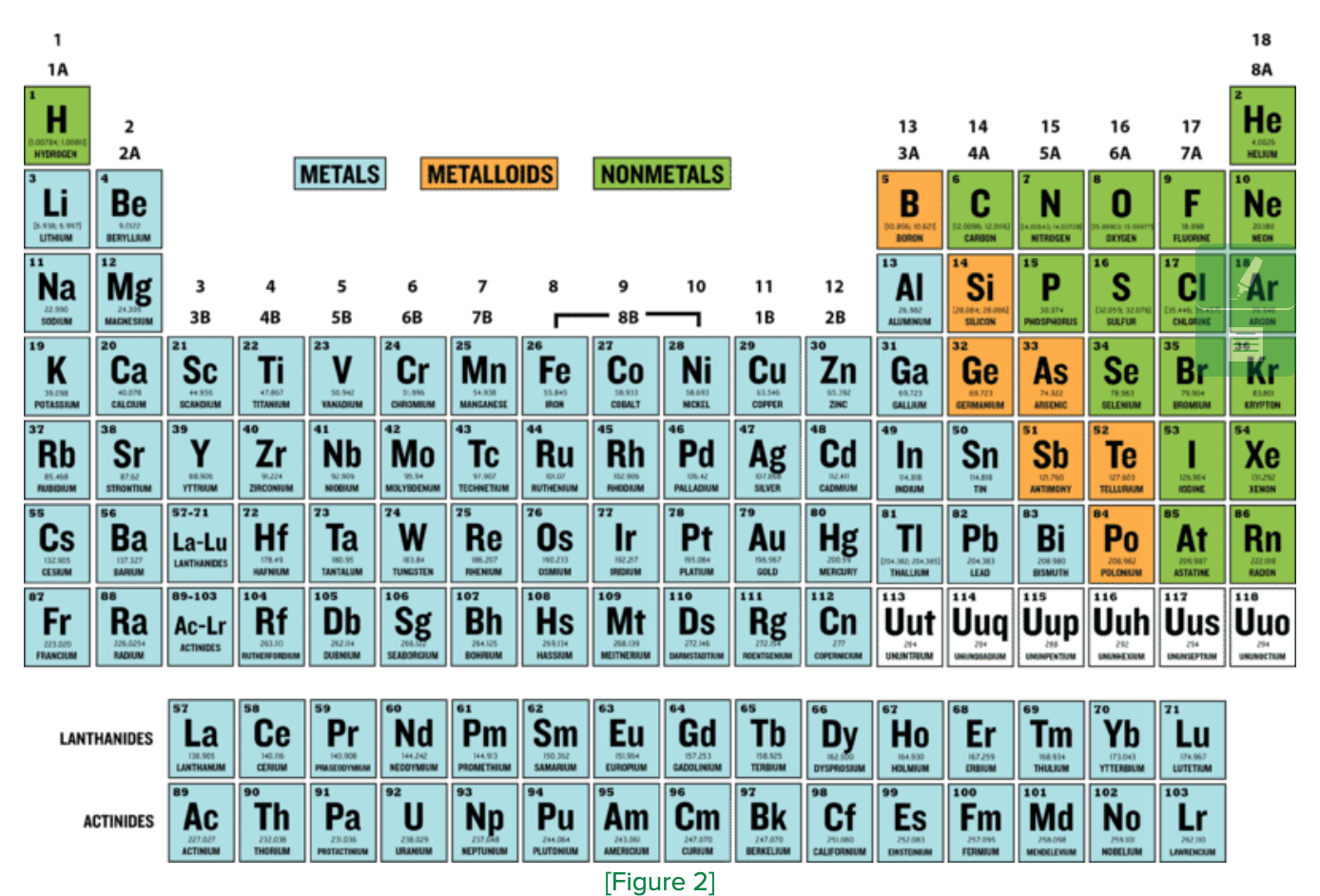
Nonmetals
Right side of periodic table. Small number of elements in gaseous state. No metallic luster, poor conductors of heat and electricity.

Metalloids
Other type of elements on the periodic table, found along the “staircase”. Have characteristics that resemble metals and nonmetals. Elements to the upper right of line display increasing nonmetallic behavior, elements to lower left display increasing metallic behavior

Alkali metals
Alkali metals are located in group 1 of the periodic table (leftmost column). All alkali metals have +1 charge because they have exactly one valence electron in their outmost shell. Softness, metallic, lusterous, low density, highly reactive

Alkaline earth metals
Alkaline earth metals are located in group 2, possess a common charge of +2, and are known for being highly reactive, shiny, and soft
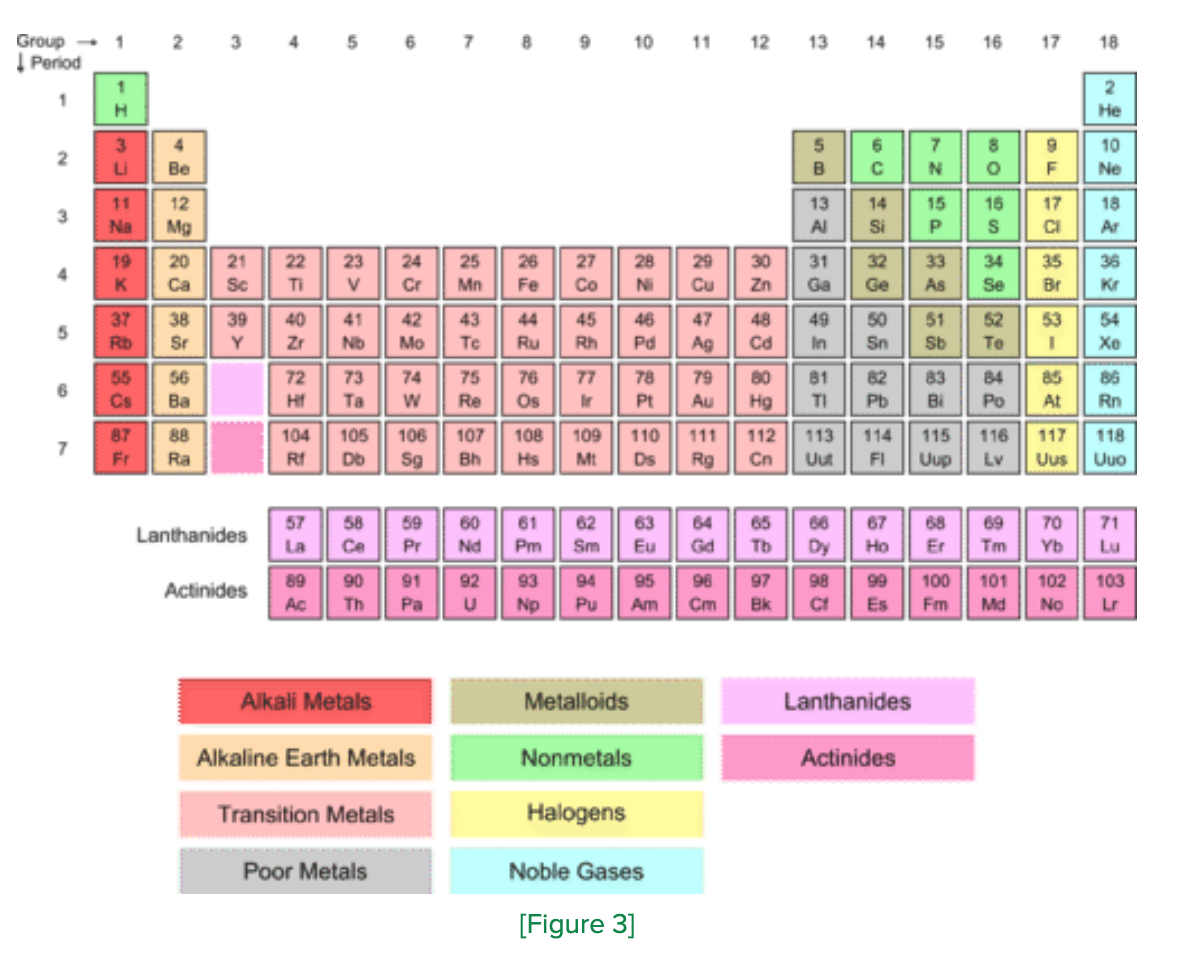
Transition metals
Transition metals are located in groups 3-12 and have a variety of charges, but +2 is the most common charge. Known for being hard, dense, high melting/boiling point, good conductors of heat, highly malleable and ductile

Halogens
Halogens are located in group 17 with the common charge of -1. They are highly reactive non-metals with a variety of states of matter at room temperature. As you move down, reactivity decreases, boiling points increase. Poor conductors of electricity and heat.

Noble Gases
Group 18 (along with helium). Common charge of 0 (because outer valence shell is completely filled). Colorless, odorless, tasteless, low reactivity, very low melting and boiling points. Solid, dense, lustrous, high conductivity, malleable and ductile.
Atomic Radius (MAKE ATOM LARGER)
Across a period (decrease), adding protons increases the nuclear charge and pulls electron shells closer. Down a group (increase), new electron energy shells are added and make atom larger.

Ionization Energy (ENERGY REQUIRED TO REMOVE ELECTRON FROM GASEOUS ATOM)
Across a period (increase), electrons are held more tightly by higher nuclear charge. Down a group (decrease), outer electrons are farther from nucleus and shielded by inner shells.

Electronegativity (ATOMS ABILITY TO ATTRACT SHARED ELECTRONS IN A CHEMICAL BOND)
Period (increases). Down a group (decreases), greater dstance and shielding reduce nucleus’s pull on outside electrons.

Valence electrons
Each group has same number of valence electrons.
Octet Rule
Atoms are most stable with eight electrons in valence shell, atoms will try to gain or lose electrons depending on their amount of valence electrons
Democritus (and Aristotle)
Democritus created the Universal Theory of the Atom. He believed that atoms were solid, uniform, indestructible, and moved in infinite numbers through all space. Aristotle rejected the ideas of Democritus and believed matter is composed of four fundamental elements.
Dalton
Daltonism. Atoms are billiard balls that are indestructible and invisible and there was no possible way to separate them. Combining the different atoms would create different elements which was partially true.
Thomson
Plum Pudding Model. The atom is a spherical mass with continuous positive charge. Negatively charged electrons are stuck inside this positive sphere. The total amount of positive charge is exactly equal to the negative charge, making the atom neutral. First recognized the electron and disproved Dalton
Millikan
The Oil Drop Experiment, figured out how to measure the electric charge of a single electron and disproved Thomson
Rutherford
The Gold Foil Experiment, most of the atom is empty space surrounding a tiny nucleus. Rutherford created a nucleus full of protons and neutrons and electronic "circles” around said nucleus and disproved THomson’s popular model
Bohr
The Bohr Model, showed that electrons orbit the nucleus and jump betweens paths of levels to absorb light, don't lose any energy. Improved Rutherford’s original structure.
Chadwick
Chadwick's Experiment. Bombarded Beryllium, realized the energy came from particles of nearly equal mass to protons, discovered neutrons
Schrodinger
The Electron-Cloud Model (ECM). Erwin Schrodinger proposed a model to visually represent atoms like previous methods, by showing that electrons exist in cloud-like regions of probability, instead of orbitals.
Isotope
2 or more atoms of the same element that have different amounts of neutrons
Ion
2 or more atoms of the same element that have different amounts of electrons

What is A, Z, X, and Y?
A - Mass number
Z - Atomic number
X - Element symbol
Y - Charge

Correct symbol for X?
Ag

Neutrons? (Hint: subtract)
61
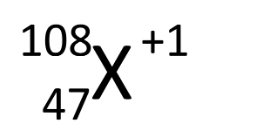
Electrons? (Hint: Subtract)
46
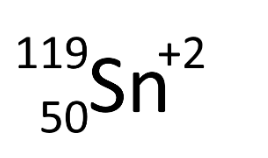
This isotope has how many protons, neutrons, and electrons?
Protons: 50
Neutrons: 69
Electrons: 48

Element symbol for X?
Br
True or False: The atom is completely solid.
False
What is the electrical charge of electrons, and what do they dictate in an atom?
They are negatively charged and dictate chemical properties.
Why is the statement that neutrons have a charge of +1 incorrect?
Neutrons are neutral and do not carry a charge of +1. They are located in the nucleus, have a mass of 1amu, and hold the nucleus together.
What are three true statements regarding protons?
They are located in the nucleus, they have a mass of 1amu, and the number of protons gives the atom its identity.
How is mass distributed between the nucleus and the electron cloud of an atom?
The nucleus contains almost all of the mass, while the electron cloud contains almost no mass.
What are the respective charges of the nucleus and the electron cloud?
The nucleus is positively charged, while the electron cloud is negatively charged.
How do the electron cloud and the nucleus compare in terms of density and space?
The electron cloud is almost completely empty space, while the nucleus is extremely dense.
What is the atomic number of an element with 5 protons, 3 neutrons, and 4 electrons?
5
What is the mass number of an element with 5 protons, 3 neutrons, and 4 electrons?
8
What is the atomic number of an oxygen atom with 8 neutrons?
8
What is the mass number of an oxygen atom that has 8 neutrons and an atomic number of 8?
16