General Security Concepts
 Call Kai
 Learn
 Practice Test
 Spaced Repetition
 Match
 Flashcards
 Knowt Play
1/19

There's no tags or description
Looks like no tags are added yet.
20 Terms
Asset
People who work for the company, servers and software, networking equiptment, and most importantly databases.
Threats
Natural disasters, fires, organizations with malicious intent.
Threat Agents
A malicious person conducting an attack.
Vulnerability
Things vulnerable to the company network; example, ill trained employees, bad physical security.
Exploit
Something that takes advantage of a vulnerability.
Confidentiality
Keeping company information safe and secure; example, encrypting data.
Integrity
Unaltered or non-manipulation of data.
Availability
Being able to access data at any given time.
Non-repudiation
Cannot deny information; example, using time stamps that prove what was or was not done.

Govern (1)
Organizational policy, strategy, and expectations are established, communicated, and monitored through the entire process. Provides outcomes to measure and prioritizes the other 5 fucntion areas.

Identify (2)
Develops security policies and capabilities. Evaluates risks, threats, and vulnerabilities and recommends security controls to mitigate them.
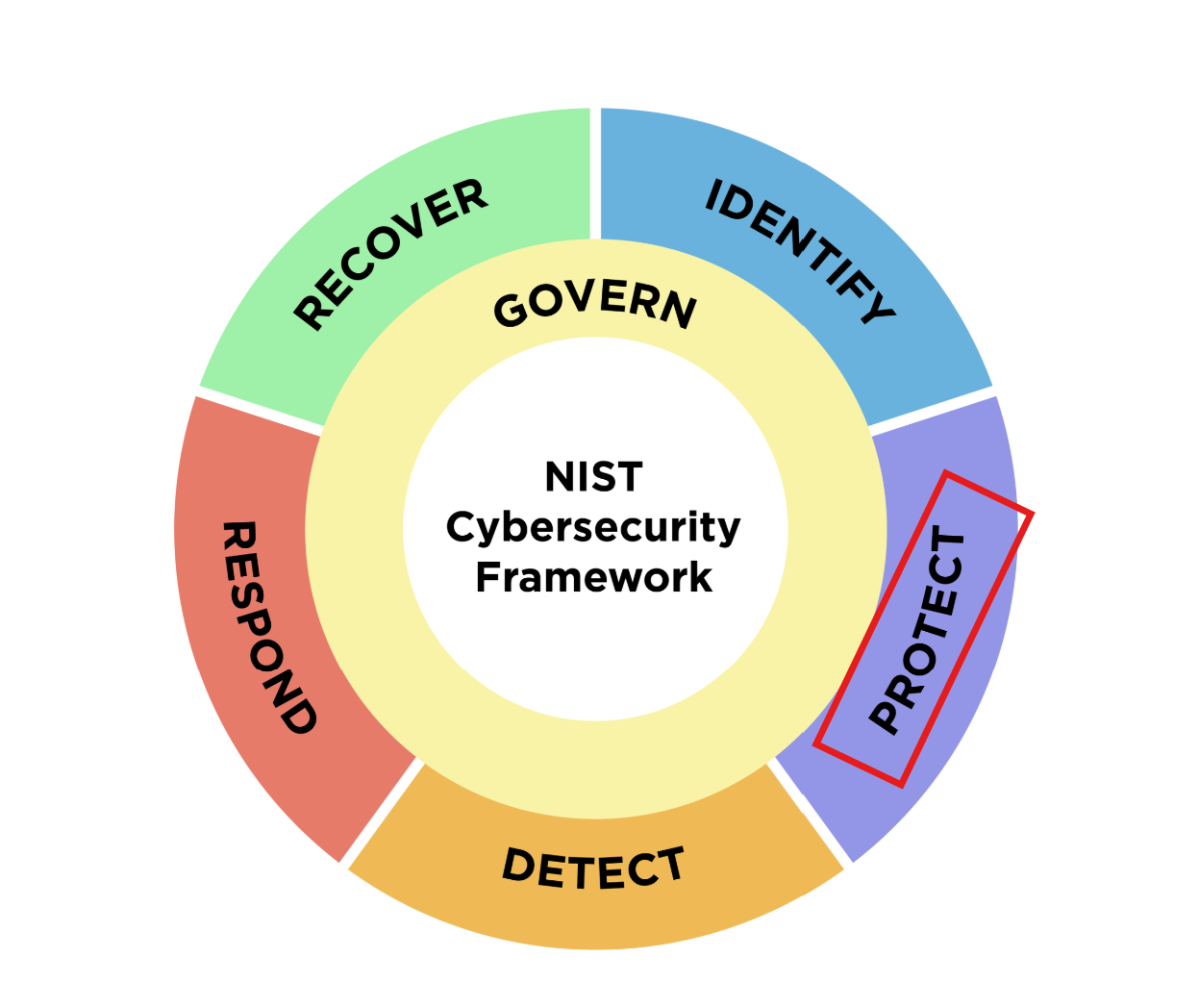
Protect (3)
Procure/develop, install, operate, and decommission IT software and hardware assets with security as an embedded requirement of every stage of this operations lifecycle.

Detect (4)
Perform on-going, proactive monitoring to ensure that controls are effective and capable of protecting against new types of threats.
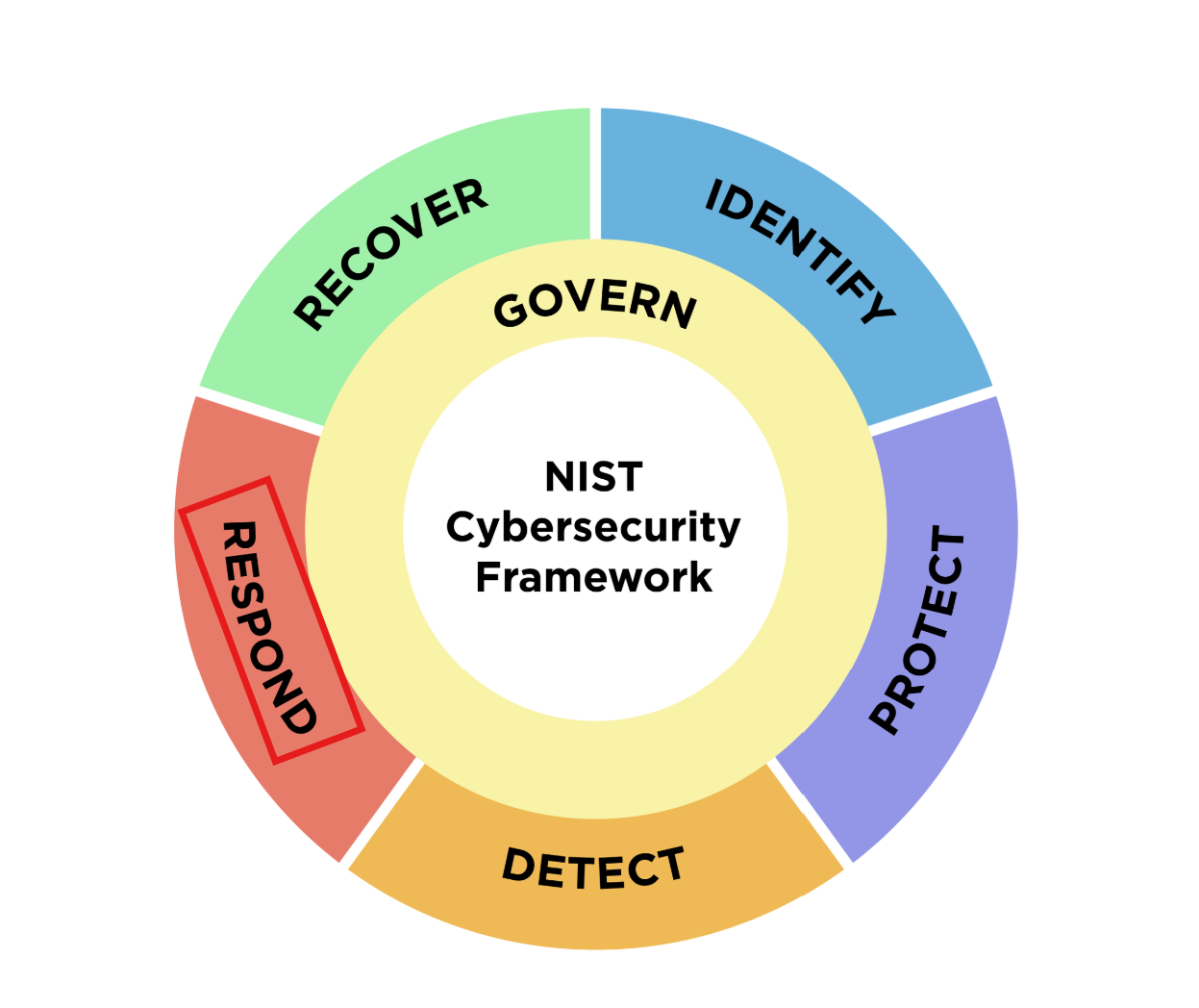
Respond (5)
Identify, analyze, contain, and eradicate threats to systems and data security.

Recover (6)
Implement cybersecurity resilience to restore systems and data if other controls are unable to prevent attacks.
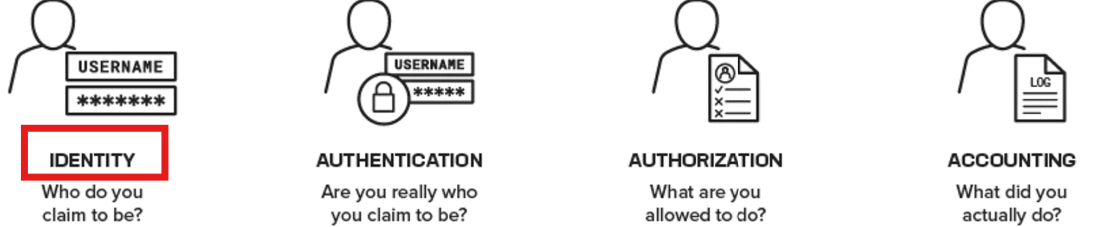
Identification (1)
The system owner confirms the users identity and creates an account to represent the user.

Authentication (2)
The user authenticates by entering the credential and compares it to the hashed credential.

Authorization (3)
For each action the account performs, a permission list is checked to allow or deny the action.
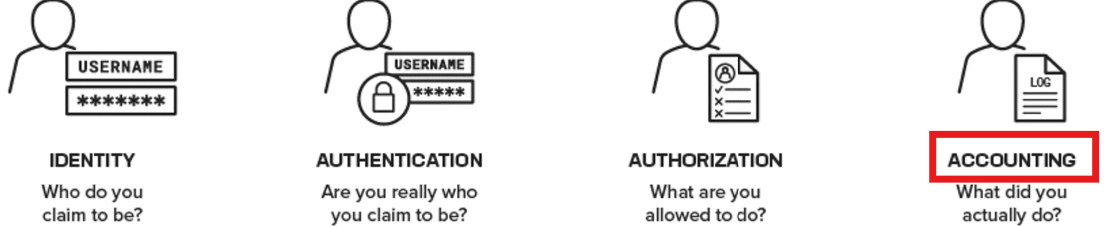
Accounting (4)
The system tracks permission usage in a log. The user cannot prevent this auditing.
Secure Information has 3 properties, often referred to as the CIA triad or AIC:
1) Confidentiality 2) Integrity 3) Availability