AH Final
 Call Kai
 Learn
 Practice Test
 Spaced Repetition
 Match
 Flashcards
 Knowt Play
1/60

There's no tags or description
Looks like no tags are added yet.
61 Terms
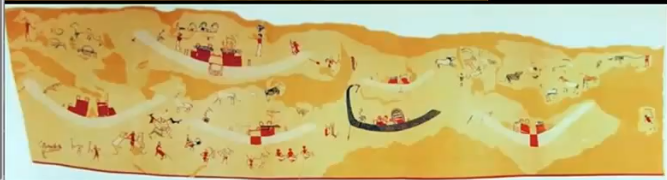
Mural from Tomb 100, Predynastic, Hierakompolis
before inherited kingship, but people in positions of leadership
war/invasion scene? guy who owned the Tomb probably leader during this battle

Palette of Narmer, Predynastic/Dynasty 0, Hierokompolis
Narmer: first “ruler” or ruling elite, not a dynastic kingship
found after scholars named Dynasty 1, debated if Narmer was a dynastic king
ceremonial version of a cosmetic palette, shield shape, indicates protection and war
catfish + chisel + serekh = king name, standards: large military flags, seropopards: snake leopard, chaos
conquering of foreigners by smiting and trampling, Narmer wearing lower and upper crown (first to conquer lower Egypt?)
types of king crowns
upper crown: white, bowling pin shaped. represents upper Egypt
lower crown: spiraly with stick in back, represents lower Egypt
double crown: combined

Seated Statue of King Khasekhemwy
Djoser’s father, guy who used Horus and Set name
upper crown, set robe: encasing garment later associated with jubilee (celebration of long reign, 30 years), Khasekhemwy only ruled 18 years, maybe longest to that point?
shortbacked throne, indicator of status. the throne has upside down name inscription for his Ka to read, along with dead people in the delta, indicating territorial expansion

Serdab Statue of King Djoser (Netjerikhet)
serdab: opening (in pyramid) where statue could look out/ for offerings
false beard: tied around ears, loced hair, preserved for wearing
wearing nemes headress, one of earliest examples, instead of a crown
meant to cover hair and direct attention to the face

Relief of King Netjerikhet
ceremonial tradition of kings running between B-shaped stones in courtyard (signifying monitoring/taking charge of their territory, B stone represents the boundaries of Egypt)
holding a flail: used to herd cattle or sheep, control aspect
idealized body of the king, never rendered aged

Lion Hunt Stele, Sumerian Late Uruk
direct contact with wild, conquering the chaos
military actions associated with kingship
first indication of political powers taking credit for keeping the wild out

Patronage Plaque of Ur Nanshe, Early Dyn III, Iraq
continuous narrative, shows Ur Nanshe with a basket of clay above his head, moving it to where it would be processed into bricks for his commissioned ziggurat
propaganda, he would not actually be involved in the making process

Meskalamdug’s Helmet, Sumerian, Ur
may have been placed onto head of deceased or just put in tomb
hair, braid with man-bun with “edges”, significant hairstyle in the north (Akkadia) ?

Head of Akkadian Ruler, Akkadian, Nineveh
similar hairstyle of Meskalamdug’s helmet
indicates Meska. may have been from the north (akkadia) and brought his hairstyle to the south (sumeria)

Queen Puabi’s & Attendant’s adornments, Sumerian, Ur
most stuff references Inanna, and the wire pendant (proposed by Miller) brings in her consort, Dummuzi
successful flock, abundance
hoops/rings= cycles
Puabi taking on the role of Inanna or priestess of Inanna. her attendants as well, maybe meaning Puabi has the power to imbue others with Inanna’s presence

Mortuary Statues of Rahotep & Nofret
from a mastaba, Ka statues
high-backed thrones (rare in Egypt)
idealized skin tones
eyes made of rock crystal, transparent stone inlaid with lapis for iris
accentuates realism, individualism
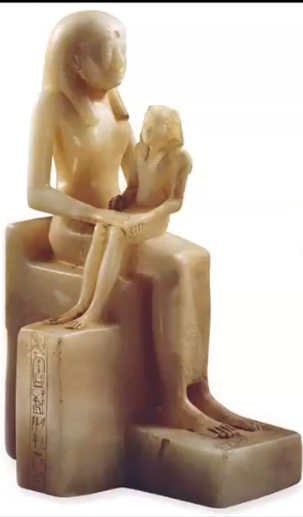
Statue of Queen Ankhnesmerye II & King Pepy II
very young king, his mother is his regent: family member that acts in his stead
pepy has the nemes headress, indicating that he is king, an adult role shown in a child
she is guiding him, but he has the ultiamte authority once he becomes of age
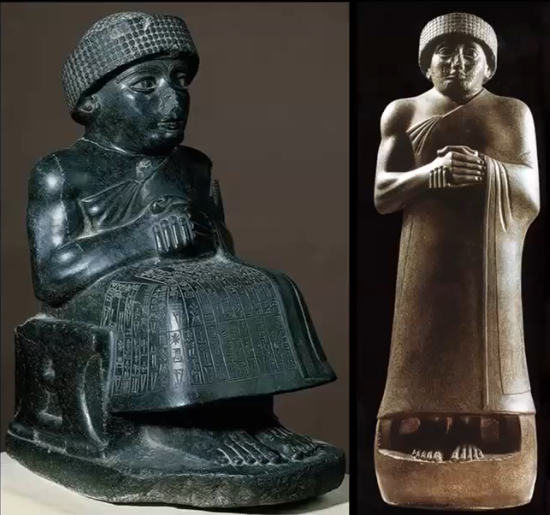
Images of Gudea & Contemporaries, Neo-Sumerian
very plain garments with a woolen cap, portraying himself as a shepherd
communicates ‘humility’, caring for ‘flock’— propaganda
piety pose

Portraits of King Mentuhotep II
holding flail and crook
debated that he is depicted as Osiris, hence the black skin, since scholars refuse to believe a Nubian was king

Portraits of Senworset III
individualized features, larger ears and long arms, along with rendered age
body is still idealized
may be due to inbreeding

Pectoral of Princess Mereret
pendant worn on chest
daughter of Senworset III
imagery associated with royal rather than representation of her, a worn-billboard for her father
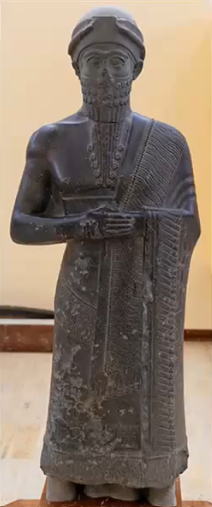
Puzur Ishtar of Mari, Persia
Ishtar: Babylonian version of Inanna
Sakkanakku: military leader/ruler, “prince” in the sense of lesser than a king, Puzur was this
lugal: Sumerian word for king Puzur was NOT this
woolen cap with horns, merged humble shepherd with god-like king. aspiring beyond his status? assimilation of all kinds of leadership?

Portraits of King Hatshepsut
Hatshepsut was regent for Thutmose III who was 2 when inherited kingship. She then takes over kingship from Thutmose
depicts herself male, as an idealized king
iconoclasm had images of Hatshepsut destroyed, since she was labeled “deviant” OR because Thutmose took throne after her and destroyed her image to establish his own authority

Images of Queen Tiye
wife of Amenhotep III
older Tiye rather than “prime”
darker skin tone rather than pale, headress with sun disc, Hathor horns, ostrich feathers (imagery of Hathor + Isis) to represent fertility
“make an hier”, role of Queen
individualism of features, heart shaped face, elongated features

Colossol Portraits of Pharoh Akhenaten
changed his name from Amenhotep IV to Akhenaten (to follow the religion of Aten, which he was trying to promote)
first to take on name “Pharoh”, which means divine king. first to call himself divine, rather than association
Amarna style, distinct from traditional style with exagarrated features and also more feminine with a rounder belly and wide hips to indicate fertility, so divine he is beyond gender
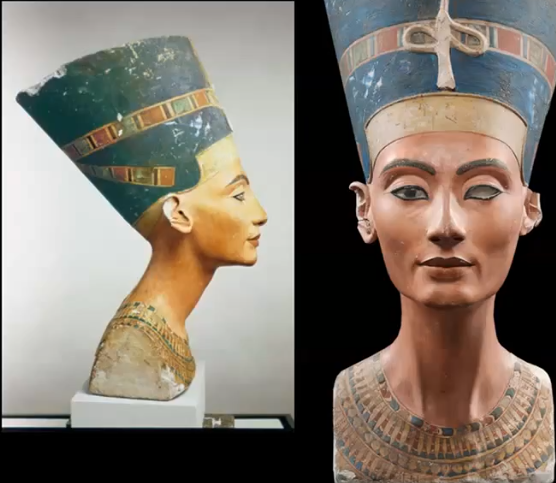
Bust of Nefertiti
amerna style
Akhenaten’s wife
modernish beauty '
in later depictions, it became indistinguishable who was the king and who was the queen due to the style and androgony

Relief of Pharoh Akhenaten & family
special Amarna relgion, Aten: literal solar disk, monotheistic religion. has no human form, sun disc that gives life to the royal family
the different style reflects how the family is set apart from others due to Aten
Nefertiti may have taken on co-leadership at the end of Akhenaten’s reign, elevation of woman’s role because of how similarly they were depicted

House altar stone showing Akhenaten, Nefertiti, and 3 daughters
indication of domestic furniture
very rare show of domestic intimacy/playfulness between royals and their children
non royal people worshipping the royal family as an extension of Aten
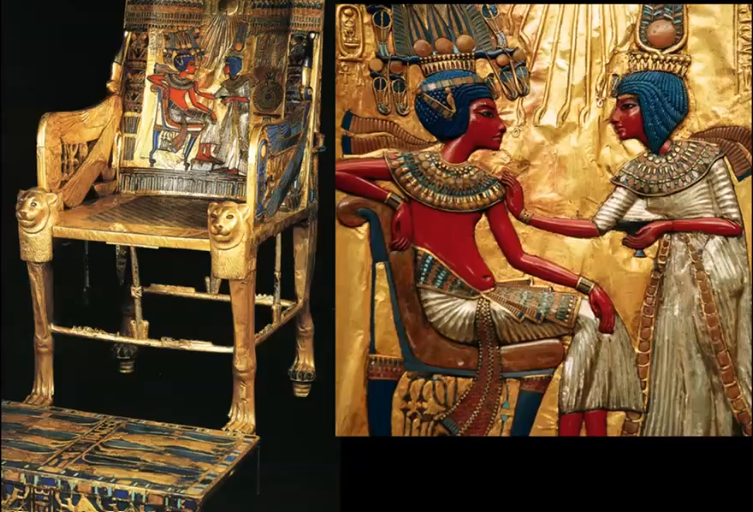
Chair of Pharoh Tutankhamun
would have been from the palace—domestic object
transition from aten and amarna was not immediate, but did eventually happen
Tutankhamun had depictions of him walking on a cane and sitting different in his chair, aided by his wife(sister), probably had a club foot due to inbreeding
question of disability accomodation (special chair)
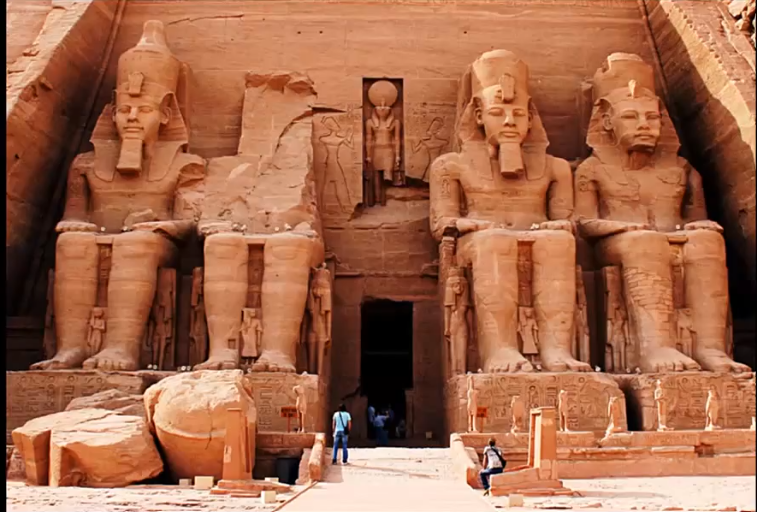
Colossol Images of Pharoh Ramesses II
rock cut temple with each column statue identical, representing ramesses
traditional Egyptian style rather than Amarna
very small statues along with him, his wife and family, not as important, the royal family is now not deemed important

Images of Pharoh Shabaka
during Kushite rule over Egypt
Kushite assimilation to Egyptian traditions and representations of the Pharaohs

Statues of Napatan Pharaohs
Napatan takes over all Nubia
still assimilation in symbols like the stiff posture and double crowns, except there are also rams horns on the hat
Nubians are focused on Amun represented by a ram, which is not the traditional representation in Egypt
very tight gold caps over a bald head rather than upper or lower egypt hats, draw attention to face through the light
would have been black Pharaohs

Portraits of Ashurnasirpal II (left) & Sargon II (right)
would have been made in Assyria and brought over to Egypt (when the assyrians took it over) to exemplify what an assyrian king should look like
features indicate different ethnicity, pointing gesture used in assyrian imagery that would be exotic to egyptian viewers

Portraits of Cleopatra VII, Greco-Roman
Cleopatra VII, macedonian greek (Ptolemy relative), inherited name Cleopatra for egypt reign
she is depicted different between different regions, concept of adaptability to cultures in order to carry tradition or keep up a similar image
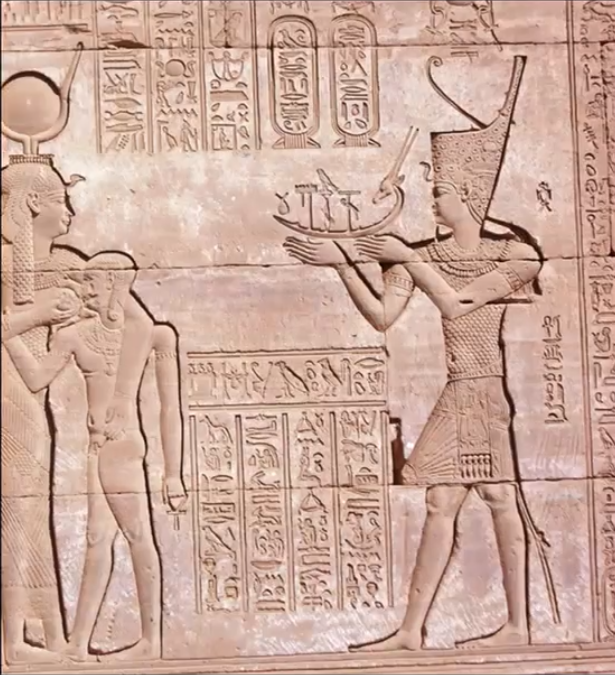
Dendera Mammisi Relief of Trajan, Greco-Roman
Cleopatra was the last greek to rule Egypt before the Romans take over, Trajan one of them
depicted roman in roman art, and at Dendera hes very traditional egyptian portrait
offering boat and standards to Hathor, did not actually worship Hathor, but was expected to by the egyptian people
adaptability in leadership
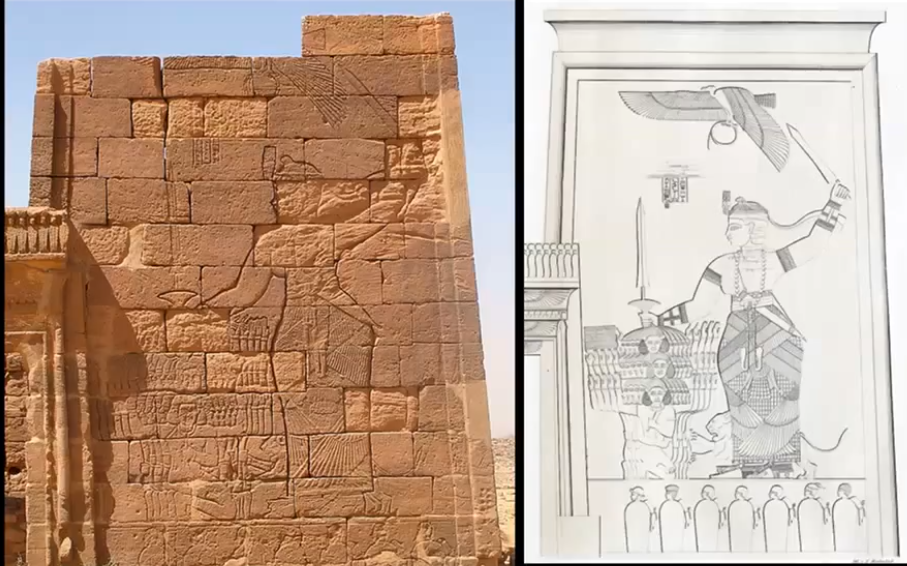
Portrait of Amanitore, Meroe
Kamaake (candance): queens of merore that were military leaders with fetility imagery attached
larger body type, emphasizing large hips and breasts to show fertility

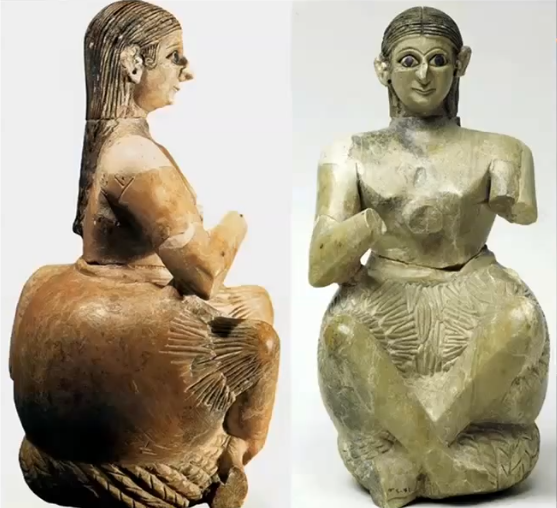
Figurines from the Temple of Abu & Eshnunna
found in a cache, likely buried when temple was abandoned
votive figurines for a wealthy person to worship the gods while they’re away as a “stand in"

Panels from High Official Hesy-Ra’s Tomb
11 panels, 6 survive, 2 shown
holding ink bag and measuring rod= scribal tools
first is a younger Hesy-Ra, noted with less titles, the second is him later in life with many titles and status from them
prioritizes scribal imagery, most important to his life

Statue of Ebih-Il, syria
inscription on the back reveals name and title “superintendant” of mari, highest rank of official other than a royal
dedicated to a temple of Ishtar (Inanna)
higher, more detailed version of the votive figurines in Abu
Ornina Urnanshe
Ornina= chief singer for courtly events, hgih status musician
playing a lyre
gender ambiguity/fluidity with male clothes, hair, and name but with breasts. trans? intersex?
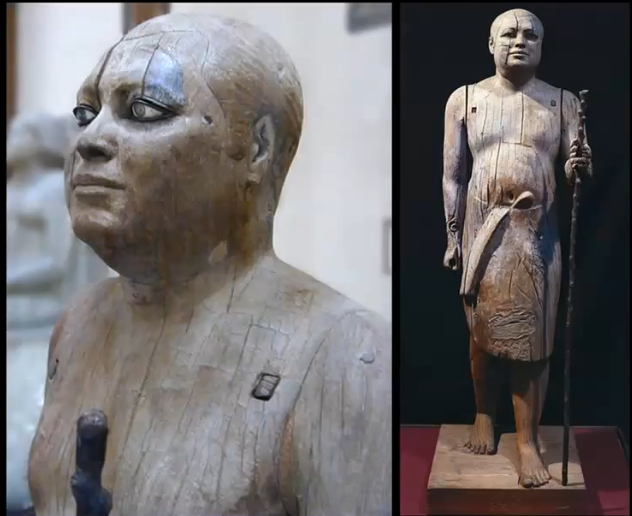
Ka-Aber
lower official, titles: lector priest, army scribe of the king
non-idealized, realistic body
mendicant= traveling priest, would go to homes, cities, and sick people to bless them

Portraits of Wahtye & Family
titles: purified priest to the king, overseer of the divine estate, overseer of the sacred boat
4 pits in his tomb, no sarchophagi. him and his family buried in pits
55 depictions of him within the tomb
borrowing kingly status imagery

Depictions & Mummy of Maiherperi
depicted with very dark skin tone and coily hair
VERY high status, the Child of the Royal Nursery
taken in by the royal nursery, son of a vassal (people ruled under another) would have been the king of Nubia if it was independent, moved from Nubia to Egypt with access to royalty as a child
fan-bearer on the right side of the king
a guard, observing the king and protcting
depicts himself different, but still uses Egyptian ideology and burial traditions
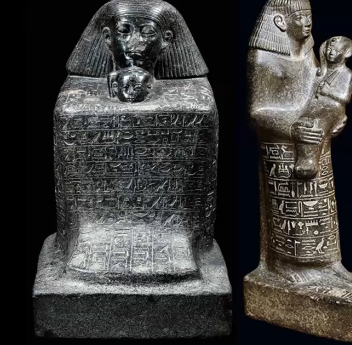
Senenmut with Neferure
Senenmut= born in one of lowest ranks in society, somehow took on roles of tutor of the royal daughter under Hatshepsut and steward of the gods’ wife (butler), and chief architect
Nefenure= Hatshepsut’s only (known) daughter
he teaches her to read, write, about the gods, etc
theory he was a lover of Hatshepsut

Seated Scribe
oldest example to what would be a “normal middle class person”
in the moment, about to write scribe in action. about to smile, non-idealized body
would be placed in someone’s tomb, meant to represent the recording of the person’s achievement rather than placed in a real

Models from the Tomb of Chancellor Meketre
models made of wood depicting what would have bene on mural before, special Middle Kingdom thing
people in these models are the average, common workers and people
depicts: Cattle Market, Butchershop, Basketweaving/looming, Offering
shows typical male and female roles
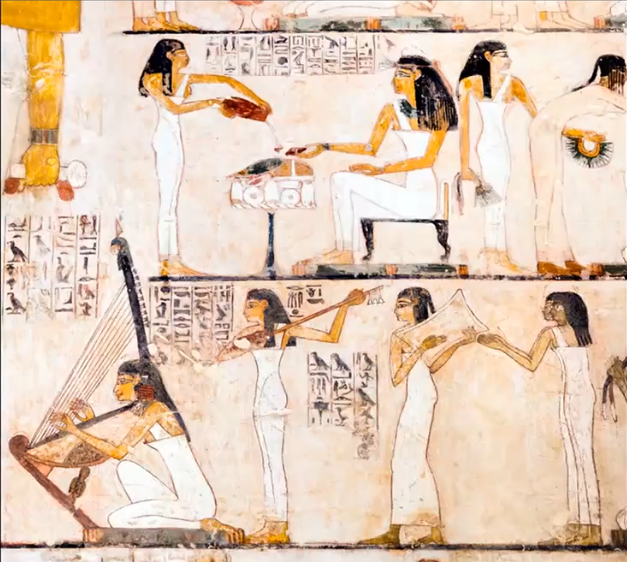
Mural of feasting & entertainment from the tomb chapel of Rekhmire
servants to a high status woman. dancers in sheer garments, musicians.
women normally played instruments
role: singer of Amun, young women would take this on
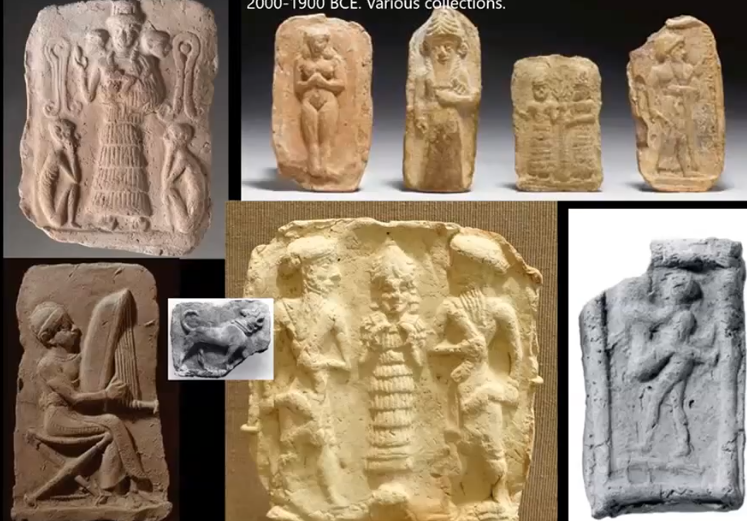
Mold-made terracotta plaques, Akkadian & Old Babylonian
mass produced and cheap, lets many people have access
varied in imagery, but majority had a frontal nude woman
porn for men, representations of themselves for women as both erotic and procreative

Tomb Plan Drawing for KV2, New kingdom
need plan to coordinate labor, be approved by the king, and measurement layouts within the valley of the kings
two perspectives going on rather than separating elevation and floor plan view to save resources
Deir el-medina
workman’s village/permanent living area for workers of Valley of the Kings, Hatshepsut’s Temple, etc.
skilled artisans from this region that apprenticed to make tombs
prosporous community
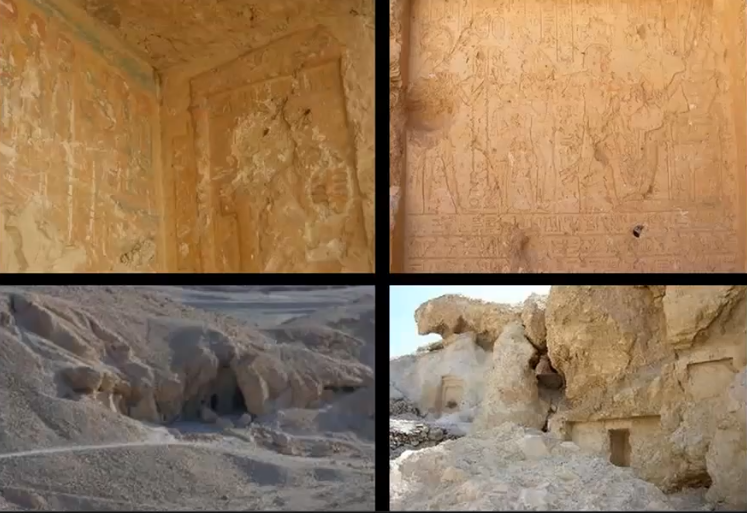
Rock-Cut shrine to Ptah & Meretseger, New kingdom
deir el-medina
ptah: god of craftsman, art, and making. shown with cap, always w/ mummy wrappings
meretseger: patron deity of Deir el-media. represented with a cobra body, always with ostrich feathers
worship scene. the workers prayed to these deities for protection and success in their crafts

Stele of Userwer, Middle kingdom
sunk relief, deep carving into surface, interested in shadow, important in the middle kingdom
unfinished. produced by Userwer himself for his own tomb, died before he could finish, put in tomb unfinished
extrememly consistent grid used before carving. implies some sort of ruler/straight edge and standardized system of measurement
unit is based on the palm of the hand. a cubit is six palms. canon of Egyptian proportions. people were typically 18 palms high to eyebrows

Mural of tribute bearers from the tomb chapel of Rekhmire
all non-Egyptians subordinate to Egyptians due to conquering. power relationship. pay tribute to not be violently conquered (more)
first register: either Levant or South Turkey (and Nubian & Medjay). pointed garments with minimal patterns, wearing a fillet (headband)
second register: Minoans. longer strands of hair with patterned kilts and boots
third register: Western desert region, Nubian and Medjay. wearing hide instead of linen. more access to animals

“King’s Son of Kush” scene of ships from Huy’s Tomb, New Kingdom
not solar barges
indicates far travel, pontoons with two ruddered stacked
this is how the egyptians are going out and finding other people, along with expansive trade routes to find other minerals and materials
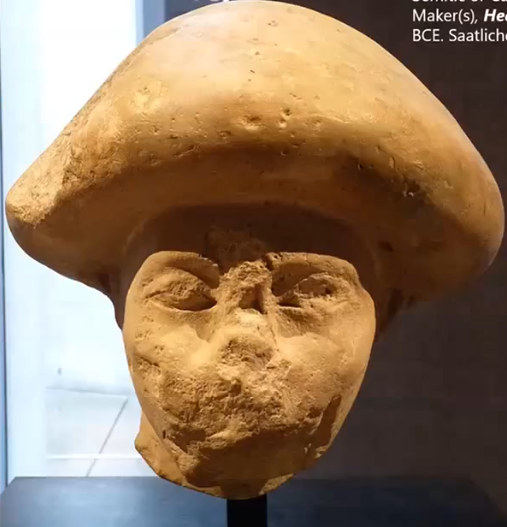
Head of an official, Semitic or Canaanite, or Hyksos
Hyksos: the main enemy of egypt literally means “foreigner”, unsure of what group of people exactly. most likely from the Canaanite/Palestine region
hyksos took over the Nile Valley, the New Kingdom came out of their reign
typically shown with “mushroom” style haircut
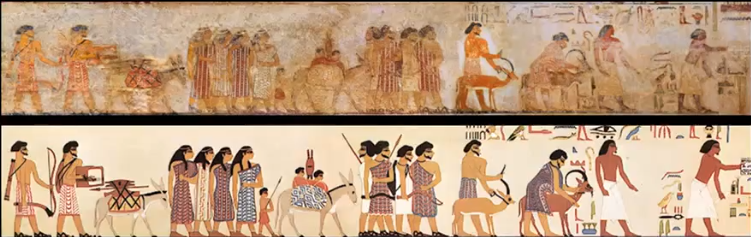
Offering Procession of the “Aamu” from Tomb of Khumhotep II
“Aamu” egyptian label for this group of people
lighter skin tone, colorful garments, puffy/round short hair, full beard, pattering and more coloring is the leader, “Abisha.”
Aamu somewhere in the Levant, that wanted to move into the governor’s (Khumhotep) province
argued this is the start of “canaanite invasion”

Apadana Facade Reliefs, Achaemenid Persian, Persepolis
audience hall to see king, with steps leading up to it with reliefs on it, for tribute bearers.
all different kinds of people depicted on the facade from across the empire
Lydians, Armenians, Babylonians, Indians, Greeks, Bactrians, Ethiopians, Elamites, Ionians, Arabs, Bedonins

Eannatum’s Victory Stele
first war monument, first king to make a monument dedicated to defeating another group of people (Umma)
the Umma are in a net
double sided stele, on back are people in a phalanx: military formation that uses protective gear to advance marching
marching on top of dead bodies of enemies
Ennatum shown as leader in wool garments
early example of dehumanization of others

Axe of Ahmose I & Queen Ahhotep II
axe= object of violence. used to smite/decapitate
ceremonial version
smiting Hyksos. Ahmose I one to kick them out, object relevant to his time

Mural from Tomb of Anen
Tiye’s brother who married into Royal Family
Tiye and Amenhotep III seated on throne held up by bound foreigners. bound with papyrus and lillies— life force of Egypt capturing them
Asiatic, Nubian, Libyan, Minoan (older), Assyrian (priest), Assyrian (all separated by Nubians). communicating Egypt is held up by the conquering of other people
king as a sphynx torturing them, sphynx normally used in this way, to depict the violence, war, and power of the pharoah

Captives being recorded in front of Horemheb
recording number of captives and where they came from
Nubians often depicted with gold hoop earrings and here with scarification, a tradition of intentional scarring in south sudan
individualized representation

Rameses II smiting enemies
holding multiple captives at the same time to smite/capture
closer to idea that king is killing populations rather than individuals
innovation in concept and techinical skill by showing depth and perspective in the captured enemies
blue “war crown” signifier of intention to conquer and kill
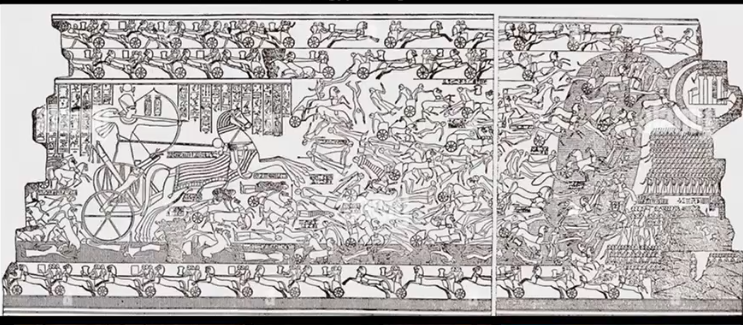
Ramesses II in the Battle of Kadesh
pylon on the Ramesseum, establishing order concept
15 large scale military campaigns led by Ramesses, this is one of the earliest and biggest ones
fighting the Hitties for land that isn’t either of theirs, Kadesh. a river flowed from a walled city, forming a moat. The hittites and egyptians’ main conflict occurred at the river
first documented battle in history
in latter part of battle, Hitties cross the river, but then back up/retreat

The Battle of Til Tuba Reliefs, Neo-Assyrian
battle against Elamites. Ashurbanipal vs. Teumann
scenes throughout along with captions, depicting the capture and killing of Teumann and his son
Assyrians wanted an elamite ruler that’s pro-Assyrian, a puppet-king on the throne rather than anti-assyrian (Teumann)
Eunuch: castraed guy that can be trusted aroudn king and his wives more
density of detailing and information. narrative very chaotic, sporadic, non-linear
political propaganda to not mess with Ashurbanipal cause he will highkey torture you

Bisotun Relief
scythian (guy w/ elf hat), indication of the reach of the persian empire
message of don’t mess with us, that will be seen by a lot of people due to the trade route