THE 541 - Exam 2
 Call Kai
 Learn
 Practice Test
 Spaced Repetition
 Match
 Flashcards
 Knowt Play
1/84

Earn XP
Description and Tags
Dr. Herr - MoState - FA26
85 Terms
Allegory
The representation of an abstract theme or themes through symbolic use of character, action, and other concrete elements of a play. (Ex. Virtues or Vices)
Anachronism
Elements in a play or production that do not belong historically in the period of that work
Used by Sebastiano Serlio
Hinged sets of flats both parallel and quasi perpendicular to arch
sets are fixed
abandoned by 1650
Angled Wing Scenery
During the 1600s French Opera incorporated this form of dance to insist on textual clarity.
Ballet
Movements that are close to the floor and restricted by clothing (Ex. small steps, gliding,
curtseying, posing)
Basses Danse
Religion which becomes a major force throughout Asia in 400 BCE
Buddhism
Commedia Dell’arte
Thrived in Italy from 1550 to 1750
Improvised scenarios (mostly comedy) written by those in the company
usually consisted of ten performers—seven men and three women
Commedia Erudita
learned (amateur) plays
Confraternity
An association of laypeople approved by the church to promote christian works
Constantinople
Conquered by the Ottomans in 1453 CE
Corpus Christi
Catholic Festival (Recognized 1311 CE, took place in late spring)
Best festival to see religious vernacular dramas (Cycle Plays)
Religious vernacular dramas
Cycle Plays (Also known as mystery plays)
Decorum
How a character is supposed to act based on social class and background
Didactic Drama
Drama intended for instruction
Critics telling playwrights what to write and what not to write
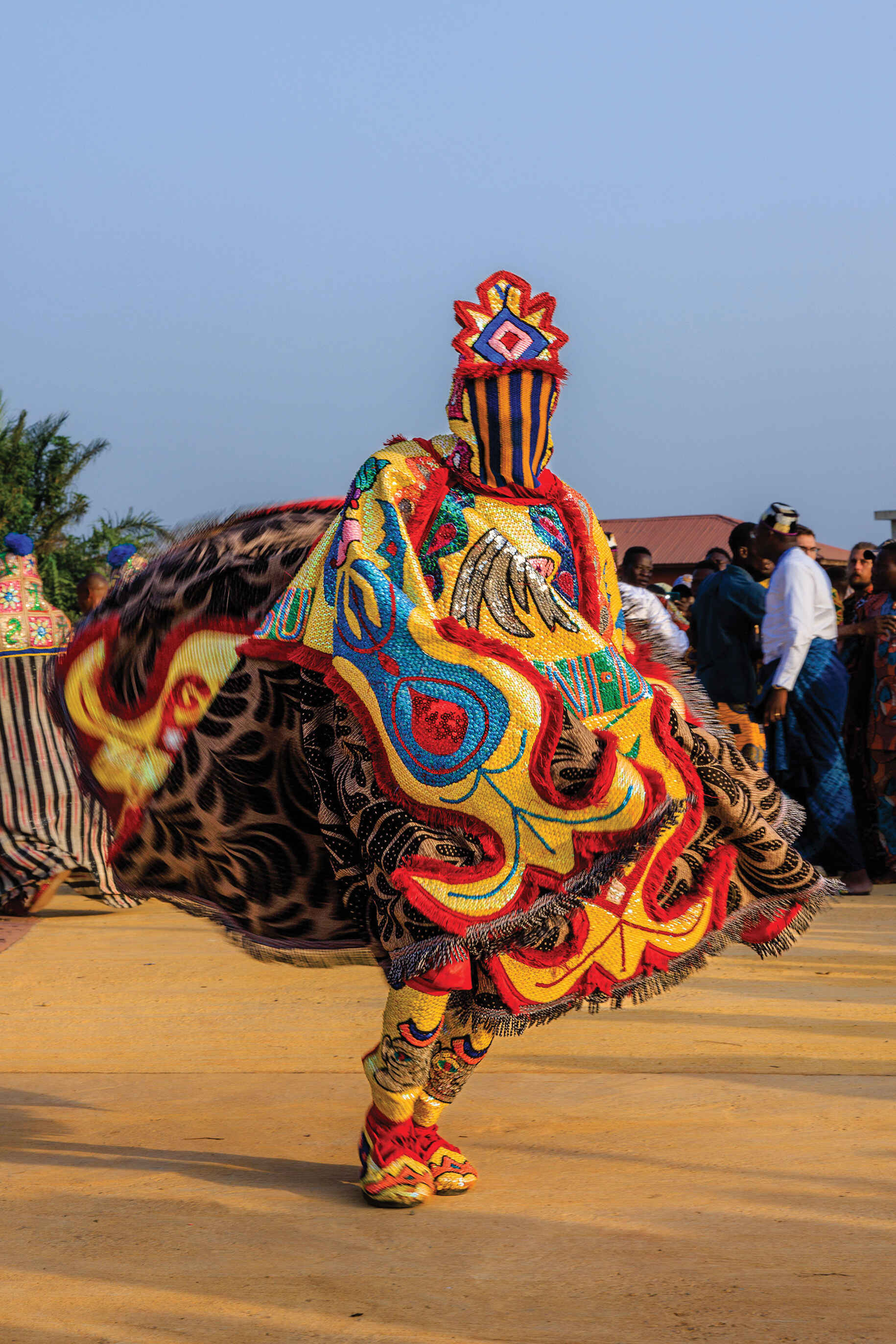
Yoruba peoples tradition of honoring lineages of ancestors through dance dramas
1400s CE West Africa
Egungun Masquerade
Episodic Structure
Dramatic structure—extremely popular during the English Renaissance and the Spanish Renaissance—in which the dramatic action begins early in the story. Episodic drama has little exposition, many characters, frequent changes of time and place, and subplots
Feudal System
Think Monty Python and the Holy Grail (King owns the land and gives some to the peasant. The peasant will work in return for safety and the job)
Painted flats
Parallel to stage front (gets smaller the farther upstage they are)
Closed shutters in back
First use credited to Aleotti in 1606
Flat Wing Scenery
Giacomo Torelli
The “great wizard” of 17th century scenic design
(1608-1678)
Revolutionized stage machinery
Created the pole and chariot system (allowed for instantaneous scene changes by one
operator)
Helped bring Italian innovation to France
Chinese performance spaces in market areas; popular from the tenth to the fourteenth centuries CE.
Made of wood
Audiences had to pay to enter
Goulan
1600s mechanism that created quick scene changes
Allowed flats to slide on and off stage easily
Groove System
Halqa
Arabic
Could refer to either the circular performance space, the storytellers, or the stories

What part of the stage is circled?
Hashigakari
Haute Danse
A court dance with high skips or jumps
Hildegard Von Bingen
German Nun (1098-1179)
Wrote liturgical songs with text
Wrote Ordo Virtutum “Play of Virtues”
One of the first woman playwrights!
Hrosvitha of Ganderheim
Lived in Abbey in Germany (935-1001)
Probably of noble birth: well-read
Wrote Christian plays modeled on Terence's comedies
Humanism
Focused on people rather than gods; they were preoccupied with describing humanity and human powers, and they studied and imitated the Greeks and Romans
Aided the spread of literature rediscovered from the past
Innamorata
In commedia dell’arte, the stock female lover.
Interludes
English. Short dramatic pieces, usually presented between the courses of a banquet.
Brief dramatic entertainments written and staged by professionals—were presented at court and in the homes of the nobility
Intermezzi
Italian. Performances between acts of a play. A 5 act play will have 6 Intermezzi
Kyogen
comic interludes between performances of Noh
Lazzi
set bits of comic business that could be inserted into many
different plays
Liturgical Drama
Mainly developed during the medieval period
Any religious drama, usually sung or chanted, that relates to the Bible and is presented in Latin inside a church sanctuary
Ludovico Castelvetro
Drama Critic which contributed to the Neoclassical Ideal
Added unities of time and place
Emphasis on decorum and verisimilitude
Strict separation of genres
Castelvetro tends to emphasize audience more
Machiavelli
Italian Vernacular Drama playwright & Political Philosopher (1469-1527)
Wrote Mandragola (1518)
A medieval scenic unit, often presented as an individual house or locale
Mansion
Medieval Farce
Humor as a result primarily of physical activity and visual effects.
Roughly 500-1400 CE
Middle Ages
Mime
A form of theatrical entertainment that consisted of short dramatic sketches characterized by jesting and buffoonery
Morality Plays
A play which attempts to teach a moral lesson through the use of allegorical characters
(Ex. Everyman)
One of the only extant plays from 12th century France
Mystery of Adam
Mystery Plays
Cycle Plays
Neoclassical Ideal
(The ultimate mashup of Horace & Aristotle)
Decorum - Act how you are supposed to act based on social class
Strict Genres - No comedy in my tragedy
Time - True to time period
Verisimilitude - True to life
Action - Plot A to B to C (down the line)
Place- Its gotta make sense with time
Neutral Platform Stage
A traveling stage made up of 2 wagons. 1 wagon has the scenery while the other is playing space for the actors.
Nicola Sabbattini
(1574–1654)
talks about different methods of changing scenes:
periaktoi, new flats around old, canvas around old flats
Noh
Rigidly traditional Japanese drama
Short dramas combining music, dance, and lyrics with a highly stylized and ritualistic presentation
Based on Greek mythology and ancient history
Completely sung, and dramatic action, mood, and characters are created through song and music.
A theatrical form of the Italian Renaissance that has survived and evolved
Opera
Pageant Master
A professional stage manager who oversaw the production of Cycle plays

What is this?
Pageant Wagon
Pantalone
Lecherous and miserly old man
From Venice
Often in pursuit of young woman
Master of one or more zanni
bright red pants and jacket with a black cloak; always with
purse on belt, Mask has long pointed nose, curving downward, walks hunched over
Genre that develops starting in late 15th C
idealized views of country life: shepherds and shepherdesses in love; love
triumphs over all
Mythological Creatures
Pastoral
An illusion of depth—a three-dimensional quality
The proscenium served as the theatrical equivalent of the frame of a painting
Perspective Painting
Pit, Box, And Gallery
Pit: standing spectators in open area
Boxes: lower, divided seating areas along walls
Galleries: upper tiers of seating, undivided, open-bench seating
Became standard seating practice for about 300 years
Platea
In medieval theatre, an unlocalized playing area
Pole & Chariot System
Developed by Giacomo Torelli
mechanized means of changing sets made up of flat wings
Processional Staging
Play Parade!
Each Cycle play was set up on a wagon that moved from locale to locale within a town, so that the play would be presented separately at each stop—each audience area—along its route
A type of theatre named for the arch or frame that surrounds its stage.
Theatre Farnese was the first!
Proscenium Arch
What happened after the weakening of the church in the sixteenth century?
Protestant Reformation (Which started to kill religious theatre)
Quem Quaeritis
A short trope added to the Easter service
The beginning of religious liturgical drama in the Middle Ages.
Raked Stage
An upward slope of the stage floor away from the audience to create depth
Rasa
the “flavor” or sentiment that the spectator is supposed to experience: comedic, er0t1c, pathetic, furious, heroic, terrible, odious, or marvelous.
Resemblance
Central to Allegorical Dance. Dance resembles the world in a symbolic sense. (ie. geometric patterns like a circular formation symbolizes the heavens)
Samurai
Japanese warriors that follow a strict code
Sarugaku Noh
the predecessor of nō
a form that mixes song, dance, and theatre
sometimes used as a generic term that includes all the various forms of nō
Sebastiano Serlio
Designs 3 main sets
Comedy
Tragedy
Pastoral
In medieval theatre, special effects
Secrets
Shadow Plays
Shadow puppets
Popular in Asia and Middle East
often criticized social norms
Shite
In nō theatre, the leading actor.
Slapstick
a wooden sword used in comic fight scenes
Sometimes it consisted of two thin slats of wood, one on top of the other; when a performer was thwacked with it, the effect was greatly exaggerated by the sound of the two pieces of wood smacking together
Sottie
French Farce
Stationary Staging
In the Middle Ages, a form of staging popular on the European continent. A series of small scenic mansions were set up side by side, usually in conjunction with a large platform stage, so that all the plays of a cycle could be presented in one location.
Stock characters
Character with common archetypes
Teatro Farnese
Built 1618 by Aleotti - (3500 seats)
Oldest extant proscenium arch theatre
Semicircular orchestra could be used for seating or flooded
Facilitates use of scenic perspective
Teatro Olimpico
Built 1584 by Palladio & Scamozzi (3000 seats)
Permanent perspective scenery (No scenic changes, ONLY street scene in perspective)
Semicircular orchestra, raised stage
◦Elaborate stage house with 5 permanent openings
Theatre at Sabbioneta
Built 1588 by Scamozzi (250 seats)
One background vista, painted in perspective: simple stage
Horseshoe shaped auditorium
Transition towards proscenium arch stage
Three Unities
Time, Place, & Action
Produced religious vernacular dramas in Europe during medieval times
Trade Guild
Verisimilitude
Appearing to be true or real
Vernacular Religious Drama
Medieval religious drama written in the vernacular—that is, the language spoken by the people of a particular country or region
Vitruvius
Roman architect who was the source for classical architectural theory
Waki
“Explainer”; in Japanese nō, the second most important character.
Zanni
In commedia dell’arte, comic male servants
Brought new prestige to nō
Most influential, however, as a theorist; in his writings
Wrote Atsumori
Zeami Motokiyo
Zibaldoni
manuscripts compiled by actors in commedia dell’arte containing jokes, comic business, and repeated scenes and speeches
Feast of Fools
Event to flip social norms. Anything (within reason) is permissible “let’s let people blow off steam for the day before going back to normal” ((Mardi Gra))