PRACTICAL BONES 2
 Call Kai
 Learn
 Practice Test
 Spaced Repetition
 Match
 Flashcards
 Knowt Play
1/92

There's no tags or description
Looks like no tags are added yet.
93 Terms
What are the 2 distinct layers of bone tissue found in the bones
compound and spongy

what is the 1st arrow pointing to
osteon

what is the 2nd arrow pointing to
volkmann’s canal
what does the volkmann’s canal connect
two haversian canals

what is the 3rd arrow pointing at
haversian canals
what do haversian canals contain
blood vessels and nerves

what does the 1st arrow point to
canaliculus

what does the 2nd arrow point to
matrix

what does the 3rd arrow point to
lacuna

what does the 4th arrow point to
haversian canal
what does the lacuna contain
osteocytes

what do the circles represent
haversian canals

what is the bridge between the haversian canals
volkmann’s canal

what bone tissue is this
cancellous or spongy bone

what does the 1st arrow point to
bone marrow
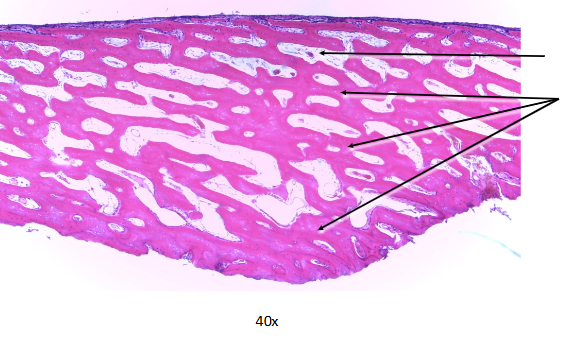
what does the 2nd arrow point to
trabeculae
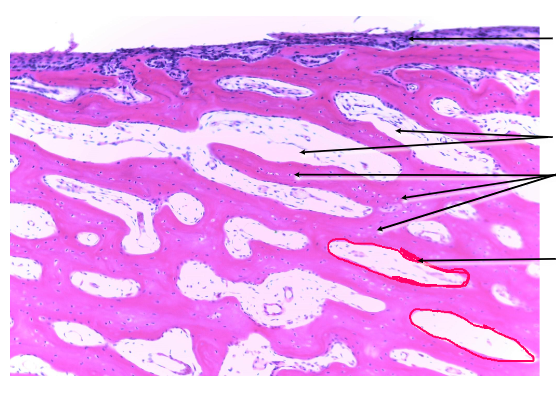
what does the 4th arrow point to
endosteum
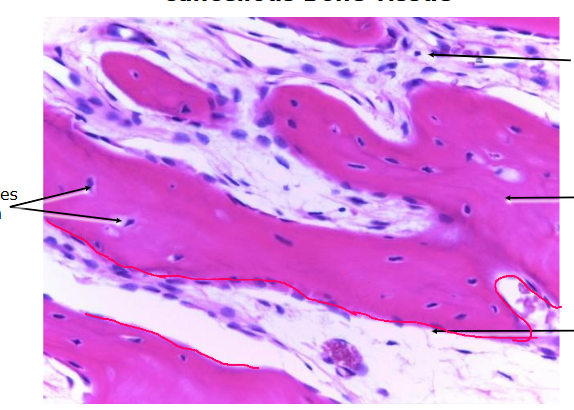
what does the arrow on the left point to
osteocyte in lacuna

what does the 1st arrow point to
striations

what does the 2nd arrow point to
nuclei
condyle means
rounded protrusion
crest means
ridge
epicondyle means
rounded protrusion above condyle
facet means
flattened surface
fissure means
slit
foramen means
hole on bone
fossa means
indentation
fovea
depression on surface of bone
head means
cranial
meatus means
elongated foramen, a canal
neck means
cervical
process means
protrusion or branching out
sinus means
air filled space in skull
spine means
vertebral column
trochanter
large prominent projection on femur
tubercle
small protrusion
tuberosity
roughened area of bone

name the bones on the right to bottom
frontal, parietal, temporal

name top to bottom
parietal, occipital

what does the yellow arrow point to
sphenoid
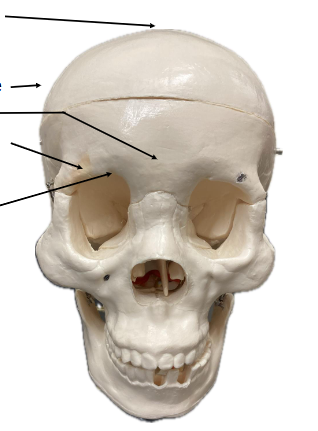
name from top to bottom
sagittal suture, coronal suture, glabella, supraorbital foramen, supraorbital margin
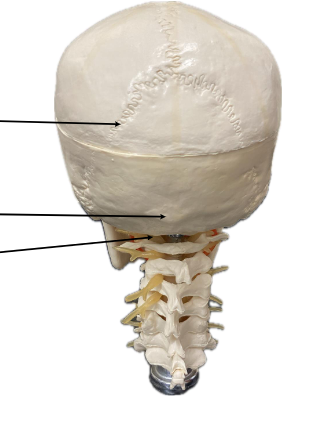
name from top to bottom
lambdoidal suture, external occipital protuberance, occipital condyle

name from top to bottom
occipital condyle, foramen magnum

name from top to bottom
foramen magnum, fossa cerebellum

name top to bottom
external acoustic meatus, zygomatic process, mandibular fossa, mastoid process

left to right then top to bottom
stylomastoid foramen, cartoid canal, jugular foraman

left top to bottom then right
carotid canal, petrous portion, jugular foraman, internal acoustic meatus

left to right
external acoustic meatus, mastoid process, styloid process, mandibular fossa, zygomatic process

top to bottom
petrous portion, internal acoustic meatus, styloid process

what is this
sphenoid

top to bottom (posterior view)
lesser wing of sphenoid, superior orbital fissure, greater wing of sphenoid, lateral pterygoid plate, medial pterygoid plate

top to bottom (superior view)
lesser wing of sphenoid, greater wing of sphenoid, sella turcica, foramen ovale, foramen spinosum
what does the sella turcica hold
pituitary gland

left to right
optic foramen, superior orbital fissure, inferior orbital fissure

left to right (only yellow)
foramen rotundum, foramen lacerum

top to bottom
crista galli, cribiform plate

(ethmoid) left then top to bottom
cribiform plate, crista galli, perpendicular plate

what are the two yellow (top to bottom)
lacrimal bone, vomer bone

what this
palatine bone

left to right
infraorbital foramen, alveolar process, zygomatic arch

top to bottom
nasolacrimal groove, lacrimal canal, zygomaticofacial foramen
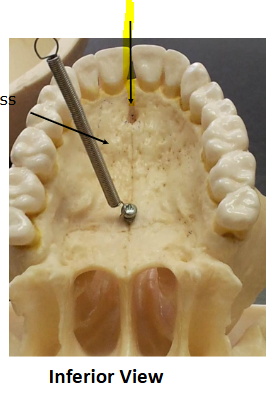
what this
incisive foramen

what this
ramus

what this
mental foramen

what this
alveolar process

what this
mandibular foramen

what this
coronoid process
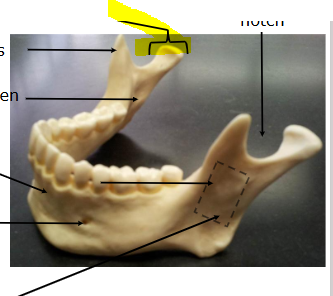
what this
condyloid process

what this
mandibular notch
how many teeth are in the permanent set
32
how many teeth in the maxillary arch
16
how many teeth in the mandibular arch
16
how many teeth in each quadrant
8

what this
incisors

what this
canines
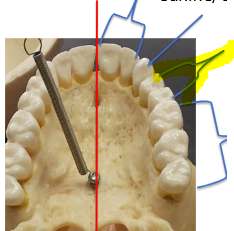
what this
bicuspids/premolars

what this
molars

what this
hyoid

top to bottom
manubrium, body/gladiolus, xiphoid process

what this
vertebral end, inferior border

what this
superior border, sternal end

what this
costal cartilage

top to bottom left to right
cervical, thoracic, lumbar, sacrum, coccyx, intervertebral foramen

what this
fovea dentis
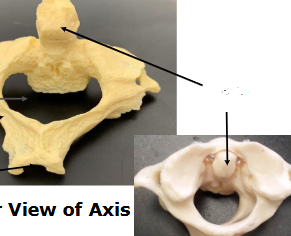
what this
dens/odontoid process

what this
transverse costal facets

top to bottom
sacral foramen, medial sacral crest, sacral hiatus

what type of vertebrae is this
lumbar

what type of vertebrae is this
lumbar

whgat type of vertebrae
thoracic

what type of vertebrae
cervical hg

what type of vertebrae is this
axis

what type of vertebrae is this
atlas