ne102 4/17 lecture: GPCR, RTK, + protein transport
 Call Kai
 Learn
 Practice Test
 Spaced Repetition
 Match
 Flashcards
 Knowt Play
1/9

There's no tags or description
Looks like no tags are added yet.
10 Terms
final goal of signal transduction
to induce a specific event in the cell

the slow way
activated adenylyl cyclase binds w activated alpha → AC turns ATP into cyclic AMP → activates PKA via shape change → phosphorylates TR + activates target gene → transcription


the fast way
SM activates GPCR → binds to g protein → binds + activates PLC → breaks inositol phospholipid into IP3 + DAG → IP3 acts as SM to open Ca2+ channel → Ca2+ from ER lumen + DAG bind to activate PKC

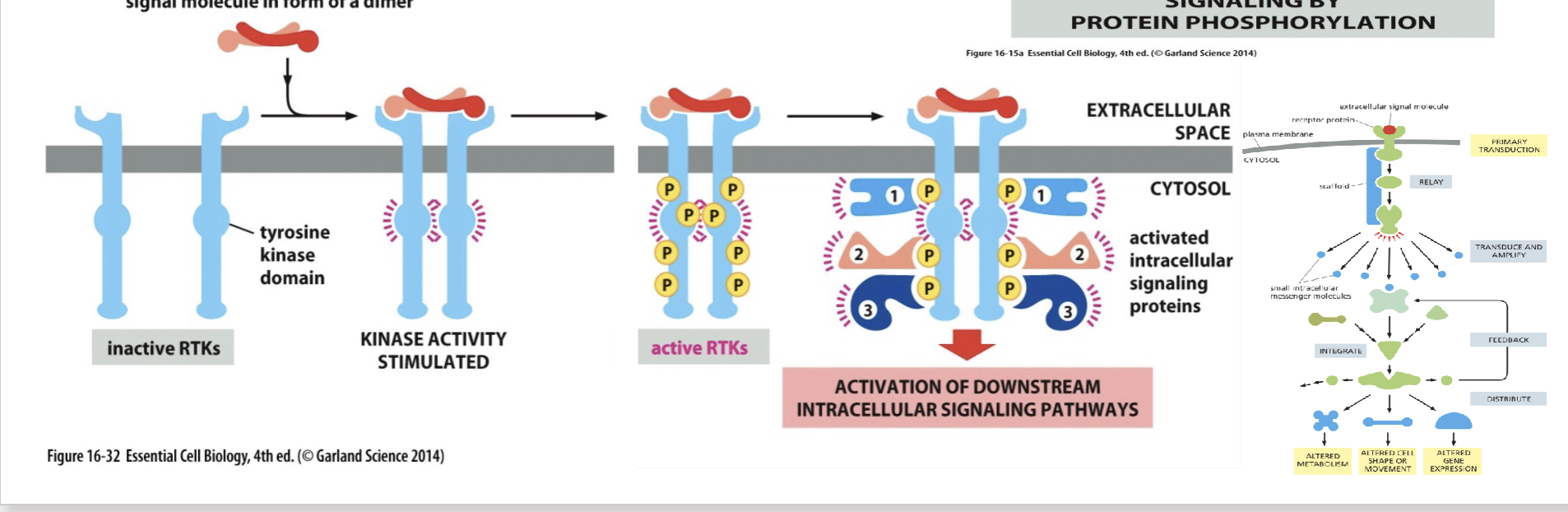
RTK + phosphorylation
SM in form of a dimer → bring RTKs together → phosphorylation → activated intracellular signaling proteins bind → activation of downstream intracellular signaling pathways
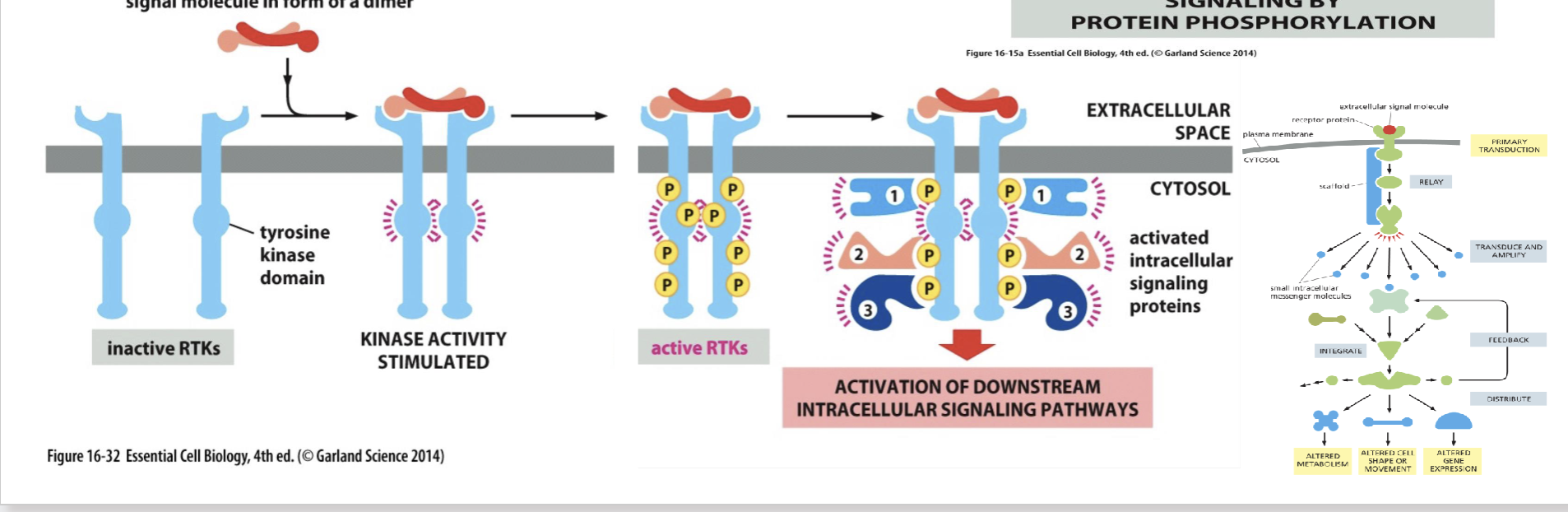
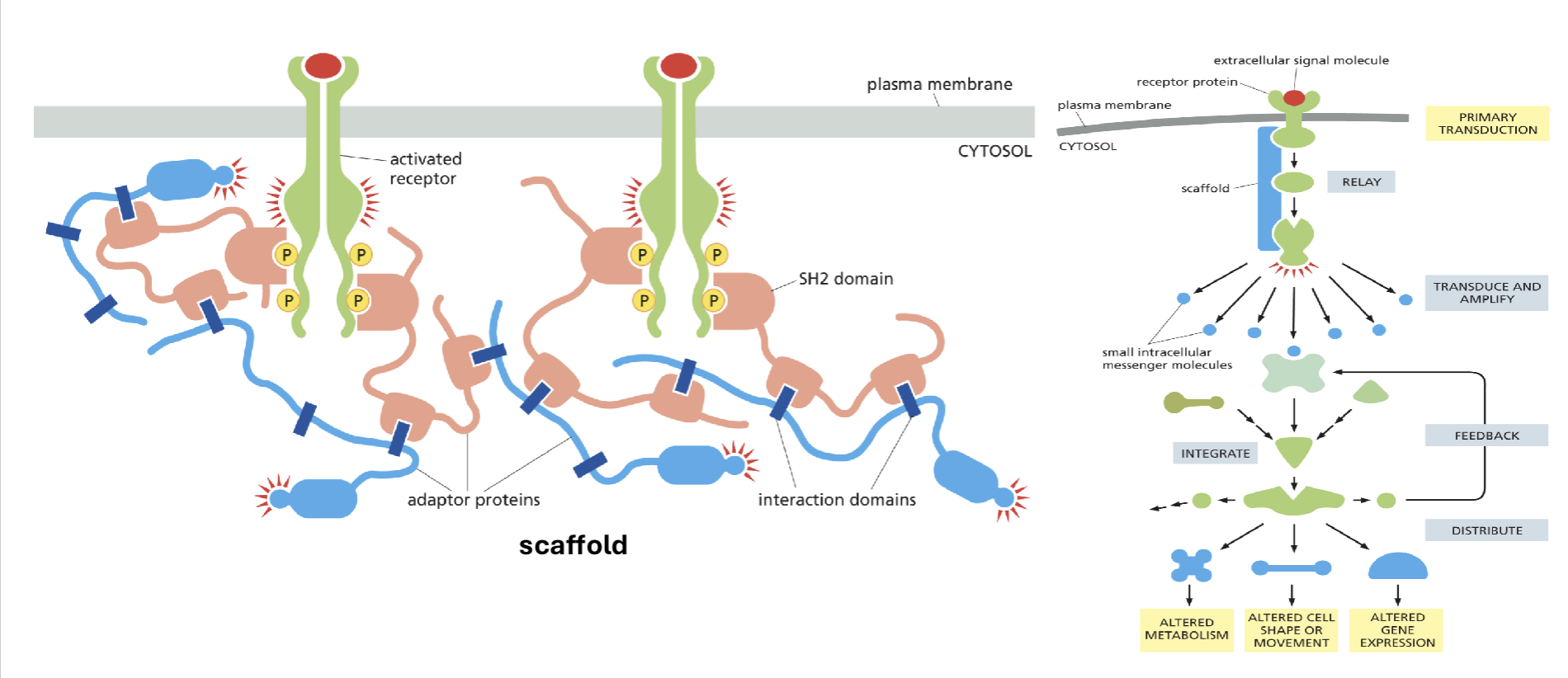
scaffold
intracellular SMs form a crosslinked matrix under plasma membrane


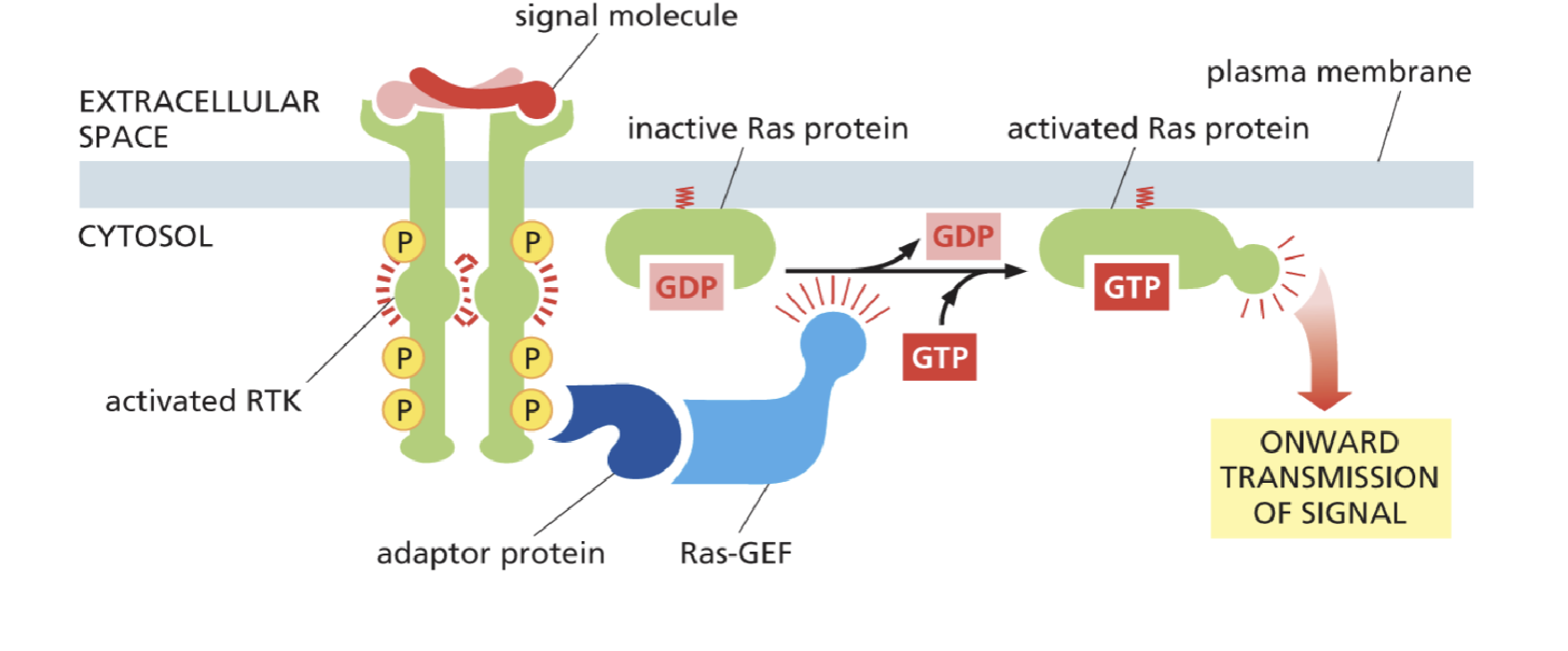
Ras small g proteins
dimer activates RTK → adaptor protein + Ras-GEF complex turn GDP of inactive Ras to GTP → activated Ras → onward transmission of signal
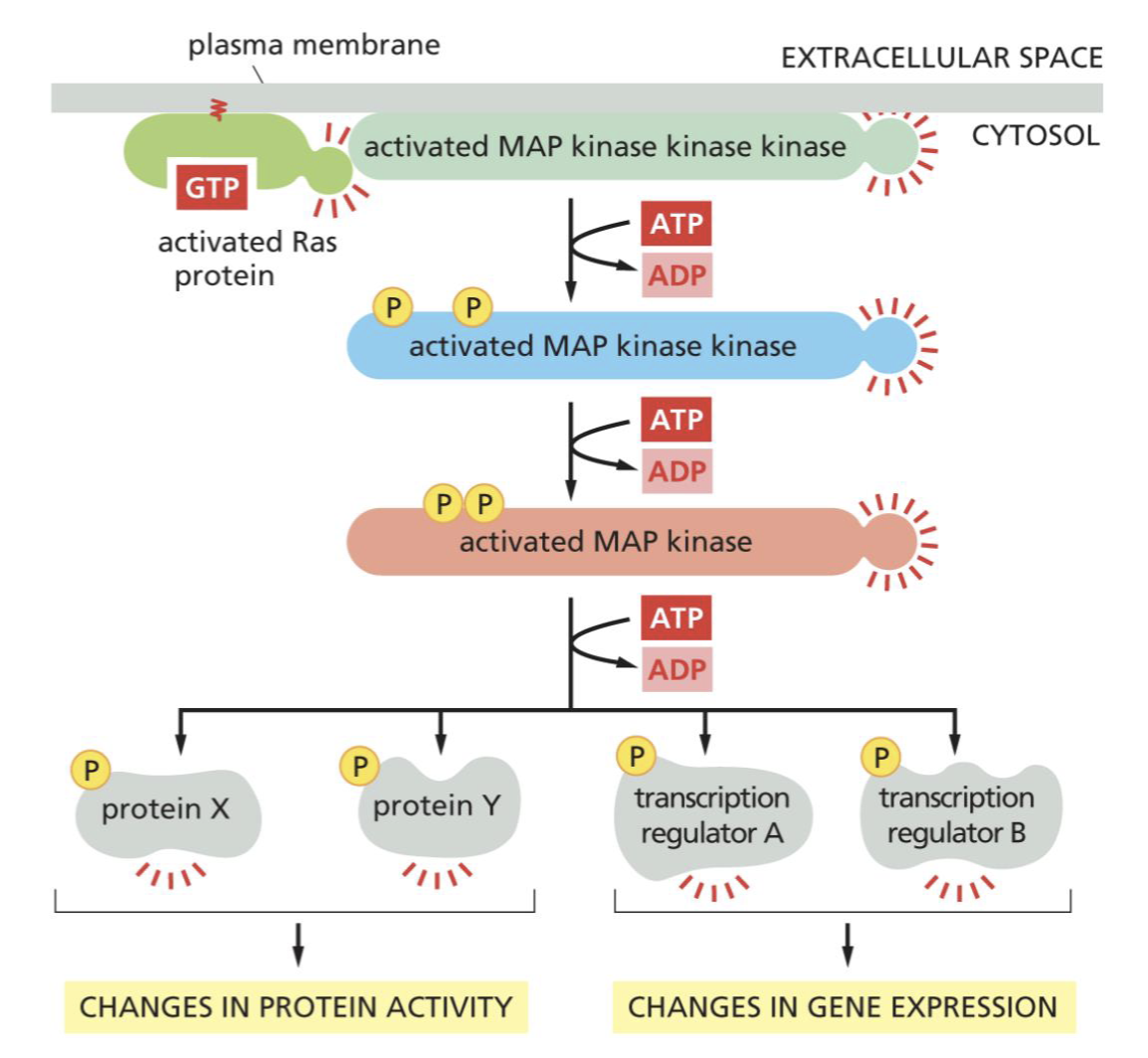
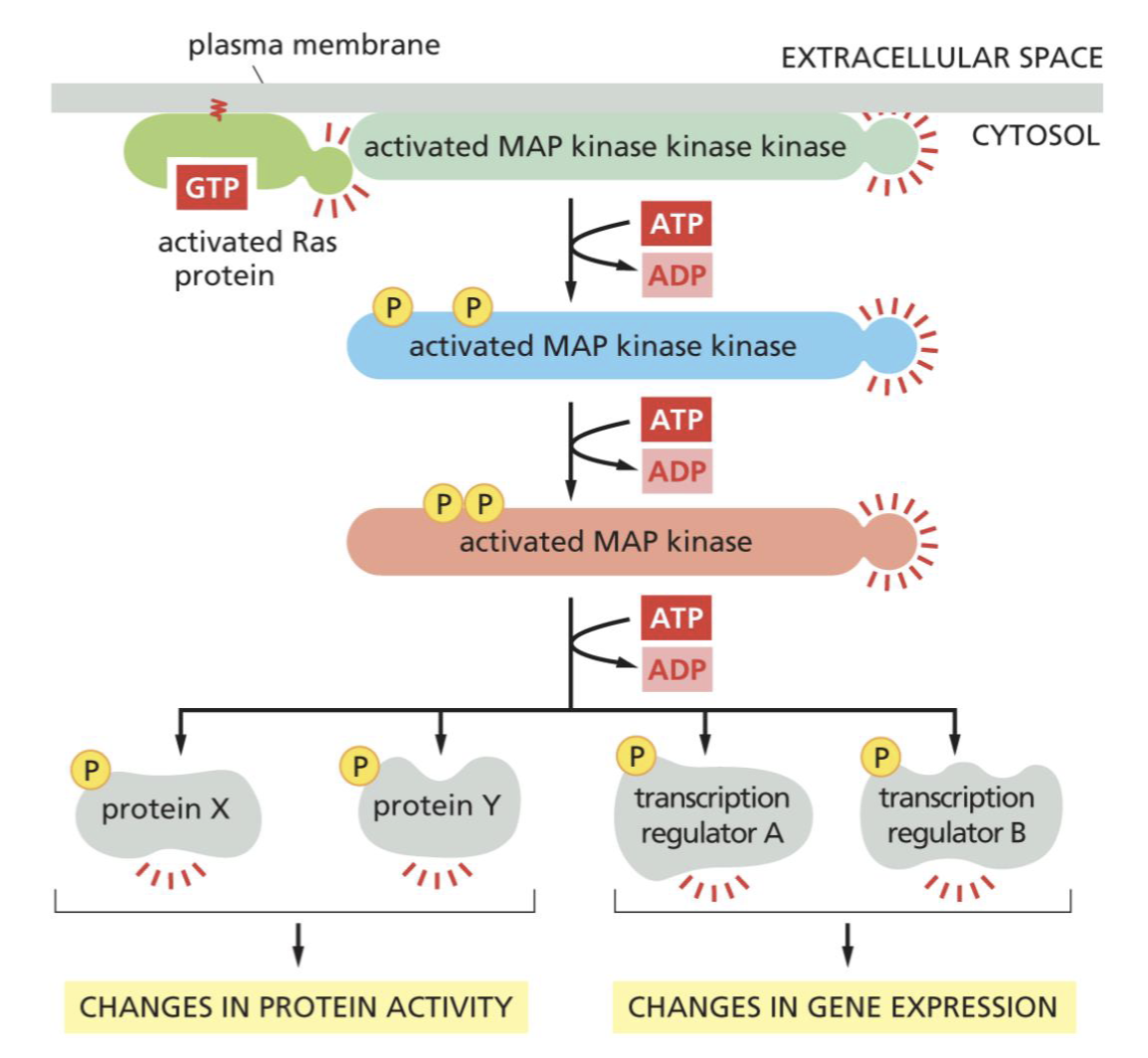
Ras activates MAP kinase → activates other proteins process
activated Ras → activated MAP kinase³ → ATP hydrolysis → activated MAP kinase² → ATP hydrolysis → activated MAP kinase → ATP hydrolysis → P goes to proteins or TR for changes in protein activity or gene expression

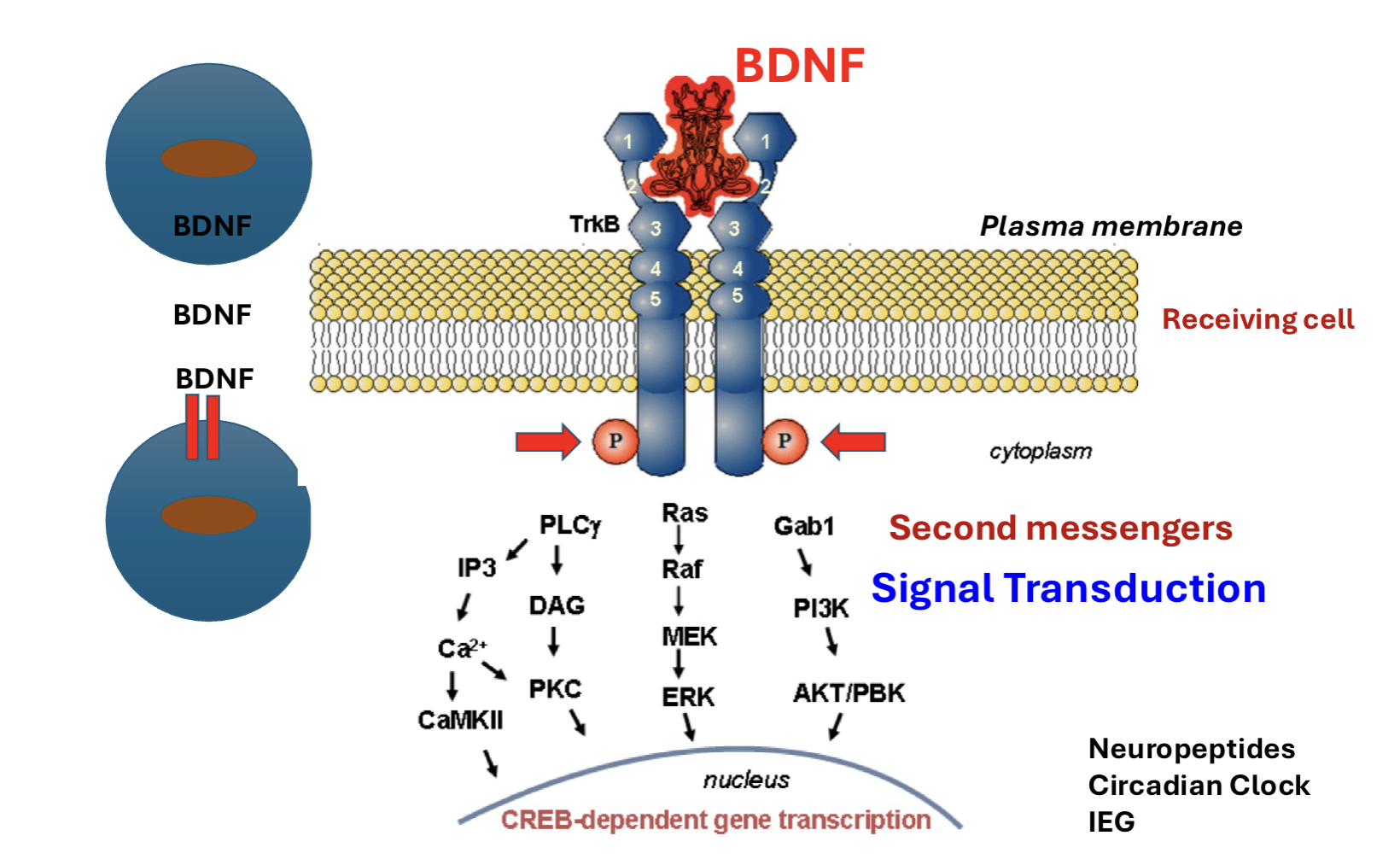
BDNF example
BDNF binds to RTK → RTK comes together → phosphorylation → second messengers move to nucleus for gene transcription

contact dependent cell to cell communication
unspecified epithelial cells → cell specialization + lateral inhibition → delta inhibitory SM from diff cell binds to notch receptor protein of undiff cells → inhibited epithelial cell


lateral inhibition
maintaining cell specificity during development; delta signal protein binds to notch receptor → cleaved notch tail migrates to nucleus → tail binds to element → transcription of notch responsive genes
