TEAS 💪 Muscular System SE
 Call Kai
 Learn
 Practice Test
 Spaced Repetition
 Match
 Flashcards
 Knowt Play
1/47

There's no tags or description
Looks like no tags are added yet.
48 Terms
💪 Muscular System
The BIG idea:
MUSCLES = MOVEMENT
Muscles contain special cells called muscle fibers that can contract (shorten/tighten).
When they contract → they create movement.
🧠 What are muscle fibers?
Muscle fibers = muscle cells
Think:
💪 Muscle = made of many muscle fibers
And:
Muscle fiber contracts → muscle contracts → movement happens
⭐ Memory:
"Fiber fires → muscle moves."
🦴 How do muscles move your body?
Muscles often attach to bones.
When a muscle contracts, it pulls on the bone.
Example:
💪 Muscle contracts
⬇
🦴 Pulls bone
⬇
🦾 Arm moves
Important:
Muscles pull — they don't push.
That's a good TEAS concept to remember.
🫀 Muscles aren't only attached to bones!
Muscles can also attach to:
🫀 Internal organs
🩸 Blood vessels
🦴 Bones
So muscles help control lots of things inside your body too.
🔥 Other jobs of muscles
Besides movement:
1. 🏃 Movement
Muscles contract → body moves.
2. 🧍 Support
Help hold your body up and maintain posture.
3. 🦴 Joint stability
Help keep joints stable.
4. 🌡 Heat
Muscle contractions produce heat.
🧠 Think:
SHIVERING = muscles contracting → HEAT 🔥
💪 How many muscles?
There are 600+ muscles in the human body.
You don't need to memorize every muscle for this section.
Just know:
600+ muscles = movement + support + stability + heat
⭐ TEAS MEMORY TRICK
Remember:
muscles
M-S-S-H
M → Movement
S → Support
S → Stabilize joints
H → Heat
🧠 Phrase:
"Muscles Move, Support, Stabilize, and Heat."
And the most important chain:
MUSCLE FIBER → CONTRACTS → MUSCLE PULLS → MOVEMENT
🔥 Fiber fires → muscle moves.
🦴 Stabilize a joint = keep it steady and in the right position.
A joint is where two bones meet, like your knee, shoulder, or elbow.
Your muscles around the joint help hold the bones in place so the joint doesn't move around too much.
Example: 🦵 Knee
When you're standing:
Muscles around knee → tighten slightly → help keep knee steady → you don't wobble
So:
STABILIZE = KEEP STEADY 🔒
Stabilize = Stop unwanted movement
Muscles don't just help you move — they also help control and steady your joints.
Movement = make it move 🏃
Stability = keep it steady 🔒
💪 THE 3 TYPES OF MUSCLE
There are only 3:
❤ Cardiac🦴 Skeletal🫃 Smooth
The easiest way to learn them is to ask 2 questions:
Where is it?
Can I control it?
❤ 1. CARDIAC =
HEART
Cardiac muscle is ONLY in the heart.
Its job:
❤ Pump blood
You cannot consciously tell your heart to beat.
So:
Cardiac = INVOLUNTARY
🧠 Memory trick:
CARDIAC → CARDIO → HEART ❤
And:
Heart = automatic
What does it look like?
Cardiac muscle is:
Striated = has stripes
Short
Branched
Usually 1 nucleus
Don't worry too much about the shape yet.
🦴 2. SKELETAL =
BONES + VOLUNTARY
Skeletal muscle is attached to your bones.
Its job:
🏃 Move your body
You can consciously control it.
Examples:
Walking
Raising your hand
Kicking
Smiling
So:
Skeletal = VOLUNTARY
🧠 Memory trick:
SKELETAL → SKELETON → BONES
And:
Skeletal = YOU control it
What does it look like?
Striated = stripes
Long
Cylindrical
Many nuclei
🫃 3. SMOOTH =
ORGANS
Smooth muscle is found in the walls of internal organs.
Examples:
Stomach
Bladder
Intestines
Blood vessels
It helps move things through your body automatically.
You don't consciously control it.
So:
Smooth = INVOLUNTARY
🧠 Memory trick:
SMOOTH = organs work automatically
And it looks:
Not striated = NO stripes
Spindle-shaped
Usually 1 nucleus
Muscle | Where? | Control | Stripes? |
|---|---|---|---|
❤ Cardiac | Heart | Involuntary | ✅ Yes |
🦴 Skeletal | Attached to bones | Voluntary | ✅ Yes |
🫃 Smooth | Internal organs | Involuntary | ❌ No |
❤ CARDIAC = HEART = AUTOMATIC
🦴 SKELETAL = SKELETON = YOU CONTROL
🫃 SMOOTH = ORGANS = AUTOMATIC
🧠 STRIPES TRICK
Cardiac + Skeletal = STRIPED
Smooth = NO STRIPES
Think:
“Cardiac and skeletal wear STRIPES. Smooth is SMOOTH.” 😂
🔬 What does "striated" mean?
Don't let this word scare you.
Striated = striped
That's it!
If you see:
Striated muscle
Think:
🟰 STRIPES
🧠 What does "involuntary" mean?
you DON'T control it consciously.
Your heart beats without you thinking:
"Okay heart, beat now." 😂
Your stomach also moves food without you telling it to.
So:
INvoluntary = NOT under your conscious control
Voluntary = YOU control it.
Skeletal = voluntary
🔥 NOW THE 4 MUSCLE PROPERTIES
All three types of muscle have these four abilities.
Don't memorize the giant words first. Learn what they DO.
1. ⚡ Excitability
Muscle can respond to a signal/stimulation.
Think:
EXCITABILITY = responds
2. 💪 Contractility
Muscle can shorten/tighten.
Think:
CONTRACT = SHORTEN
3. 🧘 Extensibility
Muscle can stretch/lengthen.
Think:
EXTEND = STRETCH
4. 🪀 Elasticity
Muscle can return to its original shape after being stretched.
Think:
ELASTIC = BOUNCE BACK
⭐ EASY MEMORY FOR THE 4E-C-E-E
Excitability → respond ⚡
Contractility → shorten 💪
Extensibility → stretch 🧘
Elasticity → bounce back 🪀
Think of a rubber band:
Signal → responds → stretches → contracts → returns
🎯 TEAS RAPID REVIEW
If you see:
Heart?
➡ ❤ Cardiac
Attached to bones?
➡ 🦴 Skeletal
Stomach/bladder/intestines?
➡ 🫃 Smooth
Voluntary?
➡ 🦴 Skeletal
Involuntary?
➡ ❤ Cardiac + 🫃 Smooth
Striated?
➡ ❤ Cardiac + 🦴 Skeletal
Not striated?
➡ 🫃 Smooth
Muscle shortens?
➡ Contractility
Muscle stretches?
➡ Extensibility
Returns to original shape?
➡ Elasticity
Responds to stimulation?
➡ Excitability
🔥 ONE LINE TO MEMORIZE
❤ Cardiac = heart + automatic | 🦴 Skeletal = bones + YOU control | 🫃 Smooth = organs + automatic
First: What is skeletal muscle doing?
Nervous system → tells muscle to contract → muscle shortens → pulls bone → bone moves
Think:
🧠 Brain/nerves = boss
💪 Muscle = worker
🦴 Bone = thing being moved
Important:
Muscles PULL, they don't push.
When a skeletal muscle contracts (shortens) → it pulls on a bone → movement happens.

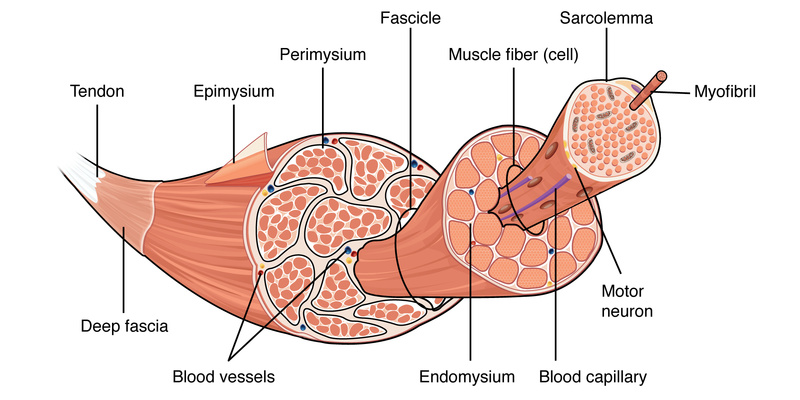
🧠 Now the confusing part: Endomysium →
Perimysium → Epimysium
Think of a bunch of straws inside a bundle.
🥤 Imagine a muscle like a bundle of straws:
1 straw = muscle fiber
A bunch of straws = fascicle
The whole bundle = muscle
And each level gets its own wrapping.
From SMALLEST → BIGGEST:
Muscle fiber
⬇ wrapped by ENDOMYSIUM
⬇ fibers grouped together
Fascicle (bundle)
⬇ wrapped by PERIMYSIUM
⬇ many fascicles grouped together
Whole muscle
⬇ wrapped by EPIMYSIUM

🔥 THE BIG 3 TO MEMORIZE
Layer | What does it wrap? | EASY TRICK |
|---|---|---|
Endomysium | 1 muscle fiber | ENDO = individual |
Perimysium | Fascicle/bundle | PERI = package |
Epimysium | Whole muscle | EPI = entire muscle |
ENDO → PERI → EPI
Think:
Individual → Package → Entire
Or:
🧵 Fiber → Bundle → Muscle
💡 What is a fascicle?
A fascicle = bundle of muscle fibers.
Think of a bundle of pencils ✏
1 pencil = muscle fiber
bunch of pencils = fascicle
lots of bundles = whole muscle
So:
Muscle fiber → Fascicle → Muscle

⭐ TEAS FAVORITE ORDER
Memorize this:
Fiber → Fascicle → Muscle
And the coverings:
Endo → Peri → Epi
Put them together:
ENDO wraps FIBERS
⬇
PERI wraps FASCICLES
⬇
EPI wraps the ENTIRE muscle
🧠 One sentence to memorize:
“ENDO = fiber, PERI = bundle, EPI = entire muscle.”
🚨 30-SECOND TEAS REVIEW
Know these:
Skeletal muscle contracts → shortens → pulls bone → movement
Muscles pull, not push
Muscle fiber = individual muscle cell
Fascicle = bundle of muscle fibers
Endomysium = wraps individual fibers
Perimysium = wraps fascicles
Epimysium = wraps entire muscle
🔥 FINAL MEMORY TRICK:
“ENDO = ONE, PERI = BUNDLE, EPI = EVERYTHING.”
If you remember that + Fiber → Fascicle → Muscle, you're in really good shape for this topic.

⚡ What about cardiac and smooth muscle?
Your first sentence is basically saying:
💪 Skeletal muscle: nervous system / excitatory stimulates it → usually voluntary
❤ Cardiac muscle: nervous system + hormones can influence it → involuntary
🫃 Smooth muscle: nervous system + hormones can influence it → involuntary
Quick memory:
Skeletal = YOU control it
Cardiac = HEART controls it
Smooth = ORGANS control it

💪 Skeletal Muscle: From BIG → SMALL
Think of a muscle like a building made of smaller and smaller parts:
Whole muscle → Fascicle → Muscle fiber → Myofibril → Sarcomere → Myofilaments
🧠 Think of it like this:
🏢 Whole muscle
→ 📦 Fascicle = bundle of muscle fibers
→ 🧵 Muscle fiber = one muscle cell
→ 🪢 Myofibril = long structures inside the fiber
→ ⚙ Sarcomere = smallest contractile unit
→ 🧶 Myofilaments = proteins inside the sarcomere

1⃣ Sarcolemma =
muscle cell membrane
The sarcolemma is simply the cell membrane of a muscle fiber.
Normal cell = cell membrane
Muscle cell = sarcolemma
🧠 Trick:
SARCO = muscle
So:
Sarcolemma = muscle cell membrane
2⃣ Sarcoplasm = muscle cell cytoplasm
The sarcoplasm is the cytoplasm inside the muscle fiber.
Normal cell = cytoplasm
Muscle cell = sarcoplasm
🧠 Trick:
SARCO = muscle
So:
Sarcoplasm = muscle cytoplasm
🔥 Easy pair:
SarcoLEMMA = membrane
SarcoPLASM = cytoplasm


3-5
3⃣ Myofibrils = long structures inside the muscle fiber
A muscle fiber contains many long structures called myofibrils.
Think of them like long strings inside the muscle cell.
🧠 Trick:
MYO = muscle
Myofibrils = long muscle structures that help it contract
4⃣ Sarcomere = smallest contractile unit ⭐
This is VERY important for the TEAS.
A sarcomere is the smallest unit that actually contracts.
Think:
🪢 Sarcomere = tiny section that shortens
🧠 Trick:
SARCOMERE = muscle's contraction unit
If you see:
"smallest contractile unit of skeletal muscle"
🚨 SARCOMERE
5⃣ Myofilaments = proteins inside the myofibril
There are two major types:
🔵 Thick = MYOSIN🟢 Thin = ACTIN
That's it!
Filament | Protein | Think |
|---|---|---|
Thick | Myosin | Myo = thick |
Thin | Actin | Actin = thin |
MYOSIN = THICK
ACTIN = THIN
Or:
Myosin = MIGHTY thick 💪
Actin = thinner

6⃣ Z-disk = boundary/anchor
The Z-disk is where the thin actin filaments attach.
Think of the Z-disks as the ends of a sarcomere.
🧠 Trick:
Z = Zero/Zone boundary
Actin attaches to the Z-disk.
The Z-disc is the boundary/end of a sarcomere.
Think of a sarcomere like a tiny room:
Z-disc | ← sarcomere → | Z-disc
The actin (thin filament) is attached to the Z-disc and extends inward.
🧠 Memory trick:
“Z = the ends of the Zone.”
So if TEAS asks “Where does actin attach?” → Z-disc.
🧠 PUT IT ALL TOGETHER
Here's the whole story:
💪 Muscle
⬇
Fascicle = bundle of muscle fibers
⬇
Muscle fiber = one muscle cell
⬇
Myofibrils = long structures inside the fiber
⬇
Sarcomeres = smallest contraction units
⬇
Myofilaments = actin + myosin
⭐ THE 6 WORDS YOU REALLY NEEDSarcolemma
= muscle cell membrane
Sarcoplasm
= muscle cytoplasm
Myofibril
= long structures inside muscle fiber
Sarcomere
= smallest contractile unit
Myosin
= THICK filament
Actin
= THIN filament
🚨 SUPER EASY MEMORY STORY
Imagine a muscle factory:
🏭 Muscle
→ 📦 Fascicles
→ 🧵 Muscle fibers
→ 🪢 Myofibrils
→ ⚙ Sarcomeres
→ 🧶 Actin + Myosin
And remember:
“Sarco = muscle, Sarcomere = contracts, Myosin = thick, Actin = thin.”
🔥 TEAS rapid-fire
Q: Muscle cell membrane? → Sarcolemma
Q: Muscle cell cytoplasm? → Sarcoplasm
Q: Smallest contractile unit? → Sarcomere
Q: Thick filament? → Myosin
Q: Thin filament? → Actin
Q: Actin attaches to? → Z-disk
💪 Muscle order
BIG → SMALL
Memorize:
Muscle → Fascicle → Fiber → Myofibril → Sarcomere → Myofilaments
🔥 COOL TRICK:
“My Friend Found My Smallest Muscles”
M = Muscle
F = Fascicle
F = Fiber
M = Myofibril
S = Sarcomere
M = Myofilament
Even easier:
Think “Bundle → Cell → Strings → Tiny units → Proteins”
Muscle
⬇ bundles = Fascicle
⬇ cells = Fiber
⬇ strings = Myofibril
⬇ tiny contraction units = Sarcomere
⬇ proteins = Myofilaments (actin + myosin)
🚨 TEAS must-know:
Sarcomere = smallest contractile unit
Z-disc = sarcomere boundary + actin attaches there
Myosin = thick
Actin = thin

💪 Sarcomere Bands
1-2
First remember the layout:
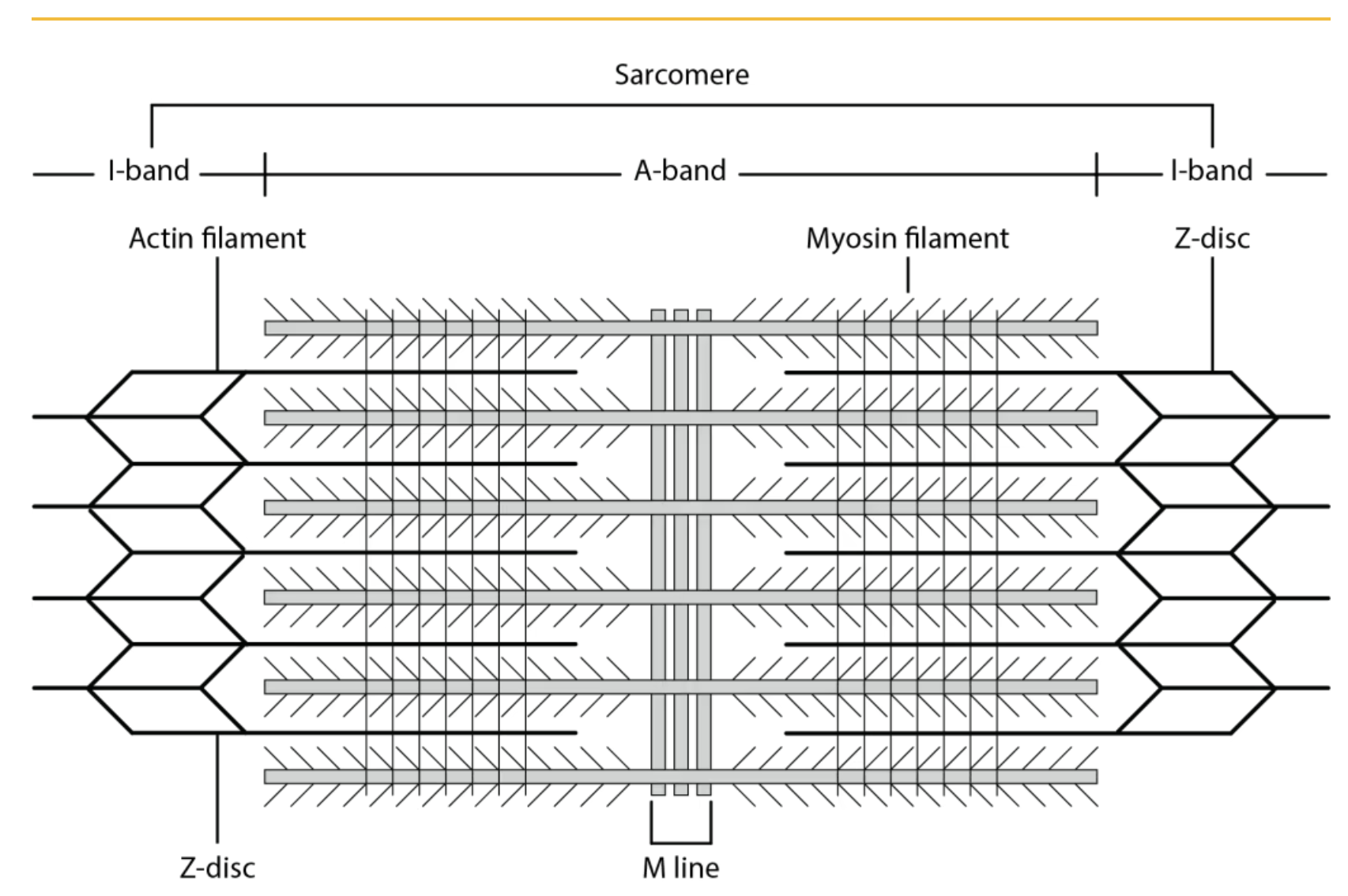
Z | I | A | H | M | H | A | I | Z
Think of it like a mirror 🪞 — everything is centered around the M line.
🟨 1. Z-line = THE ENDS
The Z-line/Z-disc marks the boundary of a sarcomere.
It is also where actin attaches.
🧠 Trick:
Z = Zero point / Zone boundary
So:
Z = END + ACTIN ATTACHES
🟩 2. I-band = THIN ONLY
The I-band contains actin (thin filaments) only.
🧠 Trick:
I = “I only see thin.”
So:
I-band = thin ACTIN only

sarcomere 3-5
🟥 3. A-band = ALL
The A-band contains both thick AND thin filaments where they overlap.
🧠 BEST TRICK:
A = ALL
A-band = Actin + myosin
So:
A = ALL → thick + thin
🟦 4. H-zone = HEAVY ONLY
The H-zone is the middle part of the A-band and contains thick myosin only.
🧠 Trick:
H = Heavy → thick
So:
H-zone = thick/myosin only
🟪 5. M-line = MIDDLE
The M-line is right in the center of the sarcomere.
🧠 Easy:
M = Middle

🔥 THE FASTEST WAY TO MEMORIZE
You really only need these:
Z = ends I = thin only
A = ALL
H = thick only
M = middle
Put it together:
Z → I → A → H → M → H → A → I → Z
🧠 Think:
“Zebra Is Always Hungry, Man!” 😂
Z = Z-line
I = I-band
A = A-band
H = H-zone
M = M-line
Then it repeats backward:
H → A → I → Z
Part | What's there? | Memory |
|---|---|---|
Z-line | Actin attaches | Z = ends |
I-band | Thin/actin only | I = only thin |
A-band | Thick + thin | A = ALL |
H-zone | Thick/myosin only | H = Heavy |
M-line | Center | M = Middle |
“Z ends it, I is thin, A has ALL, H is heavy, M is middle.”

💪 Muscle Contraction
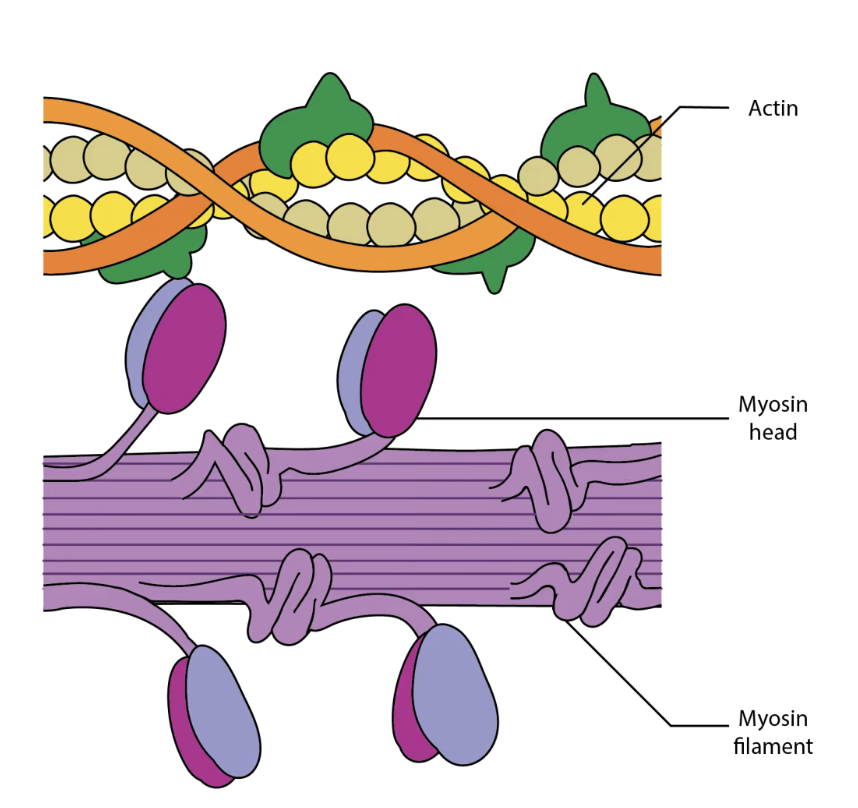
Think of myosin as little arms pulling on actin.
🟢 Actin = the rope🔵 Myosin = little arms⚡ ATP = energy🟡 Calcium = the “GO” signal
1⃣ Actin = thin filament
Actin proteins link together to make a long, thin chain.
Think:
🟢🟢🟢🟢🟢🟢🟢
Actin = the rope being pulled
2⃣ Myosin = thick filament
Myosin has little heads that stick outward.
Think of them like:
🏌🏌🏌🏌
Those heads grab onto actin.
🧠 Trick:
MYOSIN = little MUSCLE arms
3⃣ What happens during contraction?
Here's the important part:
⚡ ATP gives myosin energy
⬇
🔵 Myosin head grabs actin
⬇
🤝 Crossbridge forms
⬇
💪 Myosin pulls actin toward the M-line
⬇
📏 Sarcomere gets shorter
⬇
💪 Muscle contracts
🧠 Think:
GRAB → PULL → SHORTEN
🔄 Why does ATP matter?
After myosin pulls actin, the myosin head needs another ATP to reset/re-energize so it can grab and pull again.
Think of a hand pulling a rope:
✋ Grab → pull → release/reset → grab → pull → repeat
🔥 Memory:
ATP = energy to RESET the myosin head
🟡 What does calcium do?
This is REALLY important.
Calcium is stored in the:
Sarcoplasmic reticulum (SR)
Think of the SR as a calcium storage tank surrounding the myofibrils.
When calcium is released:
🟡 Calcium = GO!
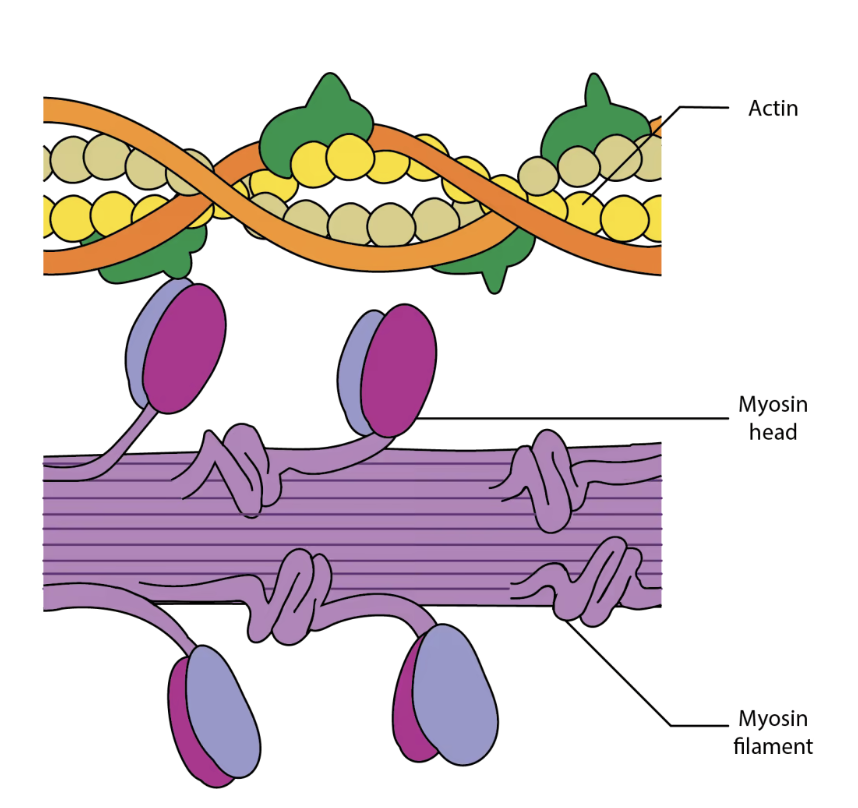
It allows the myosin heads to access actin's binding sites so contraction can happen.
Calcium makes the actin binding sites available so myosin can grab actin.
⚡ ATP = gives myosin the energy to work
ATP helps the myosin head get energized/reset so it can grab and pull.
Think of it like a car 🚗:
Calcium = turns the green light on 🟢
ATP = gasoline/energy ⛽
Myosin = car doing the work
Actin = what gets pulled
So the basic idea is:
Calcium → binding site becomes available → ATP powers myosin → myosin grabs actin → pulls → contraction
🧠 THE WHOLE STORY
Memorize this:
CALCIUM → ATP → GRAB → PULL → SHORTEN
More simply:
🟡 Calcium says GO
⚡ ATP gives energy
🤝 Myosin grabs actin
💪 Myosin pulls actin
📏 Sarcomere shortens
🚨 TEAS MUST-KNOW
Actin = thin filament
Myosin = thick filament
Myosin heads = grab/pull actin
Crossbridge = myosin attached to actin
ATP = energy for myosin
Calcium = helps start contraction
Sarcoplasmic reticulum = stores calcium
M line = actin is pulled toward the center
🔥 BEST MEMORY TRICK:
“Calcium GO, ATP POWER, Myosin PULLS, Sarcomere SHORTENS.”
If you know that sentence, you understand the basic sliding-filament mechanism the TEAS is looking for.
🔥 Super important correction to my earlier shortcut
I said, “Calcium → ATP → grab → pull.” That's okay as a simplified memory, but calcium isn't simply the first chemical step and ATP isn't simply second. They have different roles.
For the TEAS, remember:
🟡 CALCIUM = UNLOCKS
⚡ ATP = POWERS
🔵 MYOSIN = PULLS
🟢 ACTIN = GETS PULLED
🦴 Joints
First, what's a joint?
A joint = where two bones meet.
Think:
🦴 + 🦴 = JOINT
And:
Ligament = bone → bone
🧠 Trick:
Ligaments LINK bones.
⭐ The 3 Types of Joints
The easiest way to memorize them is:
🚫 Immovable → 🤏 Partly movable → 🏃 Synovial
No movement → Some movement → LOTS of movement
1⃣ Immovable = 🚫 NO movement
The bones are held tightly together by connective tissue.
Example:
💀 Skull
Your skull bones aren't supposed to freely move around.
🧠 Memory:
IMMOVABLE = “I'M MOVING? NO.” 😂
Think skull = stuck
2⃣ Partly movable = 🤏 SOME movement
Bones are connected by cartilage.
Example:
🦴 Spine
The vertebrae can move a little, but they're not freely moving like your shoulder.
🧠 Memory:
CARTILAGE = SOME movement
Think of the spine as flexible but not loose.
3⃣ Synovial = 🏃 LOTS of movement
These joints have a joint cavity, giving the bones lots of freedom to move.
Examples:
🦵 Hip
💪 Shoulder
🧠 Memory:
SYNOVIAL = SWING!
Your shoulder and hip can move in many directions.
🔥 BEST TEAS MEMORY TRICK
Remember the movement scale:
I → P → S
Immovable = 🚫 NONE
Partly movable = 🤏 SOME
Synovial = 🏃 LOTS
Think:
“I Put Shoes” 👟
I → P → S
Then remember:
Joint | Movement | Example |
|---|---|---|
Immovable | 🚫 None | Skull |
Partly movable | 🤏 Some | Spine |
Synovial | 🏃 Lots | Hip, shoulder |
🚨 One more important trick:
Ligament = bone to bone 🦴↔🦴
Joint = where bones meet 🦴 + 🦴
So if TEAS asks:
“What connects bone to bone?”
🔥 LIGAMENT
“Where do two bones meet?”
🔥 JOINT
“Which joint allows the most movement?”
🔥 SYNOVIAL

🦴 6 Synovial Joints
1-3
1⃣ Pivot joint 🔄
Turns/rotates around one axis.
📍 Example: neck
Think: PIVOT = TURN
🧠 “Pivot = swivel.”
2⃣ Hinge joint 🚪
Moves back and forth like a door.
📍 Examples: elbow, knee
Think: 🚪 DOOR HINGE
🧠 “Hinge = door.”
3⃣ Ball-and-socket joint ⚽
Moves almost every direction and can rotate.
📍 Examples: shoulder, hip
Think: ⚽ ball sitting in a socket
🧠 “Ball = ALL directions.”

Synovial joints
4-6
4⃣ Saddle joint 🐴
Moves back/forth + side/side.
📍 Example: thumb
Think: 🐴 a saddle lets you move in different directions.
🧠 “Saddle = thumb.”
5⃣ Condyloid joint ↔↕
Moves side-to-side and back-and-forth, but doesn't freely rotate like a ball-and-socket.
📍 Example: wrist
Think: wrist = wave 👋
🧠 “Condyloid = wrist.”
6⃣ Plane joint ↔
Bones slide/glide against each other.
📍 Examples: some wrist/ankle joints
Think: 🧊 two flat surfaces sliding
🧠 “Plane = slide.”
🔥 FASTEST TEAS MEMORY TABLE
joints
Joint | Movement | Memory |
|---|---|---|
Pivot | 🔄 Rotate | PIVOT = TURN |
Hinge | ↕ Back/forth | HINGE = DOOR |
Ball & socket | 🔄 All directions | BALL = ALL |
Saddle | ↔ + ↕ | SADDLE = THUMB |
Condyloid | ↔ + ↕, limited rotation | WRIST = WAVE |
Plane | ↔ Slide | PLANE = SLIDE |
🧠 THE CRAZY-EASY 6 WORDS
Just memorize:
PIVOT = TURN
HINGE = DOOR
BALL = ALL
SADDLE = THUMB
CONDYLOID = WRIST
PLANE = SLIDE

💪 1. Tendon =
muscle → bone
A tendon connects muscle to bone.
When the muscle contracts:
Muscle shortens → tendon pulls bone → bone moves
🧠 BEST TRICK:
TENdon = connects muscle to bone
Don't mix it up with a ligament:
Tendon = muscle → bone 💪➡🦴
Ligament = bone → bone 🦴➡🦴
🔥 Tendon = TIES muscle to bone
💪 2. Muscles work in PAIRS
Muscles can only pull, so you need opposite muscles to move a joint in opposite directions.
Think of two people pulling a rope from opposite sides.
One contracts → the other relaxes/lengthens.
flexor vs extensor
🦾 3. Flexor = BENDS
A flexor muscle contracts to bend a joint.
Example: Biceps
When your biceps contracts:
💪 Biceps shortens
⬇
🦴 pulls forearm
⬇
💪 Elbow bends
🧠 FLEX = FLEX your arm → BEND
🦾 4. Extensor = STRAIGHTENS
An extensor contracts to straighten a joint.
Example: Triceps
When your triceps contracts:
💪 Triceps shortens
⬇
🦴 pulls forearm
⬇
➡ Elbow straightens
🧠 EXTEND = make it LONGER/STRAIGHTER
🔥 BICEPS vs TRICEPS
Muscle | What happens when it contracts? | Job |
|---|---|---|
Biceps | Elbow bends | Flexor |
Triceps | Elbow straightens | Extensor |
BIceps = BEND 💪
TRIceps = TRIes to STRAIGHTEN
Or even simpler:
FLEX = BEND
EXTEND = STRAIGHT
🔄 The most important idea
When biceps contracts, the triceps relaxes.
When triceps contracts, the biceps relaxes.
They switch jobs.
Think:
🔵 Biceps ON → Triceps OFF → bend
🔴 Triceps ON → Biceps OFF → straighten
🚨 TEAS CHEAT CODE
Memorize these 4:
TENDON = muscle → bone
LIGAMENT = bone → bone
FLEXOR = bends
EXTENSOR = straightens
And the classic example:
Biceps = flexor = bends elbow
Triceps = extensor = straightens elbow
🔥 If you see “muscle attaches to bone” → TENDON.
🔥 If you see “bone attaches to bone” → LIGAMENT.

💪 MUSCULAR SYSTEM — TEAS CHEAT SHEET1⃣ What does muscle do?
Muscles have 3 big jobs:
💪 Move the body
🧍 Support the body/posture
🔥 Make heat
🧠 Trick: “Muscles MOVE, SUPPORT, HEAT.”
2⃣ The 3 muscle types
Muscle | Where? | Control | Stripes? |
|---|---|---|---|
💪 Skeletal | Bones | Voluntary | ✅ Yes |
❤ Cardiac | Heart | Involuntary | ✅ Yes |
🫃 Smooth | Organs | Involuntary | ❌ No |
🔥 SUPER EASY TRICK:
Skeletal = Skeleton = YOU control it
Cardiac = Cardio = Heart = automatic
Smooth = organs = automatic
Stripes:
Skeletal + Cardiac = STRIPES
Smooth = NO stripes

3⃣ Skeletal muscle coverings
but it's just 3 wrapping layers:
Endomysium → Perimysium → Epimysium
Think:
Fiber → Bundle → Whole muscle
Endomysium → wraps one muscle fiber
Perimysium → wraps a fascicle/bundle
Epimysium → wraps the whole muscle
🧠 🔥 Trick:
ENDO = ONE
PERI = PACKAGE
EPI = ENTIRE

4⃣ What's inside a muscle fiber?
Muscle fiber
⬇
contains myofibrils
⬇
myofibrils contain actin + myosin
Think:
🧵 Fiber = big container
🪢 Myofibrils = strings inside
🟢 Actin + 🔵 Myosin = proteins that contract
5⃣ How does muscle contraction happen?
This is the sliding filament theory.
Don't overthink it:
Myosin grabs Actin → pulls Actin → sarcomere gets shorter → muscle contracts
“GRAB → PULL → SHORTEN.”
Myosin = the puller
Actin = what gets pulled
⚡ ATP = energy
🟡 Calcium = helps turn contraction ON

6⃣ Tendons vs joints
6⃣ TendonsTendon = muscle → bone
Muscle contracts → tendon pulls bone → movement.
🧠 Trick:
TENdon TIES muscle to bone
🚨 Don't mix it up:
Tendon = muscle → bone
Ligament = bone → bone
7⃣ JointsJoint = where bones meet
Joints determine how much movement/flexibility you can have.
🧠 Think:
🦴 + 🦴 = JOINT
8⃣ Muscles work in pairs
Muscles pull, so they need opposing muscles to move a joint in different directions.
Example:
💪 Biceps contracts → elbow bends
💪 Triceps contracts → elbow straightens
🧠 Remember:
FLEX = BEND
EXTEND = STRAIGHTEN
🚨 THE ULTIMATE TEAS MEMORY SHEET
If you're short on time, memorize THIS:
💪 Muscle jobs
MOVE + SUPPORT + HEAT
🧍 Muscle types
Skeletal = voluntary + striped
Cardiac = involuntary + striped
Smooth = involuntary + no stripes
🧵 Muscle layers
ENDO = fiber
PERI = fascicle
EPI = whole muscle
🪢 Contraction
Myosin pulls Actin → Sarcomere shortens → Muscle contracts
🔗 Connections
TENDON = muscle → bone
LIGAMENT = bone → bone
🦴 Movement
Flexor = bends
Extensor = straightens
🔥 One giant memory line:
“Skeletal moves, cardiac beats, smooth organs; endo wraps fiber, peri wraps bundle, epi wraps all; myosin pulls actin; tendon connects muscle to bone; flex bends, extend straightens.”
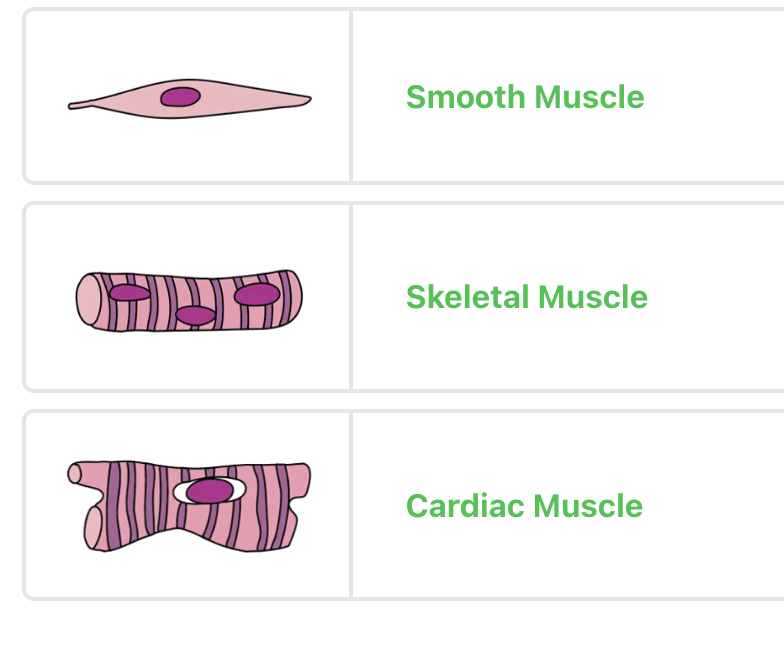
💪 3 Muscle Types — FAST
Muscle | Stripes? | Shape | Nuclei | Memory |
|---|---|---|---|---|
💪 Skeletal | ✅ Striped | Long + cylindrical | Many | Skeletal = LONG + MANY |
❤ Cardiac | ✅ Striped | Short + branched | 1 | Cardiac = BRANCHED + 1 |
🫃 Smooth | ❌ No stripes | Smooth/spindle-shaped | 1 | Smooth = NO STRIPES + 1 |
🔥 EASIEST TRICK:
Skeletal = STRIPES + LONG + MANY
Cardiac = STRIPES + BRANCHES + ONE
Smooth = NO STRIPES + ONE
🧠 Quick visual:
💪 Skeletal: ━━━━━━━━━ → long
❤ Cardiac: Y Y Y → branched
🫃 Smooth: ◇ ◇ ◇ → no stripes
🚨 TEAS MUST-KNOW:
Skeletal = long, striped, many nuclei
Cardiac = short, branched, striped, one nucleus
Smooth = no stripes, one nucleus
Stripe trick:
👉 Skeletal + Cardiac = stripes
👉 Smooth = no stripes
💪 Skeletal muscle = muscles attached to bones → move your skeleton → usually voluntary
❤ Cardiac muscle = muscle only in the heart → pumps blood → involuntary
🫃 Smooth muscle = muscle in the walls of organs and blood vessels → moves/controls things inside your body → involuntary
🧠 Super easy memory:
SKELETAL → SKELETON 🦴
CARDIAC → CARDIO ❤
SMOOTH → STOMACH/ORGANS 🫃
So for the TEAS:
Bones = Skeletal
Heart = Cardiac
Organs/blood vessels = Smooth
Most blood vessels have smooth muscle in their walls.
But the blood vessel is not made entirely of smooth muscle. It has several layers, and the middle layer contains smooth muscle.
🩸 Super easy:
Blood vessel wall → smooth muscle → can tighten or relax
Smooth muscle contracts → vessel gets narrower (vasoconstriction)
Smooth muscle relaxes → vessel gets wider (vasodilation)
🧠 TEAS trick:
Smooth muscle = organs + blood vessels
So when you see blood vessels, think SMOOTH muscle.