Unit 2 Tissues (Anatomy)
 Call Kai
 Learn
Learn Practice Test
 Spaced Repetition
 Match
Match Flashcards
 Knowt Play
1/60

Earn XP
Description and Tags
(pictures + functions + locations + characteristics included)
Name | Mastery | Learn | Test | Matching | Spaced | Call with Kai | Chat |
|---|
No analytics yet
Send a link to your students to track their progress
61 Terms

Stratified squamous epithelium:
(Many layers of flattened cells)

Fibrocartilage:
(Blue Pic: Notice the dense arrangement of the fibers and the chondrocytes that look similar to the ones in hyaline cartilage ↓)

Dense irregular connective:
(Notice the pattern isn't parallel, it's MANY directions ↓)

Dense regular connective:
(Notice how the fibers are running parallel to each other ↓)

Pseudostratified columnar:
(Looks like many layers, but is only 1; often ciliated ↓)

Hyaline cartilage:
(Notice the chondrocytes, but not as densely arranged as fibro ↓)
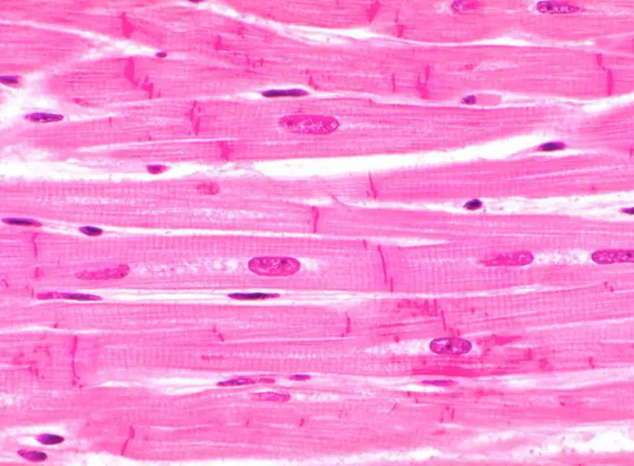
Cardiac muscle:
(Look for those intercalated discs!)

Blood

Simple squamous:
(Pointing to the 1 layer of flattened looking cells ↓)

Nerve tissue

Simple columnar:
(One layer of column shaped cells ↓)

Adipose
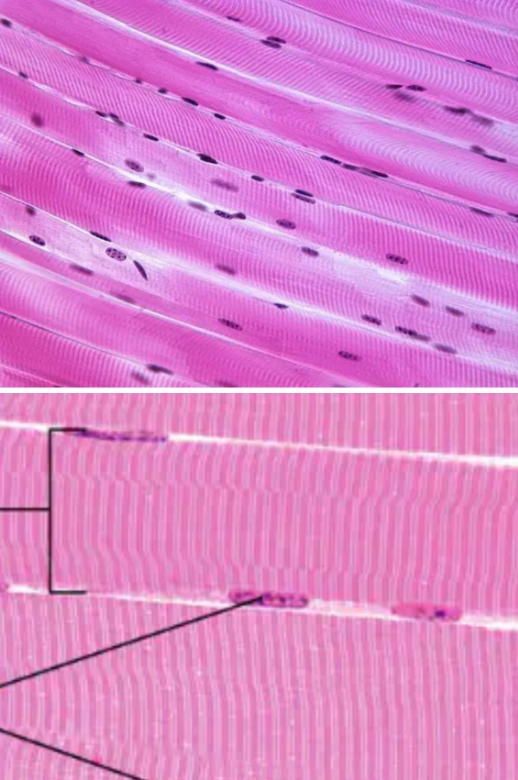
Skeletal muscle:
(Striations, but no intercalated discs ↓)

Smooth muscle:
(No striations or discs; spindle shaped)
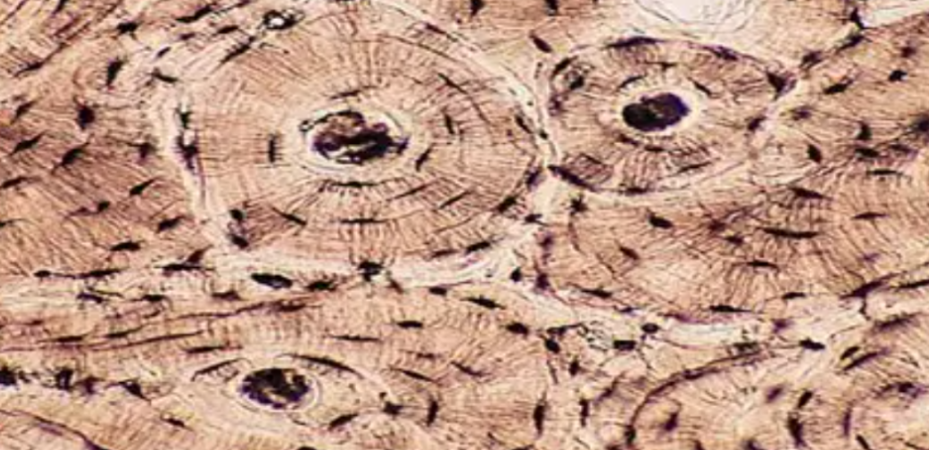
Bone
In sweat, salivary, and sebaceous gland; in mucous and goblet cells lining the intestinal and respiratory tracts
Exocrine glands
One layer, differing heights (looks like it's many layers, but is not)
Pseudostratified columnar
Easy absorption, diffusion, filtration
Simple squamous
Protects underlying tissues often subjected to abrasion
Stratified squamous
Absorption & secretes mucus and enzymes
Simple columnar
Typically have cilia for propulsion of mucus
Pseudostratified columnar
Release hormones into the bloodstream
Endocrine gland
Thin and flat, several layers
Stratified squamous
Thin and flat, one layer
Simple squamous
Forms external part of skin, extends into openings, directly continuous with skin
Stratified squamous
Tall slender rectangles, one layer
Simple columnar
Makes up serosae of ventral body cavity; forms inner lining of heart and blood vessels, lymphatic vessels, and alveolar walls of lungs
Simple squamous
Found in nasal cavity, trachea, bronchi, and upper respiratory tract in general (ciliated); also males sperm carrying ducts (non-ciliated)
Pseudostratified columnar
Found in gallbladder, stomach, small intestine, large intestine (non-ciliated) and uterus and uterine tubes (ciliated)
Simple columnar
Can withstand great tensile stress when force is applied in ONE direction
Dense regular connective tissue
Avascular, lacks nerve fibers, found between pubic bones (as pubic symphysis) and as intervertebral discs
Fibrocartilage
Support and protection, provides levers for muscle actions, and stores minerals; calcified matrix
Bone
Fluid matrix that carries nutrients, gases, and wastes through arteries and veins
Blood
Avascular, lacks nerve fibers, found at synovial joints (covering ends of long bones) and where the ribs attach to the sternum
Hyaline cartilage
Interwoven network of collagen fibers and fibroblast cells
Dense irregular connective tissue
Makes up tendons (attach muscle to bone) and ligaments (attach bone to bone)
Dense regular connective tissue
Makes up the axial and appendicular skeleton and is well vascularized
Bone
Tightly packed, parallel collagen fibers & fibroblast cells
Dense regular connective tissue
Can withstand tension exerted in MANY directions
Dense irregular connective tissue
Found under the skin in subcutaneous tissue and stores energy
Adipose tissue
Found in dermis of the skin and fibrous capsules of joints
Dense irregular connective tissue
Tensile strength allows it to absorb compressive shock and withstand heavy pressure
Fibrocartilage
Resists compression stress, acts as a cushion, and supports and reinforces throughout the body
Hyaline cartilage
Provides insulation and a reserve source of fuel; commonly called fat
Adipose tissue
Nonstriated involuntary muscle
Smooth muscle tissue
All voluntary muscles of the body (biceps, glutes, etc.)
Skeletal muscle tissue
Membrane that plays a role in body temperature regulation
Cutaneous membrane
Lines body cavities that DO NOT open to the outside of the body
Serous membranes
Propels substances along internal passageways via rhythmic contraction and relaxation
Smooth muscle tissue
Membrane that is adapted for secretion and absorption - always wet with secretions
Mucous membranes
Keratinized stratified squamous epithelium attached to a thick layer of connective tissue
Cutaneous membrane
Striated involuntary muscle
Cardiac muscle tissue
Tissue of the brain and spinal cord
Nerve tissue
Striated voluntary muscle
Skeletal muscle tissue
Lines the pericardial, pleural, and peritoneal cavities
Serous membranes
Membrane found in digestive, respiratory, urinary, and reproductive tracts
Mucous membranes
Found in the walls of the heart
Cardiac muscle tissue
Membrane that secretes serous fluid which reduces friction and lubricates parietal and visceral layers
Serous membranes
Found in the walls of hollow organs such as the esophagus, small intestine, bladder, etc.
Smooth muscle tissue
Tissue that has excitable and non-excitable cells: the excitable cells transmit electrical messages and the non-excitable cells support and protect excitable cells
Nerve tissue
Lines passageways in the body that have external connections (open to the outside of the body)
Mucous membranes