POLGOV FIRST QUARTER
0.0(0)
Studied by 18 people Call Kai
 Learn
Learn Practice Test
 Spaced Repetition
 Match
Match Flashcards
 Knowt Play
Card Sorting
1/145

Earn XP
Description and Tags
Last updated 9:27 PM on 10/27/22
Name | Mastery | Learn | Test | Matching | Spaced | Call with Kai | Chat |
|---|
No analytics yet
Send a link to your students to track their progress
146 Terms
1
New cards
Polis
"city/state"
2
New cards
Polites
"citizens"
3
New cards
Politikos
"government officials"
4
New cards
Politika
"affairs of the cities"
5
New cards
Politics
- Is the way that people living in groups make decisions.
- Is about making agreements between people, so that they can live together in groups such as tribes, cities, or countries.
- Is the set of activities that are associated with making decisions in groups, or other forms of power relations among individuals, such as the distribution of resources or position.
May be defined as: The Art of Government, Public Affairs,
Compromise and Consensus, and Power.
- Is about making agreements between people, so that they can live together in groups such as tribes, cities, or countries.
- Is the set of activities that are associated with making decisions in groups, or other forms of power relations among individuals, such as the distribution of resources or position.
May be defined as: The Art of Government, Public Affairs,
Compromise and Consensus, and Power.
6
New cards
gubernare
Latin word of "to steer"
7
New cards
kubernaein
Greek word of "to steer"
8
New cards
Governance
- Comprehends the system by which an organization operates in.
- The action of the government
- The process of decision-making and the process by which decisions are implemented
- According to Leftwich, 2011, it refers to the web of formal and informal institutions, rules, norms, and expectations which govern behavior in societies and without which the very idea of human society is possible.
- The action of the government
- The process of decision-making and the process by which decisions are implemented
- According to Leftwich, 2011, it refers to the web of formal and informal institutions, rules, norms, and expectations which govern behavior in societies and without which the very idea of human society is possible.
9
New cards
public sector, private sector, civil society
What are the three sectors of government?
10
New cards
public sector
state actors and institutions
Ex.
Information and Communications Technology, Defense, Energy, Transport Infrastructure, Healthcare, Agricultural Sectors, Philippines - Education and Training.
Ex.
Information and Communications Technology, Defense, Energy, Transport Infrastructure, Healthcare, Agricultural Sectors, Philippines - Education and Training.
11
New cards
private sector
household and companies
Ex.
Sole proprietorships, Partnerships, Small and mid-sized businesses, Large corporations and multinationals, Professional and trade associations, and Trade unions.
Ex.
Sole proprietorships, Partnerships, Small and mid-sized businesses, Large corporations and multinationals, Professional and trade associations, and Trade unions.
12
New cards
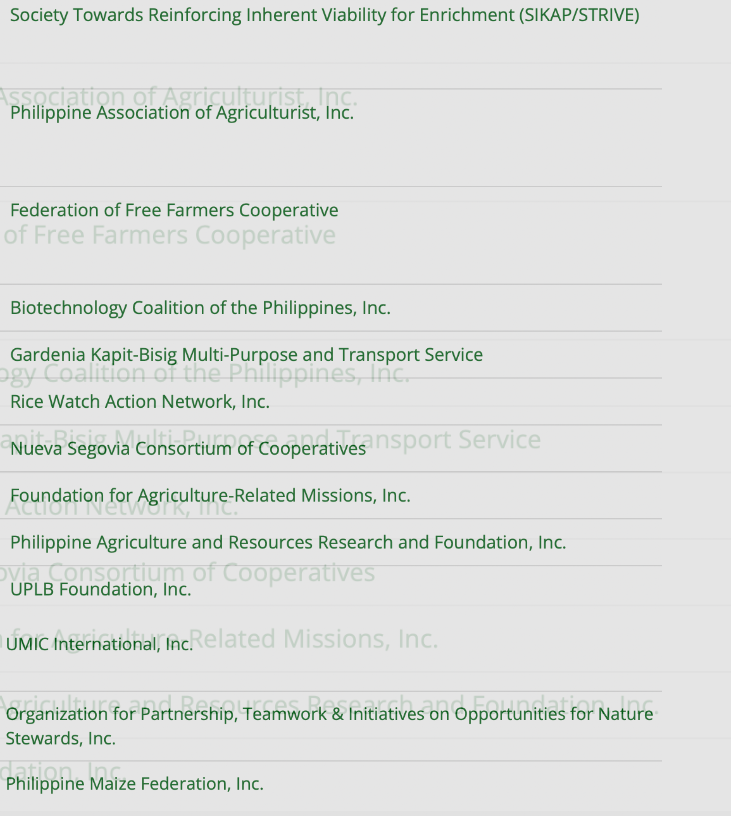
civil society
- ngo
13
New cards
Ideology
- A more or less coherent set of ideas that provides the basis for organized political action.
- To simply put, It is a set of related ideas or a systematic group of concepts and beliefs about culture, society, and human life.
- To simply put, It is a set of related ideas or a systematic group of concepts and beliefs about culture, society, and human life.
14
New cards
Political ideologies
They are evolving sets of ideas that are combined in a variety of ways to guide, inspire, or goad people to political action.
15
New cards
Radical left
- uses violence and force to change the status quo
Ex.
anarchists, communists, socialists, democratic socialists, social democrats, left-libertarians, progressives and social liberals
Ex.
anarchists, communists, socialists, democratic socialists, social democrats, left-libertarians, progressives and social liberals
16
New cards
Radical right
- uses violence and force to maintain status quo
Ex.
conservatists, fascists
Ex.
conservatists, fascists
17
New cards
Anarchy
a society with no governing body or authorities and also the confusion and chaos that can arise in the absence of a ruling authority or power
18
New cards
stateless societies
other term for anarchist countries
19
New cards
Communism
- Is an ideology where the government owns everything and nothing is privately owned.
- Political and economic doctrine that aims to replace private property and a profit-based economy with public ownership and communal control of at least the major means of production (e.g., mines, mills, and factories) and the natural resources of a society.
- Political and economic doctrine that aims to replace private property and a profit-based economy with public ownership and communal control of at least the major means of production (e.g., mines, mills, and factories) and the natural resources of a society.
20
New cards
Conservatism
- a political philosophy emphasizing the need for the principles of natural law and transcendent moral order, tradition, hierarchy and organic unity, agrarianism, classicism, and high culture as well as the intersecting spheres of loyalty.
- beliefs based on the preservation of customs and traditions
- beliefs based on the preservation of customs and traditions
21
New cards
Democracy
- "power of the people"
- a way of governing that depends on the will of the people.
- Is a system where the ruler/leader is held accountable for their actions by the public.
- a way of governing that depends on the will of the people.
- Is a system where the ruler/leader is held accountable for their actions by the public.
22
New cards
Environmentalism
- Aims at the protection and restoration of the environment
- Claims that living things other than humans, and the natural environment as a whole, are deserving of consideration in reasoning about the morality of political, economic, and social policies.
- Claims that living things other than humans, and the natural environment as a whole, are deserving of consideration in reasoning about the morality of political, economic, and social policies.
23
New cards
Fascism
- A way of organizing a society in which a government ruled by a dictator controls the lives of the people and in which people are not allowed to disagree with the government.
24
New cards
Liberalism
- A political ideology that emphasizes an individual’s rights and liberties
- A political and economic doctrine that emphasizes individual autonomy, equality of opportunity, and the protection of individual rights (primarily to life, liberty, and property), originally against the state and later against both the state and private economic actors, including businesses.
- A political and economic doctrine that emphasizes individual autonomy, equality of opportunity, and the protection of individual rights (primarily to life, liberty, and property), originally against the state and later against both the state and private economic actors, including businesses.
25
New cards
Feminism
- Feminism is about all genders having equal rights and opportunities. It's about respecting diverse women's experiences, identities, knowledge, and strengths, and striving to empower all women to realize their full rights.
- Emphasizes the importance of gender in the social, economical, and political rights of women.
- Emphasizes the importance of gender in the social, economical, and political rights of women.
26
New cards
Nationalism
- Nationalism holds that each nation should govern itself, free from outside interference (self-determination), that a nation is a natural and ideal basis for a polity, and that the nation is the only rightful source of political power.
- Revolves around patriarchy
- Revolves around patriarchy
27
New cards
Nations exist, membership in a nation has practical consequences, nationhood has political significance
Three elements of Nationalism
28
New cards
Realism
- An ideology that attempts to explain, model, and prescribe political relations.
- A view of international politics that stresses its competitive and conflictual side. It is usually contrasted with idealism or liberalism, which tends to emphasize cooperation.
- A view of international politics that stresses its competitive and conflictual side. It is usually contrasted with idealism or liberalism, which tends to emphasize cooperation.
29
New cards
Socialism
- A political and economic system in which property and the means of production are owned in common, typically controlled by the state or government.
- Is based on the idea that common or public ownership of resources and means of production leads to a more equal society
- Emphasizes community and social equality
- Is based on the idea that common or public ownership of resources and means of production leads to a more equal society
- Emphasizes community and social equality
30
New cards
Utilitarianism
- An ideology that bases the authority of a government upon their utility.
- Provides an alternative to the theories of Natural Law, Natural Rights, or Social Contract.
- Provides an alternative to the theories of Natural Law, Natural Rights, or Social Contract.
31
New cards
Democracy
A form of government in which a nation's citizens have the power to decide the laws under which they will live. These decisions are made via either a vote of the people in a "direct democracy" or through elected officials who vote on behalf of their constituents in a "representative democracy".
32
New cards
pure or representative
Democracy can be classified as?
33
New cards
demos and kratos
Where did the word "democracy" came from?
34
New cards
demos
people
35
New cards
kratos
power
36
New cards
Aristocracy
- Refers to a government form in which a small, elite ruling class which are the aristocrats — has power over those in lower socioeconomic strata.
- Members are usually chosen based on their education, upbringing, and genetic or family history.
United Kingdom, Russia, and France.
- Members are usually chosen based on their education, upbringing, and genetic or family history.
United Kingdom, Russia, and France.
37
New cards
Monarchy
A king or queen is the Head of the State. The supreme authority is vested in the monarch, an individual ruler who functions as the head of state and who achieves his or her position through heredity.
Countries: United Kingdom, Canada, Denmark, Australia, Bahamas, Belgium Cambodia, Andorra
Countries: United Kingdom, Canada, Denmark, Australia, Bahamas, Belgium Cambodia, Andorra
38
New cards
Parliamentary
- The president serves as the Nominal or Titular head
- The prime minister runs the affairs of the state
- A system of democratic governance of a state where the executive derives its democratic legitimacy from its ability to command the support of the legislature, typically a parliament, to which it is accountable.
- The prime minister runs the affairs of the state
- A system of democratic governance of a state where the executive derives its democratic legitimacy from its ability to command the support of the legislature, typically a parliament, to which it is accountable.
39
New cards
Presidential
- A form of government where the president acts as the state’s chief executive and is independent of the legislature in terms of tenure acts and policies.
- A form of government in which a head of government, typically with the title of president, leads an executive branch that is separate from the legislative branch in systems that use separation of powers.''
United States, Philippines, South Korea, Indonesia, Nigeria, Turkey, France
- A form of government in which a head of government, typically with the title of president, leads an executive branch that is separate from the legislative branch in systems that use separation of powers.''
United States, Philippines, South Korea, Indonesia, Nigeria, Turkey, France
40
New cards
Federal
- A system of government in which the same territory is controlled by two levels of government. Generally, an overarching national government is responsible for broader governance of larger territorial areas, while the smaller subdivisions, states, and cities govern the issues of local concern.
- Is a government where the power is divided into two called: National and Local.
Mexico, Malaysia, Pakistan, UAE, Iraq, Nepal
- Is a government where the power is divided into two called: National and Local.
Mexico, Malaysia, Pakistan, UAE, Iraq, Nepal
41
New cards
Military
- Any government that is administered by military forces, whether or not this government is legal under the laws of the jurisdiction at issue, and whether this government is formed by natives or by an occupying power. It is usually carried out by military workers.
- Is established by military authorities over a harrassed state
China, Japan, North Korea
- Is established by military authorities over a harrassed state
China, Japan, North Korea
42
New cards
Revolutionary
- State is concerned w/ the state of choice
- Tends to arise from the formation of a provisional government after the overthrow of an existing state and political regime. It often takes the form of a revolutionary state, which represents the will of its constituents.'
Ireland, France, German states, the Austrian empire, Hungary, Moldavia, Poland, Philippines
- Tends to arise from the formation of a provisional government after the overthrow of an existing state and political regime. It often takes the form of a revolutionary state, which represents the will of its constituents.'
Ireland, France, German states, the Austrian empire, Hungary, Moldavia, Poland, Philippines
43
New cards
De Jure
The legal, legitimate government of a state is so recognized by other states.
44
New cards
De Facto
A government wherein all the attributes of sovereignty have, by usurpation, been transferred from those who had been legally invested with them to others, who, sustained by a power above the forms of law, claim to act and do really act in their stead.
Abkhazia, Transdniestria, and Northern Cyprus
Abkhazia, Transdniestria, and Northern Cyprus
45
New cards
Civil
The practical implementation of a state on behalf of its citizens, other than through military units (martial law), that enforces law and order and is used to distinguish between religious authority (for example, canon law) and secular authority.
Netherlands, Slovakia, Argentina, Spain, South Africa, Latvia
Netherlands, Slovakia, Argentina, Spain, South Africa, Latvia
46
New cards
Power
- the ability of politicians, leaders, and others to influence policy in a government, thereby controlling what decisions people and countries make
47
New cards
Coercion, Authority, Influence
Enum. nature of power
48
New cards
Coercion
Use of force to persuade someone to do something they are unwilling to do.
49
New cards
Authority
The power to command thought, opinion, or behavior.
50
New cards
Influence
The power to make other people agree with what you want.
51
New cards
One-dimensional Power
The ability to get people to do something you want through open conflict.
52
New cards
Two-dimensional Power
The ability to get what you want by suppressing conflict and limiting the scope of debate.
53
New cards
Third-dimensional Power
The ability to get what you want by influencing the preferences of others.
54
New cards
Fourth-dimensional Power
The solid network of power system through which societies organize themselves (i.e Party List)
55
New cards
Legitimate Power
- power a leading official has due to their position
Ex. A teacher who besides being in charge of the classroom, is balanced in her/his appraisals
Ex. A teacher who besides being in charge of the classroom, is balanced in her/his appraisals
56
New cards
Referent Power
- gained respect and admiration due to influence and has strong interpersonal relationships
Ex. A teacher who is admired by her/his students. (’be like’)
Ex. A teacher who is admired by her/his students. (’be like’)
57
New cards
Expert Power
- those who have more knowledge or experience compared to other members
58
New cards
Reward power
- a leader has the ability to reward a team member. Rewards work best when they are appealing to the members
59
New cards
Coercive power
- uses the power of fear–fear of losing
60
New cards
Charismatic power
have the natural ability to persuade and inspire
61
New cards
Moral power
inspires action based on a strongly held set of values and beliefs
62
New cards
Emotional Power
This is the social power of affect, using emotion to get what you want. Charisma is a form of the emotional power of oratory and body language.
63
New cards
Physical Power
It is derived from a material or physical advantage. Individually, it came from strength or skill. It comes from having things that are not designed to hurt people.
64
New cards
Informational Power
It is derived from expressing one’s views in ways that are reasonable and compelling to others, which is considered effective communication.
65
New cards
Power over
used to refer to a person or group which has a power over the others
66
New cards
Power to
used to approved of something they are doing and hoping they will be successful.
67
New cards
Nation
a stable community of people formed on the basis of common language, territory, economic life, ethnicity, and/or psychological make-up manifested in a common culture
68
New cards
State
an association of people characterized by formal institutions of government, including laws, permanent territorial boundaries and sovereignty (political Independence)
69
New cards
population, territory, government, sovereignty
Four elements of state
70
New cards
Globalization
Transformative growth of connections among people across the planet
71
New cards
economic, political, social
What are the three types of globalization?
72
New cards
constitution
the fundamental law of the land and the basis of government.
73
New cards
constitutional convention
It is drafted indirectly by the people through their representatives in a?
74
New cards
plebiscite
registered voters go to the voting precincts and cast their direct votes “Yes” or “No” to the amendment or revision of the constitution.
75
New cards
nationwide signature drive.
where do the people introduce the amendment directly in the case of a specific modification of the constitution through people’s initiative?
76
New cards
charter
other term for constitution
77
New cards
charter change
popular acronym in the Philippines for those seeking to transition the government from presidential to parliamentary form
78
New cards
Written Constitution
This constitution, as the term denotes, is one that has a definite written form at a particular time, usually written by a group of lawmakers tasked to frame the constitution such as in the case of a constitutional convention.
79
New cards
Unwritten Constitution
This type of constitution is not entirely unwritten, as the name implies. An unwritten constitution simply means that some parts of it are written and others are unwritten or handed down from one generation to another through customs and traditions. This constitution is usually "a product of political evolution, consisting largely of a mass of customs, usages, and judicial decisions together with a smaller body of statutory enactments of a fundamental character, usually bearing different dates.“
80
New cards
The English Constitution
is unwritten only in the sense that it is not arranged into one single document. Part of it is written such the Acts of Parliament and judicial decisions of the courts.
81
New cards
Statute
- a type of law enacted or created by a lawmaking body like the Philippine Congress
- is not created or enacted directly by the people but by their representatives, such as senators or congressmen/women.
- is not created or enacted directly by the people but by their representatives, such as senators or congressmen/women.
82
New cards
Batas Pambansa (BP)
During the 1973 Constitution, the statute was called what?
83
New cards
Republic Act (RA)
During the 1987 Constitution, the statute was called what?
84
New cards
Amendment and Revision
What are the ways you can change the Philippine Constitution?
85
New cards
Amendment
the change is isolated or piecemeal only like a mere change in the term of the President from six years to four years
86
New cards
Revision
the change is substantial which requires a revamp or rewriting of the whole instrument
87
New cards
The Proposal, Ratification
What are the two steps in the revision of the constitution?
88
New cards
The Proposal
Step one in the revision of the constitution that begins with a proposal from a legislative body like our Philippine Congress or directly by the people to amend or revise it.
89
New cards
Constitutional convention, congress, by the people directly
The three (3) methods with which a proposal can be made for change, contained in the 1987 Philippine Constitution
90
New cards
Ratification
The second step in the revision of the constitution that is done by the direct approval by the people, i.e., by registered voters, of the amendment or revision of the constitution. Except by the people’s initiative, the final change in the constitution is done by delegates or drafters—whether by a constitutional convention or constituent assembly. It remains a draft and proposal without the approval of the electorate.
91
New cards
General Emilio Aguinaldo
- the dictatorial President of the Biak-na-Bato Republic in 1897
- the first to draft a constitution in the country with the aim of making the Philippines separate from the Spanish monarchy and an independent nation
- the first to draft a constitution in the country with the aim of making the Philippines separate from the Spanish monarchy and an independent nation
92
New cards
Biak-na-Bato Constitution
The first known constitution in the Philippines
93
New cards
November 1, 1897
Biak-na-Bato Republic was created.
94
New cards
December 15, 1897
Biak-na-Bato Republic lasted only until?
95
New cards
Republican and Presidential
What is the form of government of the Philippines?
96
New cards
Legislative, Executive, Judicial
What are the three branches of government in the Philippines?
97
New cards
Legislative branch
enacts, modifies, and abolishes the law.
98
New cards
Upper House (Senate) and the Lower House (House of Representatives)
The two legislative houses.
99
New cards
Executive branch
Administers or enforces the law. This is vested in the Philippine President.
100
New cards
Judicial branch
Interprets the law and settles legal cases in the courts. This is vested by the Constitution in the Supreme Court and in lower courts established by law.