The Urinary System
 Call Kai
 Learn
Learn Practice Test
 Spaced Repetition
 Match
Match Flashcards
 Knowt Play
1/78

There's no tags or description
Looks like no tags are added yet.
Name | Mastery | Learn | Test | Matching | Spaced | Call with Kai | Chat |
|---|
No analytics yet
Send a link to your students to track their progress
79 Terms
Urinary System
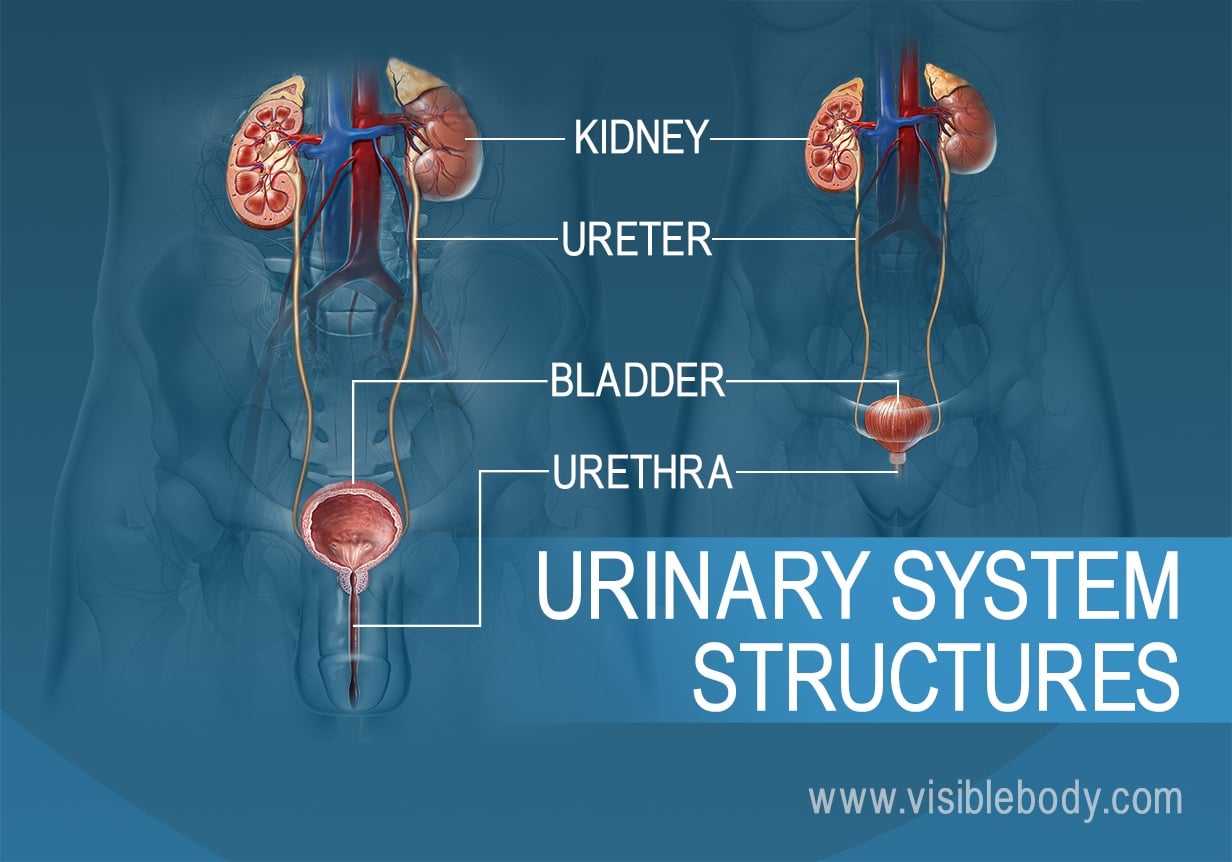
Also refers to as urinary tract. Performs many functions that are important in maintaining homeostasis. Consists of 2 kidneys, 2 uterus and 1 bladder, and 1 urethra.
Homeostasis
Is the process through which the body maintains a constant internal environment.
Urea
Is the major waste product of protein metabolism.
Urine
Is a clear, amber, slightly acidic liquid with an acrid odor that is formed in the kidneys and excreted from the urinary bladder.

Kidneys
Constantly filter the blood to remove waste products and excess water.
Renal Cortex
is the outer region of the kidney. This layer of tissue contains more than one million microscopic units called nephrons.
Medulla
is the inner region of the kidney, and it contains most of the urine-collecting tubules. “tubules: small tube”
Nephrons
are the microscopic functional units of each kidneys. It is here that urine is produced through the processes of filtration, reabsorption, and secretion.
Glomerulus
Each nephrons contains ___ which is a cluster of capillaries, surrounded by a cup-shaped membrane called the Bowman’s capsule, and a Renal Tubule.
Renal Pelvis
is the funnel-shaped area inside each kidney that is surrounded by the renal cortex and medulla. This is where the newly formed urine from nephrons collects before it flows into ureters.
Ureters
are two narrow tubes, each about 10-12 inches long, which transport urine from the kidney to the bladder.
Ureteral Orifices
Urine drains from the ureters into the bladder through the ____ in the wall of the urinary bladder.

Urinary Bladder
is an oval, hollow, muscular organ that is a reservoir for urine before it is excreted from the body.

Urethra
is the tube extending from the bladder to the exterior of the body.
Urethral Meatus AKA urinary meatus
is the external opening of the urethral.
Urination AKA voiding/micturition
is the normal process of excreting urine. Requires the coordinated contraction of the bladder muscles and relaxation of the sphincter.
Nephrologist
A physician who specialized in diagnosing and treating diseases and disorders of the kidneys.
Urologist
A Physician who specializes in diagnosing and treating diseases and disorders of urinary system of females and genitourinary system of males.
Renal Failure AKA Kidney Failure
is the inability of one or both kidneys to perform their functions. Body cannot replace damaged nephrons, when too many nephrons have been destroy.
Uremia AKA Uremic poisoning
Is a toxic condition resulting from renal failure which kidney function is compromised and urea and other waste products normally secreted in the urine are retained in the blood.
Chronic Kidney Disease
is the progressive loss of renal function over months or years. Can be life- threatening. Contributing factor in heart attacks and stokes.
End-Stage Renal Disease AKA Kidney Failure
is the final stage of chronic kidney disease, and this condition is fatal unless the functions of failed kidneys are replaced by dialysis or success kidney transplant.
Nephrotic Syndrome AKA Nephrosis
is a group of conditions in which excessive amounts of protein are lost through the urine. Caused by damage to the glomeruli as a result of low levels of protein in blood.
Hyperproteinuria
is the presence of abnormally high concentrations of protein in the urine.
Hypoproteinemia
Is the presence of abnormally low concentration of protein in the blood.
Ectopic Kidney
A congenital condition in which 1 kidney is located in an abnormal position or has fused with other kidney. “It’s where it should not be there” Risk of urinary tract infections and nephroliths.
Hydronephrosis
Is the dilation of one or both kidneys. Can cause problems with the backing up of urine due to obstruction like nephrolith (kidney stone) or narrowing in ureter.
Pyonephrosis AKA nephropyosis
is suppuration of the kidney.
Polycystic Kidney Disease
Is a genetic disorder characterized by the growth of numerous fluid-filled cysts in the kidneys. “No one ask for this, they just have it”
Renal Cell Carcinoma
Is the most common form of kidney cancer in adults. Can cause flank pain and blood in the urine, but most commonly asymptomatic until tumor has grown enough to impair kidney function.
Wilms Tumor AKA nephroblastoma
A rare type of malignant tumor of the kidney that occurs in young children. There is a high cure rate for this condition when treated promptly.
Stone AKA calculus
is an abnormal mineral deposit that has formed within the body and is named for the organs or tissue where it is located. Vary in size from small-like granules that pass through the body unnoticed…
Urinary Track Obstruction
is a blockage that prevents the flow of urine in one part of the urinary tract.
Nephrolith AKA kidney stone or renal calculus
is found in the kidney. It is hard, solid mass made of minerals and salts that forms inside your kidneys.
Hydroureter
is the distention(swelling) of the ureter with urine that cannot flow because of a ureteral obstruction.
Cystocele AKA prolapsed bladder
is a hernia of the bladder through the vaginal wall. Sometimes results of pregnancy or childbirth.
Interstitial Cystitis
A chronic inflammation within the walls of the bladder. This is similar to those of cystitis, but they don’t respond to traditional treatment.
Vesicoureteral Reflux
Is the backward flow of urine into the ureters from the bladder. Most common in infants and children.
vesicovaginal fistula
is an abnormal opening between the bladder and the vagina that allows constant involuntary flow of urine from the bladder into the vagina. Maybe caused by prolonged labor during childbirth or surgery.
Neurogenic Bladder
is a urinary problem caused by interference with the normal nerve pathways associated with urination.
Benign Prostatic Hyperplasia AKA benign prostatic hypertrophy / enlarged prostate
Is an enlargement of the prostate gland that most often occurs in men older than 50.
Prostate Cancer
one of the most common cancers among men. Can grow slowly with no symptoms, or can grow aggressively and spread throughout the body.
Urinary Tract Infection (UTI)
Begins in the bladder; Infection can affect all parts of the urinary system. Most frequently with women because the urethra is short and located near the opening to the rectum.
Urosepsis
Is a life-threatening systemic bacterial infection that can occur when a urinary tract infection spreads to the kidneys.
Cystitis
Is an inflammation of the bladder.
Pyelonephritis
Is an inflammation of both renal pelvis and kidneys. Caused by the a bacterial infection that has spread upward from the bladder.
Anuria
is the absence of urine formation by the kidneys. Often caused by kidney failure or urinary tract obstruction.
Dysuria
is difficult or painful urination. Associated with urinary tract infection.
Nocturnal Enuresis AKA Bed wetting
Is urinary incontinence during sleep.
Nocturia
Is frequent and excessive urination during the night.
Urinary Retention
Is the inability to completely empty the bladder when attempting to urinate. Most frequent in men.
Incontinence
is the inability to control the excretion of urine, feces, or both.
Stress Incontinence
Is the inability to control the voiding of urine under the physical stress such as running, sneezing, laughing, or coughing. Most common in women.
Overactive Incontinence AKA urge incontinence
occurs when muscles of the bladder contract involuntarily even though the bladder is not actually full enough to indicate the need to urinate.
Urinalysis
Is the examination of urine for the presence of abnormal elements. These tests are used to diagnose diseases, kidney damage, and pregnancy. Can also detect illicit drugs and prescription meds.
Glomerular Filtration Rate
is a blood test to check how well the kidneys are functioning at filtering blood.
Bladder Ultrasound
Is the use of handheld ultrasound transducer to look for stones or for elevation of the bladder by enlarged prostate and to measure the residual amount of urine remaining in the bladder after urination.
(Normal bladder holds 300-400mL of urine. More than this remain in the bladder after urination this is describe as distended.
Cystoscopy
Is the visual examination of the urinary bladder with the use of specialized type of endoscope known as cystoscope.
Computed Tomography AKA CT scan
is commonly used to evaluate the urinary system because it can be rapidly performed and provides additional radiographic imaging of the abdomen, which may reveal other potential sources for patient’s symptoms.
KUB (kidney, Ureters, Bladder)
is an x-ray study without the use of a contrast medium. This is also referred as flat-plate of the abdomen, used to detect bowel obstructions and nepholiths.
Voiding Cystourethrography
is a diagnostic procedure in which fluoroscopy is used to examine the flow of urine from the bladder and through the urethra.
Diuretics
are medications administered to increase secretion, primarily to rid the body excess water and salt. Example of this is Coffee, tea, and alcohol beverages.
Dialysis
Is the procedure to remove waste products, such as urea, creatinine, and excess water from the blood of a patients whose kidneys no longer function
Hemodialysis
Is the process by which waste products are filtered DIRECTLY from the patient’s blood. The filtered blood is then returned to the patient’s body.
Peritoneal Dialysis
the lining of the peritoneal cavity acts as filter to remove waste from the blood. Removes waste through a fluid exchange in the peritoneal cavity. This can be done at home by the patient.
Nephrolysis
Is the surgical freeing of a kidney from adhesions. Can also be describe a pathologic condition in which there is a destruction of renal calls.
Nephrostomy
is the placement of catheter to maintain an opening from the pelvis of one or both kidneys to the exterior of the body.
Plelotomy
Is a surgical incision into the renal pelvis. This is procedure is performed to remove obstructions such as a stone lodged in the junction between the renal pelvis and ureter.
Renal Transplantation AKA Kidney Transplant
is the grafting of a donor kidney, from either a living or nonliving donor, into the body to replace the recipient’s failed kidneys.
Extracorporeal Shockwave Lithotripsy (ESWL)
Most common kidney stone treatment. A high-energy waves travel through water or gel are used to break the stone into fragment, which excreted in the urine.
Percutaneous Nephrolithotomy
is the surgical removal of nephrolith through a small incision in the back. Small tube in temporary inserted through the incision of the kidney. First; remove urine then stone is crushed and then remove. This is used when the ESWL is not successful.
Urinary Catheterization aka Cathing
Is the insertsion of a flexible plastic tube called catheter into the baldder to withdraw urine for diagnostic purpose, to allow urine to drain freely, or place fluid chemotherapy solution.
Indwelling Catheter
remains inside the body for a prolonged time based on need. This can be either urethral or suprapubic catheter.
Foley Catheter
This device is made of flexible tube with a balloon filled with sterile water at the end to hold it in place in the bladder. Commonly used i postsurgical patients. and it was named after Frederic Foley
Meatotomy
Is a surgical incision made in the urethral meatus to enlarge the opening.
Ablation
is a term used to describe some type of treatment of prostate cancer. This involves the removal of its function through the use of surgery or medication. Electrocautery is high-frequency electrical current to destroy tissue.
Kegel Exercise
named after Dr. Arnold Kegel, are a series of pelvic muscle exercises used to strengthen the muscles of pelvic bone. In male, treat prostate pain and swelling. In female, recovery quickly after childbirth.
Bladder Retaining
Is behavioral therapy in which the patient learns to urinate on SCHEDULE, with increasingly longer time intervals as the bladder increases its capacity. The goal is to reestablish voluntary bladder control and to break cycle of frequency and urgency as a result of urge incontinence.