Ceramics Exam Review Term 1
 Call Kai
 Learn
Learn Practice Test
 Spaced Repetition
 Match
Match Flashcards
 Knowt Play
1/46

Earn XP
Description and Tags
Vocabulary flashcards covering the core concepts, artists, techniques, and review topics from Mrs. Gorey's Term 1 Ceramics Exam Review.
Name | Mastery | Learn | Test | Matching | Spaced | Call with Kai | Chat |
|---|
No analytics yet
Send a link to your students to track their progress
47 Terms
What are the stages of clay in order 1-6?
Slip, plastic, leatherhard, bonedry, bisqueware, and glazeware
What stage is mainly water?
Slip
What stage is the easiest to build with?
plastic
What stage do you throw clay on the pottery wheel in?
plastic
What stage is the best to add designs or carve in?
Leatherhard
What stage is the most fragile?
Bonedry
What stage is the clay in after being fired once?
Bisqueware
What stage is it when clay has been fired twice and has glaze on it?
Glazeware
What stage does clay need to be in BEFORE firing for the first time?
bonedry
What is considered the glue of the ceramic world?
slip
At what stage is clay no longer recyclable?
bisqueware
Approximately what temperature does the kiln fire to?
2000
What is the process used for joining two pieces of clay?
slipping and scoring
Name two things that can cause a project to blow up in the kiln.
Air bubbles and moisture
Name two things that happen as a ceramic project dries other than it hardens/becomes stronger/permanent.
Shrinking, warping

What tool is this?
Sponge tool

What tool is this?
Needle tool

What tool is this?
ribbon tool

What tool is this?
loop tool

What tool is this?
Wire tool

What tool is this?
rib tool

What tool is this?
Wooden modeling tool

What tool is this?
sgraffito tool

What tool is this?
bat tool

What tool is this?
banding wheel

What tool is this?
rolling pin

What tool is this?
pottery wheel

What tool is this?
kiln
Provide your own definition of glaze, making sure to including what glaze is and what it provides or gives to ceramic work.
Glaze is a layer of a glass substance that is painted onto a ceramic piece and then fired. Glaze gives the fired piece color, texture, or can make the work food safe.
What are the main components of glaze?
Alumina, Silica, Colorants, Flux, Modifiers
How many coats of glaze are typically recommended for an even application of glaze?
3-4
When mixing glazes, which of the following is NOT an acceptable approach?
Mixing directly in the glaze bottle
Explain two ways in which glaze is different from acrylic paint.
Glaze is different from acrylic paint because glaze goes in the kiln and can withstand the heat while acrylic paint can not go in the kiln. Glaze also changes colors once fired and arcylic paint is the same color no matter what.
Explain two ways in which glaze is different from underglaze.
Glaze is different from underglaze because it is thicker and can only be applied during the bisqueware stage. Underglaze is thinner and has a matte finish while glaze has a glossy finish. Underglaze can be applied during leatherdry and the bonedry stage as well.
List three different ways you can apply glaze.
You can apply glaze by painting it on, lattleing the piece, or diping the piece into a pot of glaze.
What do you need to do to your bisque fired project before you can apply glaze?
You need to wipe the ceramic piece down with a wet sponge and sand of the rough sharp parts of the ceramic piece before glazing.
additive
the process of adding layers or pieces of material together to build up the desired form over time
subtractive
removing pieces of material to achieve the design
relief sculpture
shapes or figures rise out from a flat background
hand-building
a ceramic technique that allows you to create forms with clay and your hands
what are the three hand-building techniques
pinch, coil, slab
what is critic
someone who provies feedback to another artist
why do we critic
to improve other artists skills and give them feedback
what is reclaiming clay
reusing leftover or discarded clay by rehydrating and remolding it
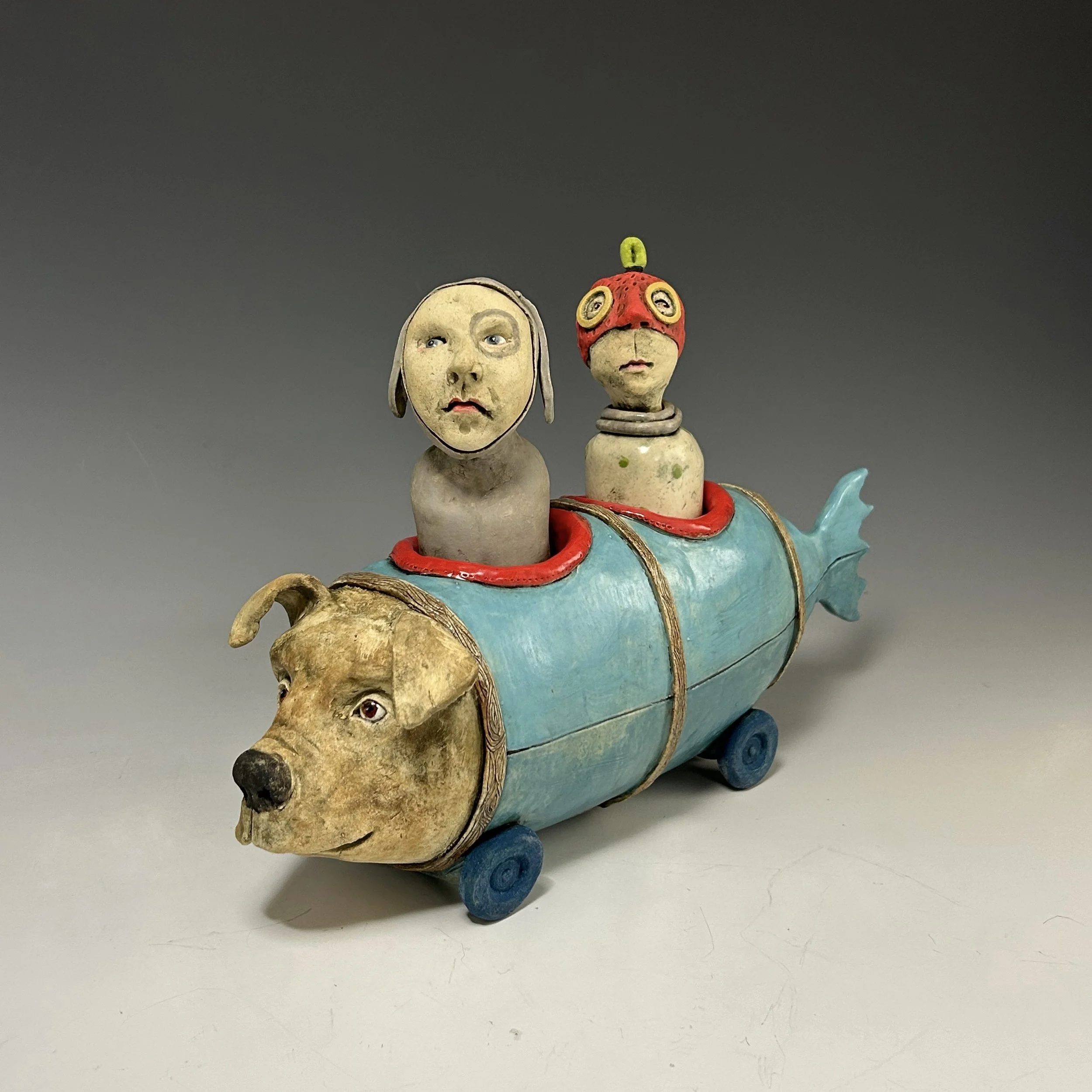
who made this art piece?
Jeanine Pennell

who made this art piece?
Roberto Lugo

who made this art piece?
Jihyun Kim