art exam 1 flashcards
 Call Kai
 Learn
Learn Practice Test
 Spaced Repetition
 Match
Match Flashcards
 Knowt Play
1/81

There's no tags or description
Looks like no tags are added yet.
Name | Mastery | Learn | Test | Matching | Spaced | Call with Kai | Chat |
|---|
No analytics yet
Send a link to your students to track their progress
82 Terms
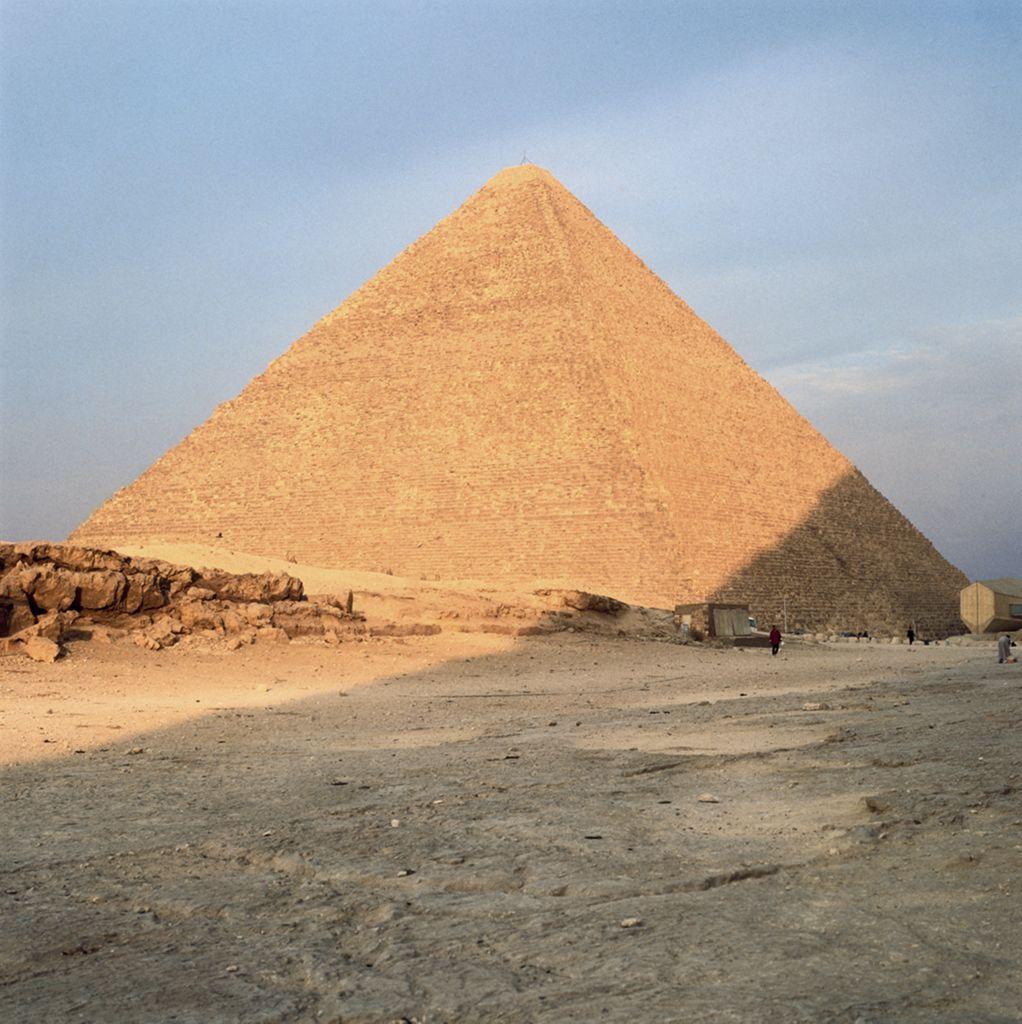
Pyramid of Khufu (Great Pyramid)
Giza, 26th BCE
granite/limestone
network of tombs (necropolis)

Hatsheput
Deir el-Bahri, ruled c.1479-1458
red granite and paint
idealistic (male representation of a female pharaoh)

Book of the Dead for the Chantress of Amun, Nauny
Ancient Egypt, c. 1050 BCE
paint/papyrus
instructions for the afterlife, illustrates the judgement of Osiris
composition
overall arrangement, organizing design, or visual structure of a work of art
content
subject matter, ideas, intention, or meanings of a work
ground line
solid baseline that indicates the ground plane on which the figure stands. a series of ground lines can be used to indicate receding space
hierarchic scale
the use of differences in size to indicate relative importance. For example, with human figures, the larger the figure, the greater the importance.
heiroglyphs
picture writing; words and ideas rendered in the form of pictorial symbols
iconography
identifying and studying the subject matter and conventional symbols in works of art
idealization
a process in which artists idealize their forms and figures in relation to cultural values about perfection and/or their own personal beliefs
naturalism
a style of depiction in which the physical appearance of the rendered image in nature seems to be accurately described

Standing male worshipper
Square Temple, Eshunna (Iraq), c. 2900-2600 BCE
limestone/alabaster/shell/bitumen

Kore from Chios
Akropolis, Athens, c. 510 BCE
marble with paint (used to be colorful)
Has the archaic smile

Yakshi bracket figure and relief, east torana, Great Stupa
Sanchi, c. 150-50 BCE
Sandstone
represents auspiciousness, fertility, and growth
abstract
art that does not attempt to describe the appearance of visible forms but rather to transform them into stylized patters or to alter them in conformity to ideals
alabaster
a soft, fine, white, translucent stone
archaic smile
the curved lips of an ancient Greek statue from the period 600-480 BCE, usually interpreted as a way of animating facial features
kore
an archaic Greek statue of a young woman or girl
relief sculpture
A sculpted image or design whose flat background surface is carved away to a certain depth, setting off the figure(s)
sculpture in the round
free standing sculpture, unconnected to a background or block
stupa
in Buddhist architecture, a bell-shaped or pyramidal religious monument, made of piled earth or stone and containing sacred relics
votive figure
an image created as a devotional offering to a deity

Riace Warrior (Bronzi di Riace)
Shipwreck near Riace (Italy), c. 460-450 BCE
bronze/bone/glass/silver/copper
depicts a Greek warrior
cast using lost wax technique

Soldiers from the Mausoleum of Shihuangdi
Lintong (China), c. 210 BCE
terracotta
around 8000 soldiers, exhibit astonishing individuality
Qin Shi Huang— first Qin Emperor
meant to protect/serve emperor after death
molded then cast to mass produce

Sasanian Wall Panel, Bird in Rondel
near Ctesiphon (Iraq), Persian, c. 6th C. CE
Stucco
commonly used to decorate iwans and reception halls of the elite, represented game (hunting animals)
bronze
metal made with copper alloy
contrapposto
meaning “set against”, used to describe the Classical convention of representing human figures with opposing alternations of tension and relaxation on either side of a central axis to imbue figure with a sense of potential for movement
glazing
in ceramics, outermost layer of vitreous liquid that, upon firing, renders ceramics waterproof
lost-wax casting
a method of casting metal, such as bronze, by a process in which a wax mold is covered with clay and plaster, then fired, melting the wax and leaving a hollow form. molten metal is then poured into the hollow space and slowly cooled
stucco
a mixture of lime, sand, and there ingredients made into an easily moldable material. when dry, produces a durable surface used for covering walls or for architectural sculpture and decoration
terra cotta
a medium made from clay fired over low heat and sometime sleft unglazed
classical
art and architecture of ancient Greece and Rome
ceramics
objects made with clay and hardened by firing

Great Stupa
Sanchi, India, founded 3rd C., enlarged c. 150-50 BCE
brick/stone
sepulchral monument related to Buddhism
gates (torana), yasti (spire) symbolizing the axis mundi, surrounded by a fence (hasmika)
circumambulation

Pantheon
Rome, 110-128 CE
stone/concrete
possibly work of Apoblodorus of Damascus
“place of Gods”
post-and-lintel (horizontal and vertical features)
free standing columns attached to dome rotunda

Main Hall, Inner Shrine/Ise Shrine (Shinto)
Mie Prefecture, Japan
Rebuilt every 20 years since 690 CE
cypress wood
style similar to ancient rice granary buildings
only open to royal family, religious officials, and people rebuilding
axis mundi
“axis of the world,” which marks sacred sites and denotes a link between the human and celestial realms
capital
the sculpted block that sits on top of a column. A historiated [ ] is one displaying human figures or narrative scenes
central planned building
any structure designed with a primary central space surrounded by symmetrical areas on each side. ex. rotunda
coffer
a recessed decorative panel that is used to reduce the weight of, and to decorate, ceilings or vaults
column
an architectural element used for support and/or decoration
drum
circular wall that supports a dome
elevation
the arrangement, proportions, and details of any vertical side or face of a building
oculus
a circular opening, either as windows or at the apex of a dome
plan
a drawing representing the arrangement of the parts of a building
rotunda
any building constructed in a circular shape, usually producing a large open space crowned by a dome
vault
an arched masonry structure that spans an interior space
sanctuary
a sacred or holy enclosure used for worship
stupa
bell shaped or pyramidal religious monument
torana
an ornamented gateway, usually leading to a stupa

Ishtar Gate
Nebuchadnezzar II’s Palace, Babylon (Iraq), c. 575 BCE
glazed brick
processional way
dragons symbolize God Marduk, lions and flowers symbolize War Goddess Ishtar

Exterior View, Arch of Titus
Rome, after 81 CE
concrete/marble/stone/wood
Historically a symbol of power, triumph due to Roman political victory against internal turmoil
Been recreated many times
Relief structure panels

Chichen Itza, ball court
Maya Culture, Yucatán, Mexico, 9th-12th C. CE
sacred, ritual ballgame
serpent ballcourt markers
apse
a large semicircular or polygonal (and usually vaulted) niche protruding from the end wall of building (e.g. the altar in a church)
arch
a curved structural element that spans an open space, built from wedge shaped stone blocls called vouissors and held at top by a trapezoidal keystone
basilica
a large rectangular building. Often built with a clerestory, side aisles separated from the center nave by colomnades, and an apse at one or both ends (Roman center for administration)
bay
a unit of space defined by architectural elements such as columns, piers, and walls
module
a segment or portion of a repeated design, basic unit of measurement
motif
any recurring element of a design or composition
nave
the central aisle of a basilica
triumphal arch
freestanding, massive stone gateway with a large central arch, builtas urban ornament and/or to celebrate military victories
vault
arched masonry structure that spans an interior space

Empress Theodora and her Attendants, sanctuary wall
San Vitale, Ravenna (Italy) c. 547
mosaic(tesserae)
commissioned by bishop while Italy under Ostogothic rule
Halos around the rulers

Mihrab, Mosque, Madrasa Imami
Isfahan, Iraq, 1345-55
glazed ceramic/faience mosaic
qibla wall of a mosque, prayer niche
contains script from Qur’an

Rose Window and Lancets, North Transept, Chartres Cathedral
France, c. 1230-1235
stained/painted glass
medieval, Gothic humanism

Qur’an folio
Central Islamic Lands, 9th C. -10th C.
gold/ink on parchment
Kufic script, diacritical marks
Sura: chapter title/marker in gold

Chi Rho Page, Gospel of Matthew, Book of Kells
Iona, Scotland, c. 800
ox gall, inks/pigments/vellum
“Chi Rho”— Christ

The Hour of Cowdust
Kangra School, Punjab, India, c. 1790
gouache/paper
Krishna
influenced by Mughal naturalism
calligraphy
handwriting as an art form
codex
a book, or group of manuscript pages (folios) held together by stitching or other binding on one side
illumination
a painting on paper or parchment used as illustration and/or decoration for manuscripts or albums
ink painting
a monochromatic style of painting developed in china using black ink with gray washes
interlace
a type of linear decoration in which ribbonlike bands are illusionistically depicted as if woven under and over one another
manuscript
a handwritten book or document
medium
the materials from which a work of art is made
narrative image
a picture that portrays an event drawn from a story, either factual or fictional
patron
institution or person who commissions or finances a work of art
vellum
a fine animal skin prepared for writing and painting

Purse lid, Sutton Hoo Ship Burial
Early Anglo-Saxon, early 7th C.
gold, garnet, glass
Celtic interlace
Heraldic beasts— apotropaic (averting evil)

Lidded Saltcellar
Sierra Leone, 15th-16th C.
Bullom or Temne and Portuguese collaboration
ivory
Indigenous belief systems: 4 snakes (wealth and danger) confront 4 dogs (associated to be spiritually astute) where the snakes represents the Portugese
Itinerant courts

Two Flasks
Ming Dynasty, China, c. 1403-1424
Porcelain, cobalt blue underglaze
Kaolin clay, named after porcellana shell
itinerant court
migratory form of government where central administration and monarch traveled continuously