BIS2C Lab Practical Character Cards
 Call Kai
 Learn
 Practice Test
 Spaced Repetition
 Match
 Flashcards
 Knowt Play
1/43

There's no tags or description
Looks like no tags are added yet.
44 Terms

Feather Dust Worm
Phylum: Annelida
Family: Sabellidae
Feeding: filter
Gut Type: complete gut (one-way)
Symmetry: Bilateral
Key Features:
Feathery Feeding Appendages
Segmented Bodies
Paired Setae


Rag Worm
Phylum: Annelida
Family: Nereididae
Feeding: Predator
Gut Type: Complete gut (one-way gut)
Symmetry: Bilateral
Key Features:
Eversible Jaws
Segmented Bodies
Paired Setae
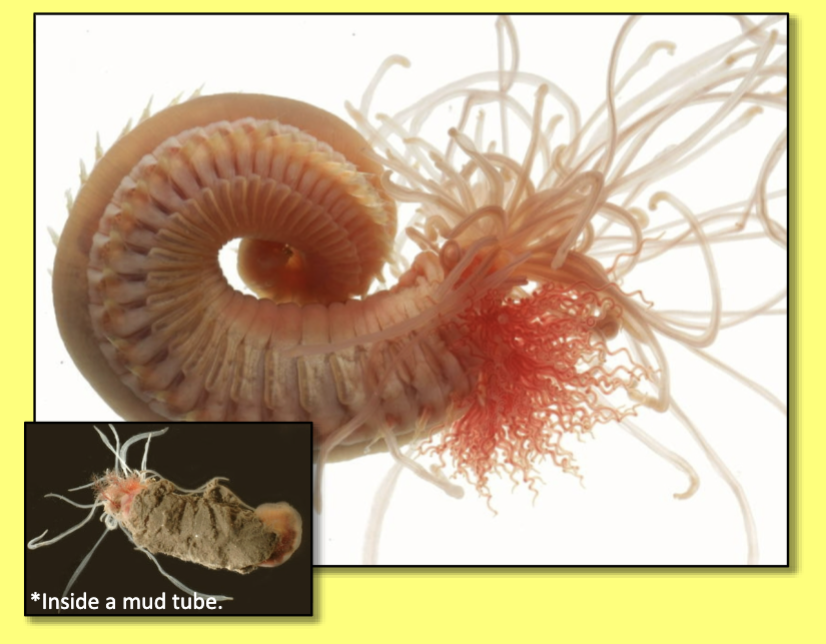
Spaghetti Worms
Phylum: Annelida
Family: Terebellidae
Feeding: Deposit
Gut Type: Complete Gut (one-way gut)
Symmetry: Bilateral
Key Features:
Segmented Bodies
Paired Setae

Earthworm
Phylum: Annelida
Family: Lumbricidae
Feeding: Deposit
Gut Type: Complete Gut (one-way gut)
Symmetry: Bilateral
Key Features:
Segmented Bodies
Paired Setae
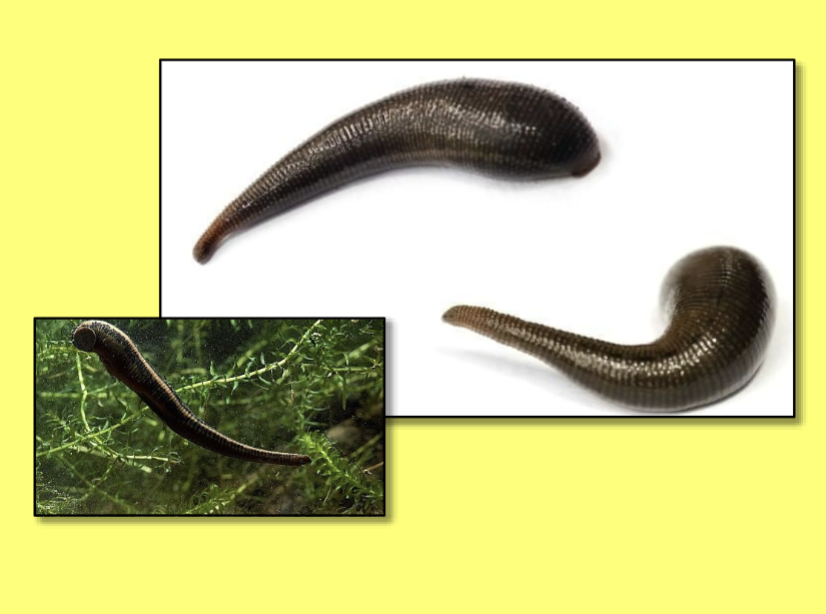
Leeches
Phylum: Annelida
Family: Hirudinidae
Feeding: Predator
Gut Type: Complete Gut (oine-way gut)
Symmetry: Bilateral
Key Features:
Segmented Bodies
Paired Setae
Sucker Mouthparts

Porcelain Crab
Phylum: Anthropoda
Family: Porcellanidae
Feeding: Suspension Feeder
Gut Type: Complete Gut (one-way)
Symmetry: Bilateral
Key Features:
Segmented body divided into tagmata
Jointed appendages
Cuticular exoskeleton composed of chitin

Hermit Crab
Phylum: Anthropoda
Family: Paguridae
Feeding: scavenger, predator
Gut Type: complete gut (one way)
Symmetry: Bilateral
Key Features
Segmented body divided into tagmata
Jointed appendages
Cuticular exoskeleton composed of chitin

Gooseneck Barnacle
Phylum: Anthropoda
Family: Pollicipedidae
Feeding: suspension feeder
Gut Type: complete gut (one way)
Symmetry: Bilateral
Key Features
Segmented body divided into tagmata
Jointed appendages
Cuticular exoskeleton composed of chitin

Acorn Barnacle
Phylum: Anthropoda
Family: Balanidae
Feeding: suspension feeder
Gut Type: complete gut (one way)
Symmetry: Bilateral
Key Features
Segmented body divided into tagmata
Jointed appendages
Cuticular exoskeleton composed of chitin

Horseshoe Crab
Phylum: Anthropoda
Family: Limulidae
Feeding: scavenger, predator
Gut Type: complete gut (one way)
Symmetry: Bilateral
Key Features
Segmented body divided into tagmata
Jointed appendages
Cuticular exoskeleton composed of chitin
Chelicerae

Crab
Phylum: Anthropoda
Family: Brachyura
Feeding: scavenger, predator
Gut Type: complete gut (one way)
Symmetry: Bilateral
Key Features
Segmented body divided into tagmata
Jointed appendages
Cuticular exoskeleton composed of chitin

Tarantula
Phylum: Anthropoda
Family: Theraphosidae
Feeding: predator
Gut Type: complete gut (one way)
Symmetry: Bilateral
Key Features
Segmented body divided into tagmata
Jointed appendages
Cuticular exoskeleton composed of chitin
Chelicerae

Cockroach
Phylum: Anthropoda
Family: Blaberidae
Feeding: scavenger
Gut Type: complete gut (one way)
Symmetry: Bilateral
Key Features
Segmented body divided into tagmata
Jointed appendages
Cuticular exoskeleton composed of chitin

Scorpion
Phylum: Anthropoda
Family: Scorpionidae
Feeding: predator
Gut Type: complete gut (one way)
Symmetry: Bilateral
Key Features
Segmented body divided into tagmata
Jointed appendages
Cuticular exoskeleton composed of chitin
Chelicerae
Fluorescence under UV light
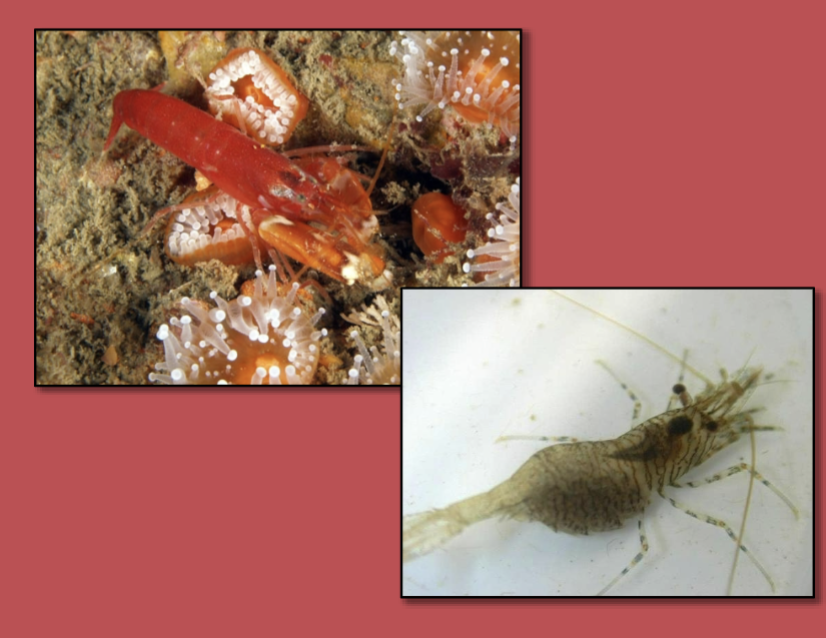
Shrimp
Phylum: Anthropoda
Family: Hippolytidae
Feeding: scavenger, predator
Gut Type: complete gut (one way)
Symmetry: Bilateral
Key Features
Segmented body divided into tagmata
Jointed appendages
Cuticular exoskeleton composed of chitin
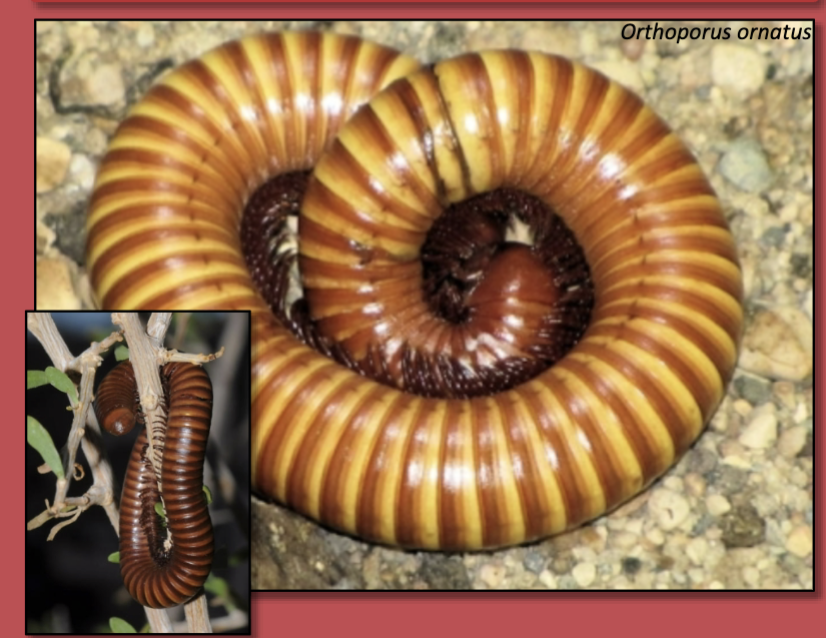
Desert Millipede
Phylum: Anthropoda
Family: Orthoporus spp.
Feeding: scavenger, grazer
Gut Type: complete gut (one way)
Symmetry: Bilateral
Key Features
Segmented body divided into tagmata
Jointed appendages
Cuticular exoskeleton composed of chitin
Two pairs of appendages per segment

Death Feigning Beetle
Phylum: Anthropoda
Family: Absolus Verrucosus
Feeding: scavenger
Gut Type: complete gut (one way)
Symmetry: Bilateral
Key Features
Segmented body divided into tagmata
Jointed appendages
Cuticular exoskeleton composed of chitin
Holometabolous

Painted Lady Butterfly
Phylum: Anthropoda
Family: Vanessa Cardui
Feeding: nectivore
Gut Type: complete gut (one way)
Symmetry: Bilateral
Key Features
Segmented body divided into tagmata
Jointed appendages
Cuticular exoskeleton composed of chitin
Holometabolous

Solitary Tunicate
Phylum: Chordata
Feeding: suspension feeder
Gut Type: complete gut (one way)
Symmetry: Bilateral
Key Features
Two siphons
Notochord
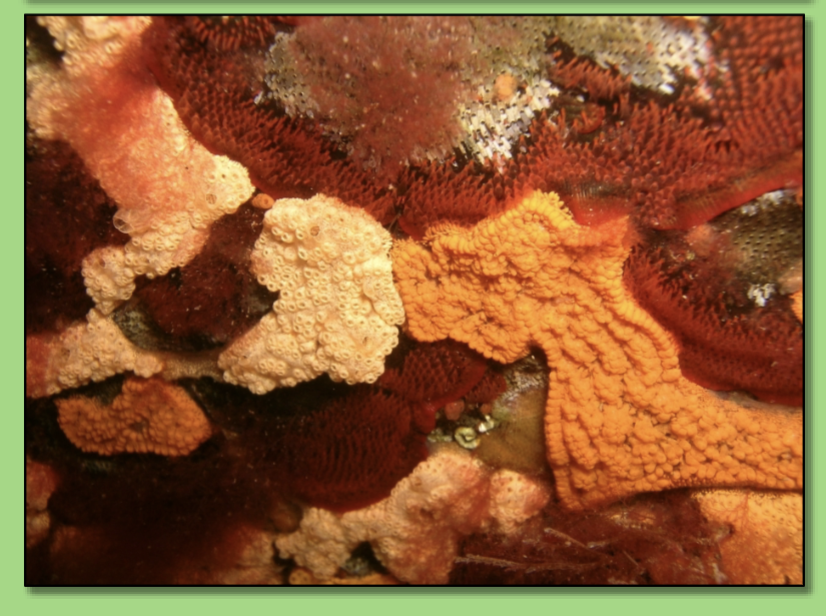
Compound Tunicate
Phylum: Chordata
Feeding: suspension feeder
Gut Type: complete gut (one way)
Symmetry: Bilateral
Key Features
Two siphons
Notochord

Hydroid
Phylum: Cnidaria
Class: Hydrozoa
Feeding: suspension feeder
Gut Type: incomplete gut (two way)
Symmetry:
radial symmetry in polyps
colony is asymmetric
Key Features
Polyp body type
Special stinging cells named nematocysts
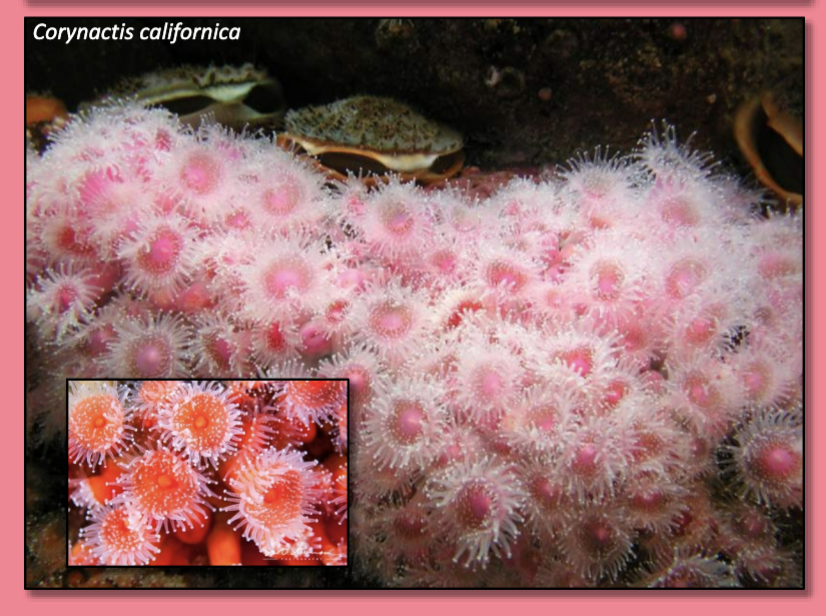
Strawberry Anemone
Phylum: Cnidaria
Class: Corynactis Californica
Feeding: predator
Gut Type: incomplete gut (two way)
Symmetry: radial
Key Features:
Polyp body type
Special stinging cells named nematocysts

Moon Jelly
Phylum: Cnidaria
Family: Ulmaridae
Feeding: predator
Gut Type: incomplete gut (two way)
Symmetry: radial
Key Features:
Polyp and medusae body types at different stages of development
Special stinging cells named nematocysts
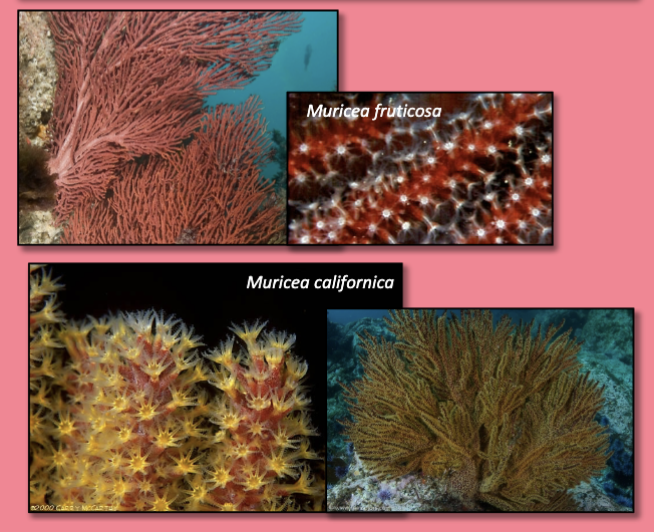
Gorgonian
Phylum: Cnidaria
Family: Plexauridae
Feeding: suspension feeder
Gut Type: incomplete gut (two way)
Symmetry:
radial symmetry in polyps
colony is asymmetric
Key Features:
Polyp body type
Special stinging cells named nematocysts

Gian Green Sea Anemone
Phylum: Cnidaria
Family: Actiniidae
Feeding: predator
Gut Type: incomplete gut (two way)
Symmetry: radial
Key Features:
Polyp body type
Special stinging cells named nematocysts

Upside-down Jelly
Phylum: Cnidaria
Genus: Cassiopeia
Feeding: suspension feeder
Gut Type: incomplete gut (two way)
Symmetry: radial
Key Features:
Polyp and medusae body types at different stages of developmeny
Special stinging cells named nematocysts

Purple Urchin
Phylum: Echinodermata
Family: Strongylocentrotus Purpuratus
Feeding: Algal Grazer
Gut Type: complete gut (one way)
Symmetry: pentaradial
Key Features:
No head or brain
Water vascular system
tube feet
spines
locomotion with movement of spines

Sea Cucumber
Phylum: Echinodermata
Genus: Parastichopus sp.
Feeding: Deposit feeder
Gut Type: complete gut (one way)
Symmetry: pentaradial
Key Features:
No head or brain
Water vascular system
tube feet
locomotion with movement of spines

Sand Dollar
Phylum: Echinodermata
Genus: Dendraster sp.
Feeding: suspension, deposit feeder
Gut Type: complete gut (one way)
Symmetry: pentaradial
Key Features:
No head or brain
Water vascular system
tube feet
spines
locomotion with movement of spines
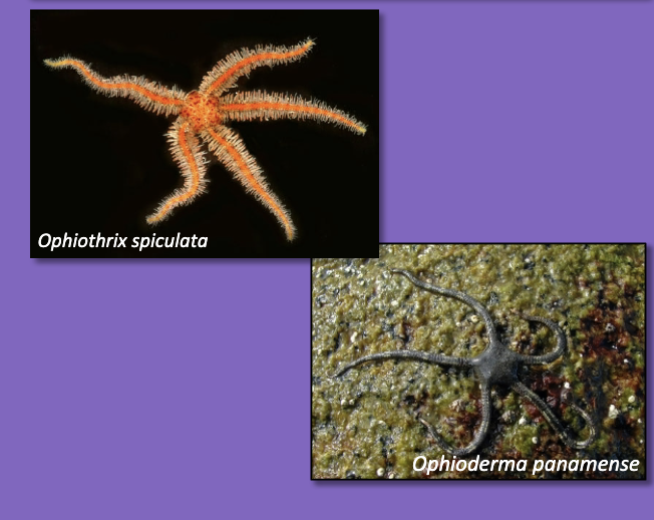
Brittle Star
Phylum: Echinodermata
Class: Ophiuroidae
Feeding: scavenger
Gut Type: incomplete gut (two way)
Symmetry: pentaradial
Key Features:
No head or brain
Water vascular system
tube feet may be present
spines
locomotion with movement of spines

Bat Star
Phylum: Echinodermata
Genus: Asterina sp.
Feeding: scavenger, predator
Gut Type: complete gut (one way)
Symmetry: pentaradial
Key Features:
No head or brain
Water vascular system
tube feet
spines
locomotion with movement of spines

Pisaster Star
Phylum: Echinodermata
Genus: Asteriidae
Feeding: scavenger, predator
Gut Type: complete gut (one way)
Symmetry: pentaradial
Key Features:
No head or brain
Water vascular system
tube feet
locomotion with movement of spines
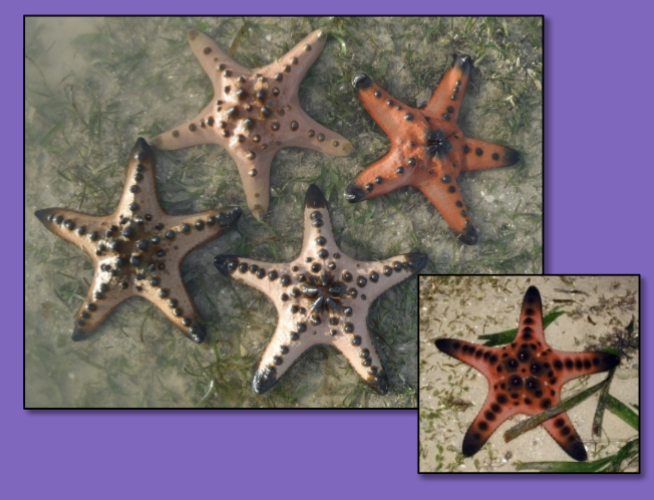
Chocolate Chip Star
Phylum: Echinodermata
Genus: Protoreaster sp.
Feeding: scavenger, predator
Gut Type: complete gut (one way)
Symmetry: pentaradial
Key Features:
No head or brain
Water vascular system
tube feet
locomotion with movement of spines
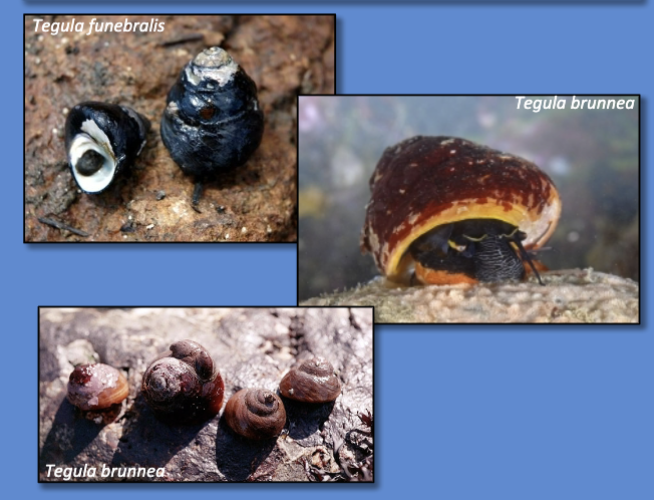
Turban Snail
Phylum: Mollusca
Family: Tegulidae
Feeding: grazer
Gut Type: complete gut (one way)
Symmetry: bilateral
Key Features:
Specialized muscular foot used primarily for locomotion
radula present
mantle present
presence of a shell

Limpets
Phylum: Mollusca
Genus: Collisella sp
Feeding: grazer
Gut Type: complete gut (one way)
Symmetry: bilateral
Key Features:
Specialized muscular foot used primarily for locomotion
radula present
presence of a shell

Kellet’s Whelk Snail
Phylum: Mollusca
Genus: Kelletia sp.
Feeding: grazer
Gut Type: complete gut (one way)
Symmetry: bilateral
Key Features:
Specialized muscular foot used primarily for locomotion
radula present
presence of a shell

Dorid Nudibranchs
Phylum: Mollusca
Superfamily: Doridoidea
Feeding: grazer
Gut Type: complete gut (one way)
Symmetry: bilateral
Key Features:
Specialized muscular foot used primarily for locomotion
radula present
Shell lost or internal
Sequestration of cnidocyts

Chitons
Phylum: Mollusca
Order: Neoloricata
Feeding: grazer
Gut Type: complete gut (one way)
Symmetry: bilateral
Key Features:
Specialized muscular foot used primarily for locomotion
radula present
Presence of a shell modified into 7-8 plates

California Sea Hare
Phylum: Mollusca
Family: Aplysia Californica
Feeding: grazer
Gut Type: complete gut (one way)
Symmetry: bilateral
Key Features:
Specialized muscular foot used primarily for locomotion
radula present
shell lost or internal
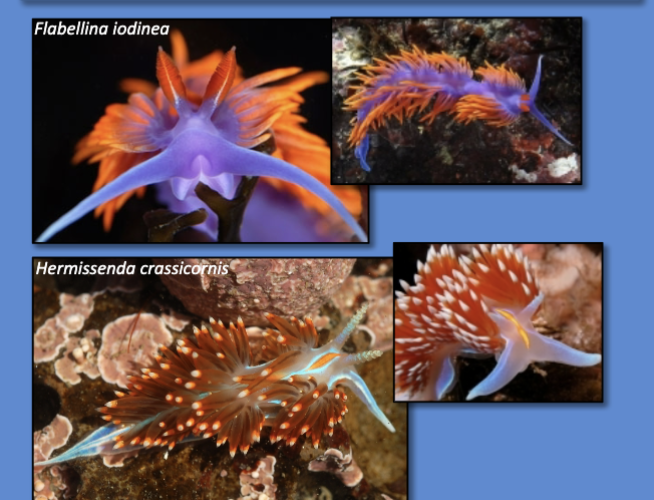
Aeolid Nudibranchs
Phylum: Mollusca
Family: Flabellinidae
Feeding: grazer
Gut Type: complete gut (one way)
Symmetry: bilateral
Key Features:
Specialized muscular foot used primarily for locomotion
radula present
shell lost or internal
sequestration of cnidocyts
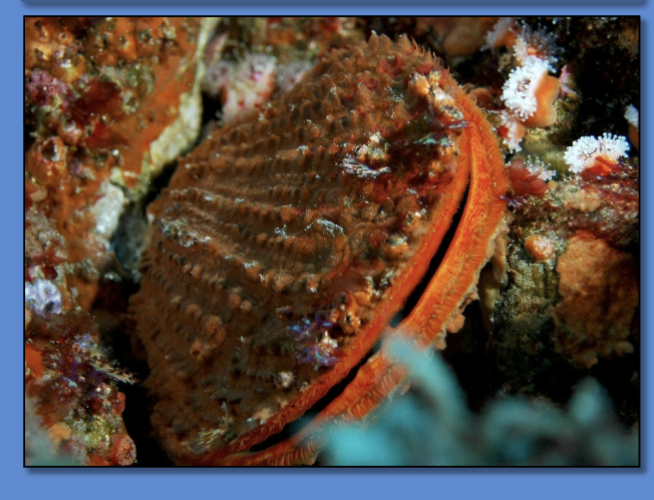
Giant Rock Scallop
Phylum: Mollusca
Genus: Crassadome sp.
Feeding: filter feeder
Gut Type: complete gut (one way)
Symmetry: bilateral
Key Features:
Specialized muscular foot used primarily for locomotion
radula present
presence of a shell

Bay Mussel
Phylum: Mollusca
Genus: Mytilus sp.
Feeding: suspension feeder
Gut Type: complete gut (one way)
Symmetry: bilateral
Key Features:
Specialized muscular foot used primarily for locomotion
radula lost
presence of a shell

Smooth Washington Clam
Phylum: Mollusca
Genus: Saxidomus sp.
Feeding: suspension feeder
Gut Type: complete gut (one way)
Symmetry: bilateral
Key Features:
Specialized muscular foot used primarily for locomotion
radula lost
presence of a shell

Sponge
Phylum: Porifera
Feeding: filter feeder
Gut Type: no gut (intracellular figestion)
Symmetry: asymmetrical
Key Features:
Body with pores, canals, and chambers lined with choanocytes
Spicules