AP Art History - Global Prehistory
 Call Kai
 Learn
 Practice Test
 Spaced Repetition
 Match
 Flashcards
 Knowt Play
1/63

There's no tags or description
Looks like no tags are added yet.
64 Terms
Stone Age
dependence on tools and weapons made of stone
Paleolithic
”old stone”
nomadic + portable art
painted cave walls (usually animals)
hunted and foraged
learned fire, developed language, created simple tools and shelters
Mesolithic
”middle stone”
people began to congregate around water, transition period
made pottery and cave paintings
hunted, gathered, stored food
bows and arrows + animal taming started
Neolithic
”new stone”
settlement → led to monumental stone architecture
farming in permanent villages
made pottery, carved wood, built shelters/tombs/places of worship
specialized jobs
complex tools from copper and bronze
Anthropomorphic
having human like characteristics or form
Henge
Circular ditch with a bank
Ocher
A material used to paint rock paintings
Apollo 11 Stones
oldest example of figurative art
named bc the excavators were listening to the radio when it was discovered
portable art
bovids or felines, zebra, giraffe, ostrich

Apollo 11 Cave, Namibia, Africa
Location where Apollo 11 stones were found
Profile
A pose/persepective of a subject
the animals on the apollo 11 stone are in strict _______
Quartzite, charcoal, ocher, and white
Materials of the Apollo 11 Cave Stones
Great Hall of the Bulls
sevaral artists over the decades
images entirely linear at times
in situ
twisted perspective
naturalism
horses, deer, bison, elk, lions, rhino, bear
similar to almost 350 other sites
hunting magic? narratives? encyclopedia of wildlife?

Charcoal and Ochre on rock
Materials Used for the Great Hall of the Bulls
Naturalism
art style
resembles the real world
Twisted Perspective
pose combining multiple viewpoints into one subject
In-Situ
artifact that hasn’t been moved from its original place
Lascaux, France, Paliolithic Europe
Location for the Great Hall of the Bulls
c. 25,500 - 25,300 BCE
Time period for the Apollo 11 Cave Stones
15,000 - 13,000 BCE
Time period of the Great Hall of the Bulls
Camelid Sacrum in the Shape of a Canine
carved out of an extinct camelid
early hunters & gatherers period
discovered in 1870
earliest cultural artifict from Mesoamerica
symbolism of rebirth or Osiris (in Egypt), fertility, or hunting
subtractive technique
mask?

Tequixquiac, central Mexico
Location for Camelid Sacrum in the Shape of a Canine
14,000 - 7,000 BCE
Time Period for Camelid Sacrum in the Shape of a Canine
Camelid Sacrum (bone)
Material for Camelid Sacrum in the Shape of a Canine
Subtractive Technique
removing material to create a sculpture
Running Horned Woman
twisted perspective
scarification or body paint
raffia
humans in settled groups
region holds special status bc of elevation/unique topology
not made for everyday use
ritual? rite? ceremony
shaman? horned deity?

Tassili n”Ajjer, Algeria
Location of Running Horned Woman
6,000-4,000 BCE
Time Period of Running Horned Woman
Pigment on Rock
Material for Running Horned Woman
Beaker with Ibex Motifs
funerary object
frieze of aquatic birds + running, narrow-bodied dogs + figure of goat
indicates prosperity of Susa

Susa, Iran; Neolithic
Location of Beaker with Ibex Motifs
4200-3500 BCE
Time Period for Beaker with Ibex Motifs
Anthropomorphic Stele
probably associated with religious or burial practices
pretty simple carvings (mainly at the front); bas-relief
face is trapezoidal + pair of eyes + long nose
chest has a necklace + an awl running through it
belt/sheath holding double-bladed dagger
many found along trade routes (arabian peninsula → Iraq, Syria)
Pre-islamic belief in afterlife?
importance of human figure

Bas-Relief
sculpture technique
figures and other design elements are barely more prominent than the background
4000-3000 BCE
Time Period of the Anthropomorphic Stele
Ha’il, Northern Saudi Arabia
Location of Anthropomorphic Stele
Sandstone
Material of Anthropomorphic Stele
Stele
Vertical stone monument.marker inscribed with text or relief carving
Jade Cong
incredibly time consuming to produce
jade must be worked at with a hard abrasive sand
found among graves near present-day shanghai
very important but we don’t know why
decorated with human faces (spirits? deities?)

c. 2500 BCE
Time Period of Jade Cong
Liangzhu Culture, Neolithic Period, China
Location of Jade Cong
Stonehenge
built in 3 phases
6ft deep, 360 ft diamater; circular ditch (henge); large NE entrance; smaller ditch South; 56 pits (held bluestones or wooden beams)
100-200 years later; wooden posts for burial; 50 men of age 24-40 buried in good health
400-500 years later; bluestones/wooden beams pulled; circle 108 ft in diameter of 30 large sarsen stones put up within henge; sarsen from nearby Marlborough Downs (how??); sarsen stones capped with 30 lintel stones
each stone was 13 ft high, 7 ft wide, 25 tons; trilithons set in horseshoe shape 45 ft across
neolithic
site specific
human compass; oriented in arrangement with the sun; ceremonies linked to death/burial
mortise and tenon; tongue in groove
during summer solstice it is framed by end of trilithon horseshoe; alighned with winter solstice at exact opposite point

Salisbury Plain, Wiltshire, England
Location of Stonehenge
Neolithic; c. 2550-1600 BCE
Time Period of Stonehenge
Sarsen on Exterior; Bluestone on Interior
Material of Stonehenge
Henge
circle of stones, posts; often surrounded by ditch or built up embankments
Trilithon
pair of upright stones witha lintel stone spanning the top
Megalith
large stone forming a prehistoric monument or is a part of one
Post and Lintel
building term where two vertical posts support a horizontal beam on top of it
Site specific
art made specifically for a certain location
Mortise and Tenon Joint
connects two pieces of wood at a 90-degree angle by fitting a projecting tongue into a matching cavity

Tongue in Groove
an edge-to-edge woodworking technique where a protruding ridge fits tightly into a hollow slot along the edge of the adjacent board

Ambum Stone
20 × 7.5 × 14 cm
stylized, simlified but still recognizable
stone is hard to carve, so this would take a long time (signals importance)
juvenile spiny anteater (echidna)? extinct marsupial?
revered for fat deposits before pigs existed
called “bones of the ancestors” by Enga tribe
broken in 3 pieces in 2000
pestle for food/body paint?
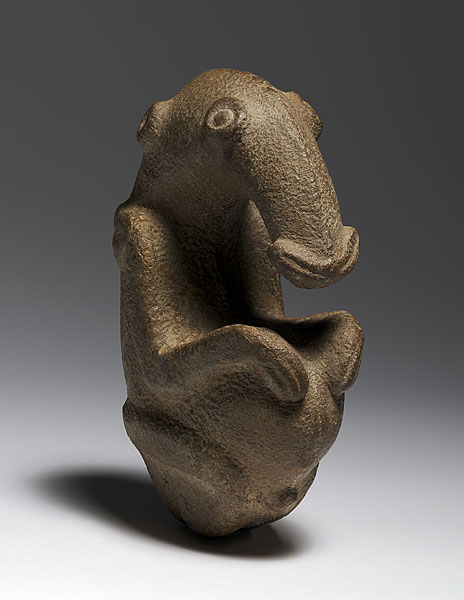
Greywacke
Material of Ambum Stone
hard sedimentary stone that often has fracture lines + veins revealing its age
Papua New Guinea
Location of Ambum Stone
c. 1500 BCE
Time Period of Ambum Stone
Tlatilco Female Figurine
intimate + lively poses + elaborate hairstyles = sophisticated artistic tradition + importance of hair to culture
narrow or wide hips
no interest in hands or feat
shows duality (life + death; cycle of life; rebirth)
suggests shamanism
incised clay
painted red, yellow, black
funerary art
many found, this one unique for double face
abnormalities = supernatural?

Ceramic
Material of Tlatilco Female Figurine
Central Mexico, site of Tlatilco
Location of Tlatilco Female Figurine
1200-900 BCE
Time Period of Tlatilco Female Figurine
Terracotta Fragments
incised clay (before being hardened on open fires)
dentate-stamped; complex geometric designs + faces
anthropomorphic
shaped by hand and maybe paddle-anvil technique
found in grave sites from Micronesia to Polynesia (250 sites)
used in funerary context or cooking
Lapita known for ceramics

Dentate-Stamped Ceramics
clay vessels decorated with rows of small, tooth-like or comb-like impressions pressed into the wet clay before firing
Lapita People, Solomon Islands, Reef Islands
Location of Terracotta Fragments
c. 1000 BCE
Time Period of Terracotta fragments
Red-slip Earthenware
Material of Terracotta Fragments