(MMI) Lecture 12 (Chapter 13 part)
 Call Kai
 Learn
 Practice Test
 Spaced Repetition
 Match
 Flashcards
 Knowt Play
1/54

Earn XP
Description and Tags
Controlling Microbial Growth
55 Terms
Sepsis
refers to microbial contamination.
Asepsis
is the absence of significant contamination.
Aseptic techniques
are designed to prevent microbial contamination of wounds during surgery and of flasks and plates in the research lab.
Sterilization (+ Commercial Sterilization)
Removal of all microbial life
Commercial sterilization: Also includes killing of Clostridium botulinum endospores
Disinfection
Removal of pathogens
Antisepsis
Removal of pathogens from living tissue
De-germing
Removal of microbes from a limited area
Sanitization
Lowering of microbial counts on eating utensils to safe levels
Rate of microbial death/killing
Bacterial populations usually die at a constant rate when heated or treated with antimicrobial chemicals
Much better to use logarithmic numbers to plot numbers of surviving microbes
Understanding logarithmic death curves is useful in
Sterilization of growth media and medical supplies/equipment
Food preservation

Sterilizing Agents Kill Exponentially
The D-value is the time required to kill 90% of cells.

Effectiveness of Antimicrobial Treatment Depends on..
Number of microbes
Environment (organic matter, temperature, biofilms)
Duration of exposure to killing agent
Microbial characteristics (wall, endospores etc.)
Alteration of membrane permeability (Microbial Control Agents)
Cell contents leak out, disrupt membrane gradients, exposure to osmotic stress
Damage to proteins (Microbial Control Agents)
Heat or chemical denaturation (disrupting tertiary structure)
Damage to nucleic acids (Microbial Control Agents)
Radiation, heat, chemical alteration of DNA (or RNA) to prevent replication and microbial growth
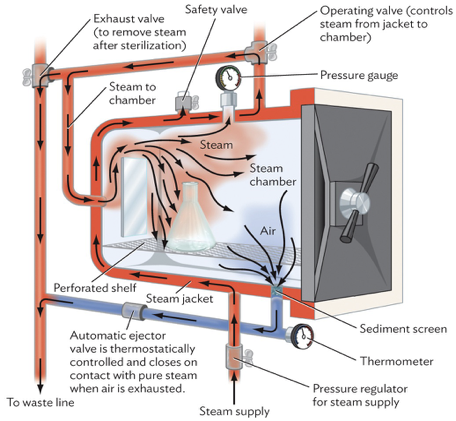
Physical Methods of Microbial Control: Heat
Moist heat denatures proteins
Autoclave: Steam under pressure

Physical Methods of Microbial Control: Heat (Altitude Variable)
Because atmospheric pressure is lower at high altitudes, the pressure shown on the autoclave gauge must be set higher than the standard 15 psi in order to reach the required sterilizing temperature of 121 degrees celsius
How does an autoclave achieve temperatures above boiling (100 degrees celsius)?
It uses pressure, which allows the steam to become superheated.
What is the result of standard autoclave conditions (15 psi)?
All organisms are killed (Through protein denaturation)
Preferably used on Microbiological media and solutions
What are two limitations or exceptions to standard autoclaving?
Endospores require longer incubation times to be killed.
Autoclaving does NOT destroy prions.
Pasteurization
reduces spoilage organisms and pathogens
What are the three equivalent temperature and time treatments used for pasteurization?
63 C for 30 minutes.
High temperature, short time: 72 for 15 seconds.
Ultra high temperature: 140 <1 second.
Thermoduric Organisms (heat resistant)
Dry heat sterilization
Used when water moisture is not compatible with item being sterilized meaning it will kill by oxidation.
Direct Flaming: inoculating loops
Incineration
Hot-air sterilization: empty glassware, instruments, needles
Equivalent Treatments to Dry Heat Sterilization
Hot air: 170 degrees, 2 hours
121 degrees, 15 minutes
Other physical methods of Microbial Control Include…
Low Temperature
Osmotic pressure
Desiccation
High Pressure
Low temperature
Inhibits microbial growth, preferably used in food, drug and culture preservation.
Refrigeration
Deep freezing (-50 to -95) Decreased chemical reactions + possible changes in proteins
Osmotic Pressure
Causes plasmolysis. results in loss of water from microbial cell.
High salt (or sugar) content in food preservation
Desiccation
Prevents metabolism
Lyophilization (=removing moisture)
High Pressure
Denatures proteins

What is Filtration?
Removes microbes from a solution and is useful in sterilization of materials which would be denatured by autoclaving such as proteins or vaccines.
Useful for sterilizing liquids (enzymes, vaccines) that are destroyed by heat
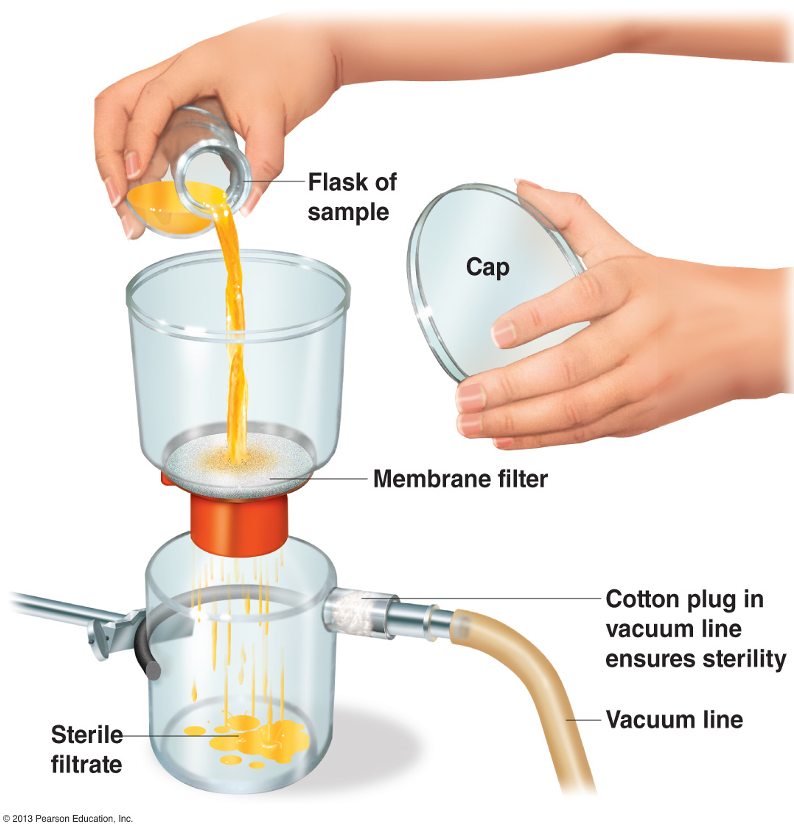
Filtration Filters
Uses filters with different pore sizes depending on the level of sterility required.
0.45 um filter removes almost all bacteria
0.2 um filter will remove some viruses

How does membrane filtration sterilize a liquid, and what are the two common laboratory setups?
The Mechanism: Unsterile liquid is forced through a microscopic filter that traps bacteria on the surface, allowing only sterile fluid to pass into the collection container.
Setup 1 (Small Volumes): Syringe filters, where fluid is manually pushed through the filter.
Setup 2 (Large Volumes): Bottle top filters, where a vacuum actively pulls unsterile media through the filter and into a flask.

How does radiation control microbial growth, and what are the different types?
works by physically damaging the microbe's DNA.
Ionizing radiation ( X-rays, gamma rays, and electron beams.)
Non Ionizing radiation (Ultraviolet (U.V.) light)
Exception: Microwaves are not highly antimicrobial; they kill microbes via heat rather than direct DNA damage.

How is non-ionizing (U.V.) radiation practically used to sterilize tissue culture cabinets?
Germicidal U.V. lamps are built into almost all tissue culture cabinets.
Switching the lamps on for 10–15 minutes before starting work is sufficient to sterilize the inside of the cabinet. (in research labs)
Damages DNA

What are the common commercial applications for ionizing radiation sterilization?
Medical & Lab Supplies: Gamma radiation is typically used commercially to sterilize items like plastic petri dishes.
Food Industry: Some foods are also irradiated to control microbial growth.
Destruction of DNA
Principles of Effective Disinfection
Concentration of disinfectant: It is important to use the recommended dilution.
Exposure time: how accessible the microbes are to the disinfectant.
Organic matter: can interfere with the action of the applied disinfectant.
pH: can alter the structure or properties of the disinfectant.

What is the purpose of the disk-diffusion method, and what visual feature indicates a disinfectant's effectiveness?
Purpose: To evaluate the efficacy of a chemical disinfectant against specific microbes.
Visual Indicator: The zone of inhibition (the clear ring around the chemical disk) indicates where the chemical successfully prevented microbial growth.
Biocide/Germicide
A chemical substance or agent that destroys and kills microbes
Bacteriostasis
Inhibits the growth of, but does not kill the bacteria
Fungistatic (for fungi)

What are the three steps of the use-dilution test for evaluating a chemical disinfectant?
Inoculate: Metal rings or cylinders are dipped in test bacteria and dried.
Expose: The dried cultures are placed in the disinfectant for 10 min at 20 degrees
Cultivate: The rings are transferred to culture media to determine whether any bacteria survived the treatment
What are ‘cial concentrations?
Refers to the lowest amount of an antimicrobial agent (such as an antibiotic or peptide) required to kill bacteria or other microorganisms, rather than just stop them from growing.
What are static concentrations?
A bacteriostatic agent stops bacteria from reproducing and growing, but it does not directly kill them.
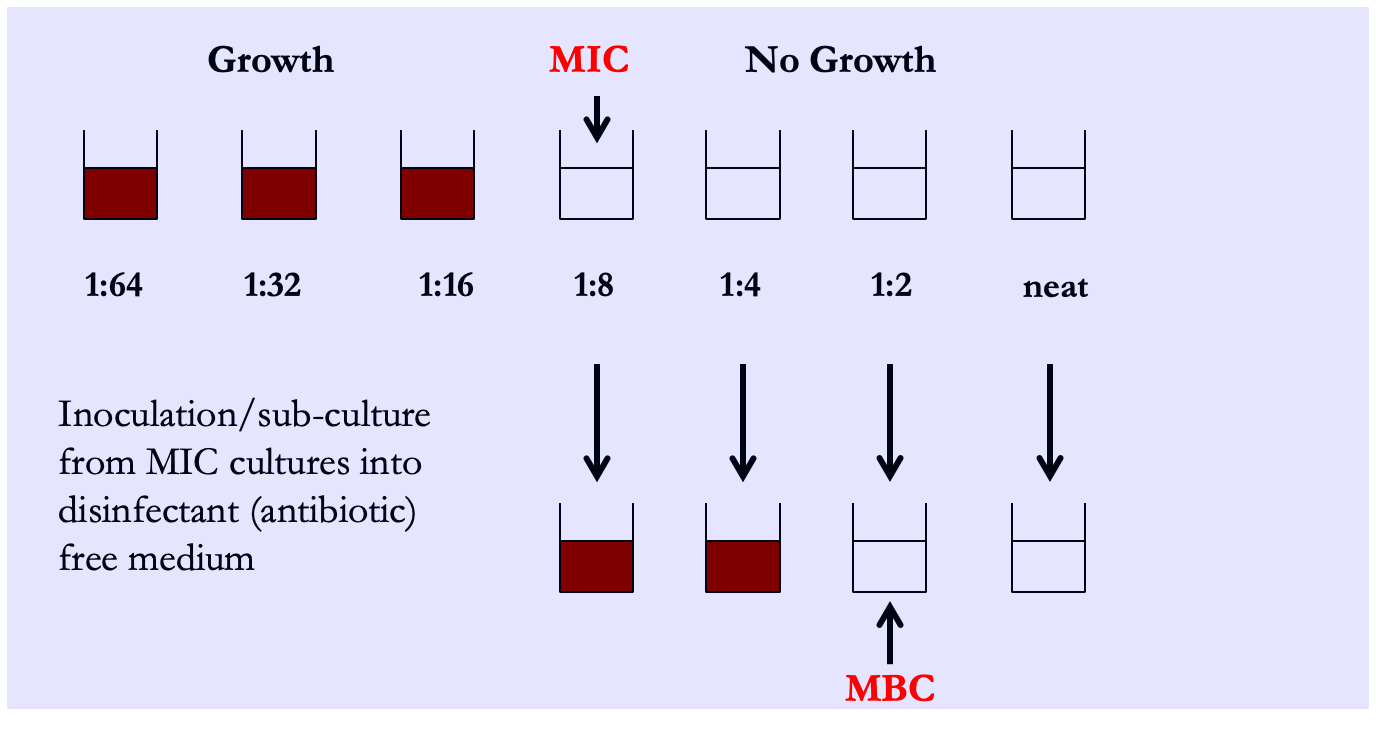
What is the difference between MIC and MBC?
MIC (Minimum Inhibitory Concentration): The lowest concentration of a chemical that visibly stops bacterial growth.
MBC (Minimum Bacteriocidal/Biocidal Concentration): The lowest concentration that completely kills the bacteria.
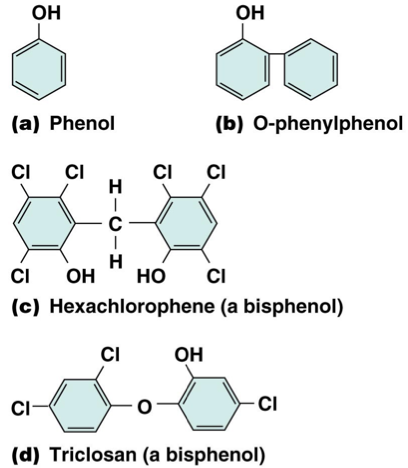
What are phenolic and bisphenol disinfectants?
phenolics and bisphenols (Antiseptics and disinfectants) are types of chemical disinfectants that kill microbes by disrupting their plasma membranes.
Phenolics: Lysol
Bisphenols: Hexachlorophene and Triclosan.
Biguanide Disinfectant
Disrupts plasma membranes (causing leakages)
Found in dentist mouth washes
Antiseptic and disinfectants
Example: Chlorhexidine
Halogen Disinfectant
Oxidizing agents (Antiseptics and disinfectants)
Hypochlorous acid (HOCl)
Diluting bleach (sodium hypochlorite) in water produces HOCl
Example: Iodine and iodophores; chlorine
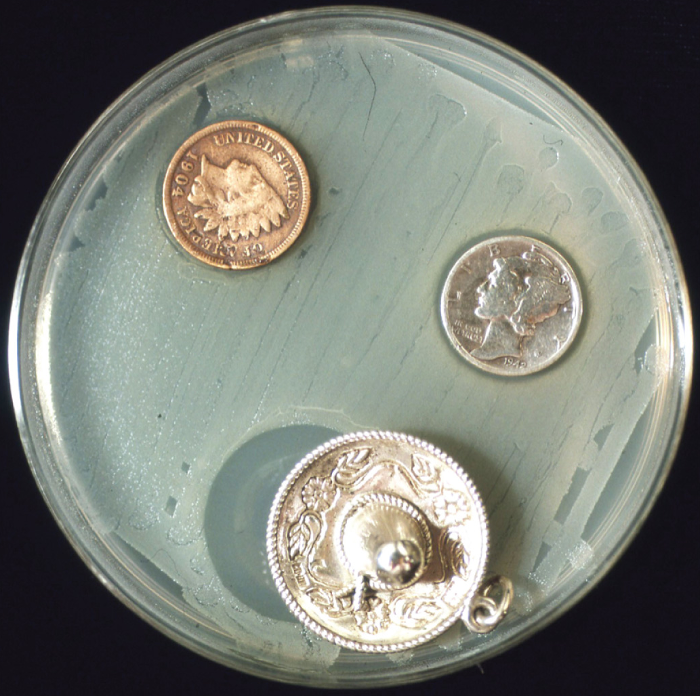
Heavy Metals as Disinfectants
Diffuse into cells
Denature proteins
Example: Ag (SIlver), Hg (Mercury) and Cu (Copper)
Now being studied as an antimicrobial coating on medically implanted devices
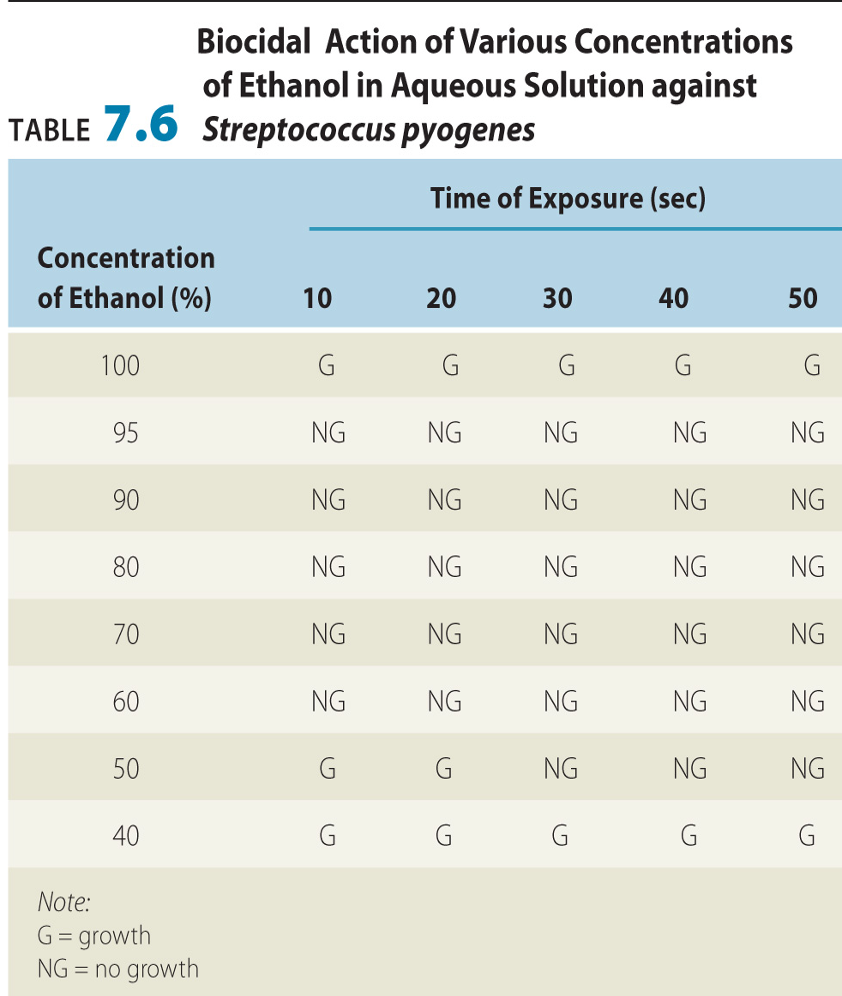
Alcohols as Disinfectants
60-90% rapidly denature proteins, dissolve lipids
Denaturation process requires water
Act on a wide range
Examples: Ethanol, Isopropanol, methanol
antiseptic vs disinfectant
antiseptics are used on living tissue (like skin or wounds) to prevent infection,
while disinfectants are used on non-living surfaces (like countertops or tools) to kill germs
Surface-active agents or Surfactants
Soap: Degerming (lower surface tension, alkali)
Acid-anionic detergents: Sanitizing
Quats (Quaternary ammonium compounds, cationic detergents): Bactericidal, Denature proteins, disrupt plasma membrane
Aldehydes
Inactivate proteins by cross-linking with functional groups (–NH2, –OH, –COOH, –SH)
Glutaraldehyde and formaldehyde
Peroxygens
Oxidizing agents
H2O2 (hydrogen peroxide)
Gaseous sterilants (e.g. ethylene oxide)
Denature proteins
Used on some medical devices which cannot be autoclaved, such as rubber tubing

Based on the chart comparing hand hygiene agents, which products are the most and least effective at microbial removal?
Most Effective: 70% isopropanol gel (achieving >99.9% reduction).
Least Effective: Regular soap (achieving ~99% reduction).
The Middle Tier (from more to less effective): 4% chlorhexidine gluconate, followed by 7.5% povidone-iodine surgical scrub, and then 62% ethanol foam.
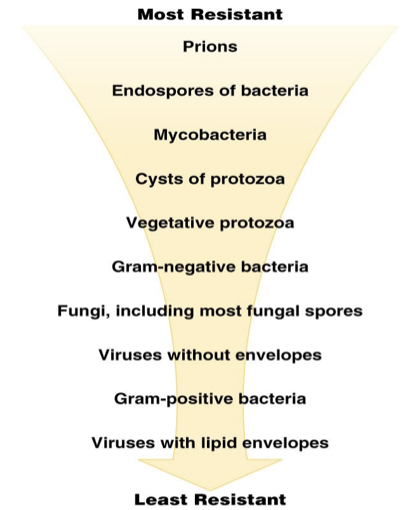
What is the decreasing order of resistance of microbial structures to chemical biocides (from most to least resistant)?
Highest Resistance: Prions, followed by Endospores of bacteria, and Mycobacteria.
Moderate Resistance: Cysts of protozoa, Vegetative protozoa, Gram-negative bacteria, and Fungi (including most fungal spores).
Lowest Resistance: Viruses without envelopes, Gram-positive bacteria, and finally, Viruses with lipid envelopes.